




fig5
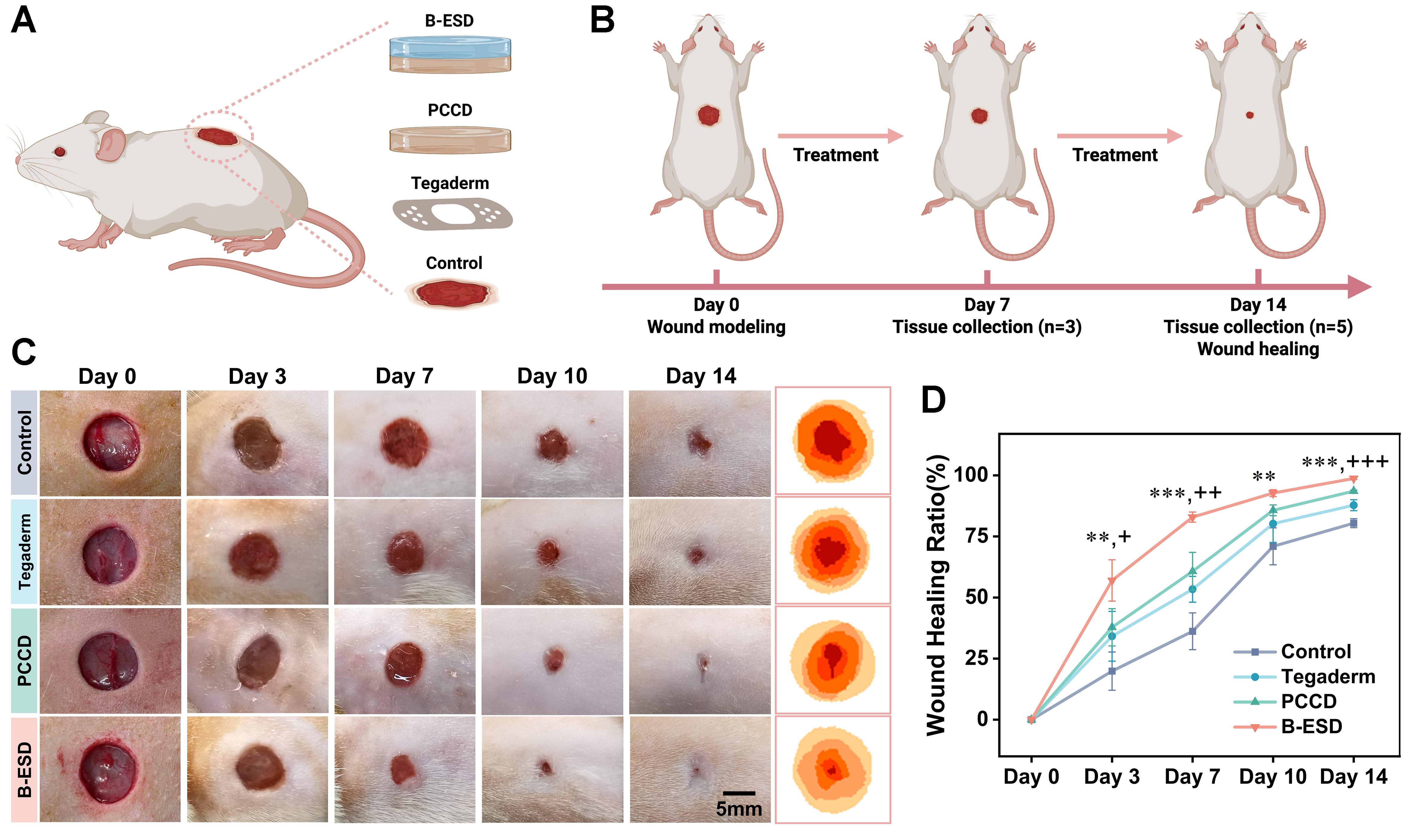
Figure 5. In vivo therapeutic efficacy of B-ESD in a rat full-thickness wound model. (A) Schematic of the rat full-thickness wound model and treatment mode in different groups; (B) Treatment procedure and timeline; (C) Representative optical photographs of wound closure under different treatment modes over 14 days; (D) Quantitative analysis of the wound-healing ratios over 14 days with statistical annotations at the indicated time points. Data are expressed as mean ± standard deviation (n = 5, **P < 0.01, ***P < 0.001 for B-ESD vs. Control, and +P < 0.05, ++P < 0.01, +++P < 0.001 for B-ESD vs. Tegaderm). (A and B) were created with BioRender. Du, X. (2026) https://BioRender.com/yfllnny. B-ESD: Bilayer electrogenerative smart dressing; PCCD: polyacrylamide/sodium carboxymethyl cellulose/calcium chloride/dopamine.