


Urinary polycyclic aromatic hydrocarbons and depressive/anxiety symptoms in older adults: an exploratory machine learning analysis
 0
Abstract
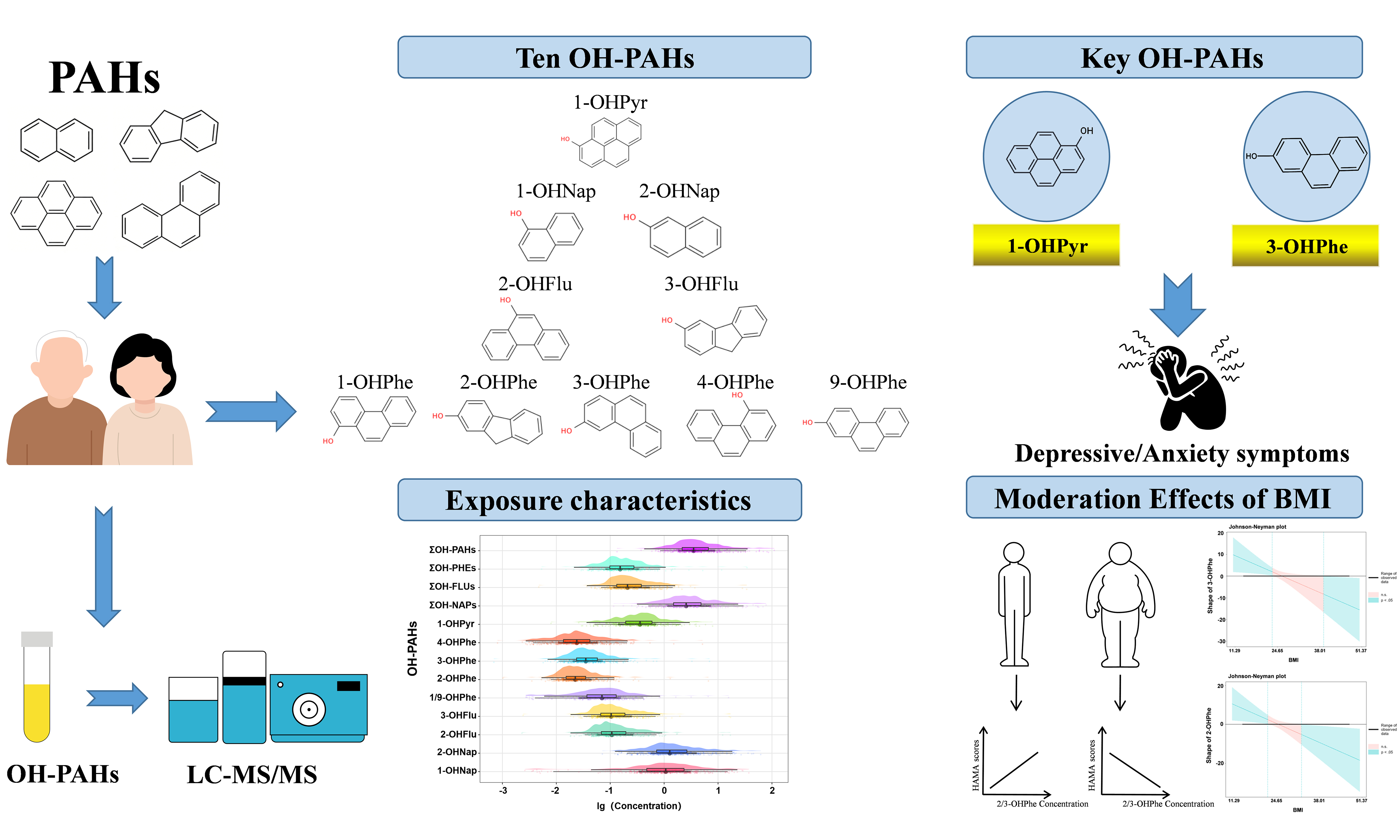
Polycyclic aromatic hydrocarbons (PAHs) are ubiquitous neurotoxic pollutants, yet evidence linking PAHs to older adults’ depressive/anxiety symptoms remains scarce. We explored single/mixed urinary PAH-metabolite associations as well as sex- and body-mass index (BMI)-related effect modification among 413 Shenzhen adults aged ≥ 60 years. Symptoms were assessed using the Geriatric Depression Scale (GDS) and Hamilton Anxiety Scale (HAMA). Complementary machine-learning analyses with XGBoost and SHapley Additive exPlanations explored key hydroxylated polycyclic aromatic hydrocarbon (OH-PAH) metabolites to cross-check conventional regression findings. Logistic regression showed that urinary 1-hydroxypyrene (1-OHPyr) and summed hydroxylated phenanthrene metabolites (ΣOH-PHEs) were associated with higher odds of prevalent anxiety symptoms. Sex-stratified analyses linked 3-hydroxyphenanthrene (3-OHPhe) to prevalent anxiety symptoms and 1-OHPyr to prevalent depressive symptoms in females, and stronger 1-OHPyr–anxiety associations were observed in non-overweight participants. Linear regression revealed a significant 1-OHPyr–HAMA association, whereas only a marginal non-significant trend was seen for GDS scores. Bayesian kernel machine regression indicated higher odds of prevalent anxiety symptoms at high mixture exposure, whereas quantile g-computation showed no significant association. The machine-learning analysis flagged 1-OHPyr as the top predictor for anxiety, with suggestive signals for depressive symptoms. Associations between phenanthrene-derived OH-PAHs and anxiety were subject to BMI modification. However, after false discovery rate (FDR) correction, these associations did not remain statistically significant (smallest PFDR = 0.494); the findings should be regarded as hypothesis-generating. This simultaneous assessment of PAH-related mood-symptom associations in older adults highlights the need for prospective cohorts to verify findings and clarify underlying mechanisms.
Keywords
INTRODUCTION
Polycyclic aromatic hydrocarbons (PAHs) are a class of organic compounds primarily generated through the incomplete combustion of organic materials. Although PAHs can be released from natural sources such as forest fires and volcanic eruptions, the majority of environmental emissions originate from anthropogenic activities, including biomass combustion, coke manufacturing, thermal industrial operations, vehicular emissions, and waste incineration[1,2]. PAHs are exposed to the human body via inhalation, ingestion, and direct dermal contact[3-6]. In humans, PAHs are mainly metabolized into hydroxylated and glucuronide metabolites, and levels of urinary hydroxylated PAH metabolites (OH-PAHs) have been proposed as specific biomarkers of PAH exposure[7]. Accumulating evidence from animal experimental studies indicates that PAHs exert neurotoxic effects[8,9]. PAHs and their metabolites, OH-PAHs, can cross the blood–brain barrier, disrupt central nervous system function[10], and induce neurological alterations, including neuronal damage, impaired learning and memory, dysregulated neurotransmission, and anxiety-like behaviors in animal models[8].
Due to age-related physiological decline, including the deterioration of renal function and metabolic capacity, older adults are particularly susceptible to the cumulative effects of environmental pollutants[11,12], which may contribute to an increased prevalence of depression and anxiety in this population, and even a heightened risk of mortality[13,14]. Meanwhile, global population aging is accelerating, particularly in China, where individuals aged ≥ 60 years are projected to comprise 39% of the population by 2050[15]. This demographic transition has been accompanied by a substantial increase in age-related diseases, including mental disorders, with depression and anxiety being the most prevalent conditions among older adults[16,17]. National surveys and data from the China Health and Retirement Longitudinal Study (CHARLS) consistently indicate a high prevalence of depressive symptoms among middle-aged and older adults, with rates ranging from approximately 17.4% to 46.15%[18-21]. Given the heightened vulnerability of aging populations to neurotoxic environmental exposures and the substantial public health impact of depressive and anxiety symptoms, identifying environmental risk factors for mental health outcomes in older adults is of growing importance.
Depressive and anxiety symptoms are influenced by a range of factors, including genetic susceptibility, social environment, nutritional status, and environmental exposures[22-27]. In recent years, accumulating evidence has indicated that neurotoxic environmental pollutants, including PAHs, could be risk factors for depressive and anxiety symptoms[26,28-32]. Epidemiological studies have also shown an association between PAH exposure and mood disorders[33-35]. For instance, multiple studies have demonstrated that fetal exposure to PAHs is correlated with depressive and anxiety symptoms in children[36-38], while higher PAH exposure is also associated with an elevated risk of depression in adults[39]. However, research on the link between PAH exposure and depressive/anxiety symptoms has mostly focused on pregnant women, children, and the general population; data on PAH exposure in older adults remain scarce, with its impact on depressive and anxiety symptoms in this population also unclear.
To address these gaps, this study aimed to explore, for the first time to our knowledge, the associations between OH-PAHs and depressive and anxiety symptoms in older adults. We further evaluated the individual and combined effects of PAH exposure and potential dose–response relationships in this population. Previous studies have primarily investigated sex-specific effects of PAH exposure on depression and anxiety in the general population, adolescents, or pregnant women, rather than in older adults[40,41]. Meanwhile, previous epidemiological studies have shown that older adults and overweight/obese individuals are particularly vulnerable to PAH-related health risks[42]. Accordingly, sex- and body-mass index (BMI)-stratified analyses were conducted to explore the potential effect modification of sex and BMI on the above associations.
EXPERIMENTAL
Study design and population
This study was based on the Nanshan Aging Study cohort. Participants were older adults recruited from eight community sites in Shenzhen, China, between August and December 2021. Enrollment eligibility criteria were as follows: (1) be 60 years of age or older; (2) have resided in Shenzhen for at least six months (regardless of registration status); and (3) provide written informed consent prior to participation. Participants were excluded from the current analysis if they had incomplete Geriatric Depression Scale (GDS) or Hamilton Anxiety Scale (HAMA) data (n = 64), or if urine samples were insufficient for OH-PAHs measurement (n = 3). Finally, 413 participants were included. Initial recruitment was conducted under ethical approval (No. II20210003) from the Ethics Review Committee of the Shenzhen Nanshan Center for Chronic Disease Control for the parent project investigating the associations between heavy metal exposure and cognitive function. During implementation of this project, the research team established the cohort and obtained subsequent ethical approval (No. II20220015) from the same committee for the formal establishment of the Nanshan Aging Study cohort, authorizing broader research on the health impacts of environmental pollutants (heavy metals and organic pollutants), with a focus on mental, cognitive, and metabolic disorders.
Assessment of OH-PAH exposure
For the measurement of urinary OH-PAHs, samples underwent enzymatic deconjugation followed by solid-phase extraction (SPE), after which the extracts were analyzed on a UHPLC system (ExionLC™, SCIEX) that was operated in tandem with a Triple Quad 6500+ mass spectrometer (SCIEX, USA). As a first step in sample work-up, the urine specimens were allowed to reach 4 °C after thawing, vortexed for 30 s, and an aliquot of 1.5 mL was transferred into a tube containing ammonium acetate buffer (pH 4.5-5.0) and a preparation of β-glucuronidase/aryl sulfatase. The enzymatic hydrolysis proceeded at 37 °C over 12 h, after which a cocktail of internal standards was added. Sample clean-up used a Bond Elut C18 cartridge holding 200 mg of sorbent in a 3 mL format. Before the specimen was applied, the cartridge was primed by passing methanol (MeOH) and subsequently Milli-Q water through it. Once the sample had been loaded, the cartridge was rinsed with Milli-Q water and then with MeOH/water prepared at a 1:1 (v/v) ratio. Acetonitrile (ACN) eluted the compounds of interest, and the effluent was concentrated to near dryness under a gentle nitrogen gas stream. The remaining residue was dissolved in a solvent mixture of ACN, MeOH, and water at a 1:1:8 (v/v/v) ratio, vortexed, and centrifuged. The clear upper layer was then pipetted into a 2 mL autosampler vial ahead of injection. Analyte separation was performed on an ACQUITY UPLC HSS T3 column (Waters, Ireland; 100 mm × 2.1 mm, with a particle size of 1.8 μm). For each run, 2 μL of the extract was injected, with ultrapure water serving as mobile phase A and a 1:1 (v/v) blend of MeOH and ACN as mobile phase B. The analytes were resolved using a gradient over a 16-minute total runtime, organized as follows: B was held at 20% for the opening 0.5 min; raised to 40% in a linear manner from 0.5 to 1 min; brought up to 60% between 1 and 4 min; kept constant at 60% from 4 to 6.5 min; advanced to 70% over the 6.5-12 min window; elevated further to 100% during 12-13 min; maintained at 100% for 13-15 min; and finally returned to 20% during the re-equilibration phase spanning 15.1-16 min[43,44]. Analyte concentrations were established using the isotope-dilution internal standard methodology, with quantitation anchored to a ten-point standard curve covering 0-100 ng/mL (0, 0.2, 0.5, 1.0, 2.0, 5.0, 10.0, 20.0, 50.0, and 100.0 ng/mL). Across these points, the R2 values exceeded 0.999. For linearity assessment, regression was carried out under a 1/x weighting scheme. The limits of detection (LOD) and of quantification (LOQ) were defined as the analyte levels corresponding to signal-to-noise ratios of 3 and 10, respectively (S/N = 3 and S/N = 10). In cases where an individual measurement proved to be lower than the LOQ, the recorded figure was replaced by LOQ/√2[45].
In order to ensure analytical reliability, quality control was managed through a pooled sample formed by mixing identical volumes drawn from the individual urine specimens; this aggregate served as laboratory-generated external quality-control material and was incorporated into each batch run so that both the effectiveness of the pre-processing steps and the constancy of the instrument could be followed continuously. To check for possible contamination, a solvent blank and a process blank were run alongside the samples at intervals of every 15 injections within a given batch. A process blank prepared from 1.5 mL of Milli-Q water underwent the same analytical sequence as the urine samples, and no OH-PAH analytes were detected in any blank run. To assess recovery, the pooled quality control (QC) material was enriched with OH-PAHs at three graded concentrations: 10 ng/mL (low), 25 ng/mL (intermediate), and 50 ng/mL (high). Recovery percentages were found to vary between 66.55% and 104.07%, while the accompanying relative standard deviations (SDs) ranged from 1.33% to 17.89%.
The panel of quantified urinary OH-PAHs comprised nine analytes, namely 1-hydroxynaphthalene (1-OHNap), 2-hydroxynaphthalene (2-OHNap), 2-hydroxyfluorene (2-OHFlu), 3-hydroxyfluorene (3-OHFlu), 1/9-hydroxyphenanthrene (1/9-OHPhe), 2-hydroxyphenanthrene (2-OHPhe), 3-hydroxyphenanthrene (3-OHPhe), 4-hydroxyphenanthrene (4-OHPhe), and 1-hydroxypyrene (1-OHPyr). As the isomers 1-OHPhe and 9-OHPhe could not be resolved chromatographically, the value reported for 1/9-OHPhe corresponds to the combined concentration of the two. For subsequent analyses, the following molar sums were adopted: ΣOH-NAPs, aggregating 1-OHNap and 2-OHNap; ΣOH-FLUs, comprising 2-OHFlu and 3-OHFlu; and ΣOH-PHEs, summing 1/9-OHPhe, 2-OHPhe, 3-OHPhe, and 4-OHPhe; and ΣOH-PAHs, representing the total sum of all nine OH-PAH metabolites (1-OHNap, 2-OHNap, 2-OHFlu, 3-OHFlu, 1/9-OHPhe, 2-OHPhe, 3-OHPhe, 4-OHPhe, and 1-OHPyr). Before the data were interpreted, individual OH-PAH concentrations were adjusted on the basis of urine specific gravity (SG), a normalization approach that has been documented in earlier investigations[43]. Detailed procedures are provided in Supporting Information [Supplementary Text 1].
Outcome measurement of depressive and anxiety symptoms
The HAMA was used to assess the anxiety level of older adults, an instrument that has also been applied to measure anxiety symptoms in very recent studies of older adults[46]. Developed by Hamilton, HAMA is a semi-structured interview tool that evaluates the severity of anxiety symptoms through 14 items, covering both psychological and physiological aspects of anxiety[47]. Each item is scored from 0 (absent) to 4 (severe), yielding a maximum total score of 56. Higher total scores correspond to greater anxiety severity. In this study, a score of ≥ 14 was defined as indicative of anxiety[48].
The GDS was employed to assess depressive status in older adults. As a widely used screening instrument for older-adult depressive symptoms[49], which has been adopted in several recent studies[50-52], this 15-item scale uses yes/no responses referring to participants’ feelings during the preceding week, with scores ranging from 0 to a maximum total score of 15. In the current study, a GDS score of ≥ 5 indicated significant depressive symptoms[53,54].
Covariates
Based on the differences in demographic characteristics of the study population and potential influencing factors of anxiety and depressive symptoms reported in previous literature[35,55], different adjustment models were adopted, and the following covariates were included: Model 1: crude model without covariate adjustment; Model 2: adjusted for sex and age; Model 3: fully-adjusted model, adjusted for sex, age, marital status, educational level, BMI, exercise, smoking status, and drinking. Age and BMI were included as continuous variables in all regression models; in Table 1, they were additionally presented as categorical groups (age: 60-65 and > 65 years; BMI: non-overweight < 24 kg/m2 and overweight ≥ 24 kg/m2, according to the Chinese Expert Consensus on Medical Nutrition Treatment of overweight/obesity[56]). Other covariates were treated as categorical variables in regression models, defined as follows: sex (male, female); marital status (married, unmarried/divorced/widowed); education (< 3 years, 3-6 years, > 6 years); exercise (hardly, < 3 times/week, ≥ 3 times/week); smoking status (never, former, current smoker); drinking (no, yes).
Comparison of baseline characteristics between the participants
| Characteristics | Total (N = 413) | No depressive symptoms (N = 354) | Depressive symptoms (N = 59) | P value | No anxiety symptoms (N = 352) | Anxiety symptoms (N = 61) | P value |
| Sex, n (%) | |||||||
| Male | 180 (44) | 160 (45) | 20 (34) | 0.105 | 155 (44) | 25 (41) | 0.657 |
| Female | 233 (56) | 194 (55) | 39 (66) | 197 (56) | 36 (59) | ||
| Age (years), mean ± SD | 71.08 ± 4.62 | 71.08 ± 4.54 | 71.12 ± 5.16 | 0.955 | 70.83 ± 4.53 | 72.56 ± 4.93 | 0.007* |
| Age (years), n (%) | |||||||
| 60-65 | 30 (7) | 26 (7) | 4 (7) | 0.999 | 25 (7) | 5 (8) | 0.789 |
| > 65 | 383 (93) | 328 (93) | 55 (93) | 327 (93) | 56 (92) | ||
| Marital status, n (%) | |||||||
| Married | 356 (86) | 305 (86) | 51 (86) | 0.954 | 302 (86) | 54 (89) | 0.568 |
| Unmarried/divorced/widowed | 57 (14) | 49 (14) | 8 (14) | 50 (14) | 7 (11) | ||
| Educational level (years), n (%) | |||||||
| < 3 | 133 (32) | 116 (33) | 17 (29) | 0.598 | 113 (32) | 20 (33) | 0.115 |
| 3-6 | 178 (43) | 149 (42) | 29 (49) | 146 (42) | 32 (52) | ||
| > 6 | 102 (25) | 89 (25) | 13 (22) | 93 (26) | 9 (15) | ||
| BMI (kg/m2), mean ± SD | 24.65 ± 3.34 | 24.59 ± 3.36 | 25.01 ± 3.17 | 0.373 | 24.64 ± 3.35 | 24.73 ± 3.27 | 0.844 |
| BMI (kg/m2), n (%) | |||||||
| < 24 | 175 (42) | 151 (43) | 24 (41) | 0.951 | 148 (42) | 27 (44) | 0.816 |
| ≥ 24 | 238 (58) | 203 (57) | 35 (59) | 204 (58) | 34 (56) | ||
| Exercise, n (%) | |||||||
| Hardly | 47 (11) | 38 (11) | 9 (15) | 0.592 | 39 (11) | 8 (13) | 0.816 |
| < 3 times/week | 63 (15) | 54 (15) | 9 (15) | 55 (16) | 8 (13) | ||
| ≥ 3 times/week | 303 (73) | 262 (74) | 41 (69) | 258 (73) | 45 (74) | ||
| Smoking status, n (%) | |||||||
| Never | 366 (88) | 315 (89) | 51 (86) | 0.695 | 309 (88) | 57 (93) | 0.417 |
| Former | 31 (8) | 25 (7) | 6 (10) | 28 (8) | 3 (5) | ||
| Current smoker | 16 (4) | 14 (4) | 2 (4) | 15 (4) | 1 (2) | ||
| Drinking, n (%) | |||||||
| Yes | 70 (17) | 62 (18) | 8 (14) | 0.453 | 57 (16) | 13 (21) | 0.325 |
| No | 343 (83) | 292 (82) | 51 (86) | 295 (84) | 48 (79) |
Statistical analysis
Continuous variables were expressed as mean ± SD, while categorical variables were presented as n (%). Due to the uneven distribution of urinary OH-PAHs, logarithmic (lg) transformation was applied. Spearman rank correlation was used to associations among urinary OH-PAH concentrations. Logistic regression and multiple linear regression analyses were used to evaluate the relationship between OH-PAH exposure (continuous variable and categorical variable) and depressive and anxiety symptoms and scores, and the median concentration of each quantile group was used as a continuous variable for trend testing. Separate single-exposure regression models were fitted for each exposure metric, with only one exposure term included per model - either an individual OH-PAH metabolite, a single family-level summed index (ΣOH-NAPs, ΣOH-FLUs, ΣOH-PHEs), or the total summed index of all nine OH-PAH metabolites (ΣOH-PAHs). To account for multiple testing, Benjamini–Hochberg false discovery rate (FDR) correction was applied to the P values of these single-exposure models for each of the four outcomes, separately for continuous-exposure models and categorical (tertile; T2 and T3) exposure models, and separately within each of the three adjustment models (Model 1, Model 2, and Model 3).
Restricted cubic splines (RCS) were used to evaluate the nonlinear associations between urinary OH-PAHs and outcomes. Three knots were set in the model, and the knot positions were determined based on the 10th, 50th, and 90th percentiles of OH-PAHs exposure. For the mixture analyses, all nine log-transformed individual OH-PAH monomer metabolites were entered concurrently as distinct exposure components. Accordingly, Bayesian kernel machine regression (BKMR) was used to accurately estimate the joint and individual effects of the mixed OH-PAH components and their potential interactions. For continuous scale outcomes (HAMA and GDS scores), a Gaussian outcome family was specified, whereas a binomial family was used for the binary prevalent anxiety and depressive symptom outcomes. The model was fitted using the native single-chain Markov Chain Monte Carlo (MCMC) implementation of the bkmr R package with 10,000 iterations and a fixed random seed (set.seed = 1000) to ensure full reproducibility. Fifty knots were defined for the kernel-machine term, and variable selection (varsel = TRUE) with estimation of the residual variance (est.h = TRUE) was enabled, using the package’s default prior distributions. Convergence was assessed by visual inspection of the trace plots for key model parameters (β coefficients, sigsq.eps, and r mixture-component parameters). Point estimates and posterior SDs derived from the MCMC posterior samples were used to construct 95% confidence intervals (CIs) for the univariate predictor–response curves and the overall mixture-effect summaries. Meanwhile, to quantify the joint effect of mixed exposure to the nine urinary OH-PAHs on anxiety and depressive symptoms and the relative contribution weight of each exposure component, quantile g-computation (QGC) was further applied. A Gaussian family was specified for continuous HAMA and GDS scores and a binomial family with a logit link for the binary anxiety and depressive symptom outcomes. Exposure concentrations were stratified into quartiles (q = 4), and the bootstrap-based qgcomp.glm.boot function with 100 bootstrap resamples (B = 100) was used to derive confidence intervals for the mixture-level effect estimates.
Considering that the effects of OH-PAH exposure on anxiety and depressive symptoms reported in previous studies may be closely related to BMI and sex, we conducted stratified analyses based on BMI and sex. In addition, studies have shown a clear connection between BMI status and the metabolism of PAHs in the human body. We further calculated the interaction term between OH-PAH exposure and BMI to explore the potential impact of BMI on this association. For statistically significant interaction terms, the Johnson-Neyman method was used to further explore potential moderating effects, aiming to determine the key BMI thresholds characterizing the relationship between OH-PAHs and depressive and anxiety symptoms, HAMA scores, and GDS scores. To reduce bias in the estimation of regression coefficients caused by extreme BMI values, Z-score standardization was performed on BMI: specifically, based on the original BMI data of the study population, BMI was converted to standardized values with a mean of 0 and an SD of 1. Johnson-Neyman analysis was conducted based on standardized BMI, and the obtained critical values were subsequently converted back to the original BMI units via inverse transformation to facilitate practical interpretation of the results and elaboration of their clinical implications. To further identify key PAH metabolites associated with anxiety and depressive symptoms and cross-check the consistency of key pollutant signals with traditional regression results, two tree-based machine-learning algorithms, random forest (RF) and extreme gradient boosting (XGBoost), were used for exploratory feature-importance analysis of urinary OH-PAH metabolites. Stratified ten-fold cross-validation was applied to conduct hyperparameter grid-search tuning and model performance evaluation. Within each cross-validation fold, the Synthetic Minority Oversampling Technique (SMOTE) was implemented to address class imbalance for binary anxiety and depressive outcomes. Regularization constraints including limited tree depth, minimum node-size thresholds, and restricted tree numbers were adopted to mitigate potential overfitting. Model performance metrics, including the area under the receiver operating characteristic (ROC) curve (AUC) and F1-score, were calculated as averaged values across all ten cross-validation folds. Based on cross-validated performance, XGBoost exhibited better AUC and F1-score compared with RF and was selected for subsequent SHapley Additive exPlanations (SHAP) interpretation. Following hyperparameter optimization via cross-validation, the final XGBoost model was refit on the complete dataset. SHAP values were computed from this full-dataset final model to quantify the marginal contribution of each OH-PAH metabolite. The full input feature set for the XGBoost model comprised all individual urinary OH-PAH metabolites as well as pre-defined summed OH-PAH indices (ΣOH-NAPs, ΣOH-FLUs, ΣOH-PHEs, ΣOH-PAHs). Gain-based feature importance quantifies the total splitting gain contributed by each feature during model training; near-zero importance values indicate negligible predictive contribution. Machine-learning outputs served as exploratory feature-ranking results to cross-check findings derived from conventional regression analyses. To evaluate the robustness of the primary results, this study conducted a sensitivity analysis in the population excluding OH-PAHs concentration outliers [defined as individuals exceeding the original distribution interquartile range (IQR) value by more than three times].
Statistical analyses were conducted using R (version 4.3.3), with the “qgcomp”, “bkmr”, and “rms” R packages used to analyze QGC, BKMR, and RCS curves, respectively. A two-tailed P value < 0.05 was considered statistically significant.
RESULTS AND DISCUSSION
Results
Characteristics of the study participants
The demographic information and characteristics of the study population were depicted in Table 1. A total of 413 participants were included, among whom 14% (n = 59) and 15% (n = 61) were screened out for depressive symptoms and anxiety symptoms, respectively. The average age of the population was 71.08 ± 4.62 years. Most of the participants were female (56%) and married (86%). Regarding educational attainment, 32% of participants had < 3 years of education, 43% had 3-6 years, and 25% had > 6 years of education. In terms of lifestyle, many participants engaged in regular physical exercise (at least three times a week), and a relatively high proportion had never smoked or consumed alcohol.
Concentration distribution of OH-PAHs
The distributions, detection frequencies, and detection limits of the urinary OH-PAHs are summarized in Supplementary Table 1 and Figure 1A. Among the analytes, 1-OHNap, 1/9-OHPhe, and 4-OHPhe were identified in 97%, 95%, and 86% of the samples, respectively, whereas all remaining metabolites were present in every sample examined (100%). Total OH-PAH (ΣOH-PAH) concentrations in urine ranged from 0.134 to 110.4 ng/mL, with a median of 3.52 ng/mL and a geometric mean (GM) of 3.90 ng/mL. The analytes with the highest average abundance were 1-OHNap, 2-OHNap, and 1-OHPyr, whose median concentrations reached 1.07, 1.27, and 0.36 ng/mL, respectively. Inter-associations among the log-transformed OH-PAHs, evaluated by Spearman correlation, are displayed in Figure 1B. Every metabolite was significantly and positively correlated with the others (P < 0.05). The strongest relationship was between 2-OHFlu and ΣOH-FLUs (r = 0.995, P < 0.001), closely followed by that between 3-OHFlu and ΣOH-FLUs (r = 0.994, P < 0.001), and by the association of 2-OHFlu with 3-OHFlu (r = 0.978, P < 0.001).
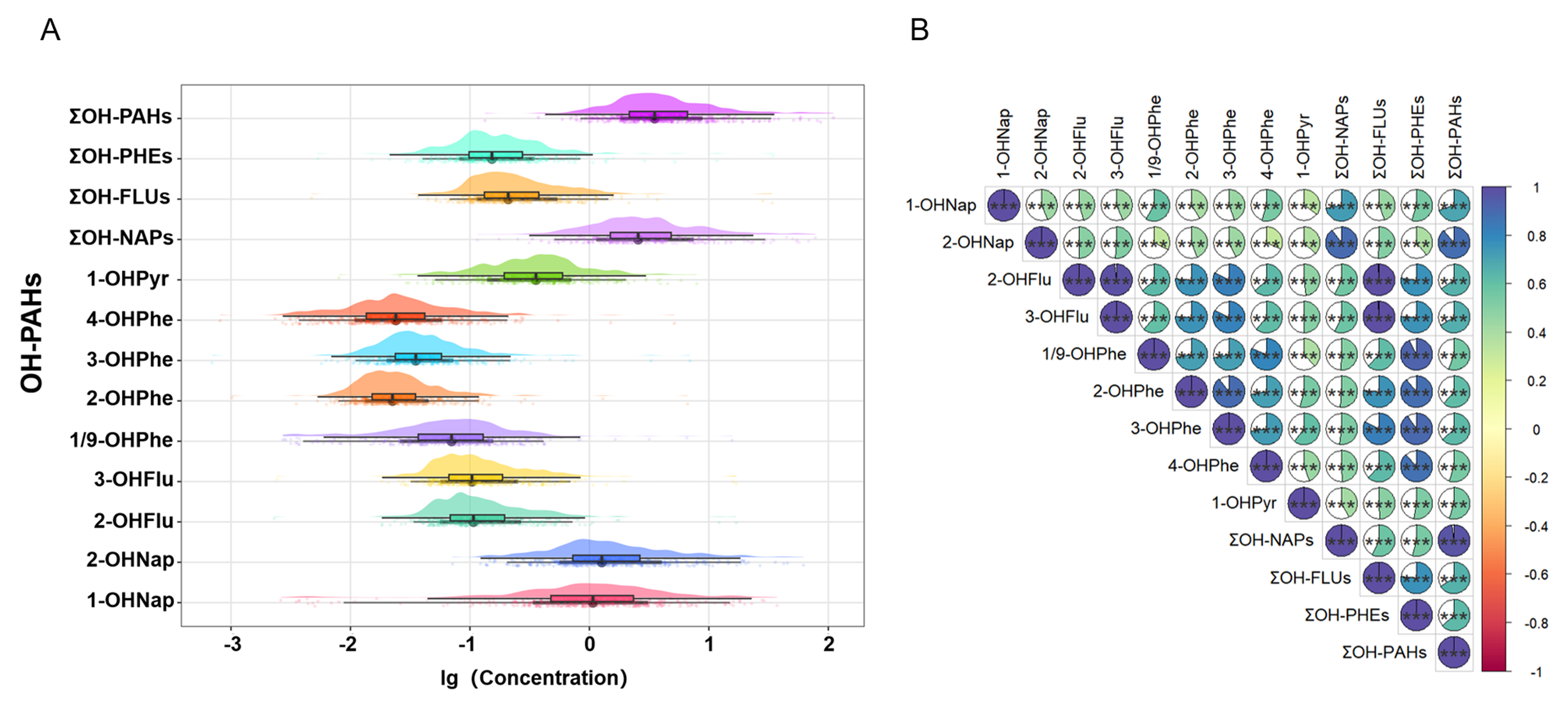
Figure 1. Distribution of different OH-PAH concentrations. (A) Raincloud plots, the left boundary denotes the 25th percentile (Q1), the right boundary denotes the 75th percentile (Q3), and the central solid line denotes the median (50th percentile); (B) Correlation matrix of OH-PAHs. Statistical significance is marked by asterisks based on two-tailed tests: *P < 0.05, **P < 0.01, ***P < 0.001. OH-PAH: Hydroxylated polycyclic aromatic hydrocarbon; ΣOH-PAHs: total sum of all nine urinary OH-PAH metabolites; ΣOH-PHEs: sum of 1/9-OHPhe, 2-OHPhe, 3-OHPhe, and 4-OHPhe; ΣOH-FLUs: sum of 2-OHFlu and 3-OHFlu; ΣOH-NAPs: sum of 1-OHNap and 2-OHNap; 1-OHPyr: 1-hydroxypyrene; 4-OHPhe: 4-hydroxyphenanthrene; 3-OHPhe: 3-hydroxyphenanthrene; 2-OHPhe: 2-hydroxyphenanthrene; 1/9-OHPhe: 1/9-hydroxyphenanthrene; 3-OHFlu: 3-hydroxyfluorene; 2-OHFlu: 2-hydroxyfluorene; 2-OHNap: 2-hydroxynaphthalene; 1-OHNap: 1-hydroxynaphthalene.
Associations between urinary OH-PAHs levels and mental disorders (depressive and anxiety symptoms)
As shown in Supplementary Figure 1 and Supplementary Table 2, no significant association was found between urinary OH-PAHs and depressive symptoms in categorical analyses. However, after adjusting for covariates, compared with the low-concentration group, a suggestive marginal trend was observed for high-concentration 1-OHPyr in relation to higher odds of prevalent depressive symptoms [odds ratio (OR) = 1.853, 95%CI: 0.940, 3.746, P = 0.079, P for trend = 0.096]. For anxiety symptoms, adjusted logistic regression revealed significant positive correlations of urinary 1-OHPyr (OR = 2.359, 95%CI: 1.148, 5.037, P = 0.022) and ΣOH-PHEs (OR = 2.065, 95%CI: 1.044, 4.186, P = 0.040) with higher odds of prevalent anxiety symptoms [Figure 2 and Supplementary Table 3]. In the multiple linear regression model with GDS scores as the dependent variable, a similar association trend was observed for 1-OHPyr (β = 0.555, 95%CI: -0.021, 1.132, P = 0.060, P for trend = 0.089) [Supplementary Table 4]. For continuous HAMA scores, adjusted multiple linear regression also identified a significant positive association for 1-OHPyr (β = 1.726, 95%CI: 0.207, 3.246, P = 0.026) with anxiety level [Supplementary Table 5]. Additionally, a suggestive marginal trend was found between high concentrations of 1/9-OHPhe and higher odds of prevalent anxiety symptoms (OR = 1.977, 95%CI: 0.987, 4.054, P = 0.057). After applying Benjamini–Hochberg FDR correction, none of the above associations remained statistically significant (all PFDR > 0.05); the smallest FDR-adjusted P values were observed for 1-OHPyr in the anxiety symptoms (PFDR = 0.494) and HAMA scores (PFDR = 0.533) analyses.
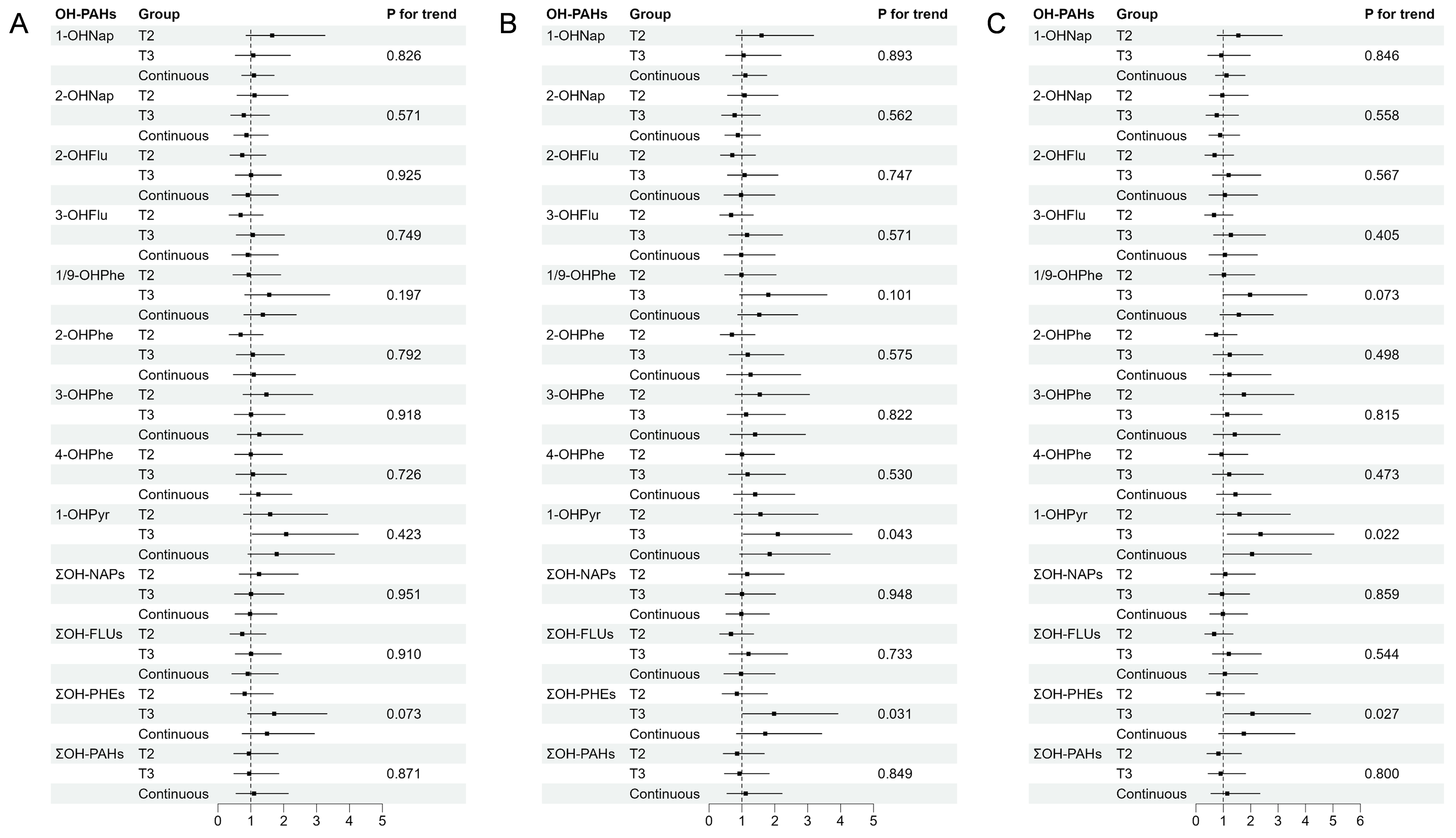
Figure 2. The association between urinary OH-PAHs and anxiety symptoms. (A) crude model; (B) the model adjusted for age and sex; (C) the model adjusted for age, sex, marital status, educational level, BMI, exercise, smoking status, and drinking. OH-PAHs: Hydroxylated polycyclic aromatic hydrocarbons; BMI: body-mass index; 1-OHNap: 1-hydroxynaphthalene; 2-OHNap: 2-hydroxynaphthalene; 2-OHFlu: 2-hydroxyfluorene; 3-OHFlu: 3-hydroxyfluorene; 1/9-OHPhe: 1/9-hydroxyphenanthrene; 2-OHPhe: 2-hydroxyphenanthrene; 3-OHPhe: 3-hydroxyphenanthrene; 4-OHPhe: 4-hydroxyphenanthrene; 1-OHPyr: 1-hydroxypyrene; ΣOH-NAPs: sum of 1-OHNap and 2-OHNap; ΣOH-FLUs: sum of 2-OHFlu and 3-OHFlu; ΣOH-PHEs: sum of 1/9-OHPhe, 2-OHPhe, 3-OHPhe, and 4-OHPhe; ΣOH-PAHs: total sum of all nine urinary OH-PAH metabolites.
Machine learning model-based feature contribution to anxiety and depressive symptoms
Cross-validated average performance metrics suggested that XGBoost outperformed RF for both anxiety and depressive symptom outcomes. For anxiety symptoms, the cross-validated average AUC was 0.752 for XGBoost [Figure 3A] vs. 0.713 for RF, with an F1-score of 0.723 vs. 0.467. For depressive symptoms, the cross-validated average AUC was 0.768 for XGBoost vs. 0.710 for RF, with an F1-score of 0.729 vs. 0.426. Given its superior performance, XGBoost was chosen for subsequent SHAP-based feature-importance analysis. SHAP values were applied to quantify the marginal contribution of each urinary PAH metabolite to individual prevalent anxiety-symptom status for model interpretability. Figure 3B shows gain-based feature importance derived from XGBoost training splitting. Figure 3C (SHAP beeswarm plot) shows both global feature ranking and individual-level exposure–outcome effects, with features sorted by descending mean absolute SHAP values to compare overall predictive importance. Both SHAP importance ranking and the beeswarm plot revealed that 1-OHPyr and 1/9-OHPhe exerted the strongest predictive effects on prevalent anxiety-symptom status. For depressive symptoms, 1-OHPyr remained among the top five influential metabolites [Supplementary Figure 2]. These SHAP values represent model-based feature-contribution estimates for exploratory feature-ranking purposes and should not be interpreted as evidence of causal effects.
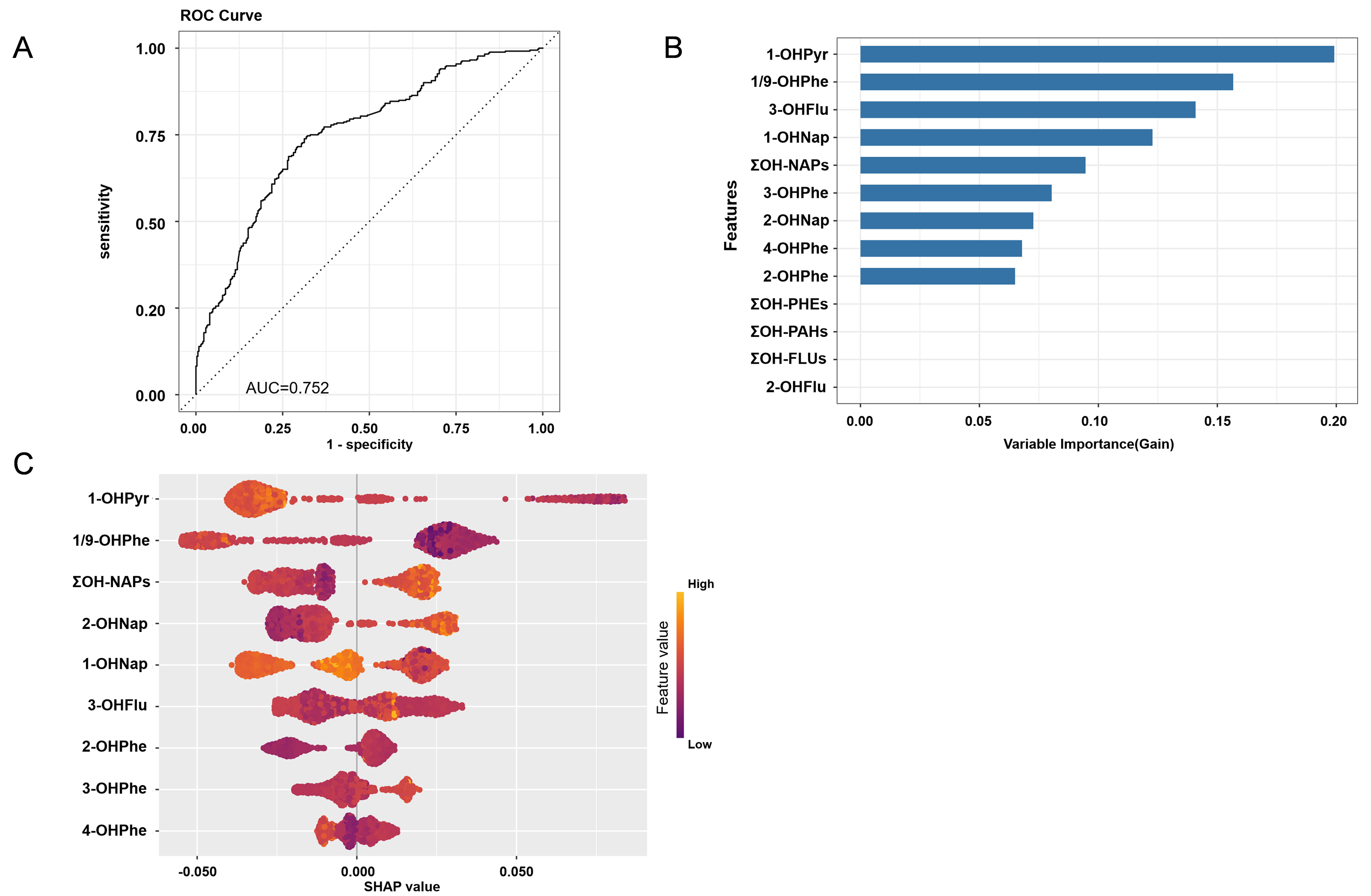
Figure 3. Predictive performance and feature contribution of the XGBoost model for anxiety symptoms. (A) ROC curve for prediction of anxiety symptoms; (B) Gain-based variable importance bar plot derived from XGBoost training; (C) SHAP beeswarm plot showing marginal effects of OH-PAH metabolites on prevalent anxiety-symptom status. Each dot represents one participant, colored by pollutant exposure level (red = high, blue = low); horizontal SHAP values indicate elevated (positive) or reduced (negative) odds for prevalent anxiety symptoms, with features ordered by mean absolute SHAP values. XGBoost: extreme gradient boosting; ROC: receiver operating characteristic; SHAP: SHapley Additive exPlanations; OH-PAH: hydroxylated polycyclic aromatic hydrocarbon; AUC: area under the receiver operating characteristic (ROC) curve; 1-OHPyr: 1-hydroxypyrene; 1/9-OHPhe: 1/9-hydroxyphenanthrene; 3-OHFlu: 3-hydroxyfluorene; 1-OHNap: 1-hydroxynaphthalene; ΣOH-NAPs: sum of 1-OHNap and 2-OHNap; 3-OHPhe: 3-hydroxyphenanthrene; 2-OHNap: 2-hydroxynaphthalene; 4-OHPhe: 4-hydroxyphenanthrene; 2-OHPhe: 2-hydroxyphenanthrene; ΣOH-PHEs: sum of 1/9-OHPhe, 2-OHPhe, 3-OHPhe, and 4-OHPhe; ΣOH-PAHs: total sum of all nine urinary OH-PAH metabolites; ΣOH-FLUs: sum of 2-OHFlu and 3-OHFlu; 2-OHFlu: 2-hydroxyfluorene; 1-OHNap: 1-hydroxynaphthalene.
Urinary OH-PAHs levels and mental disorders (depressive and anxiety symptoms) nonlinear correlation
RCS was used to examine the dose-response relationships between OH-PAHs concentrations and anxiety and depressive symptoms and their respective scores. After BMI stratification, a statistically significant “U-shaped” nonlinear association was identified between 1/9-OHPhe and continuous HAMA scores in the non-overweight subgroup (P for nonlinearity = 0.008) [Figure 4A], and a comparable U-shaped pattern was also observed for the association between 1/9-OHPhe and prevalent anxiety symptoms (P for nonlinearity = 0.037) [Supplementary Figure 3]. In the overall population, no significant non-linear association was detected between 1-OHPyr and HAMA scores (P for nonlinearity = 0.107); the overall association was statistically significant (P for overall = 0.034) [Figure 4B]. However, no significant association was found between 1-OHPyr and prevalent anxiety symptoms [Supplementary Figure 3]. Furthermore, no significant nonlinear associations were detected between 1/9-OHPhe or 1-OHPyr and GDS scores or depressive symptoms in the RCS analyses.
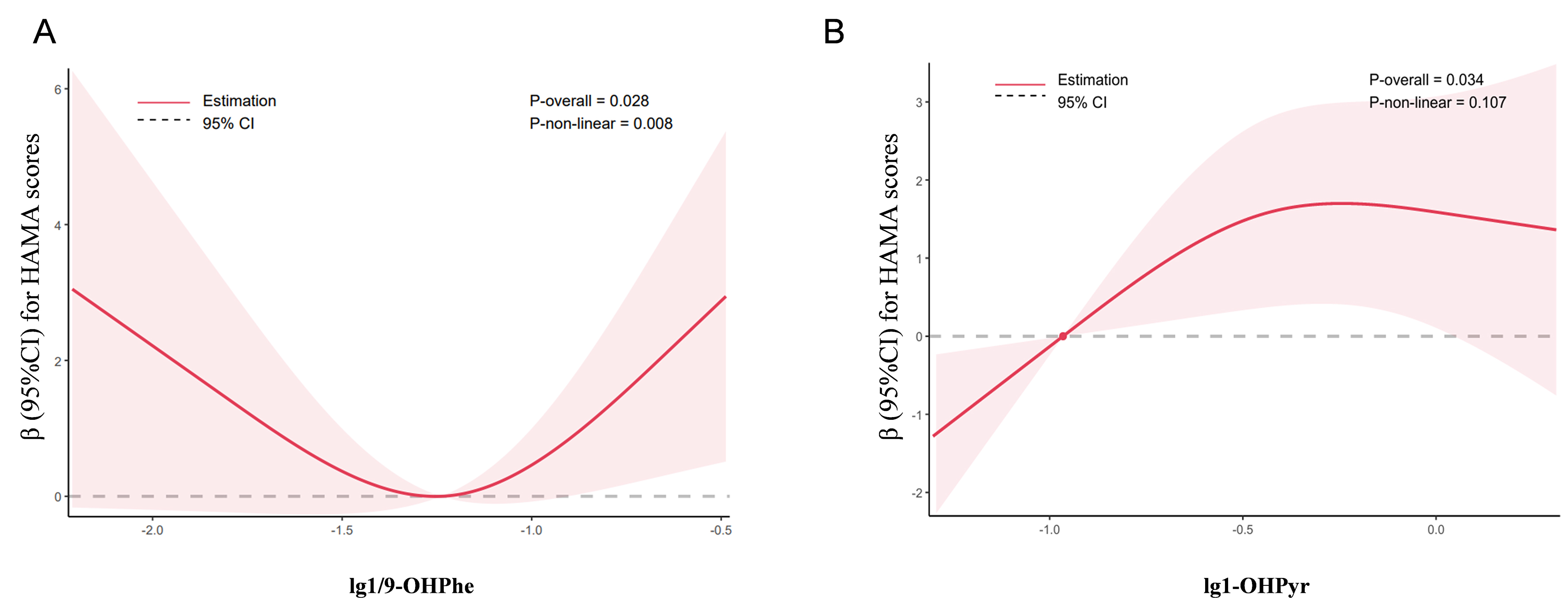
Figure 4. RCS analysis of the associations between urinary OH-PAHs and HAMA scores. (A) Dose-response relationship between 1/9-OHPhe and HAMA scores in the non-overweight subgroup after BMI stratification; models were adjusted for age, sex, marital status, educational level, exercise, smoking status, and drinking; (B) Dose-response relationship between 1-OHPyr and HAMA scores in the overall population; models were adjusted for age, sex, marital status, educational level, BMI, exercise, smoking status, and drinking. Shaded areas indicate 95%CIs for the fitted dose-response curves. RCS: Restricted cubic spline; OH-PAHs: hydroxylated polycyclic aromatic hydrocarbons; HAMA: Hamilton Anxiety Scale; 1/9-OHPhe: 1/9-hydroxyphenanthrene; BMI: body-mass index; 1-OHPyr: 1-hydroxypyrene; CIs: confidence intervals.
Mixed exposure analysis
To assess the joint influence of concurrent OH-PAH exposure on depression and anxiety outcomes, the BKMR framework was employed. The overall relationship between the mixture of OH-PAHs and the odds of prevalent anxiety symptoms is depicted in Figure 5. In the BKMR analysis, the overall association between the OH-PAH mixture and prevalent anxiety symptoms increased across the exposure range (OR from 0.849 at the 25th percentile to 1.166 at the 75th percentile) and became statistically significant at the 55th percentile (OR = 1.044, 95%CI: 1.007, 1.082), indicating a modest positive overall effect at higher exposure percentiles. With the remaining OH-PAHs held constant at their 25th percentile, 1-OHPyr showed a notable positive association with prevalent anxiety symptoms (OR = 1.290, 95%CI: 1.020, 1.620). In contrast, when the other metabolites were held at their median levels, 1/9-OHPhe exhibited a pronounced negative association with prevalent anxiety symptoms (OR = 0.652, 95%CI: 0.549, 0.774). The overall joint effect analysis revealed no significant dose-response trends for depressive symptoms and HAMA and GDS scores
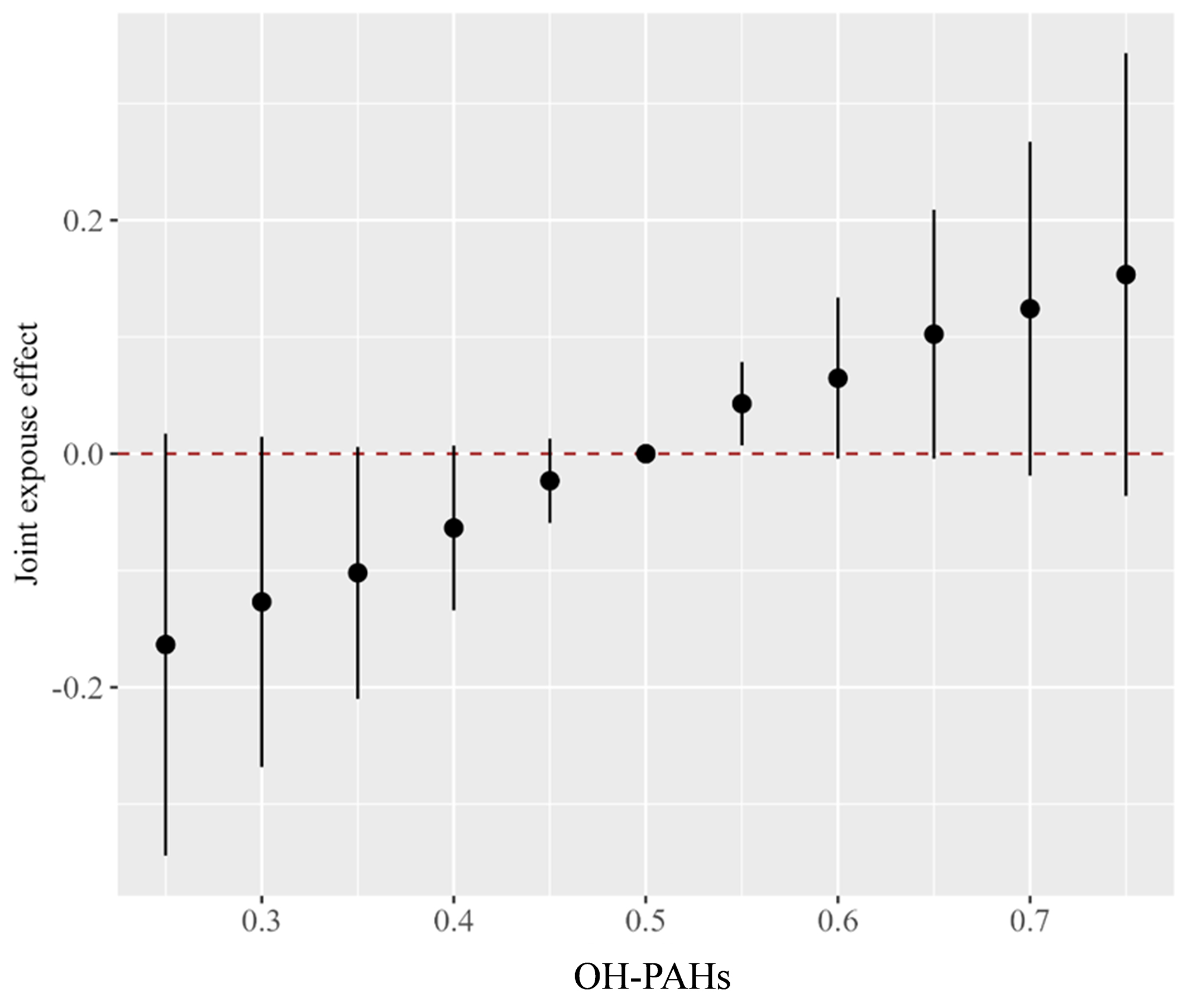
Figure 5. Assessing the combined effects of OH-PAHs on anxiety symptoms using the BKMR model. Models were adjusted for age, sex, marital status, educational level, BMI, exercise, smoking status, and drinking. OH-PAHs: Hydroxylated polycyclic aromatic hydrocarbons; BKMR: Bayesian kernel machine regression; BMI: body-mass index.
Stratified analysis and sensitivity analysis
In sex-stratified logistic regression, elevated urinary 1-OHPyr was significantly associated with higher odds of prevalent depressive symptoms in females (OR = 2.506, 95%CI: 1.038, 6.463, P = 0.048), while high 3-OHPhe (T2) was linked to higher odds of prevalent anxiety symptoms in females (OR = 2.904, 95%CI: 1.095, 8.264, P = 0.037) [Supplementary Tables 6 and 7]. Consistently, similar trends were observed in multiple linear regression models with HAMA and GDS scores as continuous outcomes [Supplementary Tables 8 and 9], though 1-OHPyr only showed marginal significance for GDS scores (β = 0.753, 95%CI: -0.030, 1.535, P = 0.061; P for trend = 0.063).
For BMI-stratified logistic regression, participants were categorized into overweight and non-overweight subgroups. In the non-overweight group, elevated 1-OHPyr exposure was significantly associated with higher odds of prevalent anxiety symptoms (OR = 3.224, 95%CI: 1.079, 10.663, P = 0.043) with a significant linear trend (P for trend < 0.05). In addition, urinary 1/9-OHPhe presented a significant interaction with BMI for anxiety symptoms (Pint = 0.002), and 1/9-OHPhe (Pint = 0.005) and 4-OHPhe (Pint = 0.040) both showed significant interactions with BMI on HAMA scores [Supplementary Tables 10-13]. Similar trends were also observed in multiple linear regression models based on HAMA and GDS scores.
In the sensitivity analysis, after excluding outliers, we re-examined the relationships between OH-PAHs and depressive and anxiety symptoms and their corresponding scores. The results showed that in the model based on the HAMA score, 3-OHPhe (T2) concentration was significantly positively correlated with HAMA score (β = 1.590, 95%CI: 0.052, 3.128, P = 0.043) (P for trend = 0.792). In the model with GDS score as the result, 1-OHPyr was also significantly positively correlated with an increase in GDS score (β = 0.762, 95%CI: 0.047, 1.476, P = 0.037) (P for trend = 0.298). The remaining results were broadly consistent with our initial findings [Supplementary Tables 14-17].
The moderation effects of BMI
Significant BMI-metabolite interactions were identified for 2-OHPhe and 3-OHPhe when OH-PAHs were treated as continuous variables, as well as for 1/9-OHPhe and 4-OHPhe when metabolites were entered as tertile-categorical predictors. Since Johnson-Neyman analysis requires continuous predictors, Johnson-Neyman plots [Figure 6] were generated using fully continuous BMI values. Prior to the interaction modeling for Johnson-Neyman computation, BMI was Z-score standardized for numerical stability, and resulting critical thresholds were back-transformed to original BMI units for reporting. Specifically, regarding their associations with anxiety scores: a significant positive correlation was observed between higher concentrations of 2-OHPhe and increased anxiety scores in individuals with BMI ≤ 21.78. A similar positive association for 3-OHPhe was seen among participants with BMI ≤ 23.05. These numerical BMI cut-points represent statistical thresholds where the exposure-outcome association crosses the significance level, rather than manually defined categorical group boundaries. While the Johnson-Neyman analysis indicated sign reversal at BMI ≥ 32.40 (for 2-OHPhe) and BMI ≥ 39.31 (for 3-OHPhe), these high-BMI intervals contained very few observations (n = 9 for BMI ≥ 32.40, n = 1 for BMI ≥ 39.31). Estimates within these upper BMI ranges represent statistical extrapolation and should be interpreted with great caution and are not treated as robust subgroup findings. Notably, when prevalent anxiety symptoms were considered, no significant BMI-moderating effect of the OH-PAH associations was observed for 2-OHPhe or 3-OHPhe, as illustrated in Supplementary Figure 9.
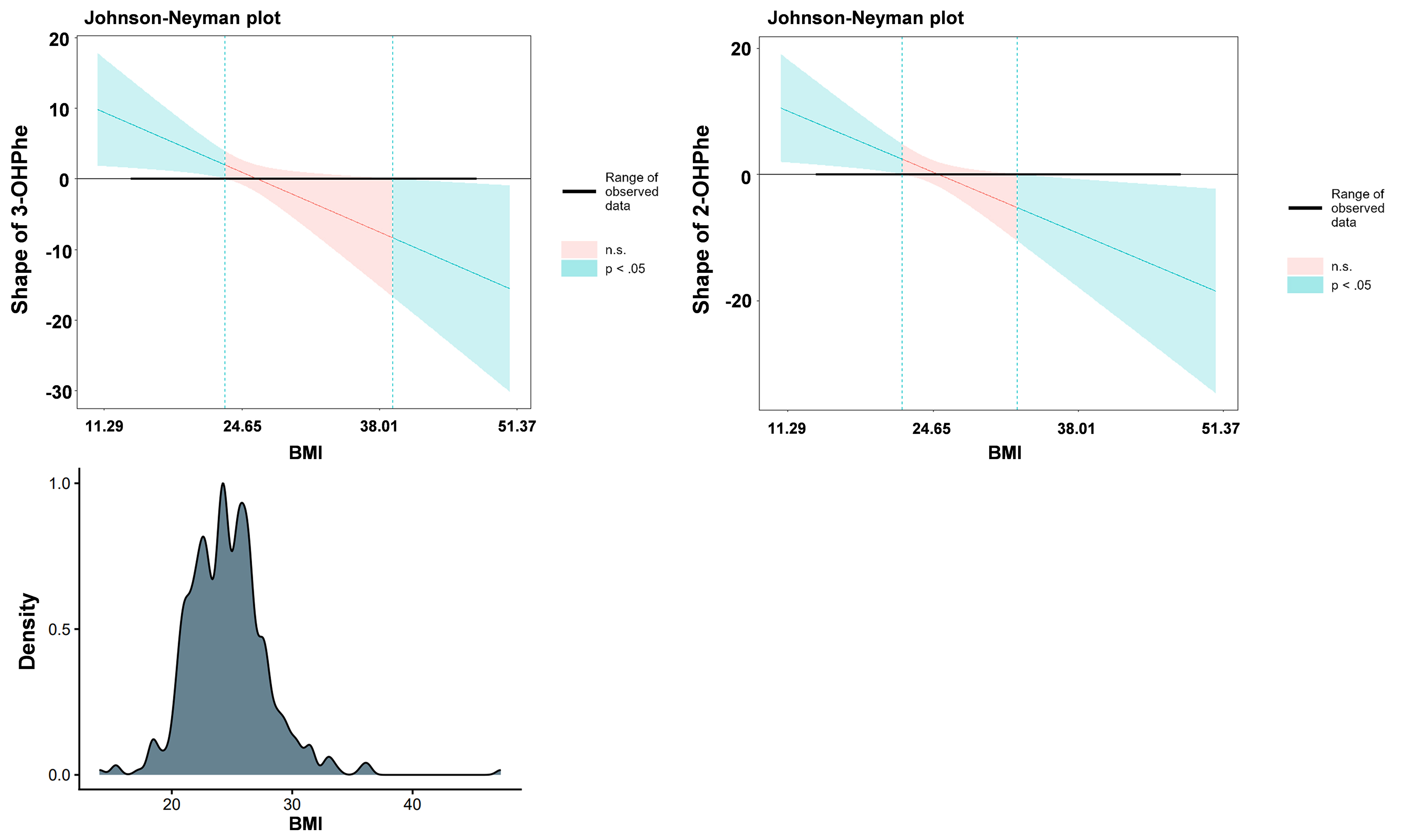
Figure 6. BMI moderates the relationship between urinary OH-PAHs and HAMA scores. Models were adjusted for age, sex, marital status, educational level, BMI, exercise, smoking status, and drinking. The lower panel displays a density plot illustrating the distribution of observed BMI values among study participants. BMI: Body-mass index; OH-PAHs: hydroxylated polycyclic aromatic hydrocarbons; HAMA: Hamilton Anxiety Scale; 3-OHPhe: 3-hydroxyphenanthrene; 2-OHPhe: 2-hydroxyphenanthrene.
Discussion
This study demonstrated that urinary ΣOH-PHEs and 1-OHPyr were associated with higher odds of prevalent anxiety symptoms in the overall older-adult study population. No statistically significant association between 1-OHPyr and depressive symptoms was observed in the full cohort, although a suggestive marginal trend was present, and a statistically significant association was detected only among female participants. These associations exhibited sex-specific heterogeneity: the associations of 1-OHPyr with depression and 3-OHPhe with anxiety were observed exclusively in females. Additionally, the association between 1-OHPyr and anxiety was observed only in non-overweight participants. BKMR indicated higher odds of prevalent anxiety symptoms at higher percentiles of the OH-PAH mixture, whereas QGC did not yield a statistically significant overall mixture effect for anxiety or depressive symptoms. Despite the non-significant overall mixture effect in QGC, 1-OHPyr stood out as the leading positive contributor to mixture-related effects. To our knowledge, this is the first study of its kind to center on older adults and simultaneously investigate the associations between OH-PAH exposure and both depressive and anxiety symptoms (and their respective scale scores). It circumvents the one-sidedness of single-outcome research, comprehensively captures the multidimensional mental health impacts of OH-PAH exposure in older adults, and addresses the critical gap in existing literature left by isolated investigations into individual symptoms in this population.
Our study demonstrated that elevated urinary 1-OHPyr and ΣOH-PHEs concentrations were associated with higher odds of prevalent anxiety symptoms in older adults. Similar results have been found in other populations. As one illustration, a cross-sectional investigation drew on data collected from 4,026 adults aged 20 or above within the National Health and Nutrition Examination Survey (NHANES) spanning 2007 to 2012, and examined how exposure to OH-PAHs was related to anxiety. The results revealed that 1-OHPyr exhibited a significant nonlinear association with anxiety, while mixed OH-PAH exposure was positively correlated with anxiety - with 1-OHNap and 3-OHFlu as the primary contributors to the joint effect[55]. Meanwhile, two other studies based on the NHANES database have both established an association between PAH exposure and depression in US adults[33,35] and reported that the highest quartiles of six PAH metabolites were linked to an elevated risk of depressive symptoms both in the crude model and after adjusting for age and sex[35]. However, in older adults, there are currently no reports on the association between exposure to PAHs and depressive and anxiety symptoms. In the future, more prospective cohort studies need to be conducted to further explore their potential health impacts.
The biological mechanisms linking PAH exposure to depressive and anxiety symptoms remain incompletely understood. Toxicological evidence suggests that PAHs may affect mental health through multiple interrelated pathways[57,58]. For instance, chronic PAH exposure can disrupt cerebral metabolism, particularly lipid and fatty acid metabolism, leading to anxiety- and depression-like behaviors in mouse models[8]. Exposure to PAHs can also induce oxidative stress, characterized by increased production of reactive oxygen species and impaired antioxidant defense systems, which may result in DNA damage and contribute to the development of depression[58-60]. Alterations in neurotransmitter regulation have also been implicated in PAH-induced neurotoxicity[9]. Furthermore, PAH exposure can trigger neuroinflammatory responses, including the upregulation of pro-inflammatory cytokines in the brain, and inflammation is increasingly recognized as a key mechanism underlying depressive and anxiety symptoms[57,61-64].
Stratified logistic regression and multiple linear regression analyses showed that in female participants, elevated 1-OHPyr levels were significantly associated with higher odds of prevalent depressive symptoms, while high 3-OHPhe concentrations were significantly correlated with higher odds of prevalent anxiety symptoms. Existing studies have confirmed that women are more susceptible to depression and anxiety than men, which can be attributed to physiological and social factors. Physiologically, women show stronger amygdala activation in response to negative emotional stimuli, resulting in poorer emotional regulation[65,66]. In addition, estrogen modulates GABAergic neurons in the medial preoptic area, indirectly increasing women’s vulnerability to anxiety and depression[67]. Socially, women suffer more from work-family conflict and cumulative disadvantages[68], while lacking sufficient decision-making power in families and the labor market[69], which further impairs their mental health. Therefore, women may be more sensitive to the adverse effects of PAH exposure. This explains our subgroup analysis finding that 1-OHPyr was significantly associated with depressive symptoms only in females.
Our study findings indicate significant BMI-exposure interactions for several phenanthrene-derived OH-PAH metabolites with respect to HAMA scores; these interaction findings should be regarded as exploratory. Among these metabolites, 2-OHPhe and 3-OHPhe were further subjected to Johnson-Neyman analysis given their statistically significant continuous-scale interaction terms. Note that the higher BMI critical thresholds, above which the model points toward a protective-direction effect, should be interpreted cautiously, as very few participants fall within those high-BMI ranges. In the BMI-stratified analyses, elevated 1-OHPyr levels were significantly associated with higher odds of prevalent anxiety symptoms with a notable linear trend; this represents an exploratory stratified observation and should not be interpreted as evidence that BMI modulates the 1-OHPyr–anxiety association. Jin et al. reported that when investigating the association between PAH exposure and asthma, only in subjects with BMI ≥ 30 were 1-OHNap, 2-OHNap, and 1-OHPyr significantly associated with asthma[70]. Meanwhile, Peris-Camarasa et al. found that high BMI was associated with increased urinary PAH concentrations[71]. Peng et al. provide a plausible explanation for these observations, asserting that obesity may influence the urinary concentrations of PAH biomarkers due to the lipophilic nature of PAHs[72]. In contrast, Chen et al. demonstrated that higher BMI was associated with reduced urinary 1-OHPyr excretion in highly exposed Chinese coke oven workers, which may be explained by increased pyrene storage in adipose tissue, leading to less pyrene being metabolized to 1-OHPyr[73]. Thus, a plausible explanation for our findings is as follows: First, PAHs are typical lipophilic environmental pollutants with low water solubility and high affinity for adipose tissue[74]. After entering the body, lipophilic PAHs preferentially accumulate in adipose tissue, reducing their free concentrations in blood; because the adipose tissue compartment is larger in obese individuals, this in vivo dilution is more pronounced and further lowers their effective exposure levels[75-77], thereby alleviating neurotoxicity to brain regions related to emotional regulation. Second, obesity-associated changes in renal hemodynamics (e.g., glomerular hyperfiltration) can alter the urinary excretion kinetics of PAHs, affecting the urinary concentrations of PAH metabolites and potentially introducing bias into the correlation analysis[78,79]. Third, obesity can be characterized as a chronic, low-grade inflammatory condition. In this state, adipose tissue releases pro-inflammatory cytokines such as tumor necrosis factor-alpha (TNF-α) and interleukin-6 (IL-6), which are capable of crossing the blood–brain barrier and thereby contributing to the onset or worsening of anxiety and depression[80-82], which may confound the association between PAH exposure and psychological symptoms. Collectively, the regulatory effect of BMI on the association between PAH exposure and depressive or anxiety symptoms in older adults is attributed to the combined effects of lipophilic accumulation, dilution and altered excretion kinetics, and obesity-related low-grade inflammation.
Strengths and limitations
Our study has several notable methodological strengths. First, it uniquely focuses on older adults, a key population vulnerable to OH-PAH exposure. To our knowledge, it is the first study of its kind to concurrently assess two prevalent mental health outcomes (depressive and anxiety symptoms), quantified by HAMA and GDS scores, alongside pre-planned sex- and BMI-stratified analyses. This design, which centers on the understudied older adult population and abandons the sole focus on a single mental health outcome, affords a comprehensive understanding of the OH-PAHs–geriatric mental health associations and enables the identification of potential heterogeneity in these associations across sex and BMI subgroups.
Nevertheless, several limitations of this study should be acknowledged. The cross-sectional design precludes causal inferences between OH-PAH exposure and depressive or anxiety symptoms in older adults. Dietary intake, the primary non-occupational route of PAH exposure, was not assessed, and its association with both exposure and mental health could introduce residual confounding. Multimorbidity and psychotropic medication use, prevalent among older adults, were likewise not accounted for and may influence OH-PAH metabolism and symptom presentation. Moreover, urinary OH-PAHs were measured from a single spot urine sample and, owing to their short biological half-life, reflect recent rather than cumulative exposure; such a single measurement may show considerable within-person variability and imperfect temporal alignment with symptom assessment (GDS reflecting the preceding week, HAMA reflecting current severity). The resulting non-differential exposure misclassification and temporal misalignment would tend to attenuate the observed associations toward the null. In addition, reverse causality cannot be excluded, as depressive or anxiety symptoms may themselves alter exposure-related behaviors (e.g., diet, cooking practices, outdoor time). The observed associations should therefore be interpreted as correlational rather than causal. Future prospective studies incorporating dietary assessment, comorbidity and medication information, and repeated exposure measurements are warranted to clarify these relationships.
CONCLUSIONS
In conclusion, this study provides evidence that exposure to 1-OHPyr and ΣOH-PHEs is associated with higher odds of prevalent anxiety symptoms among the overall older-adult participants. Associations of 3-OHPhe with anxiety and 1-OHPyr with depressive symptoms were observed only among female participants, with no corresponding significant associations detected in the overall cohort. We observed a significant interaction between 1/9-OHPhe and BMI for prevalent anxiety symptoms, and a stronger 1-OHPyr–anxiety association in non-overweight participants; these stratified findings are exploratory and do not constitute evidence of BMI effect modification. In addition, BMI modified the associations between 2-OHPhe and 3-OHPhe and HAMA scores, which were stronger at lower BMI and attenuated at higher BMI, although the higher-BMI estimates reflect statistical extrapolation and warrant cautious interpretation. This highlights the importance of considering individual susceptibility in environmental mental health research. Because of the exploratory nature of this study, the statistically significant associations should be interpreted cautiously and regarded as hypothesis-generating. Future prospective cohort studies are warranted to confirm these findings and to further elucidate the mechanisms underlying the associations between PAH exposure and mental health outcomes.
DECLARATIONS
Authors’ contributions
Writing - original draft, methodology, software, formal analysis, visualization: Liu, J.
Formal analysis, visualization: Gao, Y.
Writing - review and editing: Li, J.; Zhao, H.
Formal analysis, visualization: Wang, B.
Data curation, visualization: Zhu, Z.
Methodology, data curation: Peng, Y.
Data curation: Cheng, L.
Validation: Zeng, H.
Conceptualization, methodology, data curation, writing - review and editing, supervision, project administration: Li, H.
Availability of data and materials
The raw datasets generated and analyzed during the current study contain sensitive individual human participant information, which cannot be publicly released due to ethical restrictions and participant confidentiality requirements. De-identified aggregated data are available from the corresponding author upon reasonable request and subject to formal approval of a data access application.
AI and AI-assisted tools statement
Not applicable.
Financial support and sponsorship
This work was funded by the National Natural Science Foundation of China (No. 42267066), the Foundation of Guangxi Key Laboratory of Environmental Exposomics and Entire Lifecycle Health (2024-GKLEH-01), Nanshan Medical Key Discipline Construction Funding (Noninfectious Chronic Disease), Shenzhen Science and Technology Program (JCYJ20250604190101003).
Conflicts of interest
Li, H. is a Junior Editorial Board Member of the Journal of Environmental Exposure Assessment. Li, H. was not involved in any steps of editorial processing, notably including reviewer selection, manuscript handling, and decision-making. The other authors declare no conflicts of interest.
Ethical approval and consent to participate
This study was approved by the Ethics Review Committee of the Shenzhen Nanshan Center for Chronic Disease Control (Approval No. II20210003 and No. II20220015). All participants provided written informed consent before enrollment. All personally identifiable information was fully anonymized, and individual names will not be published in this manuscript.
Consent for publication
Not applicable.
Copyright
© The Author(s) 2026.
Supplementary Materials
REFERENCES
1. Lin, Y. C.; Li, Y. C.; Shangdiar, S.; Chou, F. C.; Sheu, Y. T.; Cheng, P. C. Assessment of PM2.5 and PAH content in PM2.5 emitted from mobile source gasoline-fueled vehicles in concomitant with the vehicle model and mileages. Chemosphere 2019, 226, 502-8.
2. Reizer, E.; Viskolcz, B.; Fiser, B. Formation and growth mechanisms of polycyclic aromatic hydrocarbons: a mini-review. Chemosphere 2022, 291, 132793.
3. Attanayake, C. P.; Hettiarachchi, G. M.; Martin, S.; Pierzynski, G. M. Potential bioavailability of lead, arsenic, and polycyclic aromatic hydrocarbons in compost-amended urban soils. J Environ Qual 2015, 44, 930-44.
4. Gholizadah, S.; Mohammadi, R.; Soleimani, D.; et al. Polycyclic aromatic hydrocarbons in grilled foods from Kermanshah province. Food Addit Contam Part B Surveill 2021, 14, 287-94.
5. Singh, L.; Varshney, J. G.; Agarwal, T. Polycyclic aromatic hydrocarbons’ formation and occurrence in processed food. Food Chem 2016, 199, 768-81.
6. White, A. J.; Bradshaw, P. T.; Herring, A. H.; et al. Exposure to multiple sources of polycyclic aromatic hydrocarbons and breast cancer incidence. Environ Int 2016, 89-90, 185-92.
7. Brandt, H. C.; Watson, W. P. Monitoring human occupational and environmental exposures to polycyclic aromatic compounds. Ann Occup Hyg 2003, 47, 349-78.
8. Li, F.; Xie, L.; Xiao, Q.; et al. Benzo[a]pyrene exposure induces anxiety-like behaviors in the mice through brain metabolic alterations. Sci Total Environ 2024, 954, 176215.
9. Xia, Y.; Cheng, S.; He, J.; et al. Effects of subchronic exposure to benzo[a]pyrene (B[a]P) on learning and memory, and neurotransmitters in male Sprague-Dawley rat. Neurotoxicology 2011, 32, 188-98.
10. Liu, Q.; Wang, B.; Wang, Y.; Wang, J.; Xu, Y.; Min, X. Mechanisms by which PM2.5-PAHs drive neurodevelopmental co-morbidities across the placental-blood-brain barrier: a network toxicology analysis. Ecotoxicol Environ Saf 2025, 306, 119306.
11. Fang, Y.; Gong, A. Y.; Haller, S. T.; Dworkin, L. D.; Liu, Z.; Gong, R. The ageing kidney: molecular mechanisms and clinical implications. Ageing Res Rev 2020, 63, 101151.
12. Hommos, M. S.; Glassock, R. J.; Rule, A. D. Structural and functional changes in human kidneys with healthy aging. J Am Soc Nephrol 2017, 28, 2838-44.
13. Liu, L.; Yuan, X.; Ni, W.; et al. Long-term exposure to low-level ambient air pollution and mortality among 0.3 million Chinese older adults. Biomed Environ Sci 2024, 37, 1362-72.
14. Shi, W.; Li, T.; Zhang, Y.; et al. Association of ambient ozone exposure with anxiety and depression among middle-aged and older adults in China: exploring modification by high temperature. Environ Res Lett 2022, 17, 054010.
15. Fang, E. F.; Fang, Y.; Chen, G.; et al. Adapting health, economic and social policies to address population aging in China. Nat Aging 2025, 5, 2176-87.
16. Huang, Y.; Wang, Y.; Wang, H.; et al. Prevalence of mental disorders in China: a cross-sectional epidemiological study. Lancet Psychiatry 2019, 6, 211-24.
17. Fang, E. F.; Scheibye-Knudsen, M.; Jahn, H. J.; et al. A research agenda for aging in China in the 21st century. Ageing Res Rev 2015, 24, 197-205.
18. Zhou, P.; Wang, S.; Yan, Y.; et al. Association between chronic diseases and depression in the middle-aged and older adult Chinese population-a seven-year follow-up study based on CHARLS. Front Public Health 2023, 11, 1176669.
19. Yunming, L.; Changsheng, C.; Haibo, T.; et al. Prevalence and risk factors for depression in older people in Xi’an China: a community-based study. Int J Geriatr Psychiatry 2012, 27, 31-9.
20. Ma, Y.; Xiang, Q.; Yan, C.; Liao, H.; Wang, J. Relationship between chronic diseases and depression: the mediating effect of pain. BMC Psychiatry 2021, 21, 436.
21. Fang, M.; Mirutse, G.; Guo, L.; Ma, X. Role of socioeconomic status and housing conditions in geriatric depression in rural China: a cross-sectional study. BMJ Open 2019, 9, e024046.
22. Koskinen, M. K.; Hovatta, I. Genetic insights into the neurobiology of anxiety. Trends Neurosci 2023, 46, 318-31.
23. Kris-Etherton, P. M.; Petersen, K. S.; Hibbeln, J. R.; et al. Nutrition and behavioral health disorders: depression and anxiety. Nutr Rev 2021, 79, 247-60.
24. McElhany, K.; Aggarwal, S.; Wood, G.; Beauchamp, J. Protective and harmful social and psychological factors associated with mood and anxiety disorders in perimenopausal women: a narrative review. Maturitas 2024, 190, 108118.
25. Rautio, N.; Filatova, S.; Lehtiniemi, H.; Miettunen, J. Living environment and its relationship to depressive mood: a systematic review. Int J Soc Psychiatry 2018, 64, 92-103.
26. Yang, T.; Wang, J.; Huang, J.; Kelly, F. J.; Li, G. Long-term exposure to multiple ambient air pollutants and association with incident depression and anxiety. JAMA Psychiatry 2023, 80, 305-13.
27. Wray, N. R.; Ripke, S.; Mattheisen, M.; et al.; eQTLGen, 23andMe, Major Depressive Disorder Working Group of the Psychiatric Genomics Consortium. Genome-wide association analyses identify 44 risk variants and refine the genetic architecture of major depression. Nat Genet 2018, 50, 668-81.
28. Braithwaite, I.; Zhang, S.; Kirkbride, J. B.; Osborn, D. P. J.; Hayes, J. F. Air pollution (particulate matter) exposure and associations with depression, anxiety, bipolar, psychosis and suicide risk: a systematic review and meta-analysis. Environ Health Perspect 2019, 127, 126002.
29. Fan, S. J.; Heinrich, J.; Bloom, M. S.; et al. Ambient air pollution and depression: a systematic review with meta-analysis up to 2019. Sci Total Environ 2020, 701, 134721.
30. Guo, J.; Garshick, E.; Si, F.; et al. Environmental toxicant exposure and depressive symptoms. JAMA Netw Open 2024, 7, e2420259.
31. Niedzwiecki, M. M.; Rosa, M. J.; Solano-González, M.; et al. Particulate air pollution exposure during pregnancy and postpartum depression symptoms in women in Mexico City. Environ Int 2020, 134, 105325.
32. Vert, C.; Sánchez-Benavides, G.; Martínez, D.; et al. Effect of long-term exposure to air pollution on anxiety and depression in adults: a cross-sectional study. Int J Hyg Environ Health 2017, 220, 1074-80.
33. Rahman, H. H.; Niemann, D.; Munson-McGee, S. H. Association among urinary polycyclic aromatic hydrocarbons and depression: a cross-sectional study from NHANES 2015-2016. Environ Sci Pollut Res Int 2022, 29, 13089-97.
34. Shiue, I. Urinary heavy metals, phthalates and polyaromatic hydrocarbons independent of health events are associated with adult depression: USA NHANES, 2011-2012. Environ Sci Pollut Res Int 2015, 22, 17095-103.
35. Zhang, L.; Sun, J.; Zhang, D. The relationship between urine polycyclic aromatic hydrocarbons and depressive symptoms in American adults. J Affect Disord 2021, 292, 227-33.
36. Margolis, A. E.; Herbstman, J. B.; Davis, K. S.; et al. Longitudinal effects of prenatal exposure to air pollutants on self-regulatory capacities and social competence. J Child Psychol Psychiatry 2016, 57, 851-60.
37. Perera, F. P.; Tang, D.; Wang, S.; et al. Prenatal polycyclic aromatic hydrocarbon (PAH) exposure and child behavior at age 6-7 years. Environ Health Perspect 2012, 120, 921-6.
38. Perera, F. P.; Wang, S.; Vishnevetsky, J.; et al. Polycyclic aromatic hydrocarbons-aromatic DNA adducts in cord blood and behavior scores in New York city children. Environ Health Perspect 2011, 119, 1176-81.
39. Zhen, H.; Zhang, F.; Cheng, H.; et al. Association of polycyclic aromatic hydrocarbons exposure with child neurodevelopment and adult emotional disorders: a meta-analysis study. Ecotoxicol Environ Saf 2023, 255, 114770.
40. Zhen, H.; Jia, Y.; Zhu, B.; et al. Associations of polycyclic aromatic hydrocarbons exposure with perinatal anxiety symptoms. BMC Public Health 2025, 25, 1245.
41. DeSerisy, M.; Salas, L.; Akhundova, E.; et al. Polycyclic aromatic hydrocarbon exposure effects on trajectories of maternal and adolescent mental health. Child Adolesc Psychiatry Ment Health 2024, 18, 114.
42. Kim, S.; Carson, K. A.; Chien, A. L. The association between urinary polycyclic aromatic hydrocarbon metabolites and atopic triad by age and body weight in the US population. J Dermatolog Treat 2022, 33, 2488-94.
43. Gao, Y.; Wang, B.; Hua, L.; et al. Risk assessment and exposure patterns of hydroxypolycyclic aromatic hydrocarbons in elderly population: insights from urinary metabolite levels and dietary habits. J Environ Sci 2026, 163, 37-47.
44. Hua, L.; Guo, S.; Wang, Y.; Sun, H.; Zhao, H. Simultaneous determination of multiple isomeric hydroxylated polycyclic aromatic hydrocarbons in urine by using ultra-high performance liquid chromatography tandem mass spectrometry. J Chromatogr B Analyt Technol Biomed Life Sci 2021, 1184, 122983.
45. Hua, L.; Gao, Y.; Guo, S.; et al. Urinary metabolites of polycyclic aromatic hydrocarbons of rural population in Northwestern China: oxidative stress and health risk assessment. Environ Sci Technol 2024, 58, 7758-69.
46. Wang, X. Q.; Wang, Y. X.; Ye, Z. H.; Zhang, Z. L.; Pan, X.; Wang, X. C. The interrelationships among insomnia, frailty, anxiety, and cognitive function in middle-aged and older adults: a cross-sectional study. Front Psychiatry 2026, 17, 1783363.
48. Janati Idrissi, A.; Lamkaddem, A.; Benouajjit, A.; et al. Sleep quality and mental health in the context of COVID-19 pandemic and lockdown in Morocco. Sleep Med 2020, 74, 248-53.
49. Yesavage, J. A.; Brink, T. L.; Rose, T. L.; et al. Development and validation of a geriatric depression screening scale: a preliminary report. J Psychiatr Res 1982, 17, 37-49.
50. Ma, H.; Gao, X.; Chen, H.; et al. Depressive symptoms status and nighttime sleep duration in relation to cognitive performance in Chinese elderly: insights from a large cross-sectional inquiry. J Affect Disord 2026, 401, 121231.
51. Zhao, T.; Liu, R.; Han, Q.; et al. Associations of 24-hour movement behaviors with depressive symptoms in rural-dwelling older adults: a compositional data analysis. Aging Clin Exp Res 2024, 36, 165.
52. Guo, J.; Ye, K. X.; Lee, T. S.; et al. Depression, but not anxiety, is associated with epigenetic age accelerations among Asian older adults. Mol Psychiatry 2026, 31, 4690-8.
53. Dias, F. L. D. C.; Teixeira, A. L.; Guimarães, H. C.; et al. Accuracy of the 15-item Geriatric Depression Scale (GDS-15) in a community-dwelling oldest-old sample: the Pietà Study. Trends Psychiatry Psychother 2017, 39, 276-9.
54. Marc, L. G.; Raue, P. J.; Bruce, M. L. Screening performance of the 15-item geriatric depression scale in a diverse elderly home care population. Am J Geriatr Psychiatry 2008, 16, 914-21.
55. Cui, S.; Wu, J.; Li, X.; et al. Association between polycyclic aromatic hydrocarbons and anxiety in US adults: National Health and Nutrition Examination Survey (NHANES) 2007 to 2012. Medicine 2025, 104, e42900.
56. Drafting Committee of Chinese Consensus on Overweight/Obesity Medical Nutrition Therapy. Chinese consensus on overweight/obesity medical nutrition therapy (2016). Chin J Diabetes Mellitus 2016, 8, 525-40.
57. Dutta, K.; Ghosh, D.; Nazmi, A.; Kumawat, K. L.; Basu, A. A common carcinogen benzo[a]pyrene causes neuronal death in mouse via microglial activation. PLoS One 2010, 5, e9984.
58. Saunders, C. R.; Das, S. K.; Ramesh, A.; Shockley, D. C.; Mukherjee, S. Benzo(a)pyrene-induced acute neurotoxicity in the F-344 rat: role of oxidative stress. J Appl Toxicol 2006, 26, 427-38.
59. León-Mejía, G.; Quintana, M.; Debastiani, R.; et al. Genetic damage in coal miners evaluated by buccal micronucleus cytome assay. Ecotoxicol Environ Saf 2014, 107, 133-9.
60. Wei, Y.; Han, I. K.; Hu, M.; Shao, M.; Zhang, J. J.; Tang, X. Personal exposure to particulate PAHs and anthraquinone and oxidative DNA damages in humans. Chemosphere 2010, 81, 1280-5.
61. Jeon, S. W.; Kim, Y. K. Inflammation-induced depression: Its pathophysiology and therapeutic implications. J Neuroimmunol 2017, 313, 92-8.
62. Peirce, J. M.; Alviña, K. The role of inflammation and the gut microbiome in depression and anxiety. J Neurosci Res 2019, 97, 1223-41.
63. Qiu, J.; Liu, R.; Ma, Y.; et al. Lipopolysaccharide-induced depression-like behaviors is ameliorated by sodium butyrate via inhibiting neuroinflammation and oxido-nitrosative stress. Pharmacology 2020, 105, 550-60.
64. Cheng, Y. Y.; Yao, Q.; Miao, Y.; Guan, W. Metformin as a potential antidepressant: mechanisms and therapeutic insights in depression. Biochem Pharmacol 2025, 233, 116773.
65. Ohrmann, P.; Pedersen, A.; Braun, M.; et al. Effect of gender on processing threat-related stimuli in patients with panic disorder: sex does matter. Depress Anxiety 2010, 27, 1034-43.
66. Lungu, O.; Potvin, S.; Tikàsz, A.; Mendrek, A. Sex differences in effective fronto-limbic connectivity during negative emotion processing. Psychoneuroendocrinology 2015, 62, 180-8.
67. Tao, C.; Zhang, G. W.; Huang, J. J.; Li, Z.; Tao, H. W.; Zhang, L. I. The medial preoptic area mediates depressive-like behaviors induced by ovarian hormone withdrawal through distinct GABAergic projections. Nat Neurosci 2023, 26, 1529-40.
68. Homan, P. Structural sexism and health in the United States: a new perspective on health inequality and the gender system. Am Sociol Rev 2019, 84, 486-516.
69. Srivastava, N.; Anand, M. Understanding gender and mental health. In Gender and mental health. Anand, M.; Ed.; Singapore: Springer; 2020. pp. 3-17.
70. Jin, Z.; Sun, W.; Wang, G. Association between polycyclic aromatic hydrocarbons exposure and current asthma: a population-based study. BMC Public Health 2025, 25, 53.
71. Peris-Camarasa, B.; Pardo, O.; Fernández, S. F.; Dualde, P.; Coscollà, C. Risk assessment and predictors of the exposure to polycyclic aromatic hydrocarbons in Spanish adults by urinary human biomonitoring. Chemosphere 2024, 352, 141330.
72. Peng, M.; Lu, S.; Yu, Y.; et al. Urinary monohydroxylated polycyclic aromatic hydrocarbons in primiparas from Shenzhen, South China: Levels, risk factors, and oxidative stress. Environ Pollut 2020, 259, 113854.
73. Chen, B.; Hu, Y.; Zheng, L.; Wang, Q.; Zhou, Y.; Jin, T. Urinary 1-hydroxypyrene concentrations in Chinese coke oven workers relative to job category, respirator usage, and cigarette smoking. Am J Ind Med 2007, 50, 657-63.
74. Abdel-Shafy, H. I.; Mansour, M. S. A review on polycyclic aromatic hydrocarbons: source, environmental impact, effect on human health and remediation. Egypt J Pet 2016, 25, 107-23.
75. Pastor-Belda, M.; Campillo, N.; Arroyo-Manzanares, N.; et al. Bioaccumulation of polycyclic aromatic hydrocarbons for forensic assessment using gas chromatography-mass spectrometry. Chem Res Toxicol 2019, 32, 1680-8.
76. Zhang, Y.; Hu, Q.; Fu, J.; Li, X.; Mao, H.; Wang, T. Influence of exposure pathways on tissue distribution and health impact of polycyclic aromatic hydrocarbon derivatives. Environ Health 2023, 1, 150-67.
77. De Roos, A. J.; Ulrich, C. M.; Sjodin, A.; McTiernan, A. Adiposity, body composition, and weight change in relation to organochlorine pollutant plasma concentrations. J Expo Sci Environ Epidemiol 2012, 22, 617-24.
78. Gupta, H.; Bhandari, U. Molecular insight into obesity-associated nephropathy: clinical implications and possible strategies for its management. Curr Drug Targets 2025, 26, 188-202.
79. D’Agati, V. D.; Chagnac, A.; de Vries, A. P.; et al. Obesity-related glomerulopathy: clinical and pathologic characteristics and pathogenesis. Nat Rev Nephrol 2016, 12, 453-71.
80. Beurel, E.; Toups, M.; Nemeroff, C. B. The bidirectional relationship of depression and inflammation: double trouble. Neuron 2020, 107, 234-56.
81. Schleh, M. W.; Caslin, H. L.; Garcia, J. N.; et al. Metaflammation in obesity and its therapeutic targeting. Sci Transl Med 2023, 15, eadf9382.
Cite This Article
 Open Access
How to Cite
Liu, J.; Gao, Y.; Li, J.; Wang, B.; Zhu, Z.; Peng, Y.; Cheng, L.; Zeng, H.; Zhao, H.; Li, H. Urinary polycyclic aromatic hydrocarbons and depressive/anxiety symptoms in older adults: an exploratory machine learning analysis. J. Environ. Expo. Assess. 2026, 5, 35. https://dx.doi.org/10.20517/jeea.2026.47
Download Citation
Export Citation File:
Type of Import
Tips on Downloading Citation
Citation Manager File Format
Type of Import
Direct Import: When the Direct Import option is selected (the default state), a dialogue box will give you the option to Save or Open the downloaded citation data. Choosing Open will either launch your citation manager or give you a choice of applications with which to use the metadata. The Save option saves the file locally for later use.
Indirect Import: When the Indirect Import option is selected, the metadata is displayed and may be copied and pasted as needed.
About This Article
Special Topic
Copyright

Data & Comments
Data
0







Comments
Comments must be written in English. Spam, offensive content, impersonation, and private information will not be permitted. If any comment is reported and identified as inappropriate content by OAE staff, the comment will be removed without notice. If you have any queries or need any help, please contact us at support@oaepublish.com.