




fig1
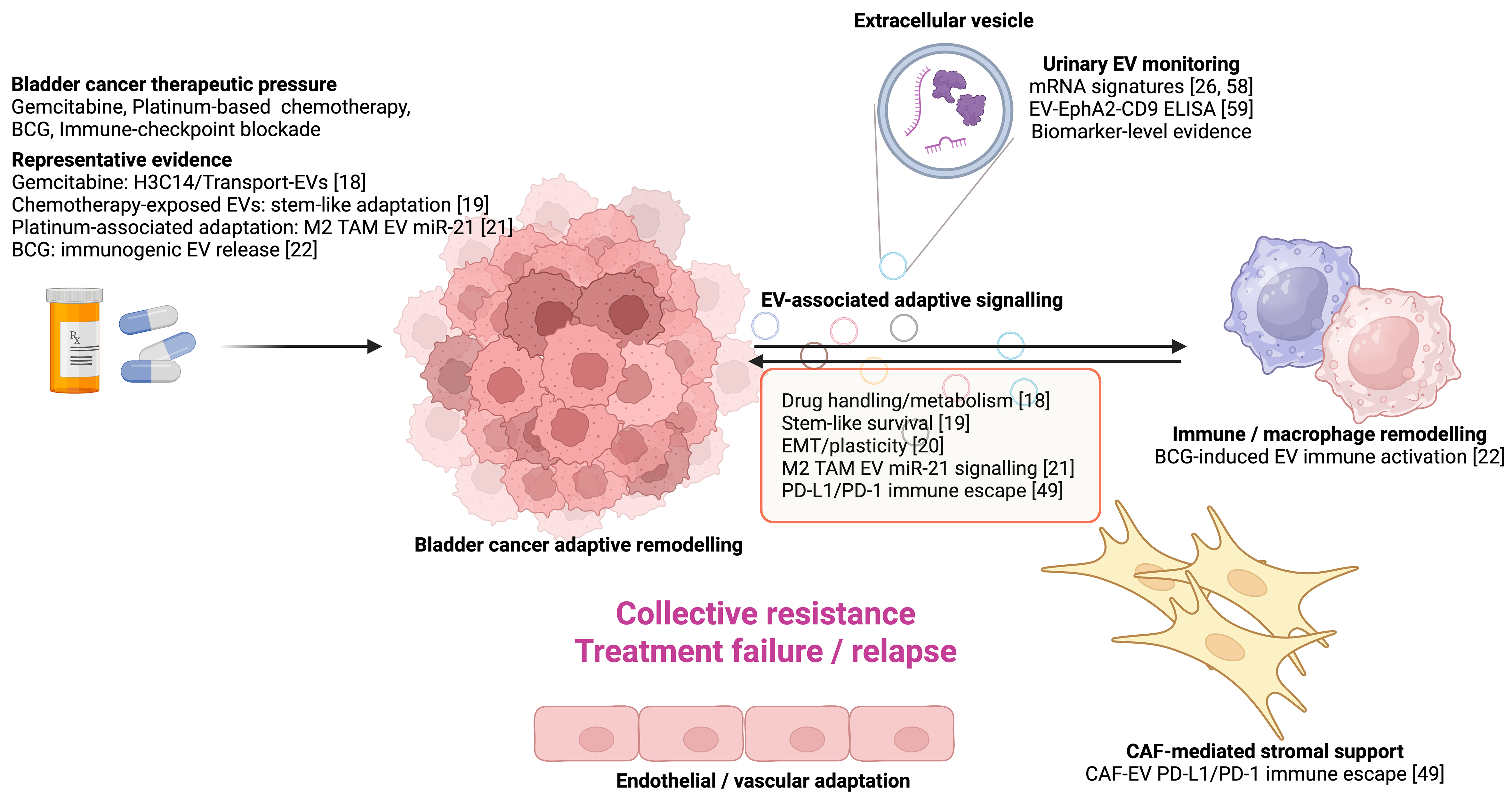
Figure 1. Evidence-mapped framework of EV-associated drug adaptation in bladder cancer. Drug-specific therapeutic pressure, including gemcitabine, platinum-based chemotherapy, BCG therapy and immune-checkpoint blockade, can reshape bladder cancer EV release, cargo composition and tumour–microenvironment communication. Representative bladder cancer studies support EV involvement in gemcitabine-associated H3C14/transport-EV remodelling, chemotherapy-exposed EV-mediated stem-like adaptation, EV-associated non-coding RNA signalling, M2 tumour-associated macrophage-derived EV miR-21 signalling, BCG-induced EV-mediated antitumour immune activation, CAF-derived EV-associated PD-L1/PD-1 signalling and immune escape and urinary EV biomarker monitoring. These mechanisms should be interpreted according to evidence category and strength, distinguishing causal mediators, permissive amplifiers, mechanistic leads and biomarker associations. Created in BioRender. Wu, Y. (2026). https://BioRender.com/lwz0yq8. EV: Extracellular vesicle; BCG: Bacillus Calmette–Guérin; CAF: cancer-associated fibroblast; PD-L1: programmed death-ligand 1; PD-1: programmed cell death protein 1; TAM: tumour-associated macrophage; ELISA: enzyme-linked immunosorbent assay; EMT: epithelial–mesenchymal transition.