


fig2
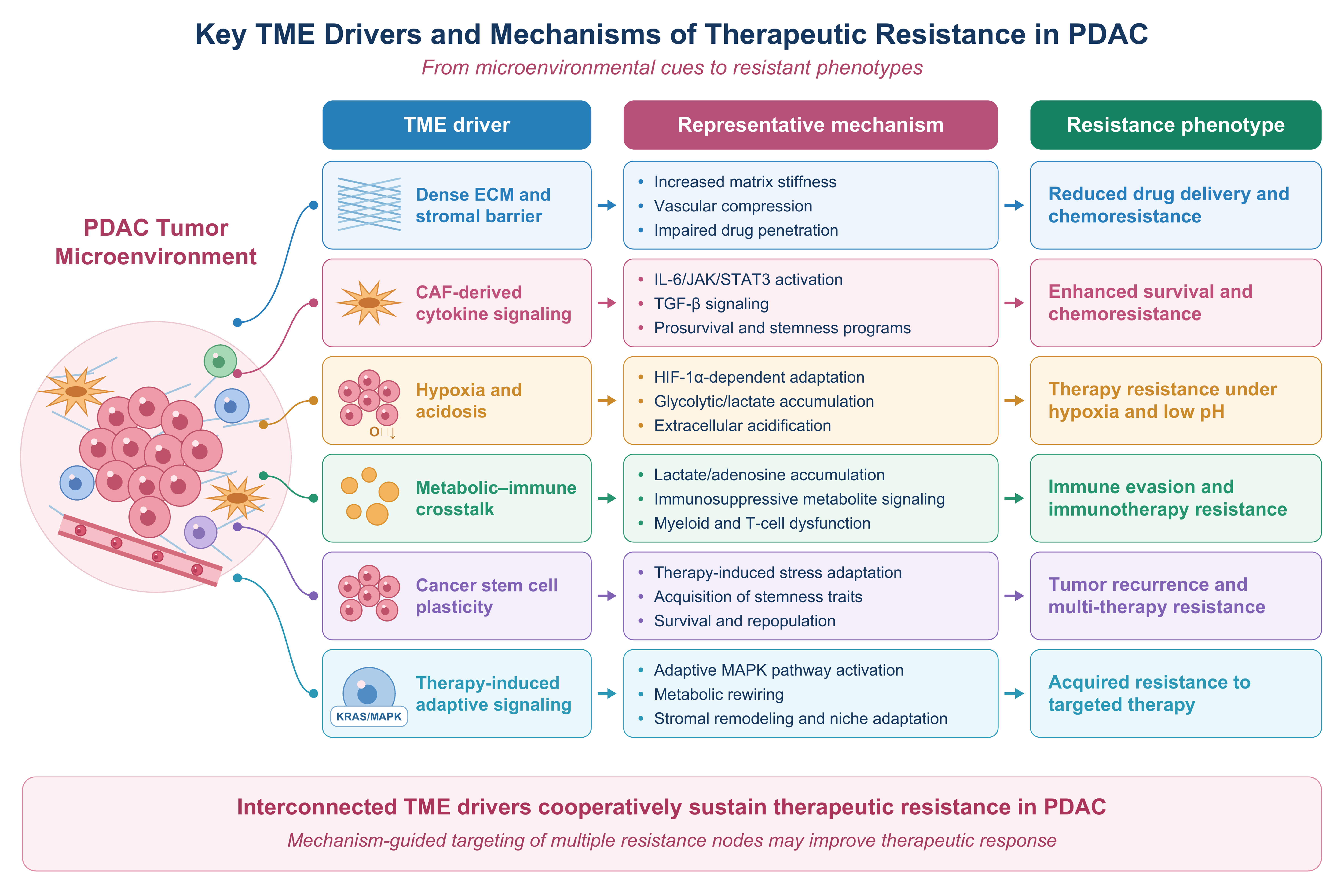
Figure 2. Key TME drivers and mechanisms of therapeutic resistance in PDAC. Major components and stressors within the PDAC TME promote distinct but interconnected resistance phenotypes. Dense ECM deposition and stromal remodeling increase matrix stiffness, compress tumor vasculature, and impair drug penetration, thereby limiting chemotherapy delivery. CAF-derived cytokine signaling activates prosurvival and stemness-associated pathways, including IL-6/JAK/STAT3 and TGF-β signaling, which contribute to chemoresistance. Hypoxia and extracellular acidosis promote HIF-1α-dependent adaptation, glycolytic/lactate accumulation, and survival under low-pH conditions. Metabolic–immune crosstalk involving lactate, adenosine, and other immunosuppressive metabolites contributes to myeloid and T-cell dysfunction and immune escape. Therapy-induced stress can also promote CSC plasticity, survival, and tumor repopulation, whereas adaptive MAPK signaling, metabolic rewiring, and stromal remodeling can facilitate acquired resistance to targeted therapy. Collectively, these interconnected mechanisms illustrate how multiple TME-derived resistance nodes cooperate to sustain therapeutic resistance in PDAC and provide a rationale for mechanism-guided combination strategies. TME: Tumor microenvironment; PDAC: pancreatic ductal adenocarcinoma; ECM: extracellular matrix; CAF: cancer-associated fibroblast; IL-6: interleukin-6; JAK: Janus kinase; STAT3: signal transducer and activator of transcription 3; TGF-β: transforming growth factor-β; HIF-1α: hypoxia-inducible factor 1α; CSC: cancer stem cell; MAPK: mitogen-activated protein kinase.