



fig2
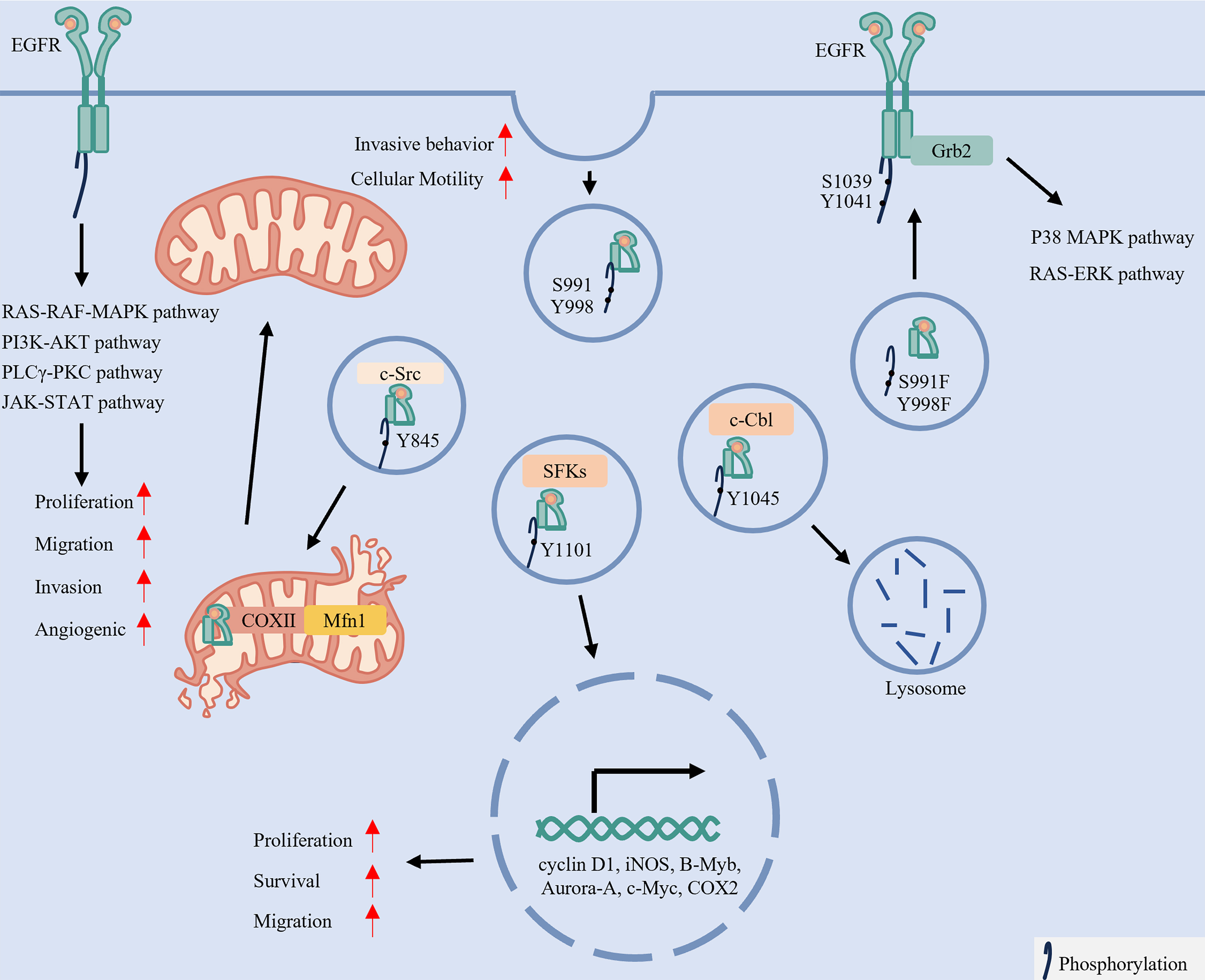
Figure 2. Site-specific phosphorylation of EGFR dictates its subcellular localization and oncogenic signaling. Upon ligand binding and dimerization, EGFR undergoes autophosphorylation, activating multiple oncogenic pathways such as the RAS-RAF-MAPK, PI3K-AKT, and JAK-STAT signaling, which drive cellular proliferation, migration, invasion and angiogenesis. Importantly, phosphorylation by specific kinases directs the trafficking of EGFR to distinct subcellular compartments. For instance, phosphorylation at serine 991, tyrosine 998, serine 1039, and tyrosine 1041 promotes its membrane localization or internalization. c-Src-mediated phosphorylation at Y845 facilitates mitochondrial localization, which induces mitochondrial fission and enhances cell motility. In contrast, SFK-mediated phosphorylation at Y1101 enables nuclear translocation, where EGFR functions as a transcriptional regulator. Meanwhile, CBL-mediated phosphorylation at Y1045 targets EGFR for lysosomal degradation. Created in BioRender. LIAN, J. (2026) https://BioRender.com/phddwmk. EGFR: Epidermal growth factor receptor; RAS: rat sarcoma virus; RAF: rapidly accelerated fibrosarcoma; MAPK: mitogen-activated protein kinase; PI3K: phosphatidylinositol 3-kinase; AKT: protein kinase B (PKB); JAK: Janus kinase; STAT: signal transducer and activator of transcription; SFKs: Src-family kinase; c-Cbl: Casitas B-lineage lymphoma proto-oncogene; Grb2: growth factor receptor-bound protein 2; PLCγ: phospholipase C gamma; PKC: protein kinase C; c-Src: SRC proto-oncogene, non-receptor tyrosine kinase; COX II: cytochrome c oxidase subunit II; Mfn1: Mitofusin 1; COX2: Cyclooxygenase-2; iNOS: inducible nitric oxide synthase; B-Myb: B-Myb transcription factor; Aurora-A: aurora kinase A; c-Myc: MYC proto-oncogene protein.