


Volume 6, Issue 2 (2026) – 13 articles
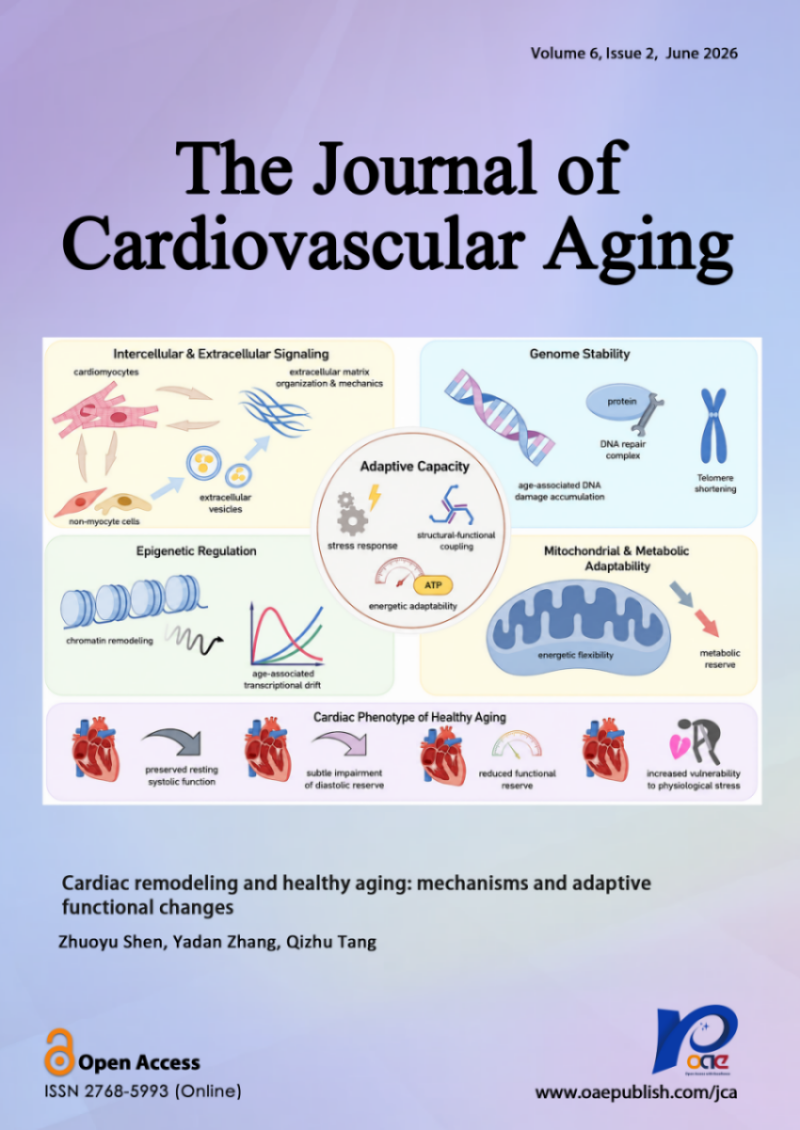
Cover Picture: Cardiac aging is accompanied by progressive alterations in myocardial structure and function, even in the absence of overt cardiovascular disease. Population-based imaging studies demonstrate that healthy aging is characterized by concentric remodeling, subtle diastolic impairment, preserved resting systolic function, and reduced cardiac functional reserve. These changes reflect adaptive remodeling with substantial inter-individual variability. Mechanistically, cardiac aging involves coordinated alterations in intercellular communication, extracellular matrix organization, mitochondrial quality control, DNA damage responses, and epigenetic regulation, affecting myocardial stiffness, metabolic flexibility, and stress responsiveness. This review summarizes the structural, functional, and molecular features of cardiac remodeling during healthy aging, emphasizing biological aging mechanisms rather than disease-driven remodeling. We further discuss emerging strategies to preserve functional reserve, maintain mitochondrial and metabolic adaptability, and sustain cardiovascular healthspan.
view this paper