




Motion-induced mechano-electric fibers towards wearable electronics with energy and information self-sufficiency
 0
0 Abstract
Mechano-electric fibers (MEFs) represent a novel class of smart textiles that offer a robust pathway for comfortable wear and efficient harvesting of human biomechanical energy by integrating with triboelectric nanogenerators (TENGs). MEFs can serve as a sustainable power supply for wearable electronics and function as sensitive and convenient platforms for the acquisition of human motion signals, and the detection of environmental stimuli. This review emphasizes that the triboelectric mechanism, response characteristics, and textile architecture endow MEFs with distinctive advantages, including highly efficient low-frequency bioenergy conversion, progressive multi-stage high-sensitivity responses, and versatile structural designs. Consequently, these features facilitate autonomous and sustainable on-body energy and information supply systems. Furthermore, the emerging functionalities and diverse applications of MEFs demonstrate the substantial potential of human-centric self-powered wearable systems, including motion capture, physiological monitoring, and environmental perception. Finally, we provide a comprehensive discussion on the critical challenges currently impeding the design and practical implementation of MEFs.
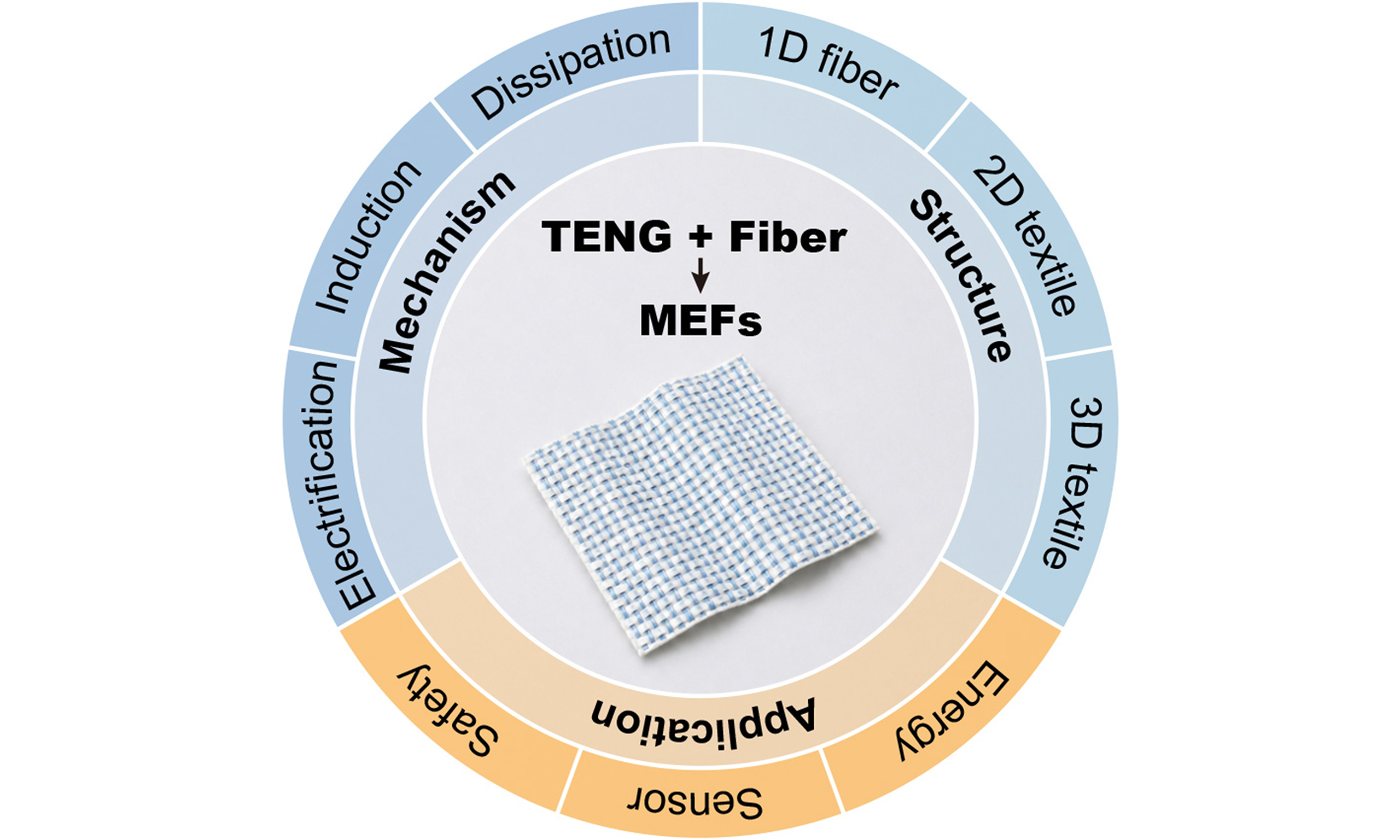
Keywords
INTRODUCTION
Wearable electronics have been widely adopted in daily life[1]. The continuous acquisition of high-fidelity user motion and physiological data has driven an increasing demand for electrical power in wearable devices. However, rigid batteries typically account for a large fraction of the weight and volume of wearable systems, severely compromising device portability, operational longevity, and comfort. The growing disparity between signal-acquisition demands and limited power supply has created an urgent need for integrated solutions capable of simultaneously sensing physiological signals and harvesting biomechanical energy for sustainable power supply. This imperative has catalyzed the emergence of mechano-electric fibers (MEFs)[2]. Biomechanical energy is associated with kinematic states and various physiological parameters[3]. Nevertheless, its highly irregular, rapidly dissipative, and low-density nature has hindered its effective exploitation[4]. Through the integration of triboelectric nanogenerators (TENGs), MEFs can harvest biomechanical energy, track human motion, monitor physiological signals, and interact with the environment. In other words, MEFs refer to fiber- and textile-shaped TENGs, which directly convert mechanical deformation into electrical signals via contact electrification. Consequently, in a self-powered wearable system that contains wearable sensors as electrical loads and MEFs as energy supplements [Figure 1A], MEFs establish a self-sustaining energy-information closed loop for the wearer[5,6], who acts as both the biomechanical energy source[7] and the recipient of diverse physiological information. In such a system, the biomechanical energy conversion in MEFs bridges energy and information flows [Figure 1B]: it supplies power to operate other wearable devices, while the generated electrical signals can serve as physiological signals for human-state monitoring. MEFs thus provide a novel implementation pathway for wearable intelligent systems [Figure 1C]. However, current MEFs still face challenges in achieving a fully self-sustaining closed loop, where the harvested energy alone powers all sensing, processing, and communication functions while maintaining stable long-term operation. Accordingly, this review examines operating mechanisms and textile architectures to outline strategies for efficient self-powered applications and summarizes prevailing challenges and potential solutions.
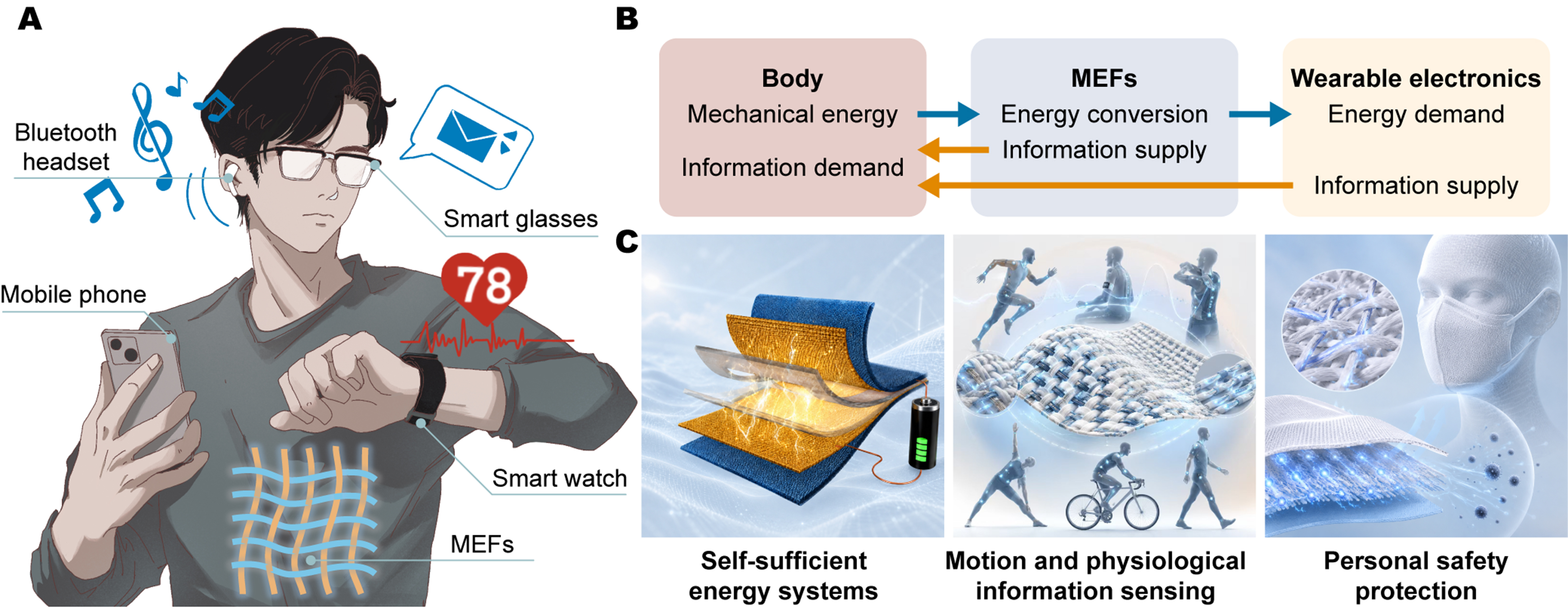
Figure 1. The role of MEFs in self-sufficient energy and information systems: (A) Wearable systems include electronic devices and energy harvesters; (B) MEFs serve as a bridge for energy and information exchange; (C) MEFs can undertake various functions. MEFs: Mechano-electric fibers.
MECHANISM
TENGs utilize the relative motion between two materials with different triboelectric properties to induce contact electrification at their interfaces. Upon electrification, the positive triboelectric material acts as an electron donor and acquires a positive surface charge, whereas the negative triboelectric material acts as an electron acceptor and becomes negatively charged. A greater difference in electron affinity leads to a more pronounced contact electrification effect. The spatial separation of these surface charges generates a localized electric field that drives charge transfer through the external circuit, thereby converting mechanical energy into electrical energy[8]. Periodic contact and separation enable continuous harvesting of biomechanical energy [Figure 2A][9]. The generated electrical signals also carry information that reflects the kinematic profiles of the mechanical stimuli, thereby endowing the system with dynamic sensing capabilities.
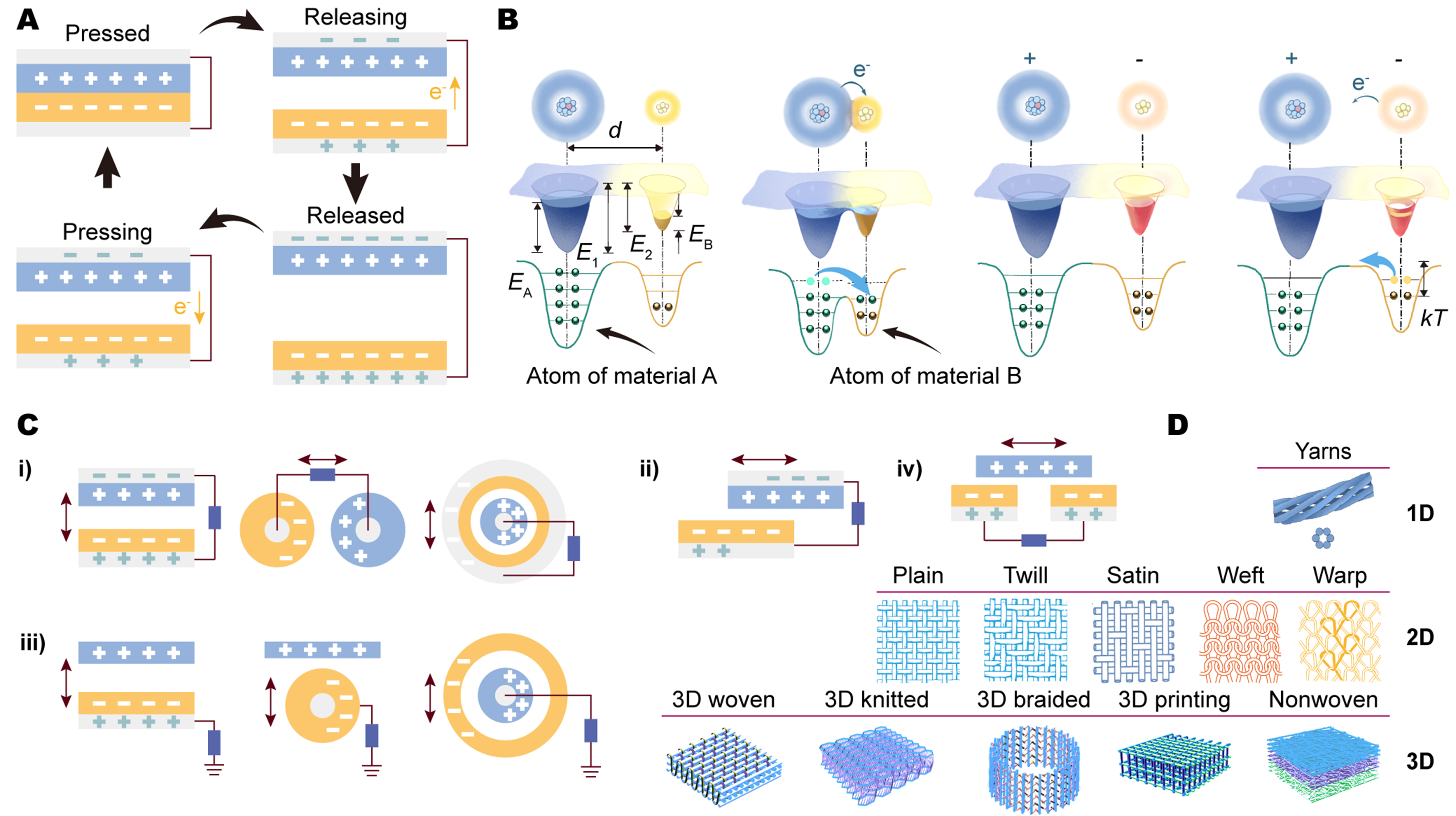
Figure 2. Working principles and structures of MEFs: (A) Mechano-electric conversion process; (B) Electron-cloud potential-well model; (C) Representative designs of the four modes; (D) Multilevel structural design space of textiles. MEFs: Mechano-electric fibers; 1D: one-dimensional; 2D: two-dimensional; 3D: three-dimensional.
The microscopic mechanism underlying this mechano-electric conversion can be explained by the surface state model and the electron-cloud potential-well model. The surface state model is primarily applicable to materials with well-defined band structures, particularly dielectrics with surface defect states[10,11]. When two materials come into contact, the energy difference between their surface states drives interfacial electron transfer, resulting in contact electrification. However, for materials whose electronic structures are described by molecular orbitals, such as polymers, the surface state model becomes inadequate. In such scenarios, the electron-cloud potential-well model provides a more broadly applicable theoretical framework [Figure 2B][12,13]. This model emphasizes that the overlap of electron clouds between the two materials in contact is the primary driver of electron transfer. The overlap converts the original single potential wells into an asymmetric double-well structure, thereby lowering the intermolecular potential barrier and establishing an energy gradient that drives electrons from a high-energy state to a low-energy state. Beyond charge generation, charge loss during conversion is an equally critical factor governing MEF output performance. In MEFs, shallow and deep traps store and release charges. Charges in shallow traps can easily escape, while those in deep traps can be retained for a long time. In addition to trap-mediated dissipation, air breakdown constitutes a major pathway for charge loss. When the voltage exceeds a certain threshold, air molecules are ionized, forming conductive channels that cause charges to dissipate rapidly. Environmental conditions, particularly ambient humidity, significantly influence the output performance of MEFs. High humidity can increase the probability of air breakdown, thereby accelerating charge loss. To address these challenges, several optimization strategies can be pursued: (i) material selection and surface modification; (ii) structural design; and (iii) control of operational conditions. Together, these mechanistic insights provide a theoretical basis for the rational design and performance optimization of MEFs.
Given the precise structural control achievable through advanced design and fabrication processes, the deformation response behavior of fibers can be accurately predicted and rationally tailored. Consequently, the response characteristics of MEFs are highly adjustable by modulating fiber diameter, length, weaving topology, and surface microstructures. Smaller fiber diameters increase specific surface area and strain response, thereby enhancing charge density but potentially limiting mechanical durability; porous or hollow architectures balance these competing effects by providing additional strain dissipation pathways[14,15]. Yarn twist optimizes inter-bundle packing and conductivity, with optimal twist angles (~30°) maximizing sensitivity and toughness, while excessive twist reduces sensitivity due to fiber obliquity[16,17]. Fabric topology determines contact mode: knitted structures with three-dimensional (3D) loop configurations exhibit line contact and higher roughness than woven fabrics with point contact, thereby significantly enhancing triboelectric output (up to 240% higher voltage)[18,19]. Surface microstructures (including wrinkles, cracks, and pores) govern strain localization and conductive network evolution, simultaneously enabling high sensitivity and a broad dynamic range through mechanisms such as crack redistribution (pores delay crack propagation) and hierarchical deformation (wrinkles flatten under large strain)[20,21]. These structural engineering principles transform textile architectures into tunable platforms for self-powered sensing and energy harvesting. Owing to their hierarchical fibrous or textile substrates, MEFs inherently exhibit abundant surface microstructures. Their response characteristics arise from the progressive contact mechanics of textile architecture, which enhances sensitivity and broadens the dynamic range for pressure sensing. When an MEF and another dielectric medium approach each other, electrostatic induction initially generates limited surface charges. Subsequently, as the surface microfibers progressively contact the opposing medium, the effective contact area expands significantly, yielding electrical signals with exceptionally high sensitivity. Under continuously increasing pressure, the effective contact area gradually approaches saturation. This multi-stage progressive response behavior ensures both high sensitivity and an extended dynamic range, representing an elegant integration of TENG principles with textile architectures. In contrast to conventional capacitive[22] and piezoresistive[23] sensors, self-powered MEFs exhibit superior response speeds and multi-signal output capabilities [Table 1]. Thermoelectric[31] and electromagnetic[32] sensors are also self-powered, but their outputs and sensitivities in textile form are typically inferior to those of MEFs. Furthermore, because of the large electronegativity difference between the constituent materials, MEFs generally produce larger signal amplitudes than piezoelectric[33] and ferroelectric[34] transducers under comparable conditions.
Comparison of the performance of different sensing mechanisms
| Literature | Mechanism | Response range | Sensitivity | Response time | Recovery time |
| Cuthbert et al.[24] | Capacitive | < 100% | GF ≈ 4 | N/A | N/A |
| Ji et al.[25] | Capacitive | < 1,700 kPa | 0.065 kPa-1 | 100 ms | 100 ms |
| Pan et al.[26] | Piezoresistive | 0.1-30 kPa | 17.73 kPa-1 | 80 ms | 40 ms |
| Zhao et al.[27] | Piezoresistive | < 10 kPa | 914.97 kPa-1 | 38 ms | 34 ms |
| Mokhtari et al.[28] | Piezoelectric | 50-1,000 Hz | 37 V·Pa-1 | N/A | N/A |
| Lan et al.[29] | Triboelectric | < 20 kPa | 0.94 kPa-1 | 39 ms | N/A |
| Xu et al.[30] | Triboelectric | < 16 kPa | 12.33 V·kPa-1 | 70 ms | 60 ms |
STRUCTURE
MEFs combine the characteristics of both TENGs and conventional textiles. MEFs can generate electrical signals inherently linked to mechanical stimuli, thereby enabling the harvesting, conversion, and utilization of diverse forms of biomechanical energy. In addition, owing to their textile nature, MEFs offer exceptional flexibility, hierarchical architecture, and the potential for scalable manufacturing. For wearable applications, multiple TENG configurations can be used to harvest biomechanical energy from various body sites and motion sources. Among the fundamental working modes for wearable applications[35], the vertical contact-separation mode is specifically designed for mechanical strains perpendicular to the textile surface [Figure 2C(i)][36]. A representative example is the dynamic pressure exerted by the plantar surface on an insole during running or jumping. The lateral sliding mode is designed for in-plane sliding, making it highly suitable for monitoring displacement and angular variations [Figure 2C(ii)]. For instance, it can effectively capture the frictional energy generated between a swinging arm and the torso during running. The single-electrode mode is intended for confined spaces where deploying dual electrodes is impractical [Figure 2C(iii)][37]. In this configuration, one electrode is grounded to serve as a reference potential for detecting varying signals on the sensing electrode. The freestanding triboelectric-layer mode allows all electrodes to move freely, and its application scope is similar to that of the lateral sliding mode [Figure 2C(iv)][38].
From a textile perspective, a wide range of hierarchical structures meet the design requirements of diverse TENG configurations, spanning structural dimensions from fibrils and one-dimensional (1D) yarns to two-dimensional (2D) fabrics and complex 3D structures [Figure 2D]. Fibrils are the fundamental building blocks of textiles and generally do not directly execute functional roles at the device level. Through various assembly techniques, thousands of individual fibers can be twisted or interlocked to form 1D yarns[39]. A single 1D yarn subjected to mechanical stress can operate in single-electrode mode, generating electrical signals to detect the applied mechanical strains. Alternatively, two 1D yarns twisted around each other can be assembled into a contact-separation-mode TENG. Furthermore, 1D yarns can be seamlessly integrated into 2D or 3D textiles via sewing[40], weaving[41], braiding[42], and other textile manufacturing processes. Specifically, 2D woven structures include plain[43,44], twill[45], and satin weaves, whereas 2D knitted structures include weft[46] knitting and warp knitting. Benefiting from their complex spatial architectures, the fibrous networks can undergo a series of pre-designed deformations in response to dynamic external forces, thereby efficiently converting biomechanical energy into electricity and detecting the deformation process. By introducing additional Z-direction longitudinal yarns into a biaxial structure, a fully interlocked 3D structure can be fabricated[47]. These 3D architectures create additional contact-separation spacing, effectively enhancing the output power density of MEFs. In addition, nonwoven fabrication techniques, such as melt-blowing[48] and electrospinning[49,50], are widely used to fabricate MEFs with micro- and nanoscale structures.
Currently, wearable systems based on MEFs predominantly employ a hybrid architecture consisting of fiber-based sensing/energy harvesting units, flexible interconnects, and conventional electronic modules. The MEFs are responsible for sensing or energy conversion, while signal conditioning, processing, and communication functions are handled by mature, miniaturized electronic modules, with the two subsystems interfaced through flexible interconnections. This approach balances the mechanical compliance and wearability of fibers with the high performance and reliability of conventional electronic modules, representing the most feasible technical pathway. The raw signals generated by MEFs typically exhibit the following characteristics: low current amplitude (mA level or below), high source impedance (MΩ level), and low frequency (0.1 Hz to tens of Hz). Accordingly, the core tasks of front-end signal conditioning include impedance matching, buffering, filtering, amplification, and decoupling. These tasks are typically implemented on a flexible printed circuit (FPC). Subsequently, the data are transmitted to a microcontroller unit (MCU) for conversion and processing, where digital filtering, baseline drift removal, and feature parameter extraction are performed as required by the target application. For computationally demanding tasks, processed data can be transmitted to a mobile device or cloud platform for further processing. Bluetooth Low Energy (BLE) is the most widely adopted wireless solution for wearable devices, offering low power consumption, excellent smartphone compatibility, and suitability for transmitting sensor signals at moderate data rates (tens of kbps). A prevalent approach for establishing electrical interconnects involves exposing the inner conductive layer at the fiber end and using silver paste, carbon paste, or other conductive adhesives to establish low-resistance electrical connections between the fiber electrodes and the FPC. On the FPC, circuit traces interconnect the signal processing chips to communication modules. Owing to their bending durability, FPCs can conform to local fabric curvature and can be either sutured or adhered to the textile surface.
APPLICATIONS
Self-sufficient energy systems
Given the ubiquity of textiles in daily life, MEFs can serve as the energy conversion core of self-sufficient wearable electronic systems on the human body. These systems can convert low-frequency, irregular biomechanical energy, including limb swinging during locomotion[51], joint flexion-extension, and even subtle respiratory chest excursions, into electricity in real time to power wearable electronics attached to clothing or skin. The harvested electricity directly sustains continuous monitoring of physiological signals, including heart rate, blood oxygen saturation, body temperature, kinematic postures, and biochemical markers in sweat, thereby establishing a closed-loop energy and information system characterized by “harvesting from and feeding back to the human body”.
To enhance electrical output, two primary strategies are intuitive: improving the contact electrification capability of materials and engineering fabric architectures with superior spatial utilization. Given the stringent safety requirements for wearable electronics, adopting bio-based materials as triboelectric layers is a highly viable approach. For example, Xiong et al. developed a scalable core-sheath yarn (CSY) via ring-spinning covering technology, comprising a conductive steel-wire-embedded polyethylene terephthalate (PET) filament core and a wool yarn sheath [Figure 3A], thereby integrating the antistatic properties of wool with triboelectric energy harvesting[52]. The resulting CSY knitted fabric (CSYF) delivers an open-circuit voltage Voc of ~430 V, a short-circuit current Isc of ~2.7 μA, and a power density of ~740 mW·m-2 under 2 Hz mechanical excitation, outperforming most yarn-based triboelectric textile devices. In contrast, the surface modification of conventional polymer fibers offers even broader applicability. In a representative work by Park et al., a skin-rubbing single-electrode TENG called a co-weaving triboelectric generator (TEG) was fabricated, featuring a core of silver-plated copper yarn wrapped in polyester yarn, and a porous triboelectric layer formed by dip-coating silicone rubber templated with sugar particles[53]. This fiber was co-woven with a perspiration electric generator (PEG), and this hybrid design mitigates both humidity-induced TEG degradation and the delayed response of PEGs that rely on sweat secretion. Consequently, the device achieves a peak current of ~8.8 μA and a maximum power density of 166 μW·cm-2. Sun et al. proposed a novel mechanism based on interconnected electron-cloud potential wells (ECPWs) and constructed a TENG employing ethyl cellulose/reduced graphene oxide (EC/rGO) as the positive triboelectric layer and polydimethylsiloxane/reduced graphene oxide (PDMS/rGO) as the negative counterpart[54]. The conductive rGO network activates bulk electrons within the dielectric layers, overcoming the limitation of conventional TENGs where charge transfer is strictly confined to surface electrons. The resulting TENG achieves record-high outputs for contact-separation mode TENGs, including an Isc of 3,180 μA, a current density of
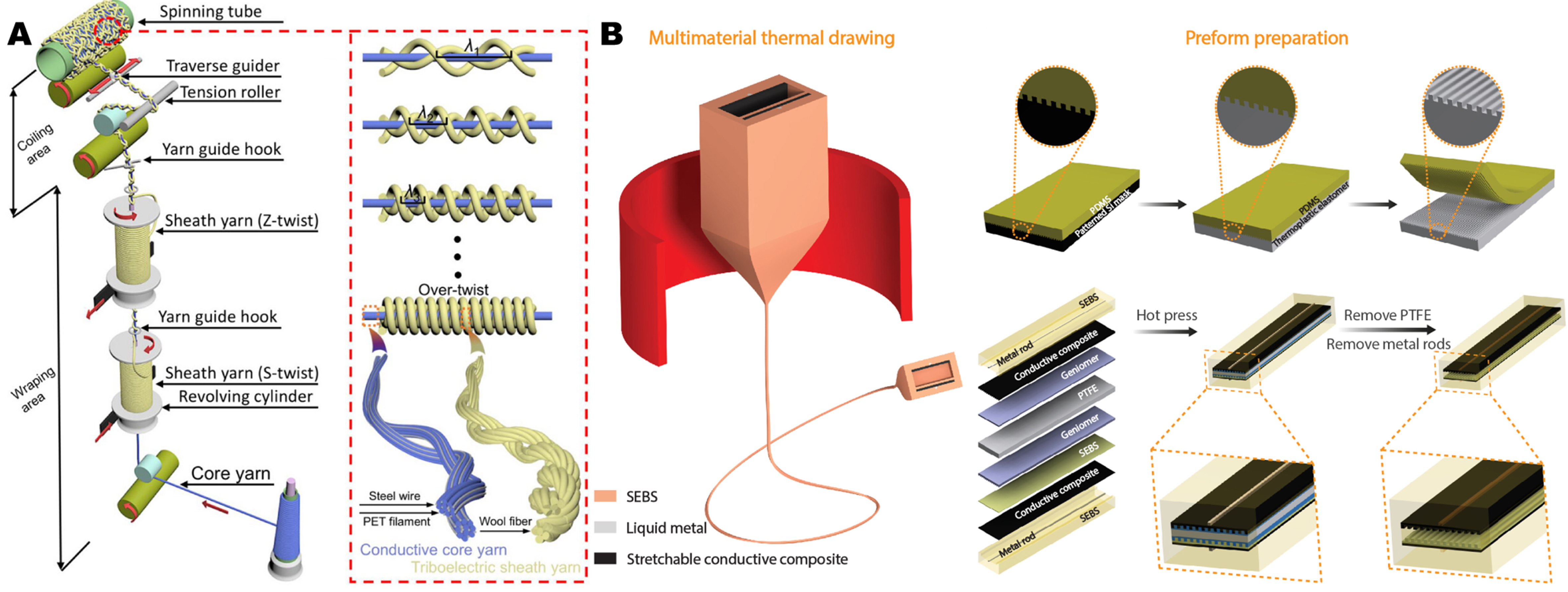
Figure 3. Scale-fabricable high-performance MEFs for energy conversion: (A) Large-scale wrapping spinning process and structure illustration of wool-based CSY. Reprinted with permission from[52]. Copyright 2025, Wiley; (B) 3D fiber formats based on scalable thermal processing of water-resistant thermoplastic elastomers and composites. Reprinted with permission from[57]. Adhering to the CC BY 4.0 agreement. MEFs: Mechano-electric fibers; CSY: core-sheath yarn; 3D: three-dimensional; PET: polyethylene terephthalate; SEBS: styrene-ethylene-butylene-styrene; PTFE: polytetrafluoroethylene.
Compositional engineering alone cannot fully mitigate the energy dissipation caused by inadequate interfacial contact or interfacial slippage in flexible textiles under real-world wearing conditions. By spatially arranging these materials to achieve ordered and efficient contact-separation cycles, the mechano-electric conversion interfaces can be substantially optimized, and the effective contact area maximized, thereby realizing a holistic synergistic enhancement in device performance. At the single-fiber level, Dong et al. designed a fiber-based TENG operating in the contact-separation mode, featuring an inner air gap and a micro-textured surface [Figure 3B][57]. Utilizing a stretchable conductive composite of carbon nanotubes (CNTs), high-density polyethylene (HDPE), and styrene-ethylene-butylene-styrene (SEBS), they achieved scalable and controllable thermal drawing from centimeter-scale preforms to kilometer-long continuous fibers. The resulting fiber exhibits exceptional waterproofness, moisture resistance, and high deformability, effectively overcoming the poor environmental adaptability and limited mechanical compliance of conventional fiber-based TENGs. For 2D textiles, Ahmed et al. developed a fully weft-faced structured fabric (FWSF) employing silver-plated nylon conductive yarns as the warp and high-density nylon filaments as the weft[58]. The weft yarns completely encapsulate the warp to maximize the effective contact area for triboelectrification. When operating in the contact-separation mode against a BaTiO3 (BTO) nanoparticle-doped PDMS composite film, it delivers a peak power density of 2,408.70 mW·m-2, a Voc of ~621 V, an Isc of ~13.76 μA, and a charge density of 7.5 nC·cm-2. The 3D fabrics further elevate the spatial and architectural complexity of the system. So and Xu reported a woven double-cloth TENG (WDC-TENG) that utilizes copper-nickel alloy fabric and BTO-doped PDMS, wherein the double-weave architecture inherently generates multiple triboelectric interfaces[59]. Consequently, the WDC-TENG achieves a remarkable power density of 15 W·m-2, an Isc of 0.7 mA, and delivers ~250 V and 602 μA during operation as a smart insole.
User behavior and physiological information sensing
Human motions such as hand clapping, finger tapping, arm touching, walking, running, and jumping are the most readily detectable signals for MEFs. By continuously acquiring kinematic parameters, including joint angles, gait characteristics, and postural variations, these fabrics can provide an objective basis for sports injury risk assessment, rehabilitation training progress tracking, and personalized exercise prescription. Meanwhile, body motion data can serve as an intentional input source for human–machine interaction (HMI), facilitating natural and efficient intelligent control and assisted decision-making[60]. Su et al. presented a representative study focusing on health monitoring and rehabilitation training[61]. They employed silica nanofibers and cellulose nanofibers to construct an aerogel skeleton, introducing ZnO@ZIF-8 core–shell heterojunction particles to enhance triboelectric polarity. This design yielded a layer–pillar ordered porous structure that exhibited a pressure sensitivity of 12.1 mV·Pa-1, alongside response and recovery times of 100 ms. Furthermore, a four-channel TENG sensing system integrated into a neck shield and coupled with a convolutional neural network (CNN)-based machine-learning algorithm achieved 97% recognition accuracy for eight distinct neck movements. This system enables cervical spine health management, early warning of poor posture, and quantitative evaluation of rehabilitation training. In the realm of personalized sports training, Chen et al. prepared a piezoelectric–triboelectric synergistic composite elastic sensing yarn featuring a coaxial three-layer structure of PDMS/poly(vinylidene fluoride) (PVDF)/elastic silver-plated nylon yarn[62]. They further designed a nine-channel E-PT yarn array wrapped around a tennis racket to enable zoned and independent sensing [Figure 4A]. The pressure sensitivity across different functional zones reached 0.0263, 0.0094, and 0.0018 V·kPa-1. By integrating the nine-channel yarn sensing array with a smart elbow brace and CNN machine learning, this system achieved 95% accuracy in recognizing six tennis strokes and 98.3% accuracy in classifying racket-face angles, enabling real-time identification and feedback of hitting postures and ball-impact locations.
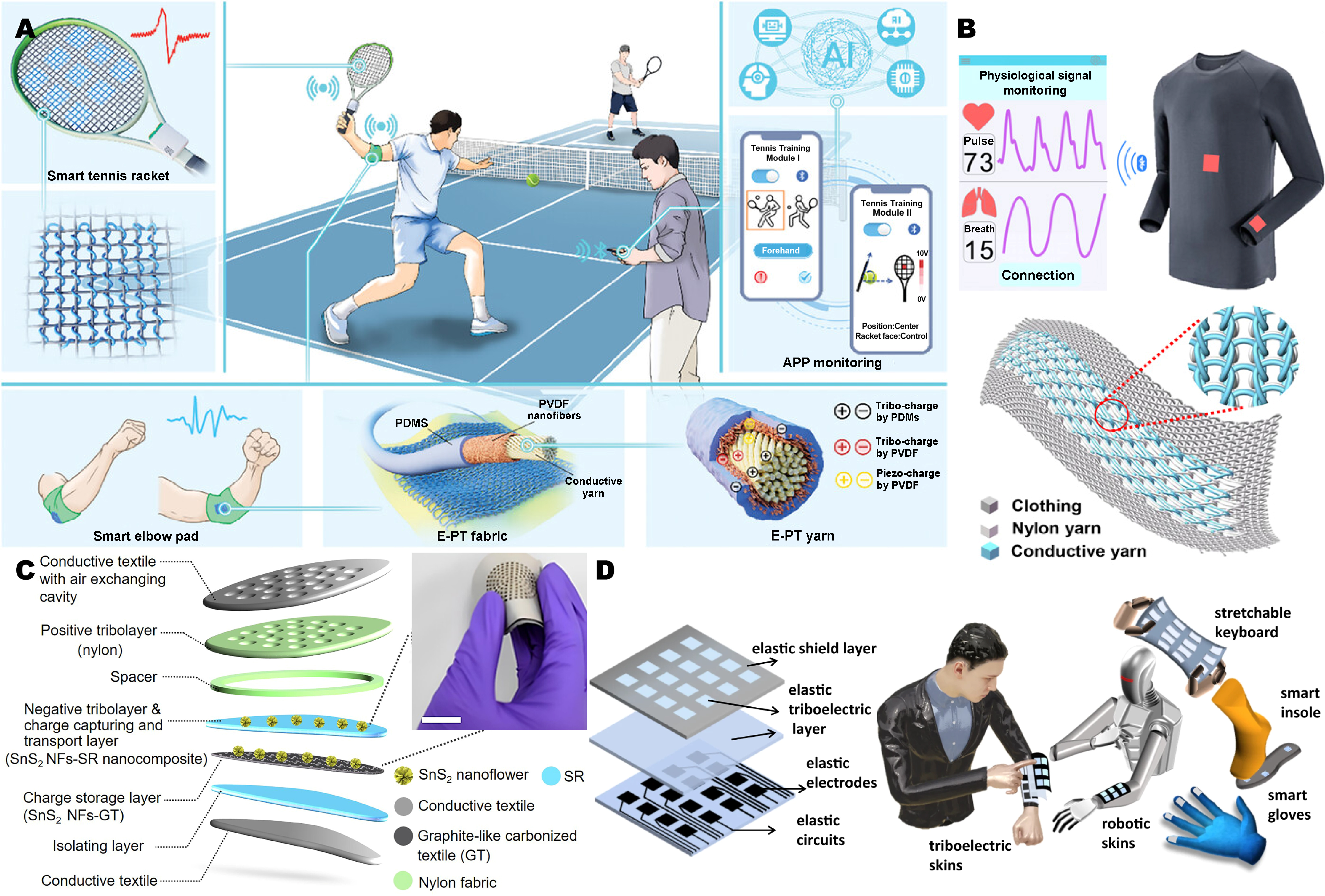
Figure 4. MEFs have extensive applications in body monitoring and HMI: (A) Schematic diagram of the smart tennis training system. Reprinted with permission from[62]. Copyright 2024, Wiley; (B) The all-textile pressure sensors could monitor pulse and respiratory signals in real time. Reprinted with permission from[64]. Adhering to CC BY-NC 4.0 agreement; (C) The layer-by-layer structure and the flexibility of ATextile (Scale bar: 2 cm). Reprinted with permission from[69]. Adhering to CC BY-NC 4.0 agreement; (D) The exploded view and the broad applications of the UTE-skin. Reprinted with permission from[74]. Adhering to CC BY 4.0 agreement. MEFs: Mechano-electric fibers; HMI: human–machine interaction; UTE: untethered triboelectric electronic; PDMS: polydimethylsiloxane; PVDF: poly(vinylidene fluoride); E-PT: elastic piezoelectric-triboelectric; NFs-SR: nanoflower–silicone rubber; NFs-GT: nanoflower–decorated graphite-like carbonized textile.
Notably, among the various wearable configurations for body motion sensing, gesture recognition gloves worn directly on the hands, the most dexterous part of the human body, can capture fine motions such as finger flexion/extension, wrist rotation, and multi-joint coordination with high spatiotemporal resolution. These gloves provide a self-powered, unconstrained natural input interface suitable for both immersive virtual manipulation and silent sign language translation. For example, Xu et al. developed a self-powered electrotactile textile haptic (SPETH) glove that realizes passive electrotactile feedback based on TENG-driven gas discharge tube (GDT) breakdown[63]. Tests on 30 subjects revealed that the comfortable perceived energy thresholds were approximately 10 μJ for females and 30 μJ for males. Moreover, the perceived intensity could be precisely regulated by modulating the capacitance, GDT breakdown threshold, and electrode position. Thus, this glove could be used in prosthetics, robotic tactile feedback, and electrostimulation rehabilitation therapy.
In addition to large-scale body movement perception and fine hand movement decoding, MEFs are also capable of monitoring even weaker physiological signals. The subtle surface deformations induced by pulse waves place higher demands on sensor sensitivity and signal-to-noise ratio (SNR), while they contain a wealth of physiological information. Continuous analysis of parameters including pulse wave morphological features, peak-to-peak intervals, and their variability enables non-invasive assessment of heart rate, blood pressure trends, and arterial stiffness, thereby providing critical data for long-term, unobtrusive dynamic monitoring of cardiovascular system health. Fan et al. developed a triboelectric all-textile sensor array (TATSA) to monitor the pulse waves and respiratory waves simultaneously and constructed a wireless mobile health monitoring system (WMHMS) for noninvasive assessment of cardiovascular disease and sleep apnea syndrome [Figure 4B][64]. The TATSA used stainless steel as the core, with Terylene yarns twisted onto the surface of a conductive yarn (0.2 mm in diameter). Its pressure sensitivity reached 7.84 mV·Pa-1 under low-pressure conditions (< 4 kPa) and 0.31 mV·Pa-1 under high-pressure conditions (> 4 kPa). Liang et al. developed wearable self-powered pressure sensors using the natural 3D network fibers of Juncus effusus as a biological template[65], and Shao et al. reported a highly efficient, breathable, and stretchable monolithic hybrid triboelectric-piezoelectric-electromagnetic nanogenerator-based electronic skin (TPEG-skin) based on a topological-insulator-composite[66]. Their sensitivities reach 5.39 V·N-1 (< 0.2 N) and 111.25 V·kPa-1 (0-0.8 kPa), respectively, enabling high-fidelity acquisition of arterial pulse waveforms.
Another monitoring application that also relies on detecting weak mechanical vibrations is acoustic sensing. MEFs can transduce micro/nano-scale deformations induced by laryngeal skin vibrations and environmental acoustic waves into electrical signals, leveraging their highly sensitive contact electrification response[67]. Such acoustic sensing capability exhibits significant application potential in scenarios including high-SNR speech recognition in noisy environments and assistive communication for individuals with speech impairments[68]. For instance, Shao et al. presented a triboelectric acoustic perceiving textile (A-Textile), overcoming the limitation of conventional acoustic textiles that rely on rigid cavities [Figure 4C][69]. They designed an SnS2 nanoflower–silicone rubber (SnS2 NFs-SR) charge trapping and transport layer, and a SnS2 NFs-decorated graphite-like carbonized textile (SnS2 NFs-GT) charge storage layer to maximize charge density and retention time. By incorporating a 2D CNN deep learning model, speech recognition based on A-Textile was realized, with direct integration into generative AI (e.g., ChatGPT), IoT, and cloud services.
Although MEFs have demonstrated highly sensitive responses in body motion tracking and physiological monitoring, their transition to practical wearable textiles imposes stringent requirements beyond conventional safety, breathability, and washability. Specifically, they must effectively suppress dielectric property drift caused by moisture adsorption[70], sensing baseline shifts induced by repeated mechanical deformations, and electrostatic crosstalk arising from accumulated surface charges. Furthermore, sufficient tensile strength and abrasion resistance are imperative to ensure long-term structural integrity, enabling the stable and reliable extraction of physiological and kinematic data. To isolate moisture interference and improve the stability of mechano-electric conversion output, Qu et al. engineered a ZIF-8/polydopamine (PDA)/cotton fabric composite system[71]. By applying a hexadecyltrimethoxysilane (HDTMS) hydrophobic modification, they achieved a superhydrophobic surface with a water contact angle of 154°. This strategy effectively mitigated triboelectric charge dissipation in high-humidity environments, yielding an output attenuation of less than 5% at 80% RH and an ultrafast recovery time of merely 25 s. Adopting an alternative approach based on natural cotton fabrics, Lin et al. sequentially modified the fiber surfaces with PDA, MXene, and octadecylamine (ODA) to simultaneously enhance the electron-donating capability, surface potential, dielectric constant, and hydrophobicity[72]. This cotton-textile-based TENG (CT-TENG) achieved a water contact angle of 134.5°, which effectively prevented water penetration and subsequent charge dissipation. At 90% RH, the Voc retention of CT-TENG reached 80.6%, which is far superior to that of unmodified cotton (58.9%). In terms of mechanical stability, Lu et al. utilized microphase separation to induce a nanofiber network and a polycrystalline domain-crosslinked architecture[73]. This structure contained a polyvinyl alcohol (PVA) and cellulose nano fibril (CNF) system, and yielded a tensile strength of 42.5 MPa, a fracture toughness of 78.6 MJ·m-3, and an elongation at break of 342%. The resulting stable long-term cyclical signals effectively address the chronic issues of stress concentration, signal drift, and premature failure in triboelectric materials. To overcome electrostatic interference and signal crosstalk in large-area multiplexed sensing, Shao et al. employed a carbon black-doped Ecoflex composite to construct an omnidirectionally stretchable shielding layer [Figure 4D][74]. This configuration realized a fully intrinsically stretchable, large-area TENG electronic skin. Notably, this approach reduced the false recognition rate of a single-electrode mode TENG array to a mere 0.20%, and the line interference voltage dropped to 0.10 V upon grounding the shielding layer.
Personal safety protection
In HMI scenarios, MEFs capture the wearer’s conscious commands. Concurrently, clothing and other textile platforms serve as the primary physical barrier against environmental contaminants and provide thermal insulation against temperature extremes, passively safeguarding the wearer’s health and safety. Filtration is a typical mechanism-driven application. When integrated into a face mask, the high voltage generated by the contact electrification process of MEFs endows the filter media with a robust electrostatic adsorption effect[75], thereby enhancing the capture efficiency for fine particulate matter[76]. Simultaneously, the waveform and amplitude of the electrical signals produced by the respiration-driven MEFs are directly correlated with breathing depth, respiratory rate, and coughing events, thus enabling self-powered, continuous respiratory monitoring that extends beyond mere filtration protection[77]. Regarding the adsorption of inhalable particulate matter, Yang et al. engineered a polyacrylonitrile (PAN) nanofiber/polystyrene (PS) microfiber composite mat[78]. The PS microfibers acted as a supporting skeleton to minimize airflow resistance, while PAN nanofibers served as highly efficient physical interception layers, thereby strengthening filtration performance through two synergistic mechanisms of electrostatic capture and physical interception. For PM0.3 filtration, the optimal efficiency reached 99.98% at an airflow rate of
In addition to monitoring respiratory mechanical parameters, the MEF platform can also detect surface potential variations induced by gas-molecule adsorption via its triboelectric output signals, thereby enabling the concentration monitoring of hazardous gases such as ammonia. Ding et al. designed a respiration-driven air filter (RAF) featuring an electron-donating triboelectric layer comprising a CNF aerogel with in situ grown MIL-125 (a Ti-based metal-organic framework, MOF), which provides a 3D porous architecture and a high specific surface area[81]. This design integrates air filtration, catalytic ammonia degradation, and respiratory monitoring. It exhibits an ammonia degradation rate exceeding 20%, a sensitive voltage response within the 20-100 ppm concentration range, rapid response and recovery times of 14 and 23 s, respectively, and robust resistance to interfering gases, making it highly applicable to scenarios such as ammonia monitoring and catalytic degradation during seafood spoilage. Furthermore, Kovalska et al. developed a surfactant-free, water-based 2D heterostructure preparation process via ultrasonic spraying, enabling green, scalable integration of multilayer graphene/transition metal dichalcogenides (MLG/TMDs) onto textiles[82]. Notably, they realized the first wearable, self-powered styrene gas sensor with a response rate of 126%, effectively overcoming the limitations of traditional volatile organic compound sensors that require external power supplies and lack wearability.
Beyond chemical and biological hazards, pervasive electromagnetic signals in the environment also pose potential health risks, particularly for vulnerable populations such as pregnant women and infants. MEFs possess an internal conductive network that provides electromagnetic Interference (EMI) shielding via ohmic losses and multiple reflections, independent of the mechano-electric conversion mechanism. Addressing this issue, Zhang et al. developed a coaxial wet-spun core–sheath fiber architecture [Figure 5A][83]. This strain-insensitive electrode contains liquid metal (LM)/AgNW as the core and a thermoplastic urethane (TPU) as the sheath. AgNWs bridge adjacent LM droplets, and the conductive pathways are rapidly activated under low mechanical stress. The excellent electrical conductivity enables seamless four-function integration of self-powered sensing, kinetic energy harvesting, Joule heating, and EMI shielding. The EMI shielding effectiveness reaches an impressive 51 dB in the 2.17-3.3 GHz frequency range, attenuating approximately 99.99% of incident electromagnetic waves and establishing this fiber as an exceptional electromagnetically protective textile.
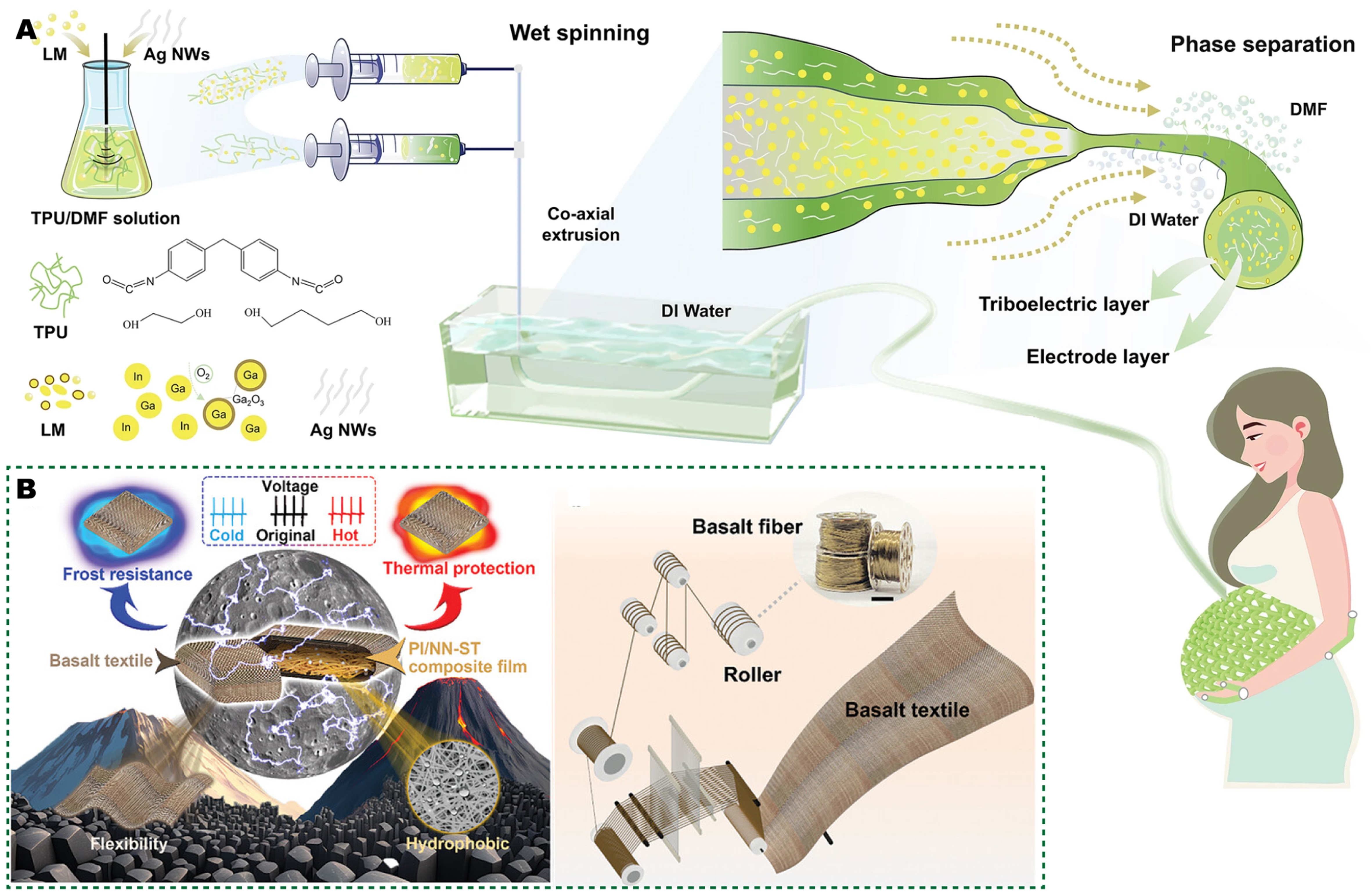
Figure 5. Representative work for MEFs regarding personal safety protection: (A) Schematic diagram of the coaxial wet-spinning process, structural composition of the multifunctional triboelectric fiber, and potential applications. Reprinted with permission from[83]. Adhering to the CC BY 4.0 agreement; (B) Schematic of the TBT with great flame retardancy and thermal protective performance and the weaving process of the simulated lunar soil basalt textiles (Scale bar: 1 cm). Reprinted with permission from[87]. Copyright 2024, Wiley. MEFs: Mechano-electric fibers; TBT: triboelectric basalt textile; LM: liquid metal; AgNWs: silver nanowires; TPU: thermoplastic urethane; DMF: dimethylformamide; DI: deionized; PI: polyimide; NN-ST: NaNbO3–SrTiO3.
As MEFs transition from functional validation toward practical wearable applications, active temperature and humidity regulation capabilities are essential for dynamically maintaining the thermophysiological comfort of the intra-garment microclimate. MEFs can harvest energy to drive Joule heaters for active warming or power micro-thermoelectric devices for cooling, demonstrating the synergistic effect of self-powered operation and thermal management. Zhu et al. engineered a bioinspired, spider-web-like, hierarchically structured Janus nanofiber membrane via simultaneous electrospinning and electrospraying[84]. This membrane features a bilayer asymmetric architecture comprising a hydrophobic PVDF-HFP layer and a hydrophilic polyamide 6 (PA6) layer. For thermal and moisture management, a temperature differential of 7.4 °C across the membrane was achieved under 1 kW·m-2 solar illumination. Furthermore, the electric-field-driven moisture transmission rate increased by 20% compared with passive diffusion. Exhibiting excellent water resistance, breathability, and unidirectional moisture transport, this membrane seamlessly integrates triboelectric energy harvesting, adaptive thermal and moisture regulation, and sterilization functionalities. Focusing on wearable thermal management, Moradi et al. reported PAN-MXene composite fibers that demonstrate broad potential for the active heating of smart textiles, flexible heat dissipation in electronic devices, and personal thermoregulation[85]. PAN served as the polymer matrix and Ti3C2Tx MXene nanosheets served as the functional filler at a high loading of 50 wt%. The MXene nanosheets were uniformly distributed both on the fiber surfaces and within the interstitial spaces, thereby establishing robust thermally and electrically conductive pathways. Achieving a maximum power density of 432.7 mW·m-2, the resulting composite yarns can be directly woven into smart fabrics, offering an optimal combination of flexibility, durability, and industrial manufacturability.
Concurrently, flame retardancy fundamentally guarantees the thermal safety of the devices under extreme conditions such as high temperatures and open flames[86]. Li et al. developed an ultra-wide-temperature-range TENG (triboelectric basalt textile, TBT), effectively overcoming the limited operating-temperature range of conventional TENGs [Figure 5B][87]. Utilizing melt-drawn basalt fiber fabric as both the electrode and the thermally insulating flame-retardant layer, paired with a polyimide (PI)/NaNbO3–SrTiO3 (NN-ST) composite nanofiber membrane as the triboelectric counterpart, the resulting TBT retained over 85% of its initial voltage at -196 °C (in liquid nitrogen) and approximately 55% at 520 °C (in an alcohol lamp flame). Remarkably, the limiting oxygen index (LOI) reached an exceptional 90%, and the fabric exhibited neither combustion nor internal structural damage after 180 s of direct flame exposure. To enhance flame retardancy, Qiao et al. employed interfacial molecular engineering for the non-destructive sizing modification of poly(p-phenylene-2,6-benzobisoxazole) (PBO) fibers with aminonaphthalimide (NDI-NH2), followed by a hot-pressing consolidation process[88]. The assembled single-electrode TENG showed a thermal decomposition index of 303.9 °C, a 5% weight-loss temperature (Td) of 497.3 °C, and an LOI of 36.4%. The material demonstrated excellent self-extinguishing behavior in an open flame without any melt dripping. While flame retardancy inherently arises from the properties of constituent materials, MEFs can add new functional dimensions to flame-retardant protection. For instance, their electrical output signals can be used for early fire warning, thereby converting passive flame retardancy into active protection. In summary, the seamless integration of heat resistance, intrinsic flame retardancy, and robust triboelectric functionality establishes a new paradigm of material–structure–performance synergy for self-powered electronics operating in extreme environments.
OUTLOOK
By seamlessly integrating TENG technology with textiles, MEFs perform the dual functions of energy harvesting and multimodal information sensing, providing an optimized solution to the challenges of sustainable power supply and enhanced sensing capabilities in wearable systems. These technological features are primarily manifested in two aspects: (1) the unique energy conversion mechanism of TENGs enables the efficient transduction of human motion into quantifiable electrical signals; and (2) textile substrates possess flexibility, physiological compatibility, and scalable manufacturability. In conclusion, MEFs provide new solutions to the long-standing dependence of sensing systems on external power sources and overcome the limitations in information acquisition pathways, ultimately transforming the human body into a unified entity that serves as both the biomechanical energy source and the endpoint for power consumption.
Looking ahead, fully self-sufficient MEF-based energy systems still face several core challenges that are closely tied to the fiber and textile nature of these devices. Achieving a practical balance among high electrical output, sensing functionality, wear comfort, mechanical durability, and scalable production remains the central bottleneck impeding the translation of self-sufficient MEF systems into real-world applications. For example, the structure–property relationships in woven topologies remain poorly understood. The electrical output of MEF textiles is not simply a linear superposition of individual fiber outputs; factors including warp–weft interlacing patterns, yarn twist, fabric density, and layered architecture strongly influence inter-fiber contact–separation behavior, stress-transfer efficiency, and charge-collection pathways. Drawing on structural design principles from textile engineering can provide systematic approaches to tailoring inter-fiber contact area, contact pressure, and gap distances. In addition, yarn twisting and wrapping techniques can construct helical or spring-like fiber architectures, thereby enhancing stretchability and output stability. At the same time, fiber-scale interconnection has rarely been treated as a dedicated technical module requiring systematic design and evaluation. Critical issues such as electrode routing, low-resistance interconnection reliability, stress concentration and fatigue failure at contact points, and signal crosstalk in multi-fiber integration remain unresolved. Future research must therefore advance fiber-scale micro-interconnection technologies, develop flexible strain-relief structures, and establish standardized interface specifications and reliability testing protocols to enable seamless integration of MEFs with existing electronic systems.
Another critical issue specific to MEFs is electrical stability and durability under multiaxial deformation. Unlike planar TENGs, which typically operate under relatively simple deformation modes, MEFs in real wearing conditions are subjected to complex multimodal deformations, including bending, torsion, stretching, and shearing, often at amplitudes and frequencies far exceeding those of conventional TENGs. To address these challenges, flexible encapsulation and self-healing strategies are particularly promising. Ultra-thin flexible encapsulation layers and self-healing dielectric or electrode materials based on dynamic covalent bonds or supramolecular interactions can significantly improve durability under multiaxial deformation and over repeated washing cycles.
Alongside these structural and material innovations, user behavior perception and physiological signal monitoring still suffer from insufficient linearity and limited resistance to interference. Future advancements in user behavior perception will focus on multimodal interaction innovations and fine motion capture. This involves integrating multiple sensing modalities, such as pressure and bending, to enrich the interaction experience. Besides, developing non-contact MEF sensors also extends device lifetimes and expands applicable scenarios. With the aid of intelligent diagnostic algorithms such as deep learning, multi-source and longitudinal physiological data can be fused and analyzed to enable automated disease diagnosis and risk assessment, thereby advancing personalized medicine and remote health management.
For environmental safety and personal protection, MEF development trends focus on improving selectivity toward hazardous factors and supporting emergency rescue operations. The development of nanofibrous materials with high specific surface areas and tailored adsorption properties, alongside multilayer composite filter media, will strengthen particulate matter capture capabilities. Furthermore, functional group modification and sensitive material screening can significantly enhance the selective detection of specific toxic gases. Their integration into a smart healthcare system triggers automatic responses, ensuring environmental health and safety.
Addressing these critical issues will open a new chapter for the development of MEFs. Ultimately, this will enable MEFs to deliver higher-quality services, safeguard physical and mental well-being, facilitate intelligent interactions, and ensure robust protection.
DECLARATIONS
Authors’ contributions
Conceptualization: Zhao, J.; Dong, K.
Investigation: Zhao, J.; Li, H.; Fan, X.; Xie, H.
Writing - original draft: Zhao, J.
Writing - review and editing: Dong, K.
Project administration: Dong, K.
Funding acquisition: Zhao, J.; Dong, K.
Availability of data and materials
Not applicable.
AI and AI-assisted tools statement
Not applicable.
Financial support and sponsorship
This work was supported by the National Natural Science Foundation of China (Grant No. 22109012), China Postdoctoral Science Foundation (Grant No. 2024M753175), Changchun-CAS Science and Technology Innovation Joint Program (Grant No. 24SH06), Fundamental Research Funds for the Central Universities (Grant No. E1E46805), Natural Science Foundation of the Beijing Municipality (Grant No. L222037 and 2212052), Postdoctoral Fellowship Program of CPSF (Grant No. GZC20232612).
Conflicts of interest
Dong, K. is a Guest Editor of the special topic “Smart Fibers and Self-Powered Wearable Devices” of the journal Soft Science, but was not involved in any stage of editorial processing, including reviewer selection, manuscript handling, and decision-making, while the other authors have declared that they have no conflicts of interest.
Ethical approval and consent to participate
Not applicable.
Consent for publication
Not applicable.
Copyright
© The Author(s) 2026.
REFERENCES
1. Dong, F.; Han, C.; Cai, S. T.; Lee, J.; Niu, S. Skin-integrated wearable electronics: a dual-interface perspective. SmartSys 2025, 1, e70013.
2. Liu, L.; Chang, D.; Gao, C. A review of multifunctional nanocomposite fibers: design, preparation and applications. Adv. Fiber. Mater. 2024, 6, 68-105.
3. Xing, F.; Gao, X.; Gao, W.; et al. High-entropy energy for self-powered systems. SmartSys 2025, 1, e70001.
4. Gunawardhana, K. R. S. D.; Wanasekara, N. D.; Dharmasena, R. D. I. G. Towards truly wearable systems: optimizing and scaling up wearable triboelectric nanogenerators. iScience 2020, 23, 101360.
5. Yin, L.; Kim, K. N.; Lv, J.; et al. A self-sustainable wearable multi-modular E-textile bioenergy microgrid system. Nat. Commun. 2021, 12, 1542.
6. Lin, Z.; Deng, Y.; Deng, L.; et al. Triboelectric nanogenerator-enabled wireless self-powered sensing system leveraging radio frequency. SmartSys 2026, 2, e70031.
7. Zhao, J.; Fan, X.; Xie, H.; et al. Revolutionizing wearable sustainable energy enabled by mechano-electric conversion fibers. Energy. Environ. Sci. 2025, 18, 3955-85.
8. Luo, J.; Gao, W.; Wang, Z. L. The triboelectric nanogenerator as an innovative technology toward intelligent sports. Adv. Mater. 2021, 33, e2004178.
9. Ge, X.; Hu, N.; Yan, F.; Wang, Y. Development and applications of electrospun nanofiber-based triboelectric nanogenerators. Nano. Energy. 2023, 112, 108444.
10. Xu, C.; Yu, J.; Huo, Z.; Wang, Y.; Sun, Q.; Wang, Z. L. Pursuing the tribovoltaic effect for direct-current triboelectric nanogenerators. Energy. Environ. Sci. 2023, 16, 983-1006.
11. Jiang, L.; Liu, X.; Lv, J.; et al. Fluid-based triboelectric nanogenerators: unveiling the prolific landscape of renewable energy harvesting and beyond. Energy. Environ. Sci. 2024, 17, 3700-38.
12. Fu, X.; Pan, X.; Liu, Y.; et al. Non-contact triboelectric nanogenerator. Adv. Funct. Mater. 2023, 33, 2306749.
13. Ning, C.; Zheng, G.; Dong, K. Emerging self-powered autonomous sensing triboelectric fibers toward future wearable human-computer interaction devices. Adv. Sensor. Res. 2023, 2, 2200044.
14. Chang, C.; Tran, V. H.; Wang, J.; Fuh, Y. K.; Lin, L. Direct-write piezoelectric polymeric nanogenerator with high energy conversion efficiency. Nano. Lett. 2010, 10, 726-31.
15. Zhao, X.; Guo, H.; Ding, P.; et al. Hollow-porous fiber-shaped strain sensor with multiple wrinkle-crack microstructure for strain visualization and wind monitoring. Nano. Energy. 2023, 108, 108197.
16. Anike, J. C.; Belay, K.; Abot, J. L. Effect of twist on the electromechanical properties of carbon nanotube yarns. Carbon 2019, 142, 491-503.
17. Yang, Q.; Xia-liu, D. L. Experimental investigation of resistance-strain behavior of carbon nanotube fibers and yarns under single and cyclic loads. Mater. Res. Express. 2019, 6, 025021.
18. Somkuwar, V. U.; Kumar, B. Influence of the fabric topology on the performance of a textile-based triboelectric nanogenerator for self-powered monitoring. ACS. Appl. Polym. Mater. 2023, 5, 2323-35.
19. Kwak, S. S.; Kim, H.; Seung, W.; Kim, J.; Hinchet, R.; Kim, S. W. Fully stretchable textile triboelectric nanogenerator with knitted fabric structures. ACS. Nano. 2017, 11, 10733-41.
20. Cui, X.; Xie, H.; Jiang, Y.; Xu, Z.; Sui, G.; Yang, X. Porous structure induced crack redistribution in surface conductive layer for high-performance fiber-based flexible strain and pressure sensors. Polym. Adv. Technol. 2023, 34, 3011-21.
21. Bakhtiyari, S.; Bagherzadeh, R.; Ezazshahabi, N.; Jahanshahi, A.; Van Langenhove, L.; Malengier, B. Yarn-to-yarn surface area and roughness as structural engineering tools for optimizing the electrical output of triboelectric nanogenerators: geometrical and experimental verification. Adv. Mater. Technol. 2025, 10, 2401346.
22. Lee, S.; Kim, J.; Yun, I.; et al. An ultrathin conformable vibration-responsive electronic skin for quantitative vocal recognition. Nat. Commun. 2019, 10, 2468.
23. Dinh Le, T. S.; An, J.; Huang, Y.; et al. Ultrasensitive anti-interference voice recognition by bio-inspired skin-attachable self-cleaning acoustic sensors. ACS. Nano. 2019, 13, 13293-303.
24. Cuthbert, T. J.; Hannigan, B. C.; Roberjot, P.; Shokurov, A. V.; Menon, C. HACS: helical auxetic yarn capacitive strain sensors with sensitivity beyond the theoretical limit. Adv. Mater. 2023, 35, e2209321.
25. Ji, B.; Zhou, Q.; Lei, M.; et al. Gradient architecture-enabled capacitive tactile sensor with high sensitivity and ultrabroad linearity range. Small 2021, 17, e2103312.
26. Pan, H.; Chen, G.; Chen, Y.; et al. Biodegradable cotton fiber-based piezoresistive textiles for wearable biomonitoring. Biosens. Bioelectron. 2023, 222, 114999.
27. Zhao, Z.; Li, Q.; Dong, Y.; Gong, J.; Li, Z.; Zhang, J. Washable patches with gold nanowires/textiles in wearable sensors for health monitoring. ACS. Appl. Mater. Interfaces. 2022, 14, 18884-900.
28. Mokhtari, F.; Usman, K. A. S.; Zhang, J.; et al. Enhanced acoustoelectric energy harvesting with Ti3C2Tx MXene in an all-fiber nanogenerator. ACS. Appl. Mater. Interfaces. 2025, 17, 3214-28.
29. Lan, L.; Jiang, C.; Yao, Y.; Ping, J.; Ying, Y. A stretchable and conductive fiber for multifunctional sensing and energy harvesting. Nano. Energy. 2021, 84, 105954.
30. Xu, H.; Tao, J.; Liu, Y.; Mo, Y.; Bao, R.; Pan, C. Fully fibrous large-area tailorable triboelectric nanogenerator based on solution blow spinning technology for energy harvesting and self-powered sensing. Small 2022, 18, e2202477.
31. Sun, T.; Zhou, B.; Zheng, Q.; Wang, L.; Jiang, W.; Snyder, G. J. Stretchable fabric generates electric power from woven thermoelectric fibers. Nat. Commun. 2020, 11, 572.
32. Zou, J.; Ling, F.; Shi, X.; et al. An electromagnetic fiber acoustic transducer with dual modes of loudspeaker and microphone. Small 2021, 17, e2102052.
33. Tang, C.; Liu, Z.; Hu, Q.; et al. Unconstrained piezoelectric vascular electronics for wireless monitoring of hemodynamics and cardiovascular health. Small 2024, 20, e2304752.
34. Yang, W.; Gong, W.; Hou, C.; et al. All-fiber tribo-ferroelectric synergistic electronics with high thermal-moisture stability and comfortability. Nat. Commun. 2019, 10, 5541.
35. Cheng, T.; Shao, J.; Wang, Z. L. Triboelectric nanogenerators. Nat. Rev. Methods. Primers. 2023, 3, 220.
36. Wang, G.; Liu, X.; Wang, Y.; et al. Energy harvesting and sensing integrated woven structure kneepad based on triboelectric nanogenerators. Adv. Mater. Technol. 2023, 8, 2200973.
37. Hasan, M. M.; Sadeque, M. S. B.; Albasar, I.; et al. Scalable fabrication of MXene-PVDF nanocomposite triboelectric fibers via thermal drawing. Small 2023, 19, e2206107.
38. Paosangthong, W.; Wagih, M.; Torah, R.; Beeby, S. Textile-based triboelectric nanogenerator with alternating positive and negative freestanding woven structure for harvesting sliding energy in all directions. Nano. Energy. 2022, 92, 106739.
39. Zhang, Y.; Zhang, D.; Chen, Y.; et al. Liquid metal enabled elastic conductive fibers for self-powered wearable sensors. Adv. Mater. Technol. 2023, 8, 2202030.
40. Xu, S.; Nie, W.; Sun, J.; et al. Multi-mode and durable fiber triboelectric nanogenerator for power and sensor enabled by Hookean vascular stent structure. Chem. Eng. J. 2023, 472, 145088.
41. Chen, K.; Li, Y.; Yang, G.; Hu, S.; Shi, Z.; Yang, G. Fabric-based TENG woven with bio-fabricated superhydrophobic bacterial cellulose fiber for energy harvesting and motion detection. Adv. Funct. Mater. 2023, 33, 2304809.
42. Li, Y.; Zhang, Y.; Yi, J.; et al. Large-scale fabrication of core-shell triboelectric braided fibers and power textiles for energy harvesting and plantar pressure monitoring. EcoMat 2022, 4, e12191.
43. Zhao, T.; Fu, Y.; Sun, C.; et al. Wearable biosensors for real-time sweat analysis and body motion capture based on stretchable fiber-based triboelectric nanogenerators. Biosens. Bioelectron. 2022, 205, 114115.
44. Wang, Y.; Chu, L.; Meng, S.; et al. Scalable and ultra-sensitive nanofibers coaxial yarn-woven triboelectric nanogenerator textile sensors for real-time gait analysis. Adv. Sci. 2024, 11, e2401436.
45. Feng, Z.; Yang, S.; Jia, S.; et al. Scalable, washable and lightweight triboelectric-energy-generating fibers by the thermal drawing process for industrial loom weaving. Nano. Energy. 2020, 74, 104805.
46. Xiong, Y.; Luo, L.; Yang, J.; et al. Scalable spinning, winding, and knitting graphene textile TENG for energy harvesting and human motion recognition. Nano. Energy. 2023, 107, 108137.
47. Wu, Y.; Dai, X.; Sun, Z.; et al. Highly integrated, scalable manufacturing and stretchable conductive core/shell fibers for strain sensing and self-powered smart textiles. Nano. Energy. 2022, 98, 107240.
48. Dong, C.; Leber, A.; Das Gupta, T.; et al. High-efficiency super-elastic liquid metal based triboelectric fibers and textiles. Nat. Commun. 2020, 11, 3537.
49. Tao, D.; Su, P.; Chen, A.; Gu, D.; Eginligil, M.; Huang, W. Electro-spun nanofibers-based triboelectric nanogenerators in wearable electronics: status and perspectives. npj. Flex. Electron. 2025, 9, 357.
50. Ram Joshi, S.; Kim, S. High power triboelectric nanogenerator based on nanofibers of silk protein and PVBVA and its motion sensing applications. Chem. Eng. J. 2024, 489, 151248.
51. Fu, H.; Gong, J.; Cao, J.; et al. Understanding contact electrification via direct covalent bond cleavage of polymer chains for ultrahigh electrostatic charge density. Energy. Environ. Sci. 2024, 17, 3776-87.
52. Xiong, C.; Luo, B.; Lei, S.; et al. A scalable core-sheath yarn for transforming wool static nuisance into usable energy for wearable electronics. Adv. Mater. 2025, 37, e08147.
53. Park, J.; Chang, S.; Shin, J.; et al. Bio-physicochemical dual energy harvesting fabrics for self-sustainable smart electronic suits. Adv. Energy. Mater. 2023, 13, 2300530.
54. Sun, Q.; Ren, G.; Yan, R.; et al. Linking electron cloud potential wells to achieve ultrahigh output current in a triboelectric nanogenerator. Adv. Mater. 2025, 37, e08689.
55. Peng, X.; Peng, W.; Chen, Y.; et al. Synergistically designed carbon-based hybrid non-contact triboelectric-and-electromagnetic nanogenerator with ultralong charge retention for wearable and ambient electromagnetic-waste energy harvesting and self-powered sensing. Mater. Sci. Eng. R. Rep. 2025, 165, 100994.
56. Chou, S.; Chen, Y.; Yan, Z.; et al. Topological-insulator nanocomposite and graphite-like tribo-charge-accumulating fabric enabling high-performance non-contact stretchable and textile-based triboelectric nanogenerators with robust charge retention. Adv. Energy. Mater. 2024, 14, 2402169.
57. Dong, C.; Leber, A.; Yan, D.; et al. 3D stretchable and self-encapsulated multimaterial triboelectric fibers. Sci. Adv. 2022, 8, eabo0869.
58. Ahmed, T.; Gao, Y.; So, M. Y.; et al. Fully weft-faced fabric architectures enable triboelectric nanogenerators with high-performance energy harvesting and motion sensing. Small 2026, 22, e14093.
59. So, M. Y.; Xu, B. Adaptive ultra-low resilience woven triboelectric nanogenerators for high-performance wearable energy harvesting and motion sensing. Small 2025, 21, e2501116.
60. Wang, W.; Zhu, J.; Zhao, H.; et al. A reconfigurable omnidirectional triboelectric whisker sensor array for versatile human-machine-environment interaction. Nanomicro. Lett. 2025, 18, 76.
61. Su, J.; Niu, Z.; Hu, Y.; et al. Superelastic triboelectric aerogel enabled by cross-scale fibers and heterojunction particles for wearable intelligent neck guard. Adv. Funct. Mater. 2026, 36, e15065.
62. Chen, Q.; Xu, D.; Yan, Y.; et al. A self-powered tennis training system based on micro-nano structured sensing yarn arrays. Adv. Funct. Mater. 2025, 35, 2414395.
63. Xu, G.; Wang, H.; Zhao, G.; et al. Self-powered electrotactile textile haptic glove for enhanced human-machine interface. Sci. Adv. 2025, 11, eadt0318.
64. Fan, W.; He, Q.; Meng, K.; et al. Machine-knitted washable sensor array textile for precise epidermal physiological signal monitoring. Sci. Adv. 2020, 6, eaay2840.
65. Liang, D.; Xie, Y.; Sun, L.; et al. Durable, high-output, weavable self-powered pressure sensors enabled by plant-templated topological interlocking structure and Schottky junction. Nano. Lett. 2025, 25, 7326-35.
66. Shao, B.; Lu, T. C.; Lu, M. H.; et al. Efficient permeable monolithic hybrid tribo-piezo-electromagnetic nanogenerator based on topological-insulator-composite. Adv. Mater. 2024, 36, e2408936.
67. Zhao, J.; Chen, D.; Zhao, L.; et al. Self-powered speech recognition system for deaf users. Cell. Rep. Phys. Sci. 2022, 3, 101168.
68. Xie, H.; Zhao, J.; Li, H.; et al. Anti-interference skin-compatible self-powered voice patch for noise-immune simultaneous interpretation and dual-mode interaction. Adv. Funct. Mater. 2026, 36, e29333.
69. Shao, B.; Wu, T. C.; Yan, Z. X.; et al. Deep learning-empowered triboelectric acoustic textile for voice perception and intuitive generative AI-voice access on clothing. Sci. Adv. 2025, 11, eadx3348.
70. Wang, N.; Feng, Y.; Zheng, Y.; et al. New hydrogen bonding enhanced polyvinyl alcohol based self-charged medical mask with superior charge retention and moisture resistance performances. Adv. Funct. Mater. 2021, 31, 2009172.
71. Qu, M.; Liu, Z.; Liu, H.; et al. A flexible superhydrophobic MOF-based textile triboelectric nanogenerator with multifunctions: mechanical energy harvesting, self-powered human motion sensing, and human-computer interaction. ACS. Appl. Mater. Interfaces. 2025, 17, 64591-605.
72. Lin, C.; Zhao, H.; Pei, Z.; et al. Cotton textile based triboelectric nanogenerator with high environmentally stability and output performance for human motion monitor and intelligent counter system. Adv. Funct. Mater. 2026, 36, e24669.
73. Lu, P.; Yang, Y.; Luo, B.; et al. Multiscale structural strong yet tough triboelectric materials enabled by in situ microphase separation. Adv. Funct. Mater. 2025, 35, 2418336.
74. Shao, B.; Lu, M. H.; Wu, T. C.; et al. Large-area, untethered, metamorphic, and omnidirectionally stretchable multiplexing self-powered triboelectric skins. Nat. Commun. 2024, 15, 1238.
75. Zhou, G.; Ma, Y.; Wei, B.; et al. Sustainable self-powered PVDF fibrous filter medias based on triboelectric nanogenerator with efficient dust collection for personal occupational protection. J. Colloid. Interface. Sci. 2025, 696, 137871.
76. Peng, Z.; Shi, J.; Xiao, X.; et al. Self-charging electrostatic face masks leveraging triboelectrification for prolonged air filtration. Nat. Commun. 2022, 13, 7835.
77. Shin, J.; Jeong, S.; Kim, J.; et al. Dynamic pore modulation of stretchable electrospun nanofiber filter for adaptive machine learned respiratory protection. ACS. Nano. 2021, 15, 15730-40.
78. Yang, Y.; Yang, Y.; Huang, J.; et al. Electrospun nanocomposite fibrous membranes for sustainable face mask based on triboelectric nanogenerator with high air filtration efficiency. Adv. Fiber. Mater. 2023, 5, 1505-18.
79. Cho, Y.; Son, Y.; Ahn, J.; et al. Multifunctional filter membranes based on self-assembled core-shell biodegradable nanofibers for persistent electrostatic filtration through the triboelectric effect. ACS. Nano. 2022, 16, 19451-63.
80. Yi, M.; Lu, N.; Gou, Y.; et al. Multi-scale nanofiber filter-based TENG for sustainable enhanced PM filtration and self-powered respiratory monitoring. Green. Energy. Environ. 2026, 11, 119-30.
81. Ding, Z.; Tian, Z.; Ji, X.; et al. Hybrid cellulose-based systems for triboelectrification in aerosol filtration, ammonia abatement and respiration monitoring. Adv. Funct. Mater. 2024, 34, 2313790.
82. Kovalska, E.; Routledge, J.; Cancelliere, R.; et al. Multifunctional, energy-autonomous textile sensors enabled by spray-coated two-dimensional heterostructures. Npj. Flex. Electron. 2026, 10, 49.
83. Zhang, H.; Chen, Y.; Xiang, S.; et al. Liquid metal and silver nanowires synergic network-enabled triboelectric fiber for strain-insensitive multifunctional applications. Adv. Fiber. Mater. 2026, 8, 594-610.
84. Zhu, Q.; Wu, T.; Sun, Y.; et al. Bioinspired Janus spider-web nanofibrous membranes integrating triboelectric energy harvesting, adaptive thermo-moisture regulation, and bactericidal activity for multifunctional wearables. Adv. Mater. 2026, 38, e16022.
85. Moradi, A.; Szewczyk, P. K.; Stachewicz, U. Scalable and multifunctional PAN-MXene composite fibers for thermal management, photothermal conversion, energy harvesting, and sensing for wearable applications. Adv. Mater. 2026, 38, e22098.
86. Liu, Y.; Wang, J.; Cao, S.; et al. Thermomechanically robust cellulosic triboelectric materials enabled by interfacial nano-bridge. Adv. Funct. Mater. 2026, 36, e25097.
87. Li, Y.; Guo, Y.; Fu, F.; et al. Triboelectric basalt textiles efficiently operating within an ultrawide temperature range. Adv. Mater. 2024, 36, e2401359.
Cite This Article
 Open Access
How to Cite
Zhao, J.; Li, H.; Fan, X.; Xie, H.; Dong, K. Motion-induced mechano-electric fibers towards wearable electronics with energy and information self-sufficiency. Soft Sci. 2026, 6, 94. https://dx.doi.org/10.20517/ss.2026.171
Download Citation
Export Citation File:
Type of Import
Tips on Downloading Citation
Citation Manager File Format
Type of Import
Direct Import: When the Direct Import option is selected (the default state), a dialogue box will give you the option to Save or Open the downloaded citation data. Choosing Open will either launch your citation manager or give you a choice of applications with which to use the metadata. The Save option saves the file locally for later use.
Indirect Import: When the Indirect Import option is selected, the metadata is displayed and may be copied and pasted as needed.
About This Article
Special Topic
Copyright

Data & Comments
Data
0








Comments
Comments must be written in English. Spam, offensive content, impersonation, and private information will not be permitted. If any comment is reported and identified as inappropriate content by OAE staff, the comment will be removed without notice. If you have any queries or need any help, please contact us at support@oaepublish.com.