

fig7
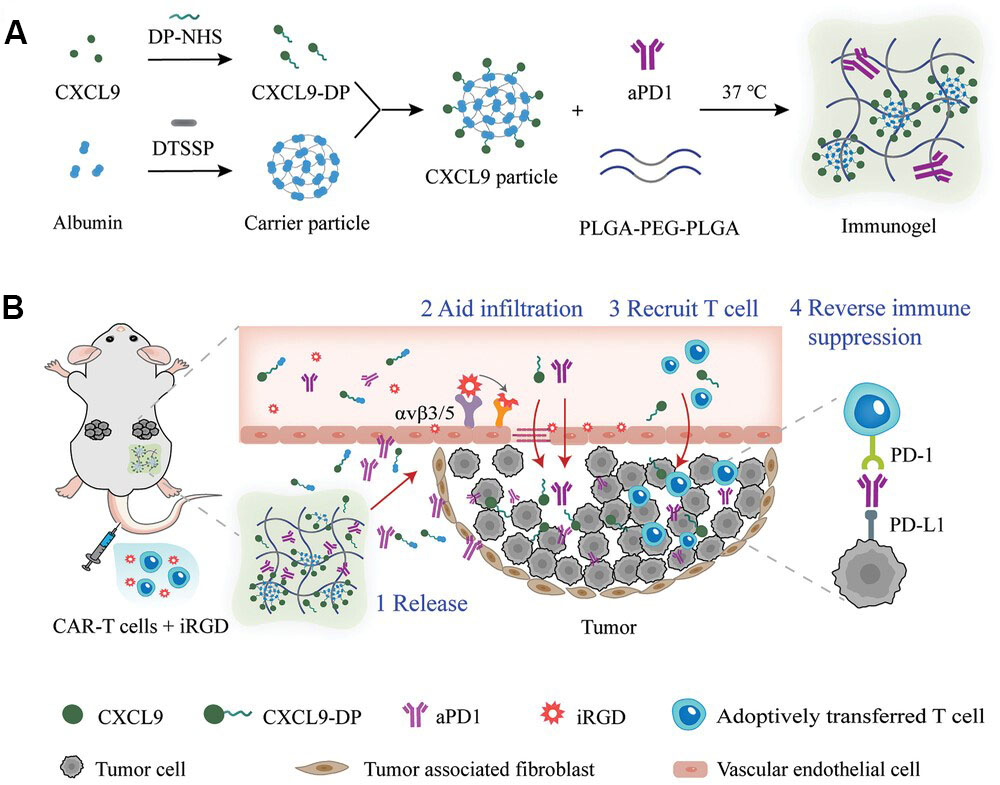
Figure 7. Design of CITE. (A) Flow chart for synthesis of injectable thermo-sensitive immunogel; (B) Schematic diagram illustrating how CITE enhances the therapeutic efficacy of adoptively transferred T cells for solid tumors. (1) Immunogel forms a drug depot and allows sustained release of CXCL9 and PD-1 antibody (aPD1) peritumorally. (2) iRGD, co-infused with transferred T cells, aids tumor infiltration of CXCL9 and aPD1. (3) CXCL9 chemotactic gradient recruits transferred T cells to migrate to and infiltrate the tumor. (4) Intratumoral aPD1 helps tumor-infiltrating T cells to counter immunosuppression. Reproduced with permission[126]. Copyright 2024, Advanced Functional Materials. DP-NHS: Diphosphate-N-Hydroxysuccinimide ester; DTSSP: 3,3'-dithiobis(sulfosuccinimidylpropionate); CXCL9: CXC-chemokine ligand 9; CXCL9-DP: C-X-C motif chemokine ligand 9 - diphenyl (or DP-modified); PLGA: poly(lactic-co-glycolic acid); PEG: poly(ethylene glycol); iRGD: internalizing RGD (peptide); PD-1: programmed cell death protein 1; PD-L1: programmed death-ligand 1; CITE: chemokine-based injectable navigation system; aPD-1: anti-programmed death-1 antibody; CAF: cancer-associated fibroblast.