


fig1
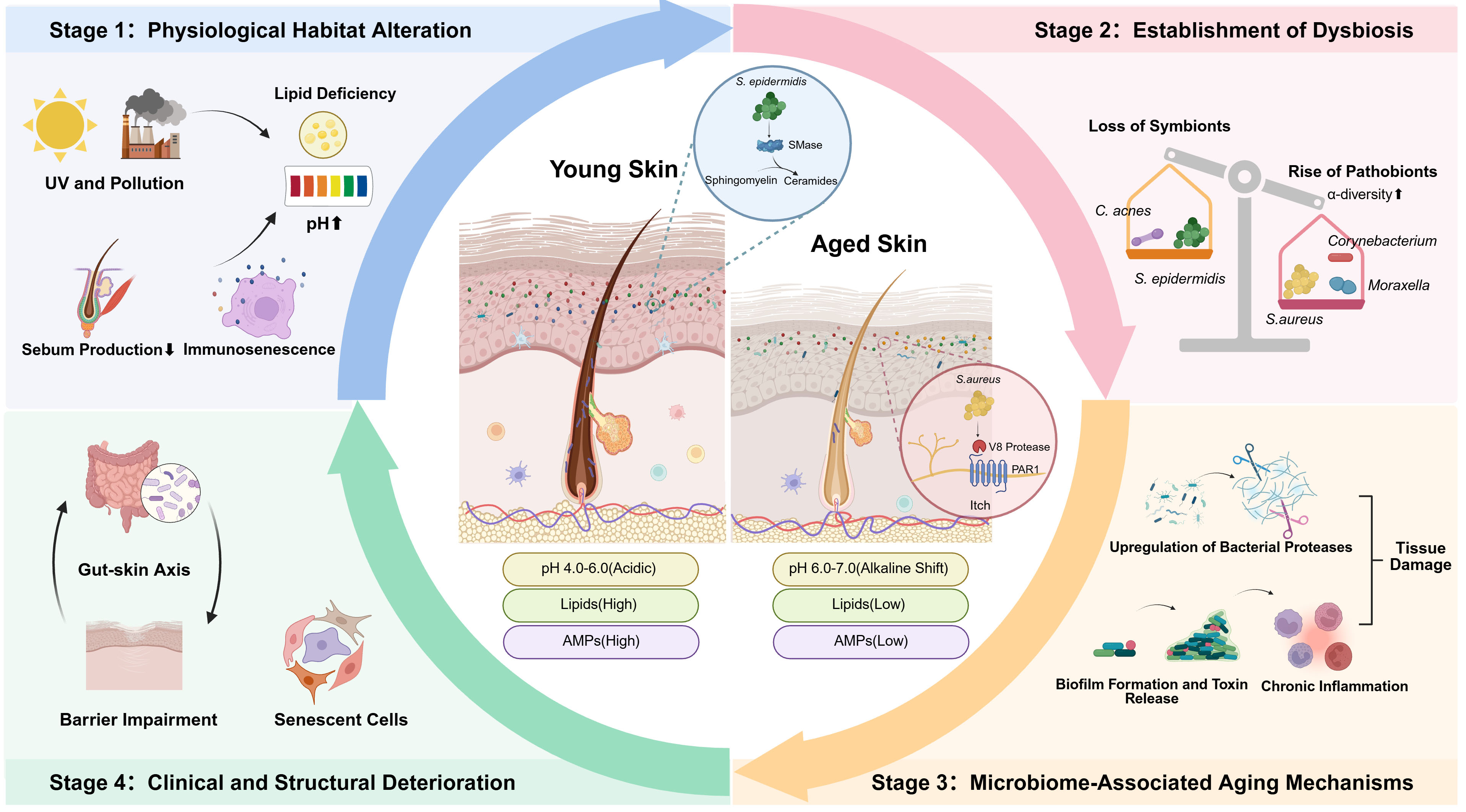
Figure 1. Bidirectional cycle of interactions between skin aging and microbiome dysbiosis. Intrinsic physiological decline such as reduced sebum secretion and immunosenescence synergizes with extrinsic exposome stressors like UV and pollution to reshape the cutaneous microenvironment. These factors induce an alkaline shift and lipid deficiency, favoring a pathological niche shift marked by a paradoxical increase in α-diversity, the depletion of keystone symbionts, and the proliferation of opportunistic pathobionts. This dysbiotic state is linked to tissue degeneration through specific molecular pathways, wherein bacterial proteases degrade extracellular matrix components while biofilm formation and toxin release trigger sustained chronic inflammation known as inflammaging. The resulting barrier impairment and cellular senescence further weaken host defenses to establish a self-reinforcing cycle, which may be further exacerbated by systemic signals from the gut-skin axis. UV: ultraviolet; C. acnes: Cutibacterium acnes; S. aureus: Staphylococcus aureus; S. epidermidis: Staphylococcus epidermidis; SMase: sphingomyelinase; AMP: antimicrobial peptide; PAR1: proteinase-activated receptor 1. Created in BioRender. Yu, L. (2026) https://BioRender.com/2u39vc7.