



fig3
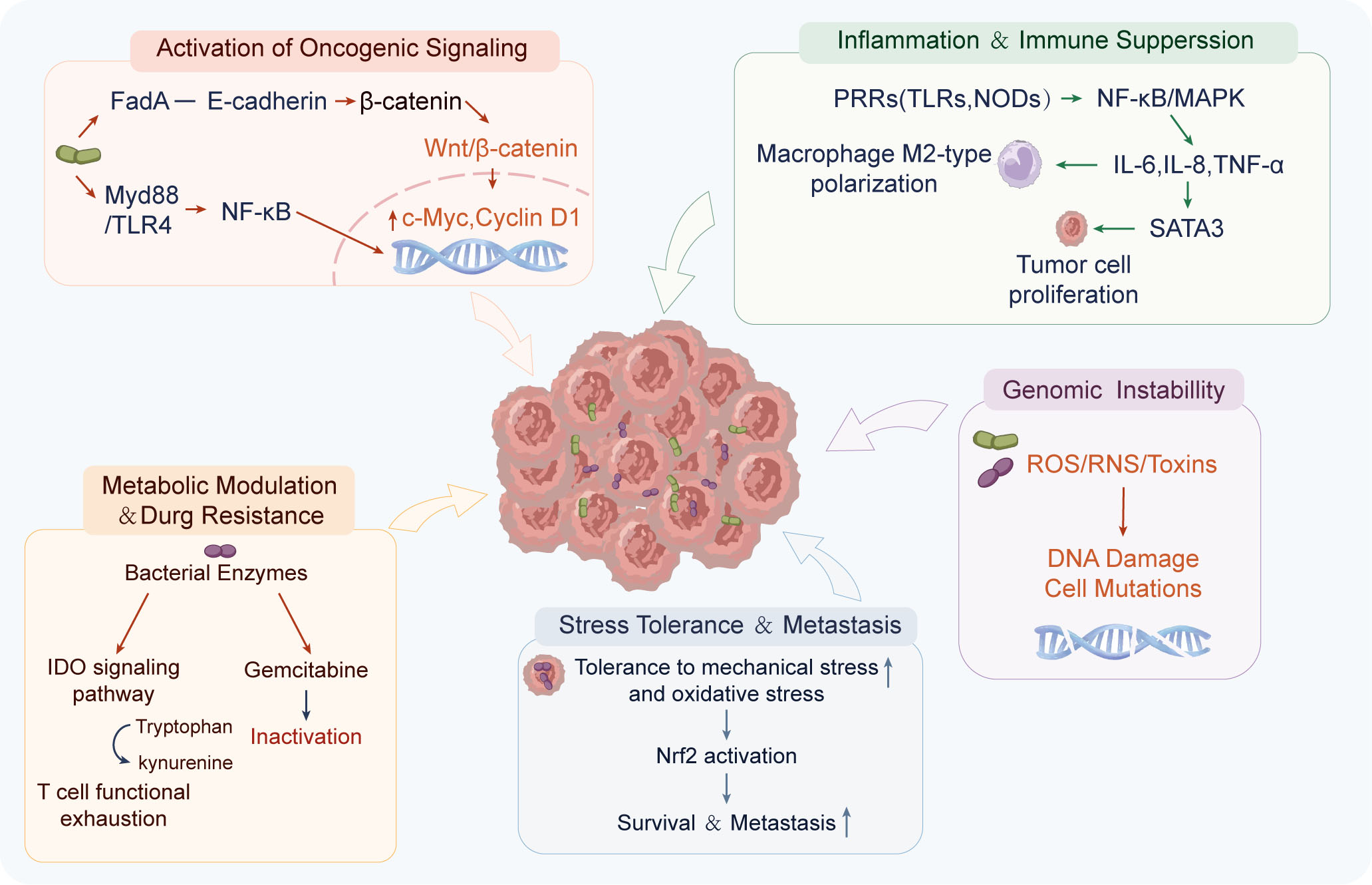
Figure 3. The mechanism by which microorganisms within tumors promote tumor growth. Intratumoral microorganisms contribute to tumor development through activation of oncogenic signaling, induction of inflammation and immune suppression, metabolic reprogramming and drug resistance, genomic instability, and enhancement of stress tolerance and metastasis. FadA: Fusobacterium adhesin A; TLR: Toll-like receptor; MyD88: myeloid differentiation primary response 88; NOD: nucleotide-binding oligomerization domain-containing protein; NF-κB: nuclear factor kappa-B; MAPK: mitogen-activated protein kinase; IL-6: interleukin-6; IL-8: interleukin-8; TNF-α: tumor necrosis factor alpha; STAT3: signal transducer and activator of transcription 3; PI3K: phosphoinositide 3-kinase; Akt: protein kinase B; mTOR: mechanistic target of rapamycin; ROS: reactive oxygen species; RNS: reactive nitrogen species; Nrf2: nuclear factor erythroid 2-related factor 2; IDO: indoleamine 2,3-dioxygenase.