



fig1
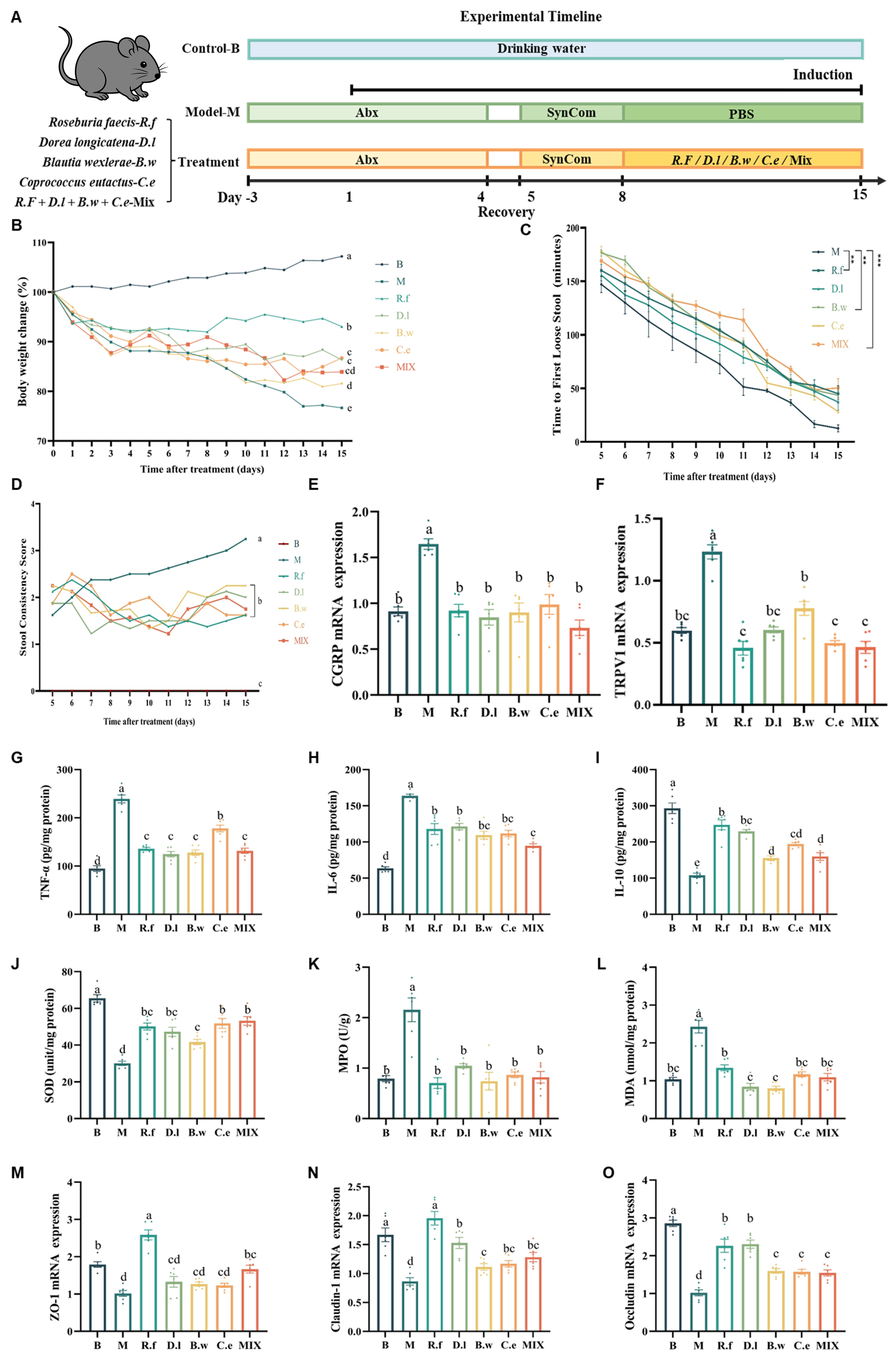
Figure 1. Lachnospiraceae strains ameliorate IBS symptoms in mice. (A) Experiment design; (B) Body weight changes; (C) Time to first loose stool; (D) Fecal consistency scores; (E and F) Colonic expression levels of visceral hypersensitivity-related factors CGRP and TRPV1. Different letters indicate statistical difference among groups; (G-I) Colonic expression levels of cytokines TNF-α, IL-6, and IL-10; (J-L) Colonic expression levels of oxidative stress markers SOD, MPO, and MDA; (M-O) Colonic expression levels of tight junction proteins ZO-1, Claudin-1, and Occludin. Data are presented as mean ± SEM. Different letters indicate statistically significant differences among groups (one-way ANOVA followed by Tukey HSD post hoc test, P < 0.05). Asterisks denote: **P < 0.01, ***P < 0.001. PBS: Phosphate-buffered saline; TNF-α: tumor necrosis factor-α; IL-6: interleukin-6; IL-10: interleukin-10; IBS: irritable bowel syndrome; CGRP: calcitonin gene-related peptide; TRPV1: transient receptor potential vanilloid 1; SOD: superoxide dismutase; MPO: myeloperoxidase; MDA: malondialdehyde; ZO-1: zonula occludens-1; SEM: standard error of the mean; ANOVA: analysis of variance; HSD: honest significant difference.