


fig1
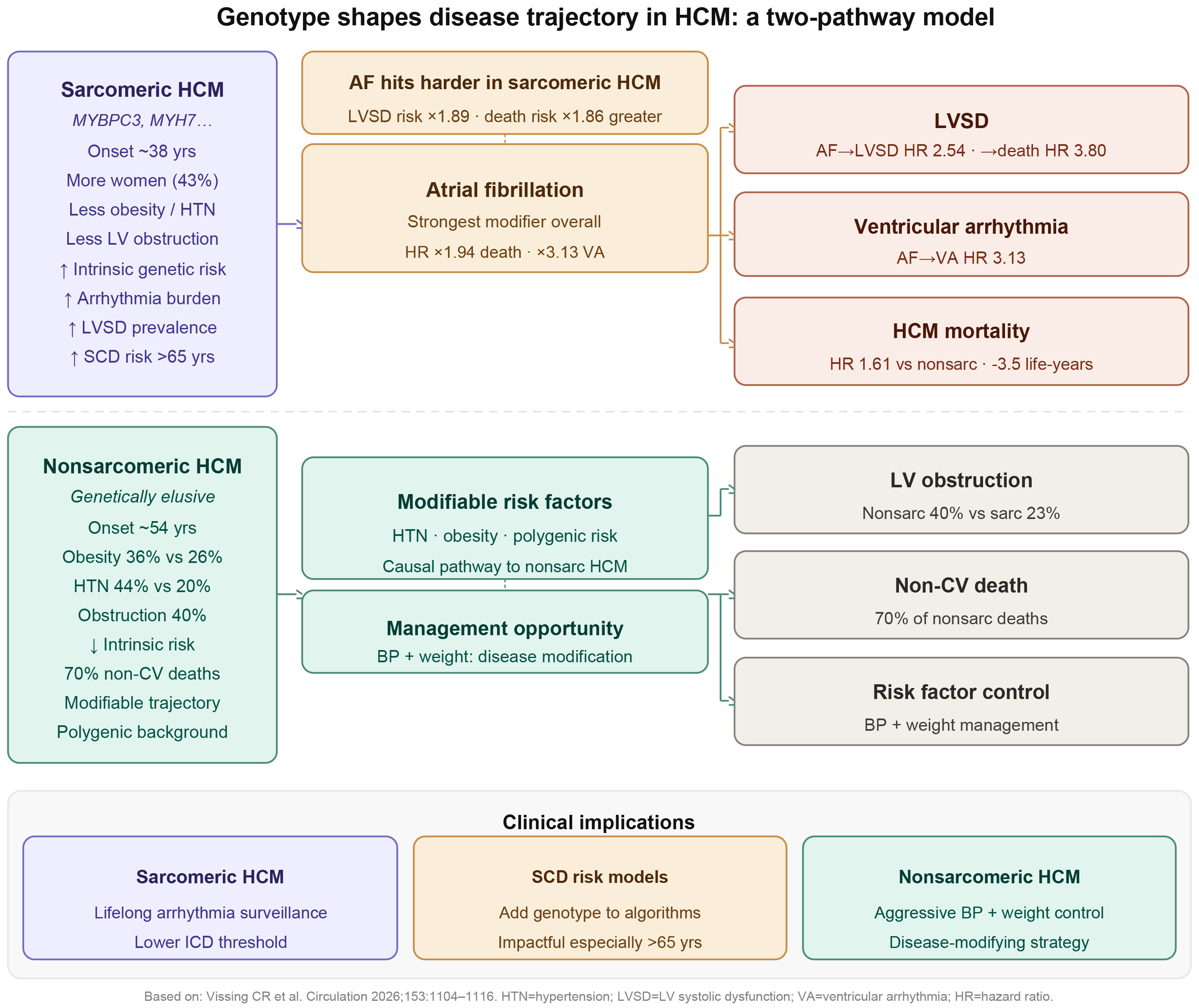
Figure 1. Two-pathway model of disease trajectory in hypertrophic cardiomyopathy according to genetic subtype. Sarcomeric HCM (top, driven by pathogenic sarcomere variants) is characterized by earlier disease onset, a higher intrinsic burden of arrhythmias and left ventricular systolic dysfunction, and a greater susceptibility to the downstream consequences of atrial fibrillation, which amplifies the risk of LVSD, ventricular arrhythmia, and HCM-related death to a significantly greater extent than in nonsarcomeric disease. Nonsarcomeric HCM (bottom, genetically elusive) is shaped predominantly by modifiable cardiovascular comorbidities - hypertension, obesity, and polygenic background risk - with a higher prevalence of LV obstruction and a greater proportion of noncardiovascular deaths. Clinical implications differ accordingly: sarcomeric HCM warrants intensified lifelong arrhythmia surveillance and a lower ICD threshold, incorporation of genotype into SCD risk prediction models would improve their performance, particularly in patients over 65, and nonsarcomeric HCM represents an opportunity for disease modification through aggressive blood pressure and weight management. HCM: Hypertrophic cardiomyopathy; LVSD: left ventricular systolic dysfunction; AF: atrial fibrillation; ICD: implantable cardioverter defibrillator; LV: left ventricle; SCD: sudden cardiac death; CV: cardiovascular.