


fig1
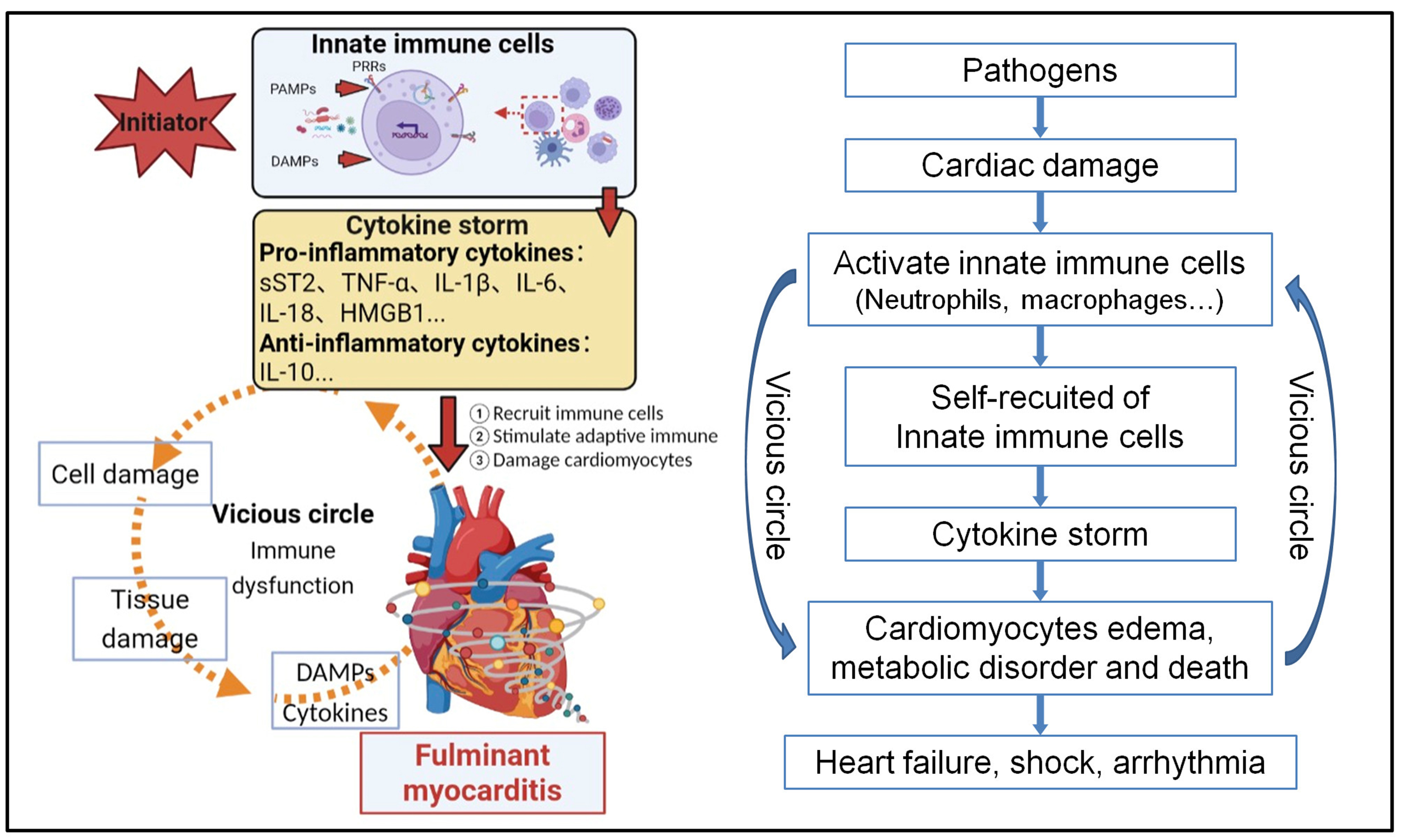
Figure 1. A summary of the pathophysiological mechanisms underlying FM. FM is initiated by viral or other causative agents that invade and damage cardiomyocytes, thereby recruiting neutrophils to the site of injury. The activated neutrophils subsequently promote the infiltration of monocytes and macrophages, which in turn trigger PAMP- or DAMP-mediated activation of innate immune cells. This activation precipitates a robust cytokine storm, inflicting further injury on myocardial tissue. The ensuing tissue destruction amplifies DAMPs-driven immune overactivation, establishing a self-perpetuating vicious cycle that ultimately culminates in the overt clinical syndrome of FM. PAMPs: Pathogen-associated molecular patterns; DAMPs: damage-associated molecular patterns; PRRs: pattern recognition receptors; sST-2: soluble growth stimulation expressed gene 2; TNF-α: tumor necrosis factor-α; IL: interleukin; HMGB1: high mobility group box 1; FM: fulminant myocarditis. The drawing part was created with BioRender (https://biorender.com/6yp4kqp).