


fig1
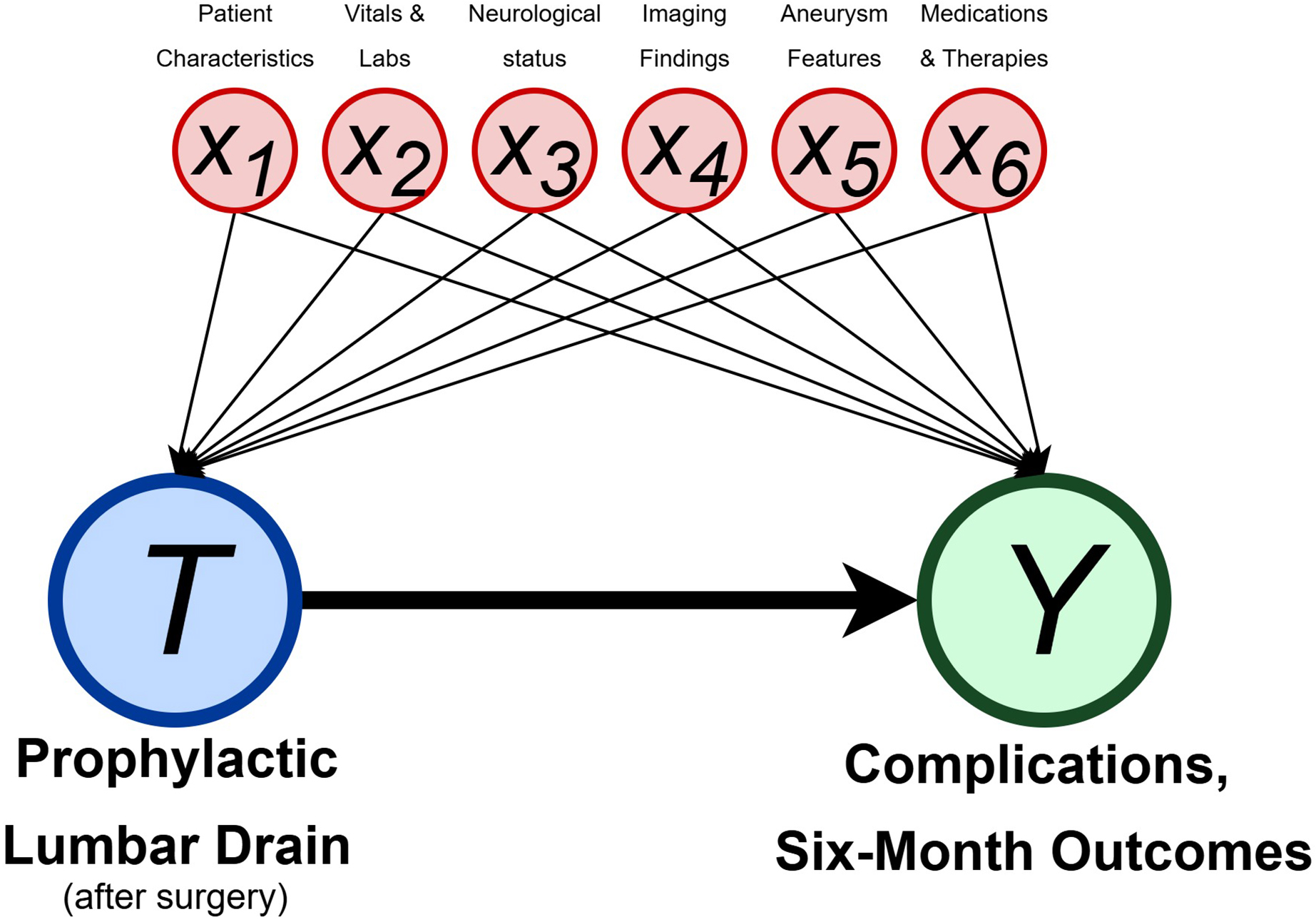
Figure 1. Directed acyclic graph (DAG) illustrating the causal model used in this study. The treatment variable T represents whether a patient received a prophylactic lumbar drain after aneurysm repair. The outcome Y represents outcome variables, including those related to the ICU course and six-month functional outcomes. Covariates are represented from x1 to x6, and include demographics, vitals and labs, neurological status, imaging findings, aneurysm characteristics, and concomitant medications or therapies. These covariates influence both treatment assignment and outcomes, and are adjusted for using Double Machine Learning (DML) to estimate unbiased treatment effects. ICU: Intensive care unit.