

fig4
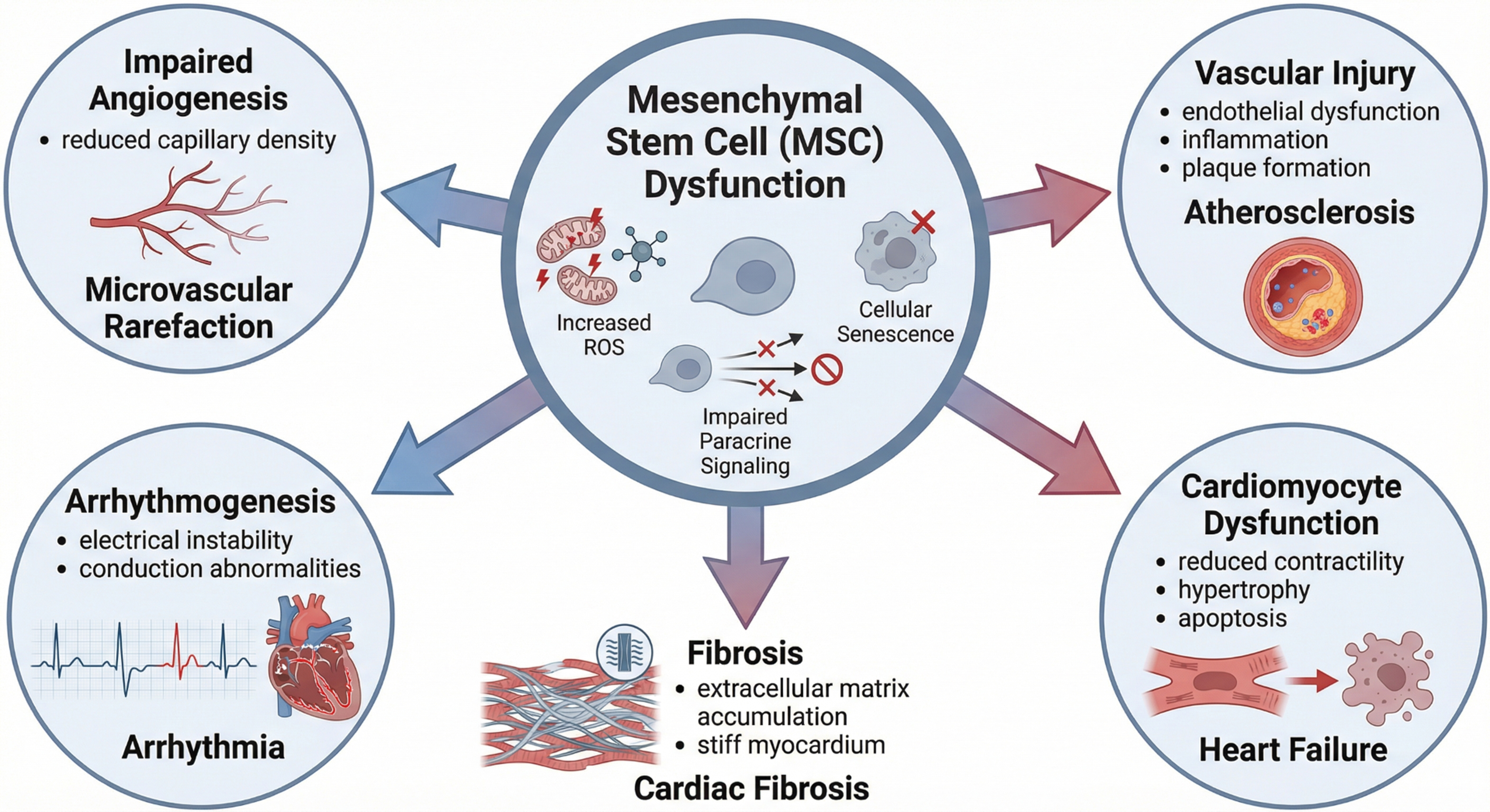
Figure 4. Downstream cardiovascular consequences of MSC dysfunction. Endogenous MSC dysfunction may contribute to multiple adverse cardiovascular outcomes in individuals with obesity. Impaired paracrine signaling and increased ROS production promote endothelial dysfunction, inflammation, and plaque formation, facilitating atherosclerosis. Reduced angiogenic capacity leads to microvascular rarefaction and decreased capillary density. In cardiomyocytes, these changes reduce contractility and promote hypertrophy and apoptosis, culminating in heart failure. Additionally, structural and electrical remodeling contribute to arrhythmogenesis and conduction abnormalities, while increased extracellular matrix deposition promotes cardiac fibrosis, further exacerbating myocardial stiffness and dysfunction. The figure was created in BioRender [Elmaraezy, A. (2026) http://BioRender.com/2mdwbbh] and refined using AI-assisted image-refinement tools (Figurelabs and Nano Banana Pro). MSC: Mesenchymal stem/stromal cell; ROS: reactive oxygen species.