


fig1
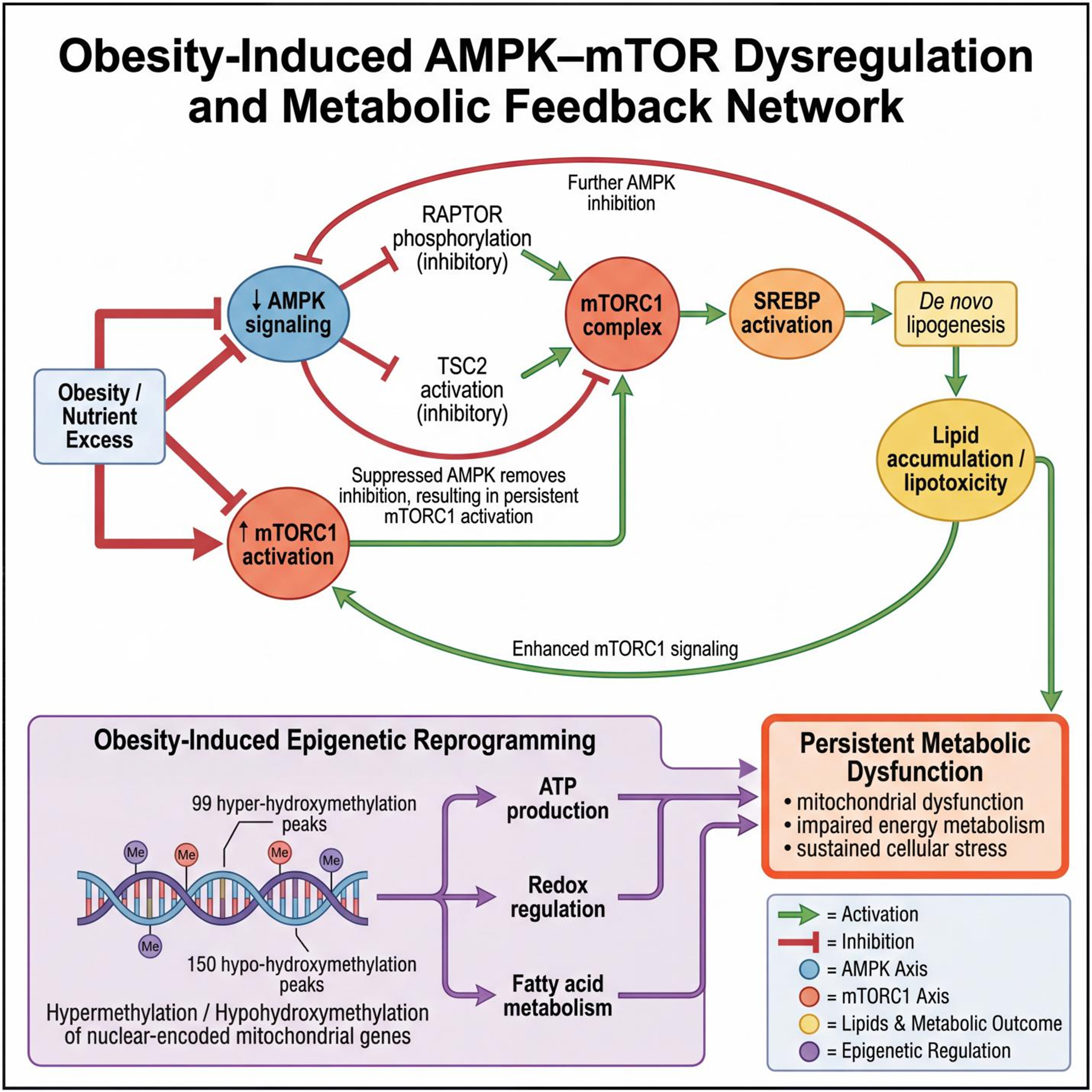
Figure 1. Obesity-induced AMPK-mTOR dysregulation and metabolic feedback network. Obesity and nutrient excess suppress AMPK signaling, releasing its inhibitory effect on the mTORC1 via reduced RAPTOR phosphorylation and diminished TSC2 activation. Sustained mTORC1 activation promotes SREBP-mediated de novo lipogenesis and lipid accumulation, ultimately producing lipotoxicity. Accumulated lipids further reinforce mTORC1 signaling, establishing a feed-forward loop. Concurrently, obesity induces epigenetic reprogramming of nuclear-encoded mitochondrial genes, characterized by altered hydroxymethylation patterns that disrupt ATP production, redox balance, and fatty acid metabolism. Together, these processes drive persistent metabolic dysfunction, including mitochondrial impairment, defective energy metabolism, and sustained cellular stress. The figure was created in BioRender [Elmaraezy, A. (2026) https://BioRender.com/k91vl7g] and refined using AI-assisted image-refinement tools (Figurelabs and Nano Banana Pro). AMPK: Adenosine monophosphate-activated protein kinase; mTOR: mechanistic target of rapamycin; mTORC1: mechanistic target of rapamycin complex-1; RAPTOR: regulatory-associated protein of mTOR; TSC2: tuberous sclerosis complex-2; SREBP: sterol regulatory element-binding protein; ATP: adenosine triphosphate.