




Thermodynamically stable hR20 structure of the Al3Er phase studied by varying solidification rate and polymorphic transformation
 0
0 Abstract
In this study, the crystal structure evolution and microstructure of the Al3Er phase in an Al-30 wt% Er alloy solidified at different cooling rates were investigated using X-ray diffraction (XRD), scanning electron microscopy (SEM), electron backscatter diffraction (EBSD), and transmission electron microscopy (TEM). The XRD and EBSD results show that as the cooling rate decreases, the Al3Er phase transforms from the cP4 structure
Keywords
INTRODUCTION
Er-containing aluminum alloys have attracted considerable attention because of the excellent physical properties of the Al3Er intermetallic compound, including its low density, high melting point and high specific stiffness[1-3], and have been accepted as a potential high-temperature material. In these alloys, Er exists predominantly in the form of the Al3Er phase. According to the Al-Er binary phase diagram[4,5], a eutectic reaction occurs on the Al-rich side at 649 °C, and the maximum solid solubility of Er in α-Al is only 0.0461 at.%. Consequently, excess Er readily precipitates as nano-scale Al3Er dispersoids during solidification or subsequent heat treatment. The equilibrium Al3Er phase possesses a cP4 crystal structure and forms over a wide composition range in the Al-Er binary system. The cP4-structured Al3Er compound has been widely employed as a strengthening phase in aluminum alloys[6-11]. This phase is coherent with the Al matrix and contributes significantly to enhancing mechanical properties and thermal stability of the alloys. The stability of the Al3Er phase plays a crucial role in determining the microstructure and overall performance of the alloys. Therefore, a thorough understanding of the formation, evolution and stability of Al3Er is essential for the design and optimization of high-performance Er-containing aluminum alloys.
The thermodynamically stable structure of Al3Er has long been reported to be the ordered cubic L12 (Cu3Au-type, cP4) structure with space group
More recent evidence has challenged this long-held view, suggesting that the hR20 structure represents the thermodynamically stable structure of Al3Er. The hR20 structure belongs to the space group
MATERIALS AND METHODS
A hypereutectic Al-30Er (in wt%) alloy was provided by Hunan Rare Earth Metal Materials Research Institute Co., Ltd. The Al3Er crystal samples were prepared by cutting the alloy blocks into pieces to fit in a rectangular alumina crucible with dimensions of 30 × 20 × 17 mm3. The crucible was then sealed in a quartz tube under an argon atmosphere with a pressure of 10-3 Pa. The alloy was melted in a KSL-1400X muffle furnace (Hefei Kejing Material Technology Co., Ltd., China) at 1,100 °C for 120 min, and subsequently cooled to 500 °C (below the eutectic temperature) at varying rates of 60, 50, 40, 30, and 5 °C/h, followed by furnace cooling to room temperature. A processing scheme is shown in Figure 1.
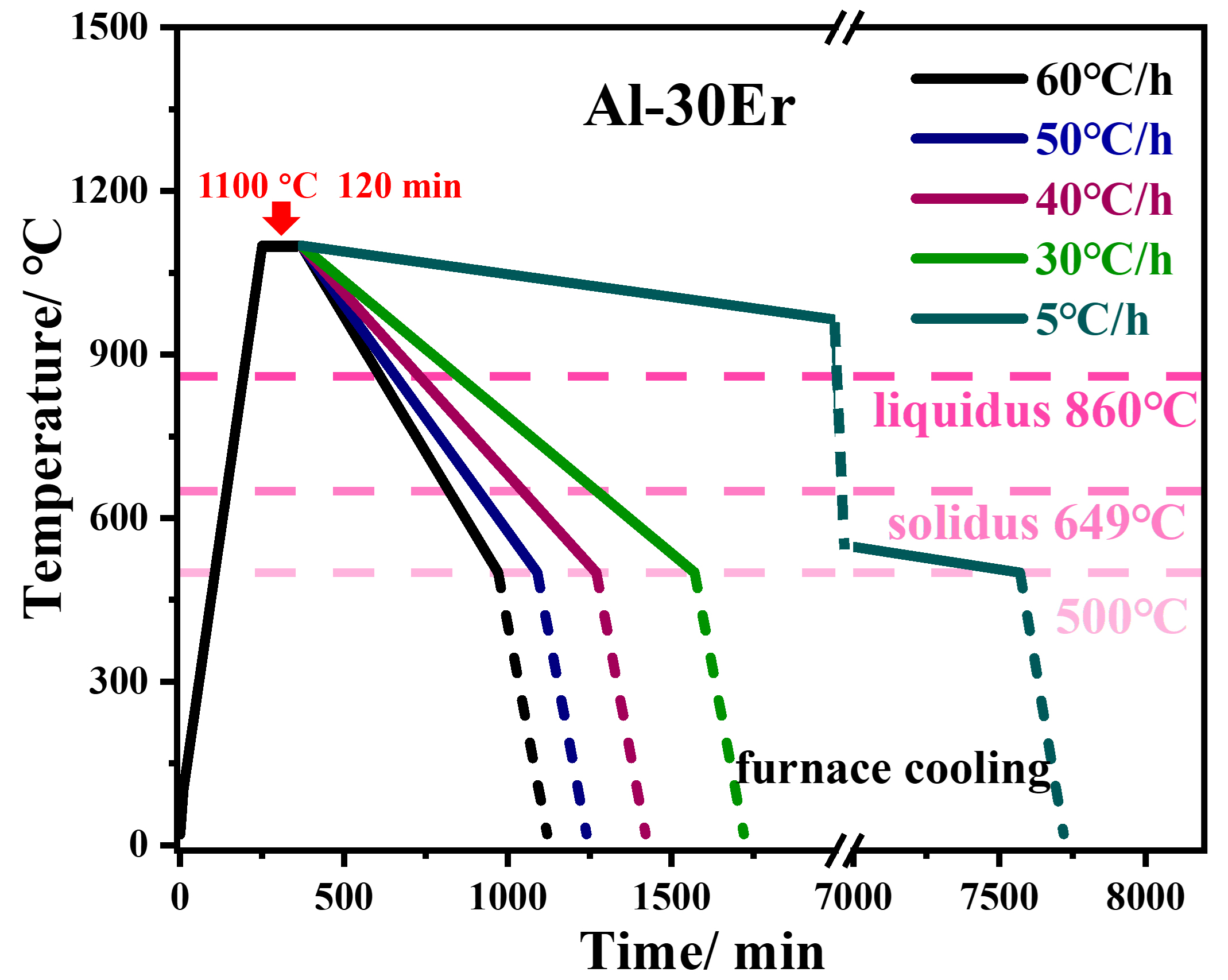
Figure 1. Processing scheme of the Al-30 wt% Er alloy.
The crystal structure of the Al3Er phase was determined using a D8 Advance X-ray diffractometer (Bruker Corporation, Germany) with Cu Kα radiation at 40 kV, 30 mA and a scanning speed of 4 °/min. The high-angle diffraction peaks were selected for slower scanning with a step size of 0.02 ° and a dwell time of 2 s per step. The Pseudo-Voigt and Pearson VII functions were applied to fit the diffraction peaks and determine precise peak positions[24]. For micro-X-ray diffraction (XRD) analysis, the Al3Er phase was examined using a D8 Advance X-ray diffractometer equipped with a General Area Detector Diffraction System (GADDS) (Bruker Corporation, Germany) and Co Kα radiation operated at 40 kV and 30 mA, with a 0.3 mm collimator aperture. The X-ray beam was focused on the Al3Er crystal, and the goniometer rotation angle φ was varied from 0 to 360°.
Scanning electron microscopy (SEM) samples were prepared by mechanical polishing and observations were conducted using an Field Electron and Ion Company (FEI) Helios NanoLab 600i scanning electron microscope (Thermo Fisher Scientific Inc., America). Electron backscatter diffraction (EBSD) samples were prepared by mechanical polishing, followed by vibratory polishing for 6 h using a 0.02 μm SiO2 suspension. EBSD observations were performed on an Oxford NordlysMax3 electron backscatter diffraction detector (Oxford Instruments, United Kingdom). Transmission electron microscopy (TEM) samples were prepared by site-specific lift-out using a focused ion beam (FIB) in a Helois 4000i dual-beam scanning electron microscope (Thermo Fisher Scientific Inc., America). TEM observations were conducted in a JEOL 2100F transmission electron microscope (JEOL Ltd., Japan) operated at 200 kV.
RESULTS
Phase structure of the samples cooled at different rates
When the Al-30Er alloy is cooled from the liquid state to room temperature at different rates, millimeter-sized primary Al3Er phase blocks are observed on the surface of the samples. A typical surface image of the sample prepared at a cooling rate of 60 °C/h is shown in Figure 2. The red cross marks the X-ray beam position in bulk-sensitive micro-XRD. The dark contrast is the proeutectic Al3Er phase. Figure 3 shows the XRD patterns of the samples cooled at different rates. It can be seen that only Al and Al3Er phases are present, and the crystal structure of the Al3Er phase differs depending on the cooling rate. At a cooling rate of 60 °C/h, only the cP4-structured Al3Er phase is formed. When the cooling rate decreases to 50 and 40 °C/h, the hR20-structured Al3Er emerges, coexisting with the cP4-structured Al3Er phase. At a slower cooling rate of 30 °C/h (and 5 °C/h), only the hR20-structured Al3Er phase is observed. These results indicate that as the cooling rate decreases, the solidification process approaches equilibrium solidification, and the proportion of the hR20-structured Al3Er phase increases progressively until it becomes the sole phase.
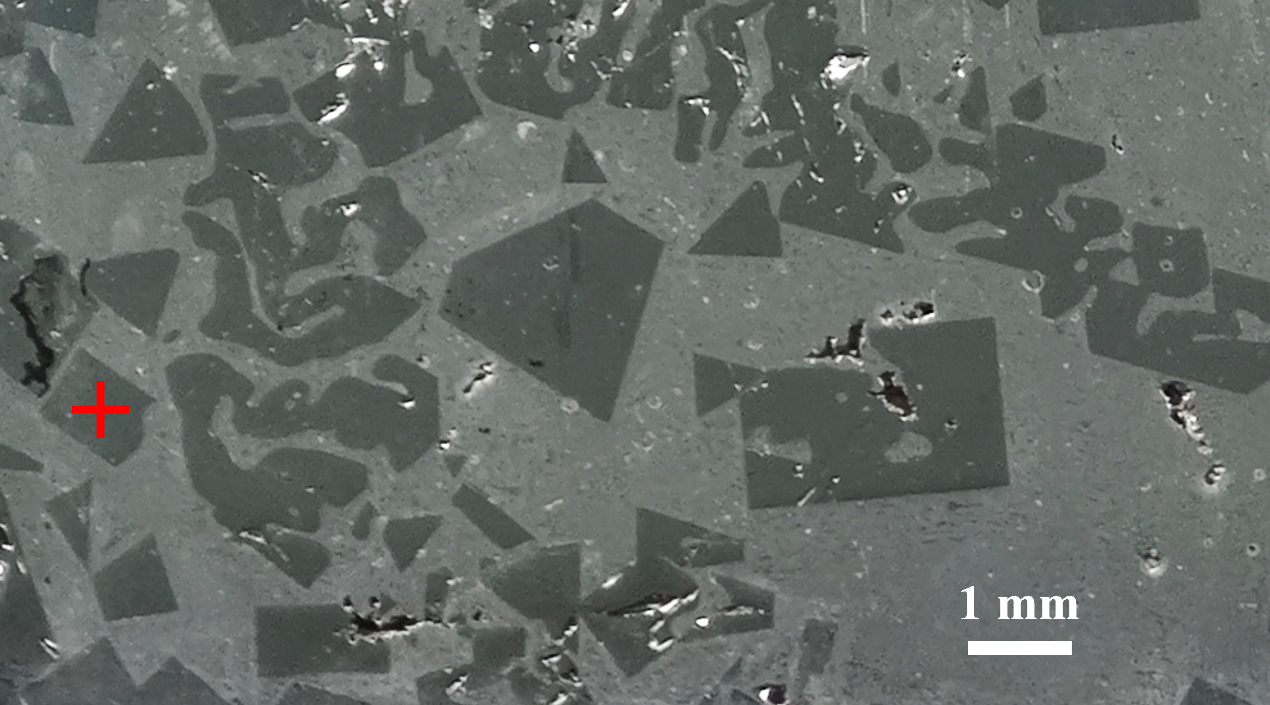
Figure 2. Optical micrograph of the sample cooled at 60 °C/h. The red cross marks the X-ray beam position in bulk-sensitive micro-XRD. XRD: X-ray diffraction.
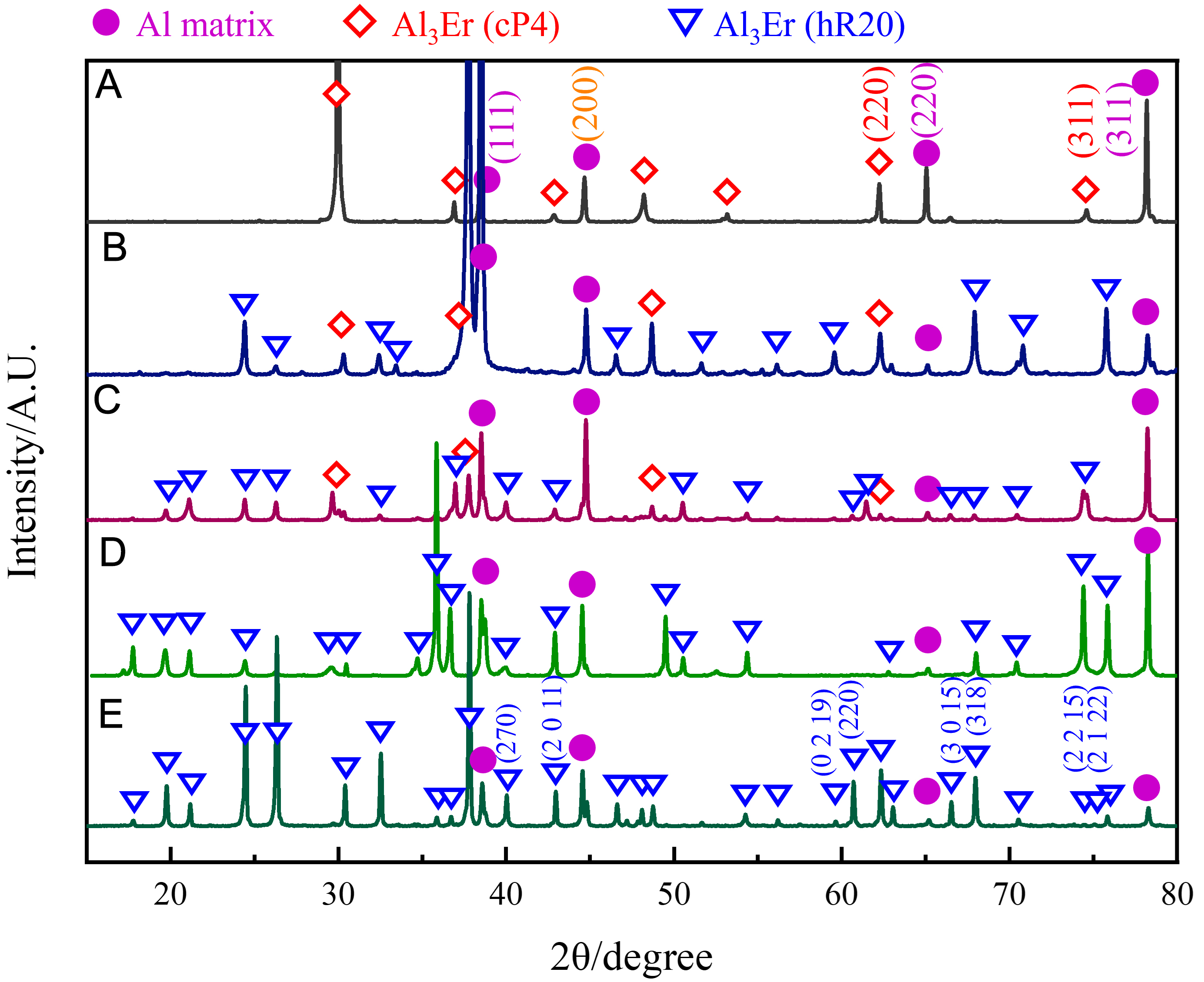
Figure 3. XRD patterns of Al-30Er alloy samples cooled at different rates: (A) 60 °C/h; (B) 50 °C/h; (C) 40 °C/h; (D) 30 °C/h; and
The high-angle diffraction peaks (2θ > 60°) of the samples cooled at 60 °C/h and 5 °C/h were selected for rescanning at a slower speed and finer step. The resulting diffraction patterns are shown in Figures 4 and 5. Figure 4 shows the (220), (311), (222) and (320) diffraction peaks of the cP4-structured Al3Er phase, and the (220), (311) and (222) diffraction peaks of the Al matrix. It can be seen that the diffraction peaks of the cP4-structured Al3Er phase, indexed as (220), (311) and (222), are located close to those of the Al phase. This is attributed to the similarity of the cP4 and fcc structures with low lattice mismatch. Figure 5 shows the (027), (2 0 11), (0 2 19), (220), (3 0 15), (318), (2 2 15) and (2 1 22) diffraction peaks of the hR20-structured Al3Er phase, and the (111), (200), (220) and (311) diffraction peaks of the Al matrix. As the hR20 structure belongs to the rhombohedral crystal system with low symmetry, whereas cP4 belongs to the cubic crystal system with high symmetry, there is no correlation between the diffraction peak positions.
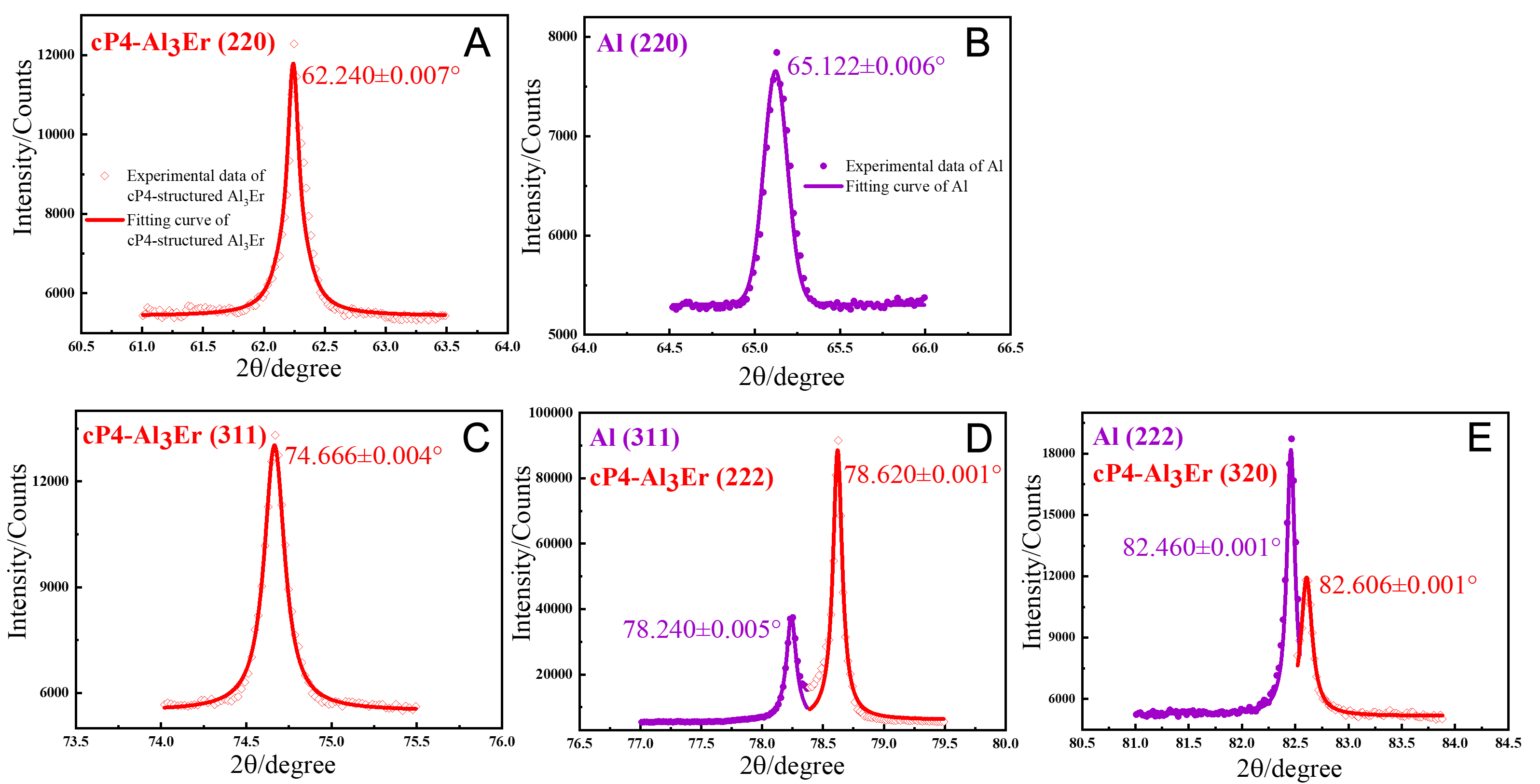
Figure 4. High-resolution diffraction peaks of the cP4-structured Al3Er and the Al matrix after slow scanning: (A) Al3Er (220); (B) Al (220); (C) Al3Er (311); (D) Al (311) and Al3Er (222); (E) Al (222) and Al3Er (320).
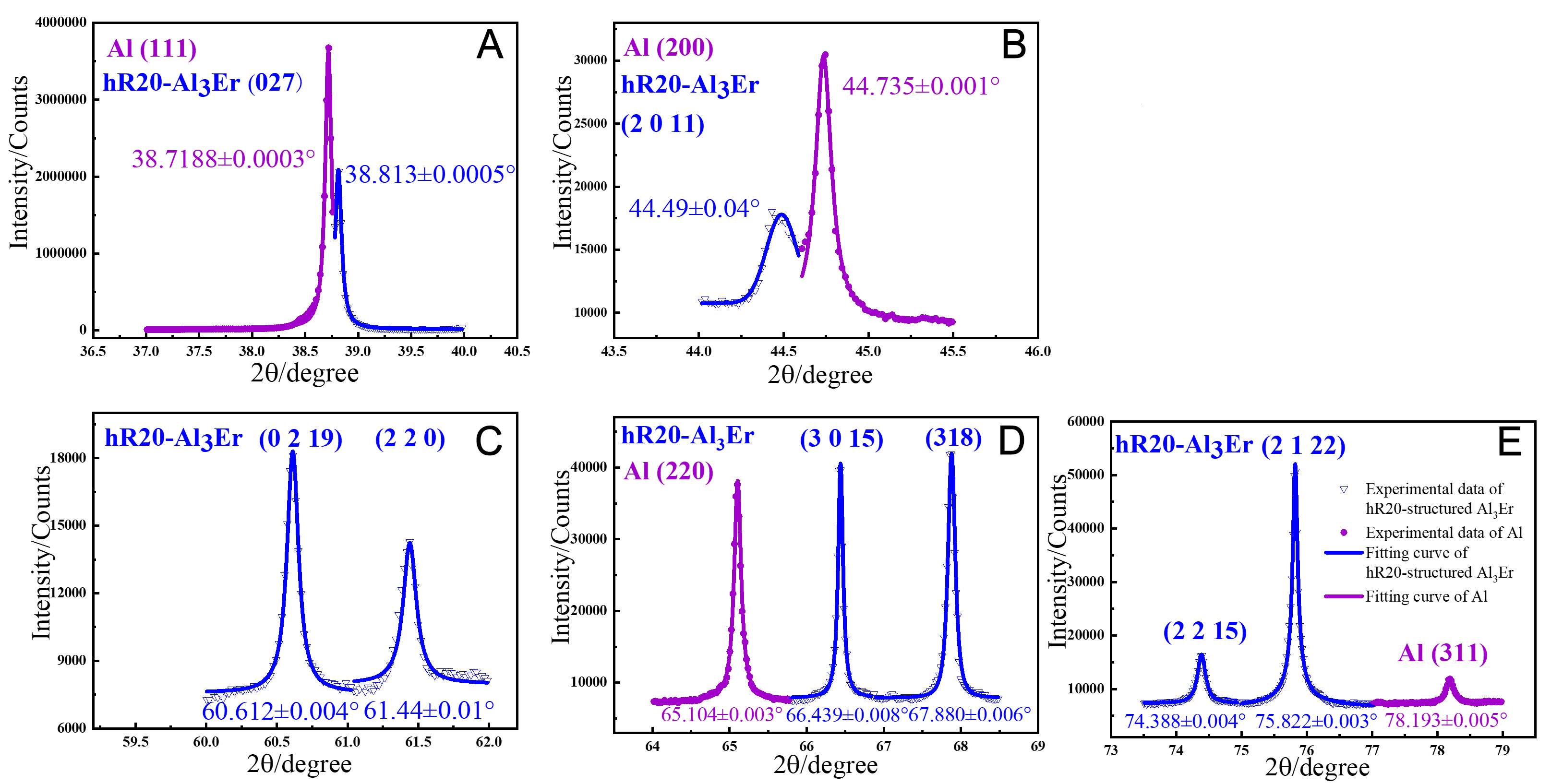
Figure 5. High-resolution diffraction peaks of the hR20-structured Al3Er and the Al matrix after slow scanning: (A) Al (111) and Al3Er (027); (B) Al (200) and Al3Er (2 0 11); (C) Al3Er (0 2 19), Al3Er (220); (D) Al (220) and Al3Er (3 0 15), Al3Er (318); (E) Al (311) and Al3Er (2 2 15), Al3Er (2 1 22).
The lattice constants were obtained by fitting the experimental diffraction peaks using the Pseudo-Voigt and Pearson VII functions[24] to extract accurate peak positions, which were then used in the Bragg equation.
The lattice constants of Al and cP4-structured Al3Er were calculated to be 0.4047 ± 0.0002 nm and 0.4212 ± 0.0003 nm, and the lattice mismatch between the two phases was 4.08 ± 0.09%. The lattice constants of the hR20-structured Al3Er were calculated to be a = 0.6036 ± 0.0006 nm and c = 3.5705 ± 0.0004 nm. The experimental results obtained in this work and in other experiments[13-15,20] are compared in Table 1. As shown in Table 1, the measured values are generally consistent with the reported values, with differences comparable to the typical spread among independent experimental studies.
Lattice constants and lattice mismatch values between the Al matrix and cP4 and hR20 structured Al3Er obtained by different experiments
Morphology of Al3Er formed at different cooling rates
Primary Al3Er phase
The microstructural morphology of the Al3Er phase formed at different cooling rates was characterized using SEM and EBSD, and typical SEM micrographs of the primary Al3Er phase are shown in Figure 6. Energy-dispersive X-ray spectroscopy (EDS) point analyses of the primary Al3Er particles from the samples confirmed an Er content of approximately 25 at.% for both the cP4- and hR20-structured particles, consistent with the stoichiometric composition of Al3Er. No measurable compositional difference between the two types of particles was detected, supporting the conclusion that they are iso-compositional polymorphs. The primary Al3Er phase appears as light gray blocky particles regardless of the cooling rate, and each primary phase particle is surrounded by a dark gray halo, as indicated by the red arrows. The outline of the halo conforms to the external outline of the primary Al3Er particles. Surrounding the halo are the alternating light and dark regions, corresponding to the eutectic structure. Combined with the XRD results, the light gray particles are identified as the primary Al3Er phase, while the dark gray regions correspond to the Al phase, confirming that the halo surrounding the primary Al3Er phase is the Al phase formed during solidification.
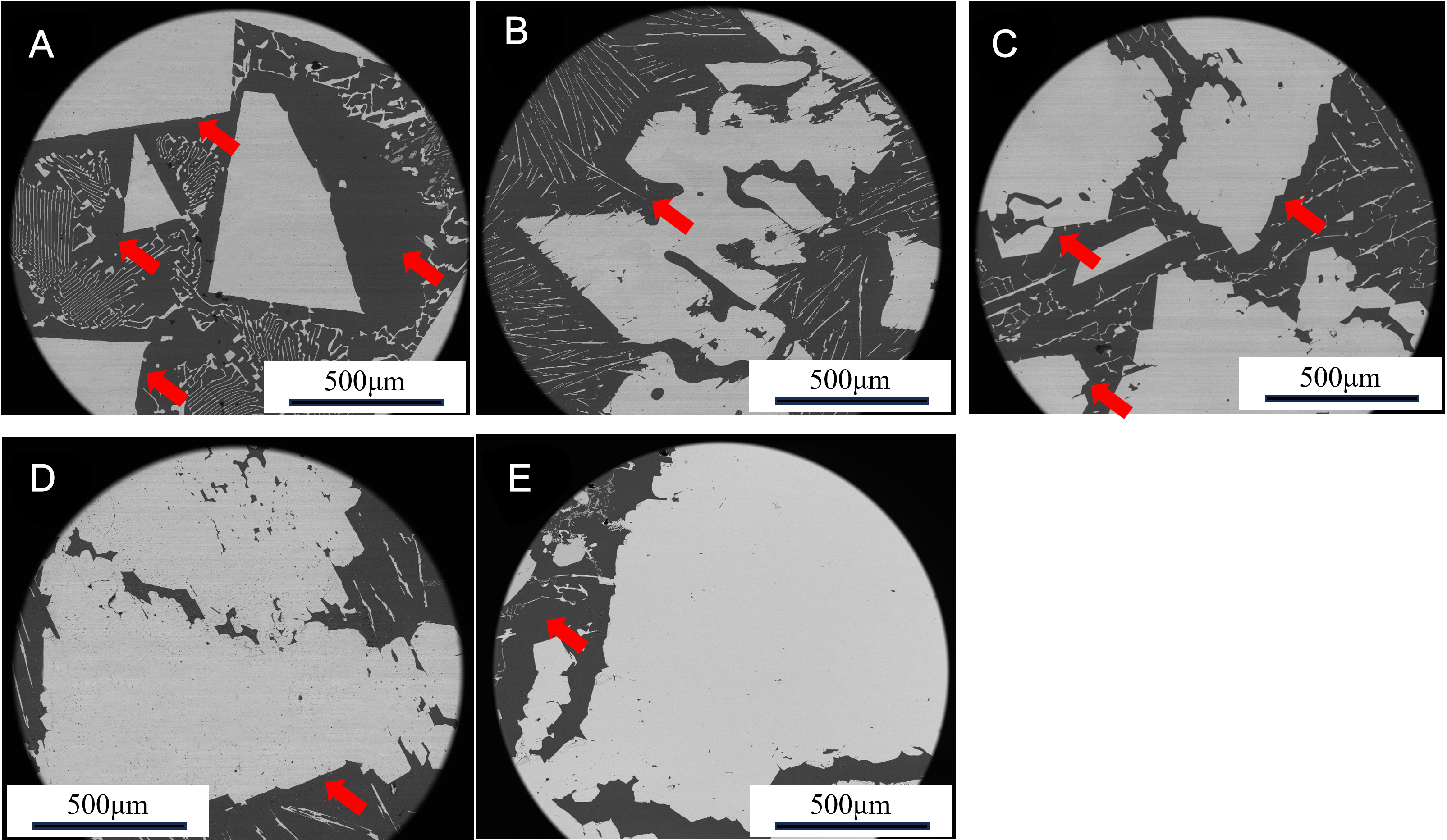
Figure 6. SEM micrographs of primary Al3Er phase formed at different cooling rates. (A) 60 °C/h; (B) 50 °C/h; (C) 40 °C/h; (D) 30 °C/h; and (E) 5 °C/h. SEM: Scanning electron microscopy.
With decreasing cooling rate, the average size of the primary Al3Er particles increases progressively. At a cooling rate of 60 °C/h, the average size of the primary Al3Er particles is approximately 500 μm. When the cooling rate decreases to 50 °C/h, 40 °C/h, 30 °C/h and 5 °C/h, the particle size increases to 800 μm, 1 mm, 1.5 mm and 2 mm, respectively. During solidification of the hypereutectic Al-30Er alloy from the liquid state, a lower cooling rate extends the residence time in the liquid/solid two-phase region, which allows the primary phase particles to have sufficient time for nucleation and growth, resulting in larger primary particles at room temperature.
In addition, the morphology of the primary Al3Er particle boundaries also varies with the cooling rate. As seen in Figure 6A, at a cooling rate of 60 °C/h, the Al3Er grain boundaries are predominantly straight. At cooling rates of 50 °C/h and 40 °C/h [Figure 6B and C], the grain boundaries exhibit a mixed character, with some grain boundaries appearing straight and others wavy. At cooling rates of 30 °C/h and 5 °C/h [Figure 6D and E], the grain boundaries are wavy. Correlating these observations with the XRD results in Figure 3, the primary cP4-structured Al3Er particles show straight boundaries, whereas the primary hR20-structured Al3Er particles exhibit wavy boundaries. The difference in micromorphology is likely related to their different crystal structures, which have different degrees of symmetry.
To investigate the grain orientation and grain size distribution of the primary Al3Er grains, EBSD analysis was conducted on the primary phase in four samples cooled at 60, 50, 40 and 5 °C/h, as shown in Figure 7. In the phase distribution maps [Figure 7A2, B2, C2, D2], the red regions are the cP4-structured Al3Er phase and the blue regions are the hR20-structured Al3Er phase. As seen in Figure 7A, at a cooling rate of 60 °C/h, the primary phase exhibits a cP4 structure. In Figure 7B and C, at 50 °C/h and 40 °C/h, both cP4 and hR20 structures coexist. At the lowest cooling rate of 5 °C/h [Figure 7D], only the hR20 structure exists. These results are in good agreement with the XRD results in Figure 3. In the inverse pole figure (IPF) maps [Figure 7A3, B3, C3, D3], each primary cP4-structured Al3Er particle exhibits a single crystallographic orientation, regardless of the cooling rate, indicating that it is a single crystal. In contrast, each primary hR20-structured Al3Er particle displays at least two distinct orientations, signifying that it is polycrystalline. The average internal grain size of the primary cP4-structured Al3Er particles at 60 °C/h is 211 μm, while that of the primary hR20-structured Al3Er particles at 5 °C/h is 92 μm.
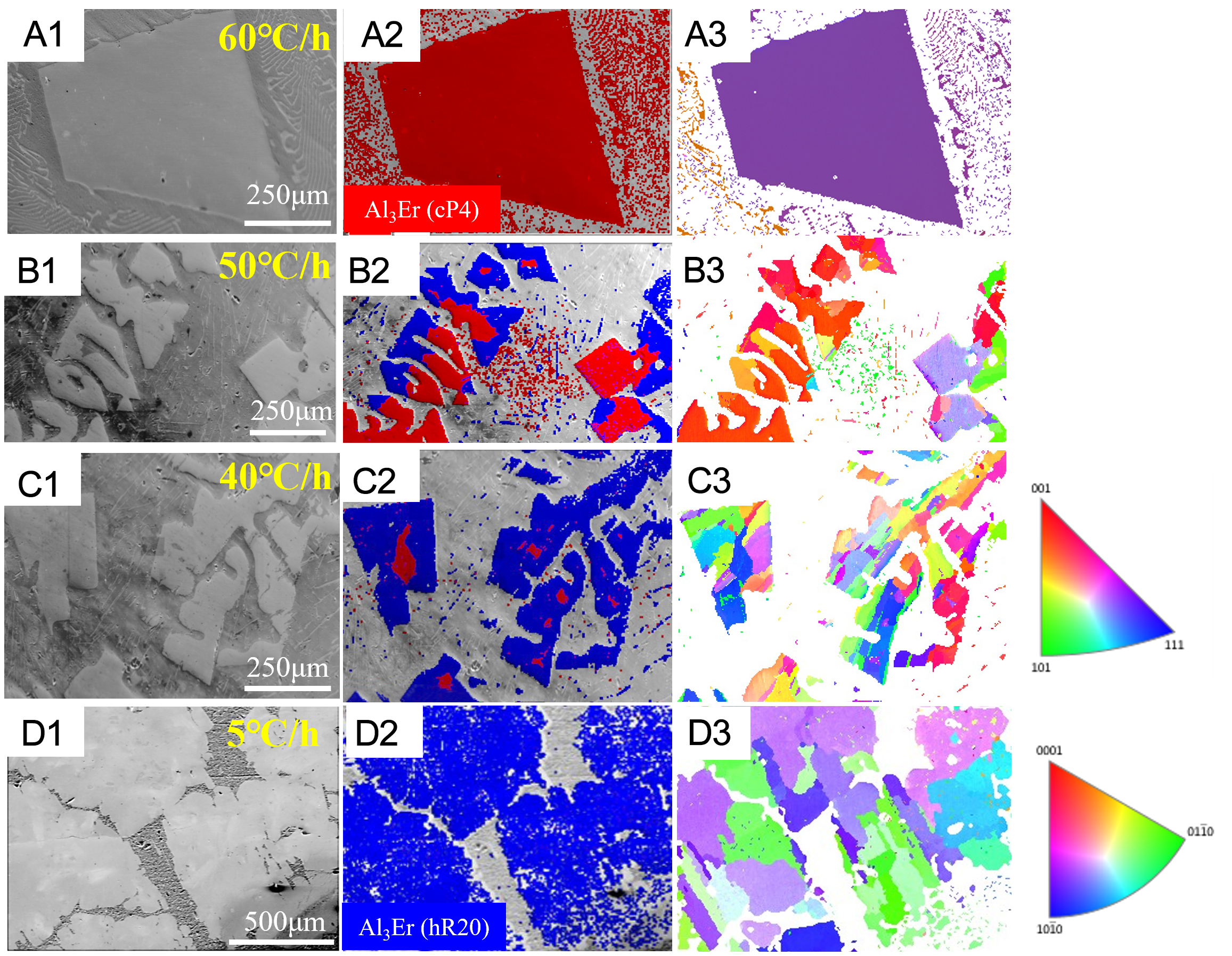
Figure 7. EBSD orientation maps of Al3Er in samples cooled at different rates: (A) 60 °C/h; (B) 50 °C/h; (C) 40 °C/h; (D) 5 °C/h; (1) microstructure diagram; (2) phase distribution diagram; (3) IPF maps. EBSD: Electron backscatter diffraction; IPF: inverse pole figure.
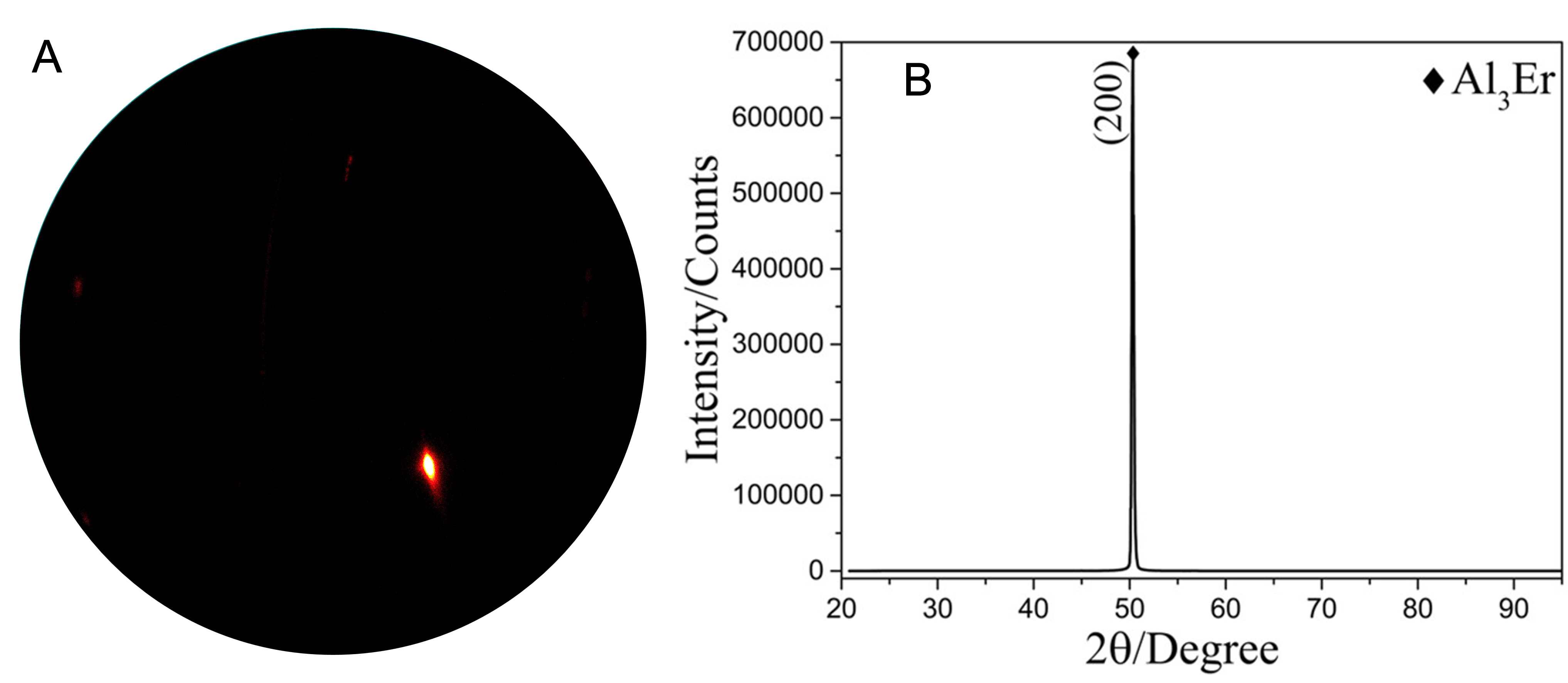
As the EBSD provides crystallographic information from a relatively small near-surface region of the sample, a bulk-sensitive micro-XRD analysis was conducted on the sample containing the primary cP4-structured Al3Er phase cooled at 60 °C/h, as shown in Figure 8. The X-ray beam was focused on the position marked by the red cross in Figure 2. The sharp bright diffraction spot in Figure 8A indicates that the measured volume of the primary cP4-structured Al3Er phase corresponds to a single crystal. The diffraction pattern corresponding to the diffraction spot in Figure 8A is shown in Figure 8B, which exhibits only one strong (200) diffraction reflection, indicating that the (200) planes of the primary Al3Er particle are parallel to the sample surface.
Eutectic structure
The eutectic structures in samples cooled at different rates are presented in Figure 9. At a cooling rate of
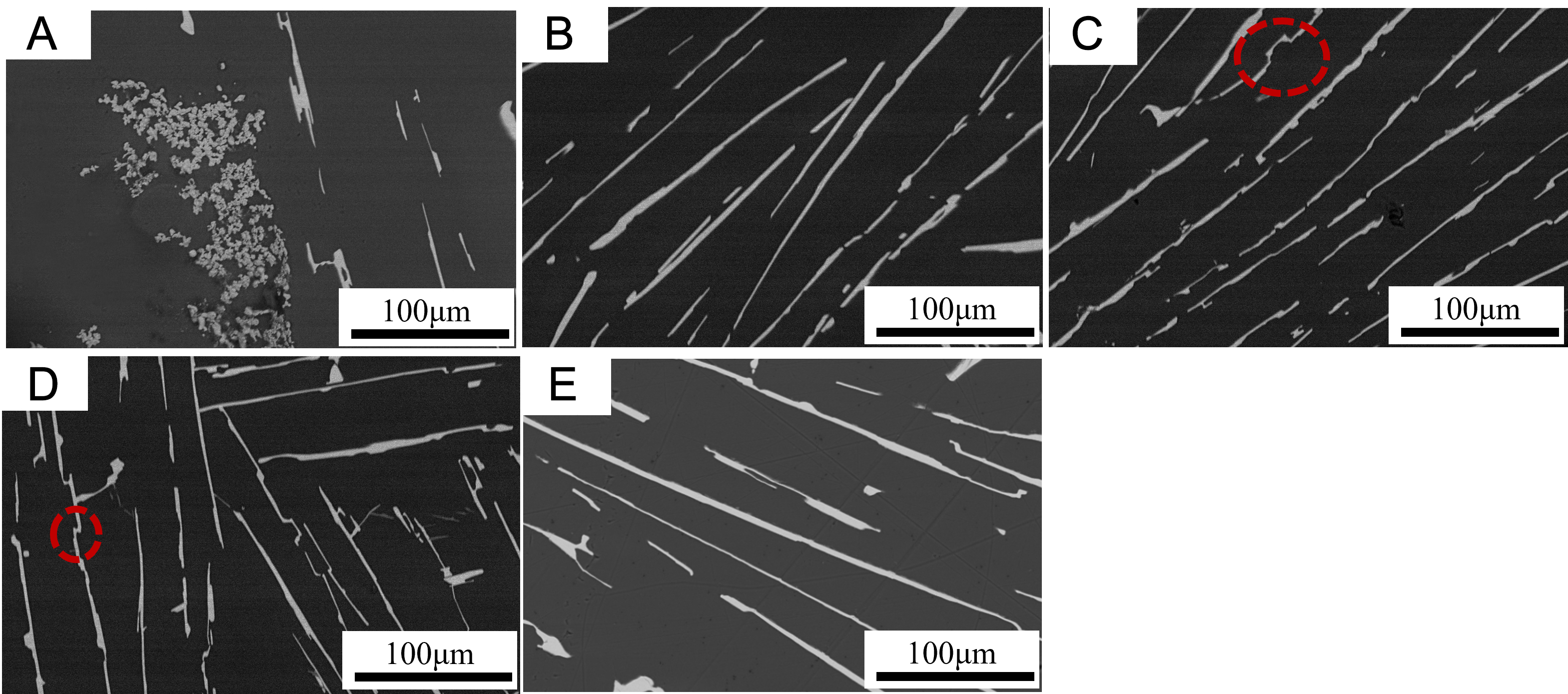
Figure 9. SEM micrographs of eutectic structures cooled at different rates. (A) 60 °C/h; (B) 50 °C/h; (C) 40 °C/h; (D) 30 °C/h; and
As the cooling rate decreases, the interlamellar spacing of the eutectic structure increases from approximately 20 μm to 80 μm, consistent with the reduced undercooling at slower cooling rates. In Figure 9C and D, lamellar faults (highlighted by red circles) can be observed within the regular lamellar eutectic structure. These lamellar faults arise from the rotation of the eutectic Al and Al3Er phases to achieve favorable low-energy crystallographic orientations.
Orientation relationship between the cP4- and hR20-structured Al3Er phases
At cooling rates of 50 °C/h and 40 °C/h, two different structures of the Al3Er phase coexist, indicating an ongoing polymorphic transformation and the potential existence of an orientation relationship between these two phases. A site-specific lift-out specimen containing both Al3Er phase structures was extracted from the sample cooled at 40 °C/h [Figure 7C] using FIB and subsequently examined by TEM. The specimen was lifted out from a specific location identified in the EBSD phase distribution map, as marked by the yellow box in Figure 10A. Figure 10B shows a HRTEM image in which the phase interfaces are clear, as indicated by the white dashed lines. Figure 10C presents the selected-area electron diffraction (SAED) pattern, confirming the presence of three sets of diffraction spots from the three different phases, as indexed in the figure. The orientation relationship between the cP4-structured Al3Er phase and the hR20-structured Al3Er phase is
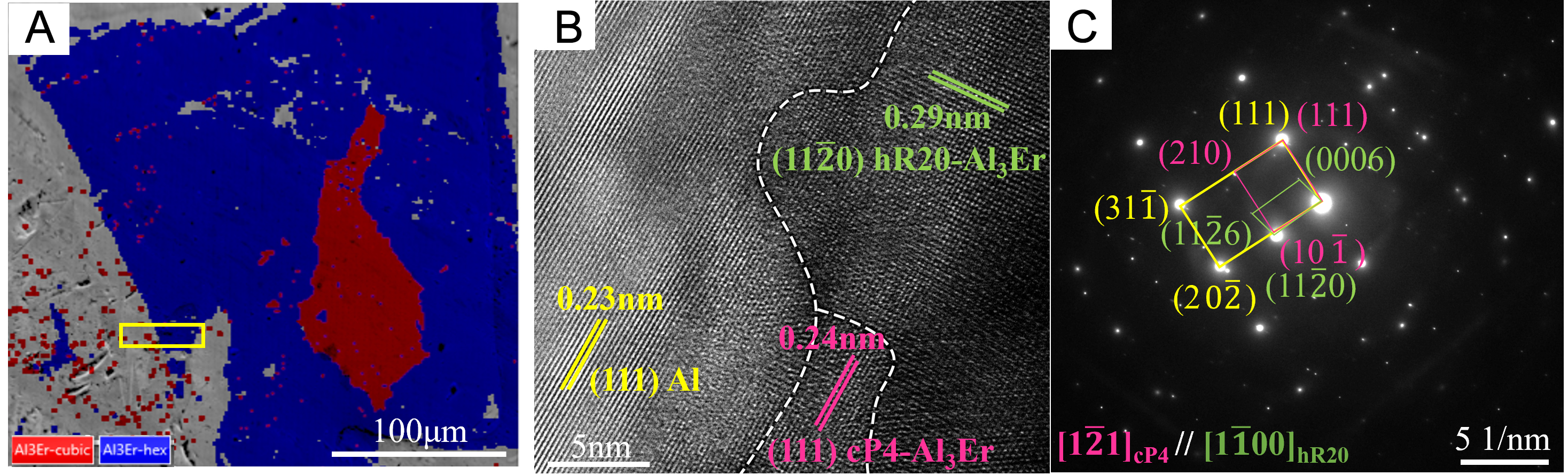
Figure 10. TEM characterization of the Al/Al3Er interface in the alloy cooled at 40 °C/h. (A) Backscattered electron image showing the location of TEM specimen preparation; (B) HRTEM image of the Al/Al3Er interface and (C) corresponding SAED pattern. TEM: Transmission electron microscopy; HRTEM: high-resolution transmission electron microscopy; SAED: selected-area electron diffraction.
DISCUSSION
The structural transformation and thermodynamically stable structure of the Al3Er phase
As shown in Figures 3 and 7, the structure of the Al3Er phase varies with cooling rate, gradually transforming from the cP4 structure to the hR20 structure as the cooling rate decreases. Since slower cooling rates produce crystal structures at room temperature that more closely approach the equilibrium state[25-27], this experimental result demonstrates that the hR20-structured Al3Er phase is more stable than the cP4-structured Al3Er phase. This result does not support the conclusion presented in the Al-Er phase diagrams[4,5].
Furthermore, the observations in Figure 7 show that the average grain size of the polycrystalline hR20-structured Al3Er phase obtained at 5 °C/h is 92 μm, which is unexpectedly much smaller than that of the single-crystalline cP4-structured Al3Er phase obtained at 60 °C/h (211 μm). This finding contradicts the classical solidification principle that a reduction in cooling rate increases grain size[26]. To clarify whether the hR20-structured Al3Er phase precipitates directly from the liquid or forms through a polymorphic transformation from the cP4-structured Al3Er phase, classical nucleation theory calculations were performed[26,28].
The driving force for nucleation of a phase from the melt can be calculated using[29]:
Where Lm is the latent heat of fusion per unit volume. ΔT is the undercooling and Tm is the melting point of Al3Er, which is 1,603 K[4,5].
The critical nucleation energy and the steady-state nucleation rate are calculated using[28]:
where γSL is the solid-liquid interfacial energy. Nv is the number of nucleation sites per unit volume. The Zeldovich factor[28] is given by
For three-dimensional equiaxed solidification, the average grain diameter d is related to the steady-state nucleation rate J and the grain growth velocity G by the following relationship[26,28]:
Under similar undercooling conditions, G is determined by the crystal structure[26]. Since both cP4 and hR20 are Al3Er phases, the atomic attachment kinetics at the solid-liquid interface are not expected to differ substantially; it is reasonable to assume GcP4 ≈ GhR20. Consequently, the difference in grain size resulting from the direct solidification of the two structures is predominantly governed by the nucleation rate J.
From Equations (1)-(3), the volumetric driving force ΔGV increases monotonically with undercooling ΔT, the critical nucleation energy ΔG* decreases monotonically with increasing ΔGV, and the nucleation rate J therefore increases monotonically with ΔT. This directional relationship is independent of any specific parameter values. Combined with Equation (4), a lower nucleation rate necessarily leads to larger grains. However, the experimentally measured grain size of the Al3Er phase (hR20-structured) cooled at 5 °C/h is unexpectedly smaller than that of the Al3Er phase (cP4-structured) cooled at 60 °C/h, which directly contradicts the theoretical prediction. The irreconcilable discrepancy rules out the possibility that the hR20-structured Al3Er phase precipitates directly from the liquid.
Therefore, the plausible transformation pathway is that the primary cP4-structured Al3Er phase precipitates first from the liquid and grows into a single crystal. Then, during slow cooling, the hR20-structured Al3Er phase nucleates heterogeneously at the boundaries of the cP4-structured Al3Er phase through a polymorphic transformation and grows, finally forming a polycrystalline hR20 microstructure.
This conclusion is in perfect agreement with the EBSD results in Figure 7. The cP4- and hR20-structured Al3Er phases are iso-compositional polymorphs, and the first-principles calculations indicate that the difference in their formation energies is very small[22,23], implying a limited chemical driving force for the phase transformation. Therefore, rapid cooling suppresses diffusion and inhibits the transformation, whereas slow cooling extends the residence time of the sample in the high-temperature regime, providing sufficient kinetic conditions for atomic rearrangement. Furthermore, the hR20-structured Al3Er phase nucleates at the boundaries of the cP4-structured Al3Er particles, i.e., at the cP4-structured Al3Er/ Al phase interface, which substantially reduces the critical nucleation energy required to initiate the transformation[26,28].
The hR20-structured Al3Er phase particles obtained at a slow cooling rate are polycrystalline, with each grain having nucleated independently at the phase boundary of the cP4-structured Al3Er grain and subsequently grown. The relatively high nucleation density leads to a fine final grain size for the hR20-structured Al3Er grains. By comparison, the cP4-structured Al3Er phase particles formed at a fast cooling rate are single crystals, having grown from a single nucleus in the melt. Therefore, the smaller grain size of the polycrystalline hR20-structured Al3Er phase particles is a consequence of the polymorphic transformation.
The cooling-rate-dependent structural evolution from cP4 to hR20 directly influences the intrinsic mechanical properties of the Al3Er phase. Beyond this intrinsic difference, the structural transformation has important implications for the strengthening performance of Er-containing aluminum alloys. In these alloys, the strengthening effect of cP4-structured Al3Er precipitates relies on their coherency with the α-Al matrix. The lattice mismatch between cP4-Al3Er and the α-Al matrix is only 4.08 ± 0.09%. This relatively small lattice mismatch facilitates the formation of coherent or semi-coherent interfaces that generate the elastic strain fields responsible for effective dislocation pinning. Although the present study investigates primary Al3Er particles formed during solidification, the structural evolution identified here is also relevant to nanoscale Al3Er strengthening precipitates, for which interface coherency with the α-Al matrix is critical to precipitation strengthening. In contrast, the hR20-structured Al3Er precipitates possess rhombohedral symmetry, which is less compatible with the cubic α-Al lattice than the cP4 structure. Therefore, hR20-structured precipitates in the Al matrix would be expected to exhibit reduced coherency with the Al matrix, potentially decreasing their contribution to precipitation strengthening. Furthermore, reduced interface coherency may increase the interfacial energy, thereby decreasing the resistance to precipitate coarsening and potentially reducing creep resistance at elevated temperatures. Consequently, an uncontrolled cP4 to hR20 transformation during solidification or high-temperature service could adversely affect both the room-temperature strength and the high-temperature stability of Er-containing aluminum alloys. Although direct measurements of strengthening in Er-containing aluminum alloys are beyond the scope of the present work, the structural evolution identified here has important implications for alloy performance. The critical cooling rate of 36 °C/h determined in this work therefore provides practical guidance for avoiding such structural evolution during alloy processing.
The critical cooling rate of the Al3Er phase
Based on the above results, the polymorphic transformation from the cP4 structure to the hR20 structure is a thermally activated diffusion process. That is, a critical cooling rate exists at which the hR20-structured Al3Er phase fully precipitates. The variation of the transformed volume fraction f with time t can be described by the Johnson-Mehl-Avrami-Kolmogorov (JMAK) equation[28,31]:
where f is the volume fraction of the transformed hR20-structured Al3Er phase, K is the temperature-dependent rate constant, n is the Avrami exponent (which depends on the transformation mechanism), and
fhR20 was determined from the area fraction of the hR20-structured phase in the EBSD phase distribution maps in Figure 7. At a cooling rate of 50 °C/h, fhR20 = 0.4, while at 40 °C/h, fhR20 =0.9. According to the Al-Er binary phase diagram, the liquidus temperature of the Al-30Er hypereutectic alloy is approximately 860 °C, i.e., 1,133 K[4,5]. The primary Al3Er phase precipitates below the liquidus and persists throughout the subsequent cooling process; therefore, ∆T = 1,133 K - 773 K = 360 K.
By fitting the two sets of data using the JMAK equation, the linear regression result shows that n ≈ 6.8 and K ≈ 8.3 × 10⁻⁷. With only two data points, n and K are fully determined but the goodness of fit cannot be assessed. Nevertheless, the derived values provide a reasonable estimate for subsequent calculations. Taking fcrit = 0.99 as the criterion for completion of the transformation, the corresponding constant C = -ln(0.01) ≈ 4.605. The critical time is then calculated as:
The corresponding critical cooling rate is:
This value is in excellent agreement with the experimental observations. A slow cooling rate of 30 °C/h or 5 °C/h, being below the critical rate, allows the transformation to proceed completely and yields sole hR20-structured Al3Er phase. A fast cooling rate of 60 °C/h, which exceeds the critical rate, suppresses the transformation and yields the cP4-structured Al3Er phase. Intermediate cooling rates of 50 °C/h and 40 °C/h result in a two-phase coexistence microstructure. This finding provides strong evidence that the polymorphic transformation requires a sufficiently long high-temperature residence time and is governed by a well-defined critical cooling rate. Slow cooling rates offer sufficient time for the transformation to nucleate and grow, whereas fast cooling rates lead to its arrest.
It should be pointed out that the JMAK analysis is based on only two available data points; the fitted n and k values are therefore used primarily as engineering parameters for the extrapolated estimation of the critical cooling rate. The unusually high Avrami exponent of 6.8 reveals the pronounced self-acceleration character of the transformation. Regarding the determination of the critical cooling rate, its reliability does not rely on the precise value of n but is directly constrained by the two measured data points. No matter what kinetic model is adopted, the fact that the transformation from fhR20 = 0.4 to fhR20 = 0.9 is completed within a difference of only about 1.8 h in effective residence time itself demonstrates an extremely high cooling rate sensitivity of the transformation. The critical cooling rate thus estimated is highly self-consistent with the experimental observations, further confirming the reasonableness of the estimate.
The diffusional nature of the cP4 to hR20 polymorphic transformation in Al3Er
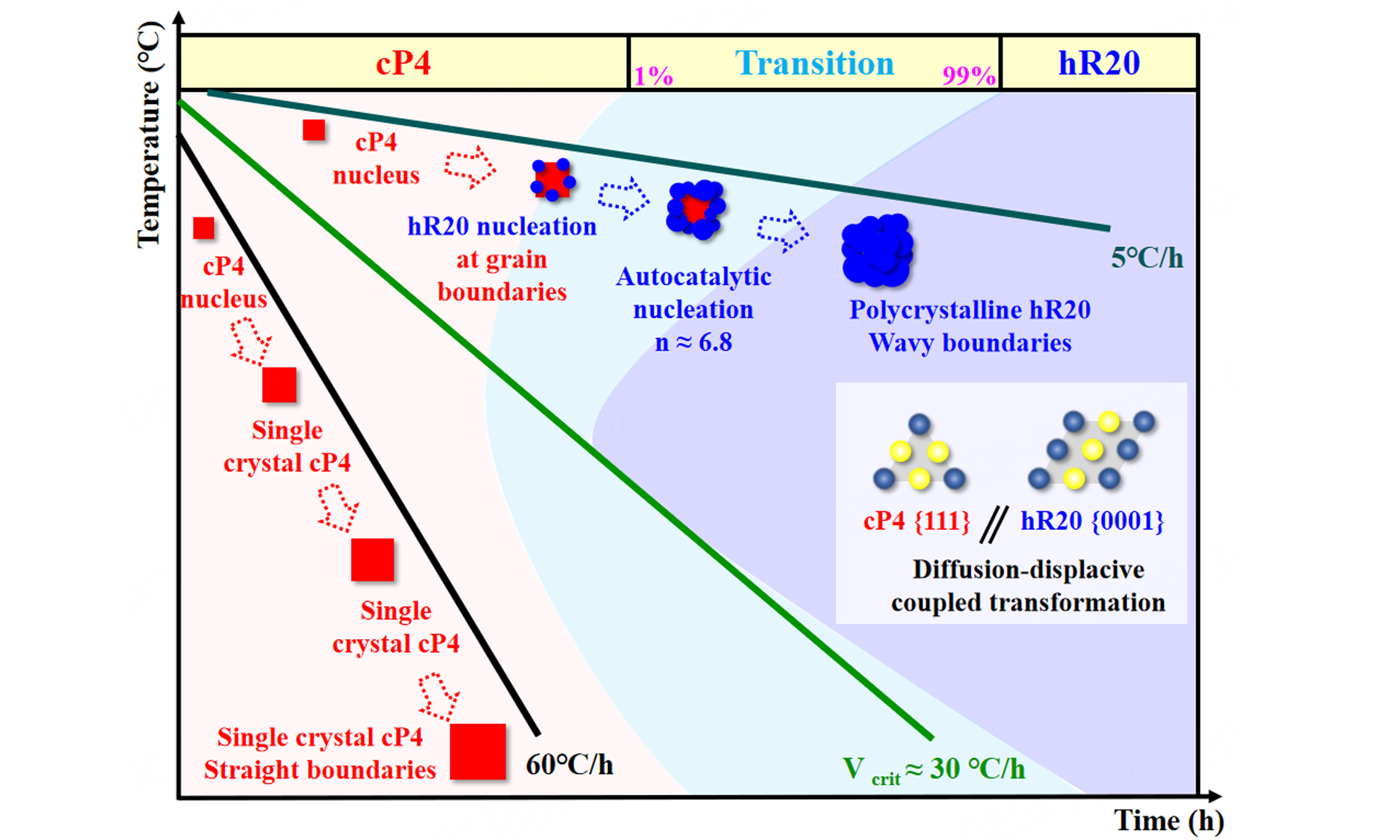
Classical polymorphic transformation from a cubic-based structure to a rhombohedral-based structure, such as the fcc to hcp transition in Co-alloy[32] and Fe40Mn40Co10Cr10[33], and the 3C to 6H transformation in SiC[28,34], typically occurs through the glide of Shockley partial dislocations and is classified as a diffusionless displacive phase transformation. However, in this study, the cP4 to hR20 transition exhibits remarkable diffusion-controlled characteristics. The kinetic analysis presented in Section 4.2 reveals a well-defined critical cooling rate of 36 °C/h for the transformation, along with a high Avrami exponent of nearly 6.8, which is characteristic of diffusion-controlled transformations with site-saturated nucleation and three-dimensional growth. These observations indicate that the transformation is not a fault-mediated displacive process but rather a diffusion-displacive coupled phase transformation.
In the cP4 structure, Er atoms are uniformly distributed on every {111} close-packed plane with an Er:Al ratio of 1:3. In contrast, the hR20 structure exhibits a heterogeneous layered arrangement of Er atoms, wherein certain layers are enriched in Er while others consist entirely of Al, resulting in a periodic compositional modulation, as seen in Figure 11A. Therefore, the transformation from the cP4 to the hR20 structure requires not only a change in the stacking sequence but also long-range diffusion of Er atoms between different stacking layers to achieve the site-occupancy reconstruction. This diffusional requirement governs the thermally activated transformation; i.e., within the effective temperature range, the interlayer diffusion of Er atoms governs the transformation rate. As the temperature decreases, the competition of the decreasing diffusion coefficient and the increasing driving force leads to the characteristic C-curve and the critical cooling rate.
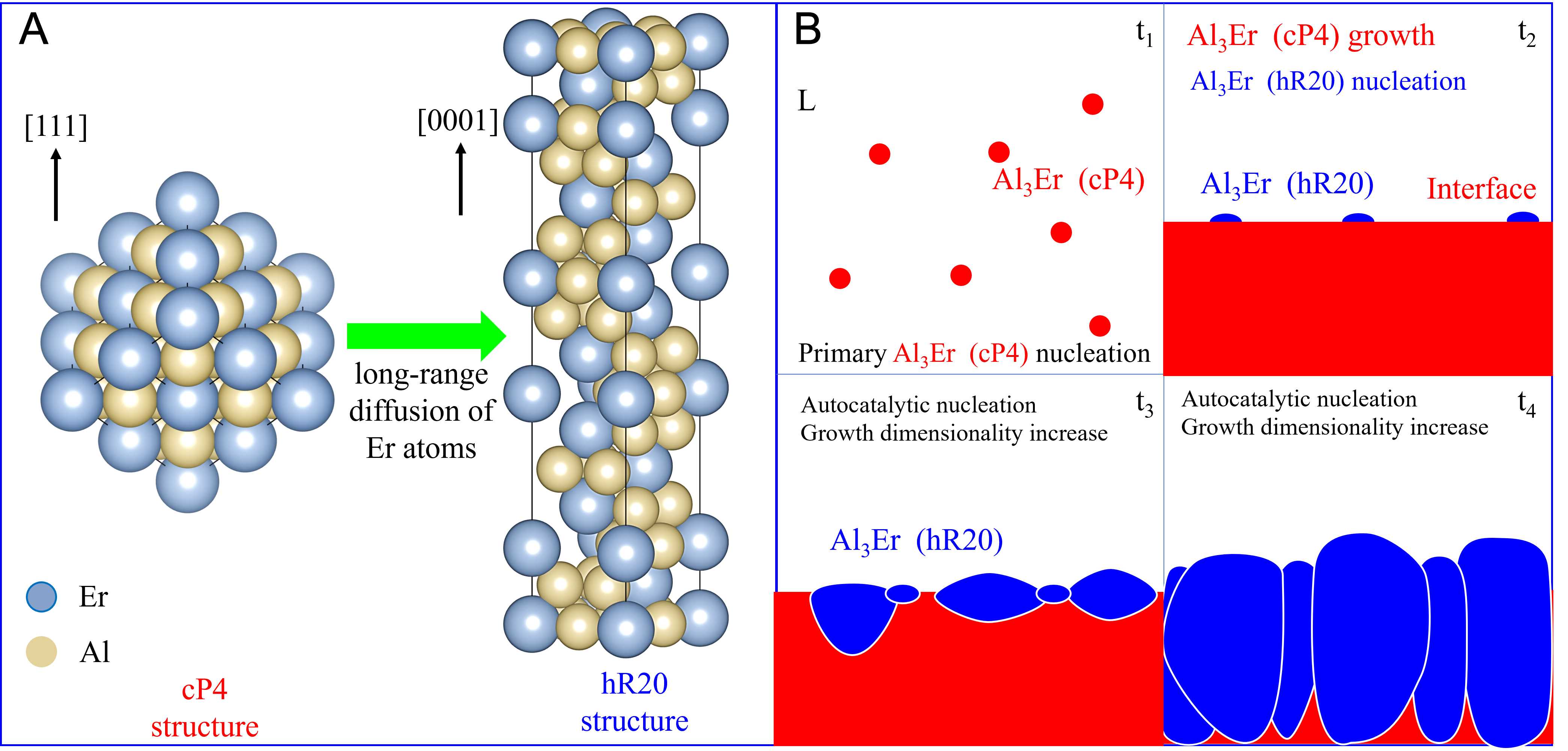
Figure 11. Schematic diagram of the cP4 to hR20 polymorphic transformation mechanism. (A) Distribution of closely packed plane atoms in the two-structured Al3Er phases; (B) Initial state (t1) and the three transformation stages (t2-t4) of microstructure evolution during polymorphic transformation. t1: Initial formation of cP4-structured Al3Er phase; t2: Isolated nucleation of the hR20-structured Al3Er phase on phase boundaries of cP4-structured Al3Er phase; t3: Autocatalytic nucleation and growth dimensionality transition of hR20-structured Al3Er phase; t4: Formation of polycrystalline hR20-structured Al3Er.
SAED pattern in Figure 10 determined the orientation relationship is
Furthermore, the Avrami exponent of 6.8 is considerably higher than the typical range of 1-4 in classical JMAK theory. This result indicates that during the polymorphic transformation, the synergistic effects of autocatalytic nucleation, the self-assembly of diffusion channels and the transition in growth dimensionality come into play[35-37].
In the early stages of the cP4 to hR20 transformation, the hR20 phase nucleates primarily at preferred sites on phase boundaries of the cP4-structured phase, and the nucleation rate is relatively low. Once a nucleus forms, a semi-coherent interface develops between the hR20 and cP4 phases, as seen in Figure 10, and this interface is characterized by substantial lattice distortion and a high vacancy concentration, which provides a high diffusion rate channel[38,39]. When these interfacial regions become interconnected along the cP4-structured Al3Er/ Al phase interfaces, they act as highly efficient catalytic sites for subsequent nucleation. As the volume fraction of the hR20-structured phase increases, the total interfacial area expands rapidly, and the number of effective nucleation sites grows exponentially, causing the nucleation rate to rise dramatically[35,36,40]. This positive feedback loop continues until neighboring hR20 particles impinge upon one another, after which the nucleation rate begins to decrease.
The EBSD phase distribution maps in Figure 7 show that in partially transformed samples, the hR20-structured phase is distributed preferentially along the cP4 grain boundaries, forming a continuous or semi-continuous network that surrounds the untransformed cP4 cores, which is a characteristic morphological feature of autocatalytic nucleation. Moreover, the grain size of the polycrystalline hR20-structured phase formed at the lower cooling rate is much smaller than that of the cP4-structured phase formed at the higher cooling rate, indicating a substantially higher nucleation density. A statistical analysis was performed using the EBSD IPF maps in Figure 7. Within the same field of view, the number density of hR20-structured phase in the 40 °C/h sample is about 3.4 times that in the 50 °C/h sample. As the transformation fraction increases from 0.4 to 0.9, the number density increases by a factor of 3.4, exceeding the increase expected from linear growth. Such an increase is characteristic of an autocatalytic nucleation mechanism, in which new nuclei are generated rapidly at the transformation interface. Furthermore, the coefficient of variation of the hR20-structured phase grain size distribution in the 40 °C/h sample is 0.68, larger than the value of 0.41 measured for the 50 °C/h sample. This indicates the coexistence of fine grains and coarse grains, consistent with the broad grain size distribution expected for autocatalytic nucleation. These results provide direct evidence for the autocatalytic nucleation mechanism.
If the nucleation rate increases exponentially with time, i.e.,
In addition, the dynamic transition of growth dimensionality further contributes to the elevated Avrami exponent. The formation of the hR20-structured phase can be divided into two stages[37]. During the initial stage, hR20-structured phase elongates one-dimensionally along phase boundaries of the primary cP4-structured Al3Er particles, with growth controlled by grain-boundary diffusion, corresponding to a growth dimensionality of 1. When the phase boundaries are completely covered by the hR20-structured phase, the growth mode shifts to two- or three-dimensional thickening into the grain interiors, corresponding to growth dimensionalities of 2 and 3. The schematic diagram of the polymorphic transformation process is shown in Figure 11B. The EBSD micrographs in Figure 7 reveal that the hR20-structured phase grains are elongated at grain boundaries, which is a typical characteristic of one-dimensional growth, while being equiaxed or spherical within the grains, which is a typical characteristic of two- or three-dimensional growth. These results are consistent with the model of the growth-dimensionality transition. This change in growth dimensionality means that the dimensionality parameter evolves during the transformation. The effective Avrami exponent becomes a weighted average of contributions from different stages. Higher-dimensionality growth occurs in the middle and later stages, when the volume fraction increases most rapidly. As a result, its contribution to the overall Avrami exponent is amplified, producing the markedly high apparent Avrami exponent (n) obtained by fitting[37].
The diffusion-displacive coupled cP4 to hR20 polymorphic transformation manifests itself in the fact that the layer difference in Er atom occupancy necessitates long-range diffusion during the phase transformation, which in turn dictates the existence of a critical cooling rate of 36 °C/h. The autocatalytic nucleation, the self-assembly of diffusion channels and the transition in growth dimensionality during the transformation lead to an anomalously high Avrami exponent of 6.8, which has a clear mathematical foundation and is experimentally supported in this work.
In summary, the cP4 to hR20 polymorphic transformation can be divided into three stages. At the first stage, the primary cP4-structured Al3Er phase has precipitated from the liquid as a single crystal, and Er atoms at grain boundaries begin interlayer migration through diffusion, with preferential sites becoming potential nucleation sites. The nucleation rate is extremely low during this stage, corresponding to t2 schematic diagram in Figure 11B. At the second stage, which is the autocatalytic acceleration period, once the first hR20-structure Al3Er nucleus forms at the grain boundary, its interface becomes a catalytic site, and the nucleation rate increases exponentially. The number density increases significantly. The grains extend one-dimensionally along the grain boundary, as shown in t3 of Figure 11. At the third stage, after the grain boundaries are covered, growth shifts to thickening toward the grain interior, ultimately forming a polycrystalline hR20-structured Al3Er microstructure. The essence of this model lies in the coupling of diffusion and displacement. Diffusion controls the transformation rate, which determines the critical cooling rate, while displacement assists in stacking rearrangement.
CONCLUSIONS
(1) After the solidification process, the cP4-structured Al3Er phase grains are formed under a fast cooling rate of 60 °C/h, the hR20-structured Al3Er phase grains are formed under a slow cooling rate of 30 °C/h or below, and the two structures coexist under an intermediate cooling rate of 50 or 40 °C/h. The thermodynamically stable structure of the Al3Er phase is the hR20 structure.
(2) The lattice constant of the cP4-structured Al3Er phase is 0.4212 ± 0.0003 nm, with a lattice mismatch of 4.08 ± 0.09% relative to the Al matrix. The lattice constants of the hR20-structured Al3Er phase are a = 0.6036 ± 0.0006 nm, c = 3.5705 ± 0.0004 nm. The orientation relationship between the cP4-structured and hR20-structured Al3Er phases is:
(3) At a cooling rate of 60 °C/h, the primary cP4-structured Al3Er phase is single-crystalline with an average grain size of 211 μm, exhibiting straight boundaries and the eutectic structure consists of both flocculent and lamellar features. In contrast, at a cooling rate of 5 °C/h, the primary hR20-structured Al3Er phase is polycrystalline with an average grain size of 92 μm, displaying wavy boundaries, and its eutectic structure is lamellar.
(4) Classical nucleation calculations indicate that the hR20-structured Al3Er cannot precipitate directly from the liquid. The feasible transformation pathway is that during slow cooling, the cP4-structured Al3Er phase precipitates first and the hR20-structured Al3Er phase subsequently nucleates heterogeneously at the grain boundaries.
(5) JMAK kinetic analysis shows that the critical cooling rate for the polymorphic transformation is 36 °C/h. The polymorphic transformation is a diffusion-displacive coupled phase transformation, in which the interlayer difference in Er atom occupancy necessitates long-range diffusion of Er atoms. The high Avrami exponent of 6.8 originates from autocatalytic nucleation, a transition in growth dimensionality, and the self-assembly of diffusion channels.
DECLARATIONS
Authors’ contributions
Made substantial contributions to conception and design of the study and performed data analysis and interpretation: Wang, J.; Gao, K.; Xiong, X.; Ning, J.
performed data acquisition and provided administrative, technical, and material support: Wu, X.; Wen, S.; Wei, W.; Huang, H.; Nie, Z.; Zhou, D.
Availability of data and materials
The data that support the findings of this study are available from the corresponding author upon reasonable request.
AI and AI-assisted tools statement
Not applicable.
Financial support and sponsorship
This work is supported by the National Key Research and Development Program of China (2022YFB3705802) and the Program on Jiangsu Key Laboratory for Clad Materials (BM2014006).
Conflicts of interest
Zhou, D. is affiliated with Yin Bang Clad Material Co. Ltd., while the other authors declared that they have no conflicts of interest.
Ethical approval and consent to participate
Not applicable.
Consent for publication
Not applicable.
Copyright
© The Author(s) 2026.
REFERENCES
1. Zhao, W.; Liu, G.; Zhang, S.; et al. A review of rare earth elements microalloying in aluminum alloys: Mechanisms of microstructure evolution and Performance Enhancement. J. Mater. Res. Technol. 2026, 41, 2839-69.
2. Mosleh, A. O.; Wang, J.; Pozdniakov, A. V.; et al. Synergistic effect of Fe, Ni, and Er on microstructural stability and high-temperature performance of Al-Cu-Mg alloys. Mater. Charact. 2026, 239, 116687.
3. Knipling, K. E.; Dunand, D. C.; Seidman, D. N. Criteria for developing castable, creep-resistant aluminum-based alloys - a review. Int. J. Mater. Res. 2006, 97, 246-65. https://www.researchgate.net/publication/270227343_Criteria_for_developing_castable_creep-resistant_aluminum-based_alloys_-_A_review (accessed 2026-10-14).
4. Jin, L.; Kang, Y.; Chartrand, P.; Fuerst, C. D. Thermodynamic evaluation and optimization of Al-Gd, Al-Tb, Al-Dy, Al-Ho and Al-Er systems using a modified quasichemical model for the liquid. Calphad 2010, 34, 456-66.
6. Ge, Z.; Wei, S.; Liu, Z.; et al. High-strength additively manufacturable Al-Zr-Er-Ni alloys with high as-built ductility and thermal stability. npj. Adv. Manuf. 2025, 2, 48.
7. Gorlov, L.; Loginova, I.; Glavatskikh, M.; Barkov, R.; Pozdniakov, A. Novel precipitation strengthened Al-Y-Sc-Er alloy with high mechanical properties, ductility and electrical conductivity produced by different thermomechanical treatments. J. Alloys. Compd. 2022, 918, 165748.
8. Zhang, Z.; Fan, W.; Long, X.; et al. Er/Sc co-doping enabling laser-powder bed fusion aluminum alloys with superior strength and uncompromised toughness. Rare. Met. 2026, 45, e70427.
9. Xu, Z.; Luan, S.; Tian, S.; Wang, H.; Li, S.; Zhou, L. Effect of erbium on microstructure and properties of AA6061 twin-roll casting sheet. J. Alloys. Compd. 2022, 907, 164458.
10. Cao, P.; Zhu, D.; Wu, N.; et al. Effect mechanism of Er content variations on the mechanical and corrosion properties of T6 state Al-Mg-Si-xEr sheets. J. Mater. Res. Technol. 2024, 29, 1359-76.
11. Moustafa, E. B.; Abushanab, W. S.; Milyani, A. H.; Mosleh, A. O.; Khalil, A. M. Microstructural and mechanical properties of a new Er-modified cast and homogenized AlSiCuMg alloys. J. Alloys. Compd. 2025, 1018, 179144.
12. van Vucht, J. H. N.; Buschow, K. The structures of the rare-earth trialuminides. J. Less. Common. Met. 1966, 10, 98-107.
13. Hu, Z.; Yin, Z.; Lin, J.; et al. Microstructural, electronic, and mechanical properties of L12 ordered Al3Er and Al3Yb intermetallics: an experimental and first-principles calculations. Mater. Res. Express. 2019, 6, 116516.
14. Kong, Y.; Li, H.; Tao, H.; Liu, W. First-principles study of physical properties of L12-Al3X structural phases for heat-resistant aluminum conductors. Trans. Nonferrous. Met. Soc. China. 2025, 35, 377-91.
15. Villars, P.; Calvert, L. D. Pearson’s Handbook of crystallographic data for intermetallic phases, 2th ed.; ASM International, 1991. https://search.worldcat.org/zh-cn/title/Pearson%27s-Handbook-of-Crystallographic-Data-for-Intermetallic-Phases/oclc/23767318 (accessed 2026-10-14).
16. Wang, J.; Gao, K.; Xiong, X.; et al. Effect of trace Er addition on the age-hardening responses and evolution of Al3M particles in Al-0.08Sc-0.06Zr alloy aged at 400 °C. Mater. Charact. 2025, 229, 115652.
17. Li, C.; Zhou, Q.; Han, M.; Sha, S.; Luo, Y.; Xu, X. Effect of rare earth element Er on the microstructure and properties of highly alloyed Al-Zn-Mg-Cu-Zr-Ti alloy. J. Alloys. Compd. 2023, 956, 170248.
18. van Vucht, J. H. N. Influence of radius ratio on the structure of intermetallic compounds of the AB3 type. J. Less. Common. Met. 1966, 11, 308-22.
19. Mao, Z.; Seidman, D. N.; Wolverton, C. First-principles phase stability, magnetic properties and solubility in aluminum-rare-earth (Al-RE) alloys and compounds. Acta. Mater. 2011, 59, 3659-66.
20. Meyer, A. Über die kubische und rhomboedrische form des Al3Er. J. Less. Common. Met. 1970, 20, 353-8.
21. Xu, L.; Shi, X.; Xia, D.; Huang, D.; Tang, H. Experimental investigation and thermodynamic assessment of the Al-Er system. Calphad 2022, 79, 102482.
22. Gao, M. C.; Rollett, A. D.; Widom, M. Lattice stability of aluminum-rare earth binary systems: a first-principles approach. Phys. Rev. B. 2007, 75, 174120.
23. Gao, C.; Gao, K.; Ding, Y.; et al. The phase stability of Al3Er studied by the first-principles calculations and experimental analysis. Metals 2021, 11, 759.
24. Jiang, C. H. The technique and application of polycrystalline X-ray diffraction. Beijing: Chemical Industry Publishing House, 2014. (in Chinese). https://d.wanfangdata.com.cn/periodical/Ch9QZXJpb2RpY2FsQ0hJTmV3UzIwMjUwMTA0MTcwMjI2Eg1meGh4MjAxNDA4MDIxGggxaDY0YzEzcQ%3D%3D (accessed 2026-10-14).
27. Gao, Q.; Ai, J.; Tang, S.; et al. Fast crystal growth at ultra-low temperatures. Nat. Mater. 2021, 20, 1431-9.
29. Dantzig, J. A.; Rappaz, M. Solidification, 2th ed.; EPFL Press, 2016. https://books.google.com/books?id=k1Q-DgAAQBAJ&printsec=frontcover&hl=zh-CN&source=gbs_ge_summary_r&cad=0#v=onepage&q&f=false (accessed 2026-10-09).
30. Du, Y.; Chang, Y.; Huang, B.; et al. Diffusion coefficients of some solutes in fcc and liquid Al: critical evaluation and correlation. Mater. Sci. Eng. A. 2003, 363, 140-51.
31. Johnson, W. A.; Mehl, R. F. Reaction kinetics in processes of nucleation and growth. Trans Am Inst Min Metall Eng 1939;135:416-42. https://onemine.org/documents/papers-reaction-kinetics-in-processes-of-nucleation-and-growth-? (accessed 2026-10-09).
32. Jiang, W.; An, X.; Liu, W.; Ni, S.; Song, M. Microstructure and hardness of solution treated and cold-rolled Co75Cr25 alloy. Mater. Charact. 2021, 181, 111521.
33. Zhang, L.; Yu, P.; Fan, J.; Li, Y.; Gao, Y.; Li, G. High pressure induced the polymorphism phase transition in the Fe40Mn40Co10Cr10 multi-principal element alloy. Intermetallics 2021, 136, 107268.
34. Calabretta, C.; Scuderi, V.; Bongiorno, C.; et al. Impact of nitrogen on the selective closure of stacking faults in 3C-SiC. Cryst. Growth. Des. 2022, 22, 4996-5003.
35. Lu, K.; Wang, J. Activation energies for crystal nucleation and growth in amorphous alloys. Mater. Sci. Eng. A. 1991, 133, 500-3.
36. Blázquez, J. S.; Romero, F. J.; Conde, C. F.; Conde, A. A review of different models Derived from Classical Kolmogorov, Johnson and Mehl, and Avrami (KJMA) theory to recover physical meaning in solid-state transformations. Physica. Status. Solidi. (b). 2022, 259, 2100524.
37. Sun, Z.; Han, G. G. D.; Schmidt-Rohr, K. Partially cooperative phase conversions and noninteger Avrami exponents. J. Phys. Chem. C. 2024, 128, 20765-73.
38. Shewmon, P. G. Diffusion in solids, 2th ed.; Springer Cham, 2016. https://link.springer.com/book/10.1007/978-3-319-48206-4 (accessed 2026-10-14).
39. Yang, Z.; Qiu, N.; Yang, H.; Wang, Y. Vacancies-mediated atomic diffusion controlled by the interfacial structure of FCC/BCC HEA multilayers. J. Alloys. Compd. 2023, 947, 169512.
Cite This Article
 Open Access
How to Cite
Wang, J.; Gao, K.; Xiong, X.; Ning, J.; Wu, X.; Wen, S.; Wei, W.; Huang, H.; Nie, Z.; Zhou, D. Thermodynamically stable hR20 structure of the Al3Er phase studied by varying solidification rate and polymorphic transformation. Microstructures 2026, 6, 20260130. https://dx.doi.org/10.20517/microstructures.2026.105
Download Citation
Export Citation File:
Type of Import
Tips on Downloading Citation
Citation Manager File Format
Type of Import
Direct Import: When the Direct Import option is selected (the default state), a dialogue box will give you the option to Save or Open the downloaded citation data. Choosing Open will either launch your citation manager or give you a choice of applications with which to use the metadata. The Save option saves the file locally for later use.
Indirect Import: When the Indirect Import option is selected, the metadata is displayed and may be copied and pasted as needed.
About This Article
Copyright

Data & Comments
Data
0







Comments
Comments must be written in English. Spam, offensive content, impersonation, and private information will not be permitted. If any comment is reported and identified as inappropriate content by OAE staff, the comment will be removed without notice. If you have any queries or need any help, please contact us at support@oaepublish.com.