


fig1
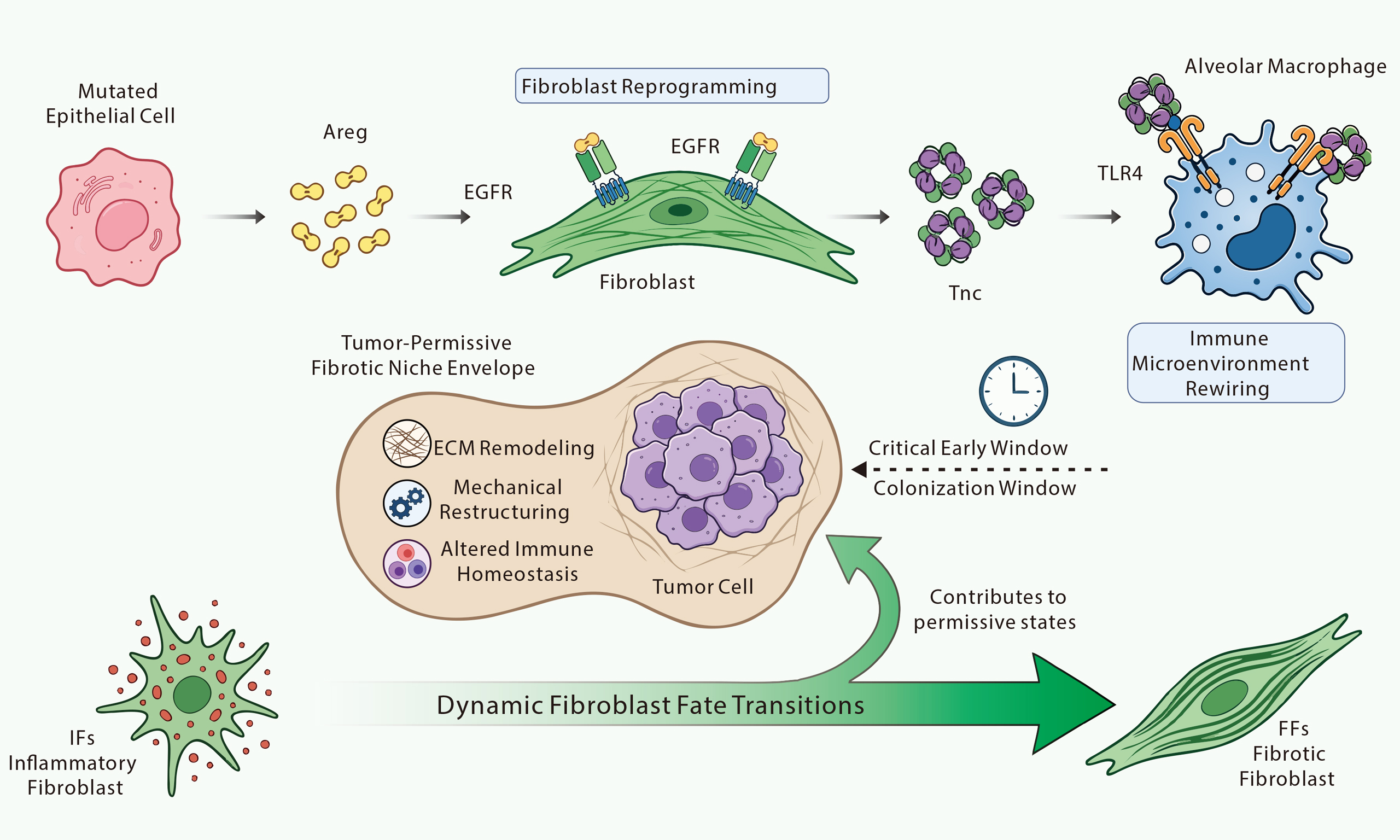
Figure 1. The Areg-EGFR-Tnc-TLR4 Signaling Axis Orchestrates a Temporal State-Dependent Fibrotic Niche for Lung Colonization. This schematic illustrates the intricate molecular and cellular mechanisms by which early fibrotic niches establish tumor-permissive microenvironments, facilitating lung colonization by disseminated tumor cells. The process initiates with mutated epithelial cells secreting amphiregulin (Areg), which then binds to and activates epidermal growth factor receptors (EGFR) on adjacent Fibroblasts. This triggers fibroblast reprogramming, leading to the robust secretion of Tenascin C (Tnc). Subsequently, Tnc engages Toll-like Receptor 4 (TLR4) on alveolar macrophages, resulting in profound immune microenvironment rewiring that favors tumor progression; This orchestrated signaling cascade culminates in the formation of a tumor-permissive fibrotic niche envelope around invading tumor cells. This niche is characterized by critical alterations including ECM remodeling, significant mechanical restructuring of the extracellular matrix, and an altered immune homeostasis that suppresses antitumor immunity. These events occur within a Critical Early Window, also termed the Colonization Window, which is crucial for successful tumor engraftment and survival. Underlying this process are dynamic fibroblast fate transitions, where distinct fibroblast states, such as inflammatory fibroblasts (IFs) and fibrotic fibroblasts (FFs), contribute to the permissive conditions of the niche. This highlights that the specific state and timing of the fibrotic microenvironment are pivotal determinants of metastatic success. ECM: Extracellular matrix.