



fig4
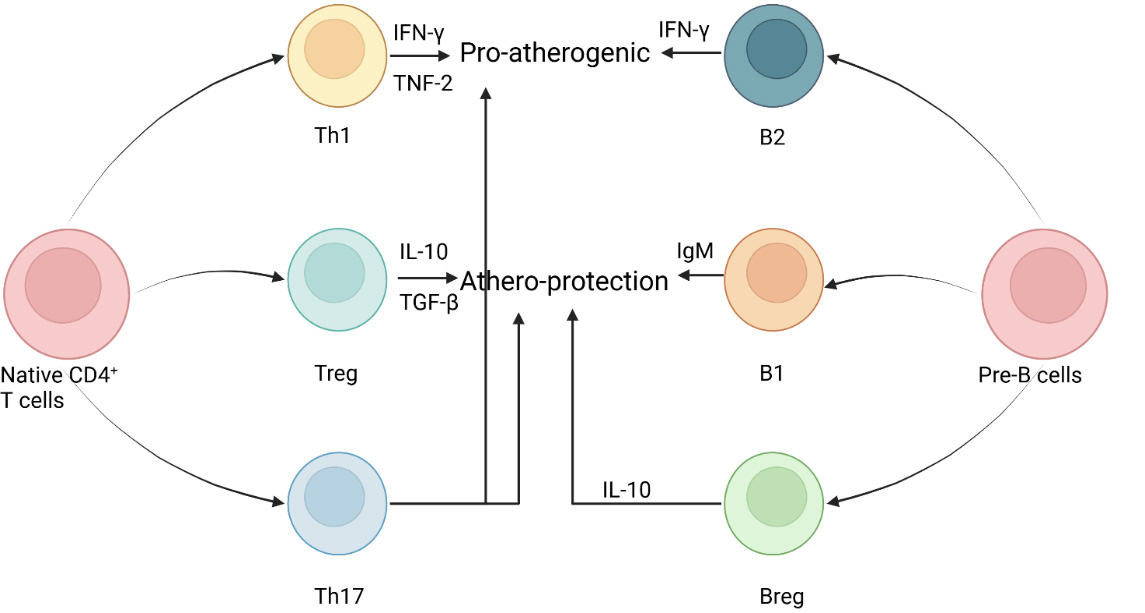
Figure 4. Schematic diagram illustrating the roles of T cells and B cells in atherosclerosis. CD4+ T lymphocytes give rise to T helper cells and regulatory T cells. Th1 cells can secrete IFN-γ and TNF-α, further leading to plaque instability and the body’s inflammatory environment. Tregs are considered to have anti-atherosclerotic effects because they can release anti-inflammatory cytokines, including TGF-β and IL-10. Th17 cells are characterized by their ability to secrete the inflammatory mediator IL-17 through multiple pathways to promote AS, which is the opposite of the protective effect of Tregs. In addition, Th17 cells also have pathogenic effects that contribute to the deterioration of AS. Like T cells, B cells express different functions through various subtypes, such as B1, B2, and Breg. B1 cells are characterized by secreting IgM antibodies, which can act on ox-LDL and protect against atherosclerosis. Breg cells can help stabilize plaques and inhibit inflammatory processes by releasing the anti-inflammatory cytokine IL-10. On the contrary, B2 cells can produce pro-inflammatory cytokines, such as IFN-γ and pathogenic IgG, which can intensify atherosclerosis activity. The figure created with BioRender.com. IFN-γ: Interferon-gamma; TNF-α: tumor necrosis factor-alpha; Th1: T helper type 1 cell; B2: conventional B cell; IL-10: interleukin-10; IgM: immunoglobulin M; TGF-β: transforming growth factor-beta; Treg: regulatory T cell; B1: innate-like B cell; Th17: T helper type 17 cell; Breg: regulatory B cell; OxLDL: oxidized low-density lipoprotein; IgG: immunoglobulin G; ox-LDL: oxidized low-density lipoprotein.