

fig1
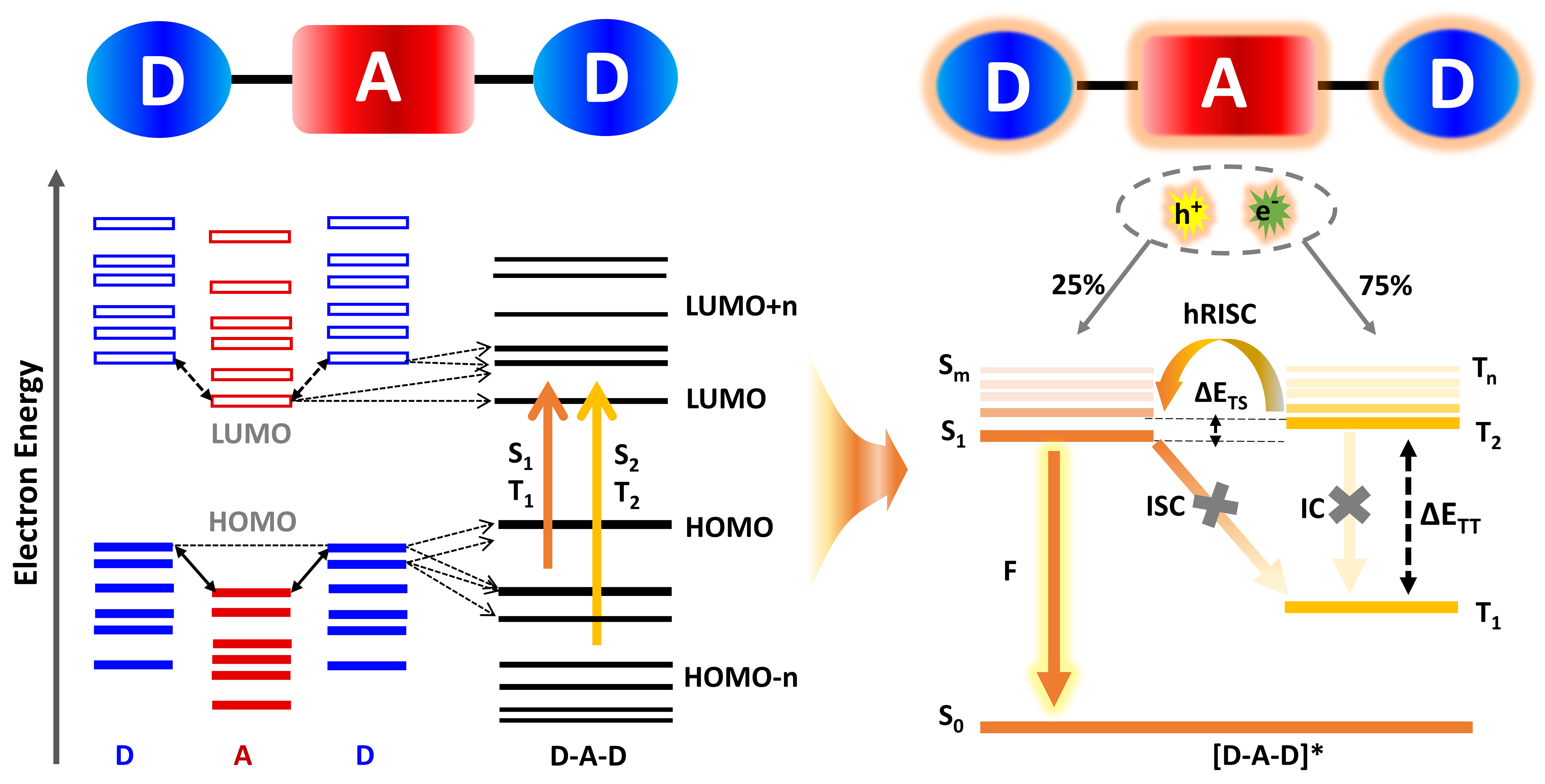
Figure 1. The molecular orbitals distributions of both the fragments (donor and acceptor) and the triads (DAD) under the ground states and excited states by electroluminescence of “hot-exciton” TADF materials. DAD: Donor–acceptor–donor; TADF: thermally activated delayed fluorescence; LUMO: lowest occupied molecular orbital; HOMO: highest occupied molecular orbital; hRISC: high-lying reverse intersystem crossing; IC: internal conversion.