





fig7
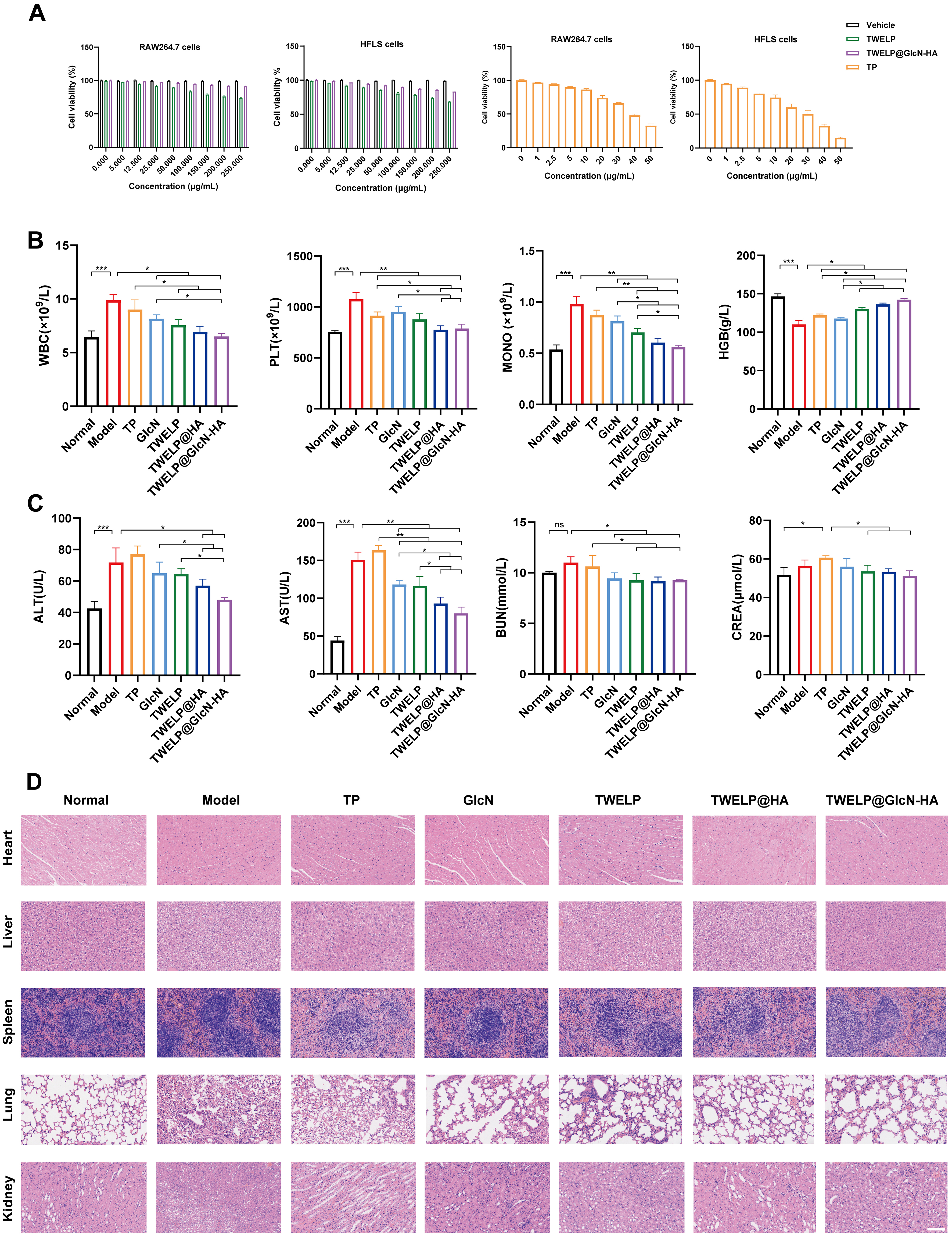
Figure 7. In vitro and in vivo biosafety evaluation of TWELP@GlcN-HA. (A) Cytotoxicity of Vehicle, TWELP, TWELP@GlcN-HA, and TP in RAW264.7 and HFLS cells (0-250 μg/mL for TWELP formulations and 0-50 μg/mL for TP); (B) Hematological parameters: WBC, PLT, MONO, HGB; (C) Serum biochemical markers for liver and kidney function: ALT, AST, BUN, CREA; (D) H&E staining of major organs: heart, liver, spleen, lung, kidney (scale bar: 100 μm). Data are mean ± SD (n = 4); one-way ANOVA, *P < 0.05, **P < 0.01, ***P < 0.001. ALT: Alanine aminotransferase; ANOVA: analysis of variance; AST: aspartate aminotransferase; BUN: blood urea nitrogen; CREA: creatinine; GlcN: glucosamine; H&E: hematoxylin and eosin; HFLS: human fibroblast-like synoviocytes; HGB: hemoglobin; MONO: monocyte; PLT: platelet; SD: standard deviation; TP: triptolide; TWELP: Tripterygium wilfordii-derived exosome-like nanoparticles; TWELP@GlcN-HA: engineered Tripterygium wilfordii-derived exosome-like nanoparticle system; TWELP@HA: hyaluronic acid-modified TWELP; WBC: white blood cell.