





fig4
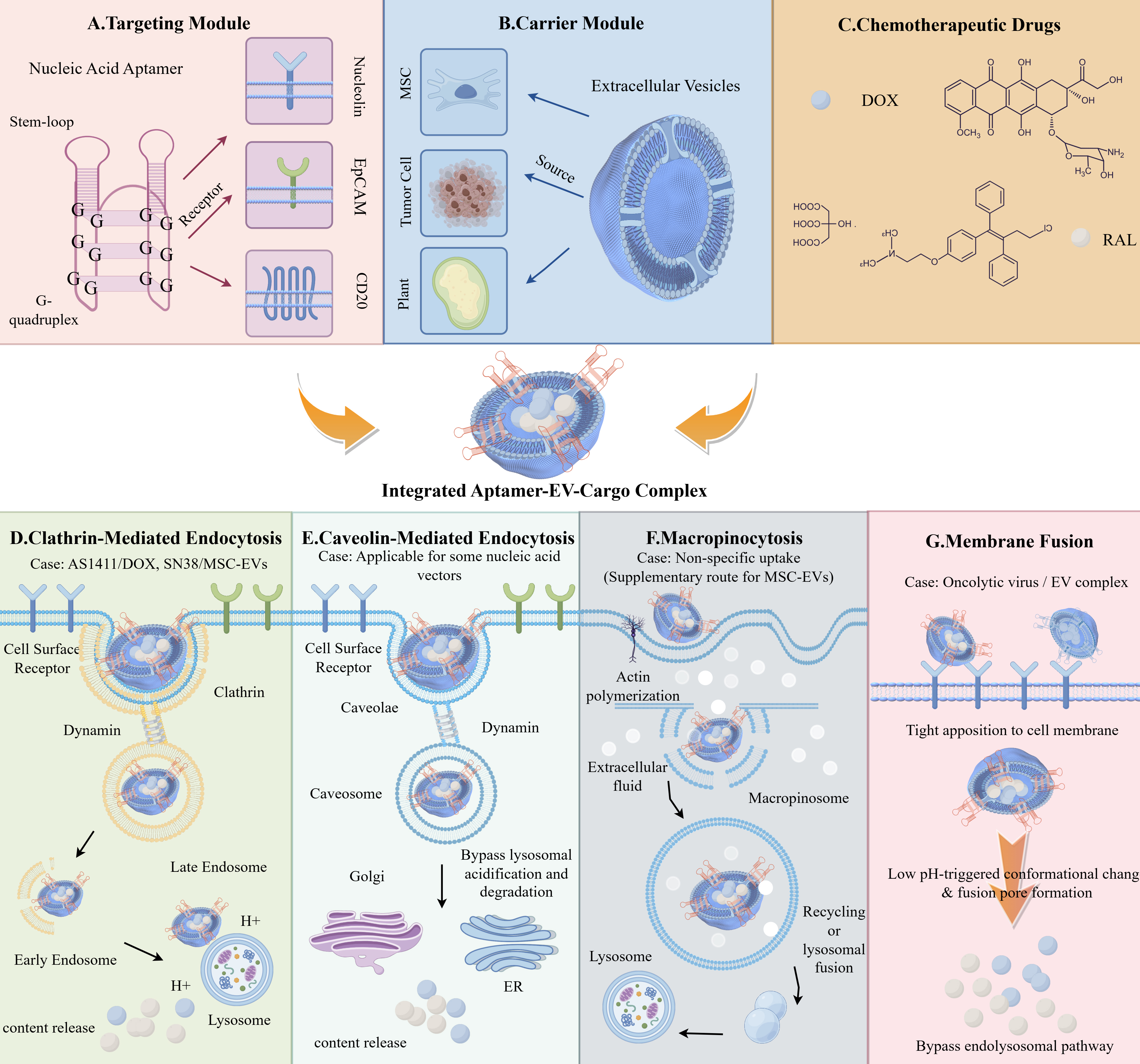
Figure 4. Modular design of aptamer-functionalized EV-based chemotherapeutic delivery systems. Upper schematic: This schematic illustrates the rational design of an integrated aptamer-EV-drug delivery system, which is assembled from three functional modules: (A) the targeting module, comprising nucleic acid aptamers with characteristic secondary structures (stem-loop, G-quadruplex) that bind to specific cell surface receptors (e.g., nucleolin, EpCAM, CD20); (B) the carrier module, consisting of EVs derived from multiple sources including MSCs, tumor cells, and plants; and (C) the chemotherapeutic drug module, represented by DOX and RAL. These three modules are conjugated to form the integrated Aptamer-EV-Cargo complex for targeted delivery. Lower subpanels (D-G): The lower portion delineates four distinct cellular internalization routes for the integrated complex, demonstrating versatile pathways for intracellular cargo release and potential avoidance of lysosomal degradation. (D) Clathrin-mediated endocytosis pathway, which is the primary route for AS1411/DOX and SN38/MSC-EVs internalization. (E) Caveolae-mediated endocytosis, suitable for nucleic acid vectors, which bypasses lysosomal acidification and degradation. (F) Macropinocytosis pathway, representing a non-specific uptake route that serves as a supplementary pathway for MSC-EVs. (G) Membrane fusion pathway, utilized by oncolytic viruses/EV complexes, involving tight apposition and low pH-triggered conformational changes to bypass the endolysosomal pathway. This figure was drawn with Figdraw and is an original work of the authors. Figdraw ID: TRSPAdd884. DOX: Doxorubicin; EpCAM: epithelial cell adhesion molecule; EV: extracellular vesicle; MSC: mesenchymal stem cell; RAL: raloxifene; SN38: irinotecan active metabolite SN38.