





fig3
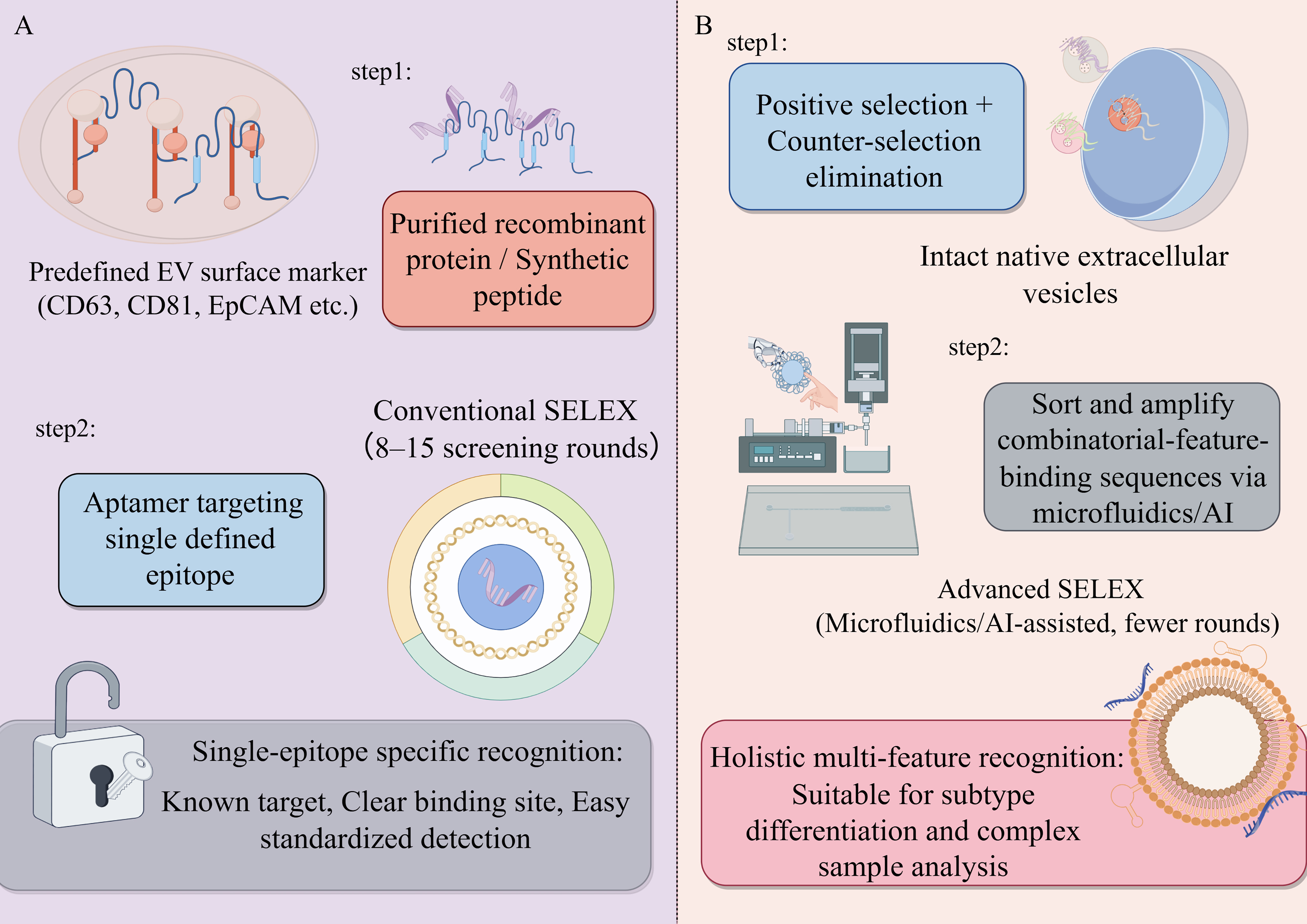
Figure 3. Comparative schematic workflow of SELEX methodologies for EVs. (A) Conventional SELEX strategy. This approach uses purified recombinant proteins or synthetic peptides as targets based on predefined EV surface markers (such as CD63, CD81, EpCAM). It requires 8-15 screening rounds and yields aptamers targeting a single defined epitope. This results in single-epitope-specific recognition, characterized by known targets, clear binding sites, and easy standardized detection; (B) Advanced SELEX strategy. This approach utilizes intact native EVs, incorporating positive selection and counter-selection elimination. It employs microfluidics/AI-assisted systems to sort and amplify combinatorial-feature-binding sequences, requiring fewer rounds. This method achieves holistic multi-feature recognition, making it suitable for subtype differentiation and complex sample analysis. This figure was drawn with Figdraw and is an original work of the authors. Figdraw ID: WYTPRcaf81. AI: Artificial intelligence; EpCAM: epithelial cell adhesion molecule; EV: extracellular vesicle; SELEX: systematic evolution of ligands by exponential enrichment.