


fig4
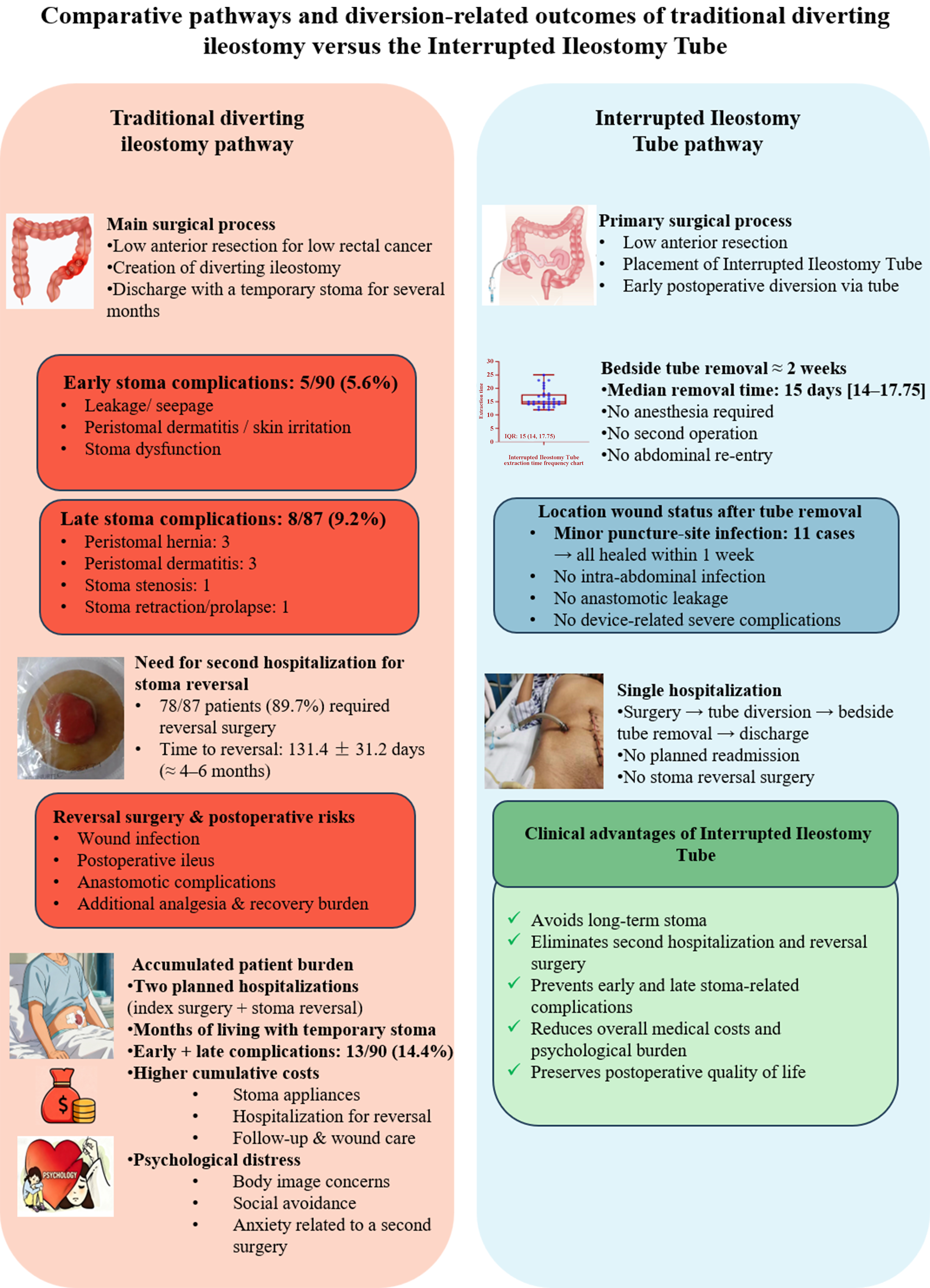
Figure 4. Schematic comparison of long-term diversion pathways between traditional diverting ileostomy and the Interrupted Ileostomy Tube. The traditional pathway involves discharge with a temporary stoma, early stoma-related events (5/90) and late stoma-related complications (8/87), and a second hospitalization for stoma reversal after approximately 4-6 months (78/87; mean 131.4 ± 31.2 days), with additional operative, economic, and psychological burden. In contrast, the Interrupted Ileostomy Tube allows bedside tube removal either during the index hospitalization or after discharge at outpatient follow-up, with a median time to removal of 15 postoperative days (IQR 14-17.75); because the index LOS is shorter than the median removal time [Table 2], tube removal was frequently completed after discharge once predefined criteria were met, with no formal stoma, no planned second surgery, and only minor puncture-site infections that resolved with simple dressings. Created in BioRender. Zhao, H. (2026) https://BioRender.com/mmwdh62. IQR: Interquartile range; LOS: length of stay.