


Population aging and cardiovascular disease in China: epidemiological transition and integrated strategies for healthy aging
 0
0 Abstract
China is undergoing rapid population aging, which is reshaping the burden, spectrum, and management needs of cardiovascular disease (CVD). In addition to coronary heart disease and stroke, aging is contributing to the increasing clinical importance of atrial fibrillation, degenerative valvular disease and heart failure. This review summarizes the epidemiological transition of CVD among older adults in China and highlights the role of aging-related biological vulnerability, cumulative risk-factor exposure, and health-system challenges in driving this burden. It further discusses integrated strategies to promote cardiovascular healthy aging, including dietary sodium reduction, culturally adapted physical activity, environmental risk mitigation, vaccination, simplified pharmacotherapy, evidence-informed adjunctive traditional Chinese medicine, frailty-aware guideline-directed therapies, and community-based and digitally supported care models. By linking population-level prevention, clinical management, primary-care delivery, and geriatric-psychosocial support, this review provides a practical framework for scalable, culturally acceptable, and equitable strategies to reduce CVD events, preserve functional ability, and improve quality of life among China’s older adults.
Keywords
INTRODUCTION
China is undergoing one of the most rapid and extensive demographic transitions in modern history, with profound implications for public health, healthcare delivery, social security, and long-term care planning[1]. Cardiovascular disease (CVD) remains the leading cause of death in China, accounting for nearly half of all deaths in both rural and urban areas, according to the Report on Cardiovascular Health and Diseases in China 2023[2]. Population aging is intensifying this burden through two interrelated pathways: increasing the absolute number of older adults at high cardiovascular risk and reshaping the clinical spectrum of CVD toward more complex geriatric presentations, including multimorbidity, atrial fibrillation (AF), degenerative valvular disease, and heart failure (HF).
Although atherosclerotic CVD, particularly coronary heart disease (CHD) and stroke, continues to dominate China’s CVD burden, aging is adding new layers of clinical complexity. Older adults are more likely to have cumulative lifetime exposure to cardiometabolic risk factors, age-related vascular and myocardial changes, frailty, cognitive impairment, polypharmacy, and functional limitations. As a result, cardiovascular care for older adults increasingly requires not only disease-specific treatment but also integrated prevention, long-term management, rehabilitation, and geriatric-psychosocial support.
This review synthesizes contemporary evidence on population aging and CVD in China, with a focus on demographic trends, age-dependent disease burden, rural-urban disparities, major geriatric cardiovascular conditions, and scalable strategies for cardiovascular healthy aging. By linking epidemiological transition with prevention and care strategies, it aims to provide a practical framework for reducing CVD events, preserving functional ability, and promoting equitable cardiovascular health among China’s older adults.
In recognition of the methodological considerations for narrative reviews, the literature was identified through the authors' cumulative expertise and ongoing monitoring of developments in cardiovascular epidemiology, geriatric cardiology, and population aging in China, supplemented by targeted searches in PubMed for key topics using combinations of keywords including “CVD”, “aging”, “epidemiology”, “China”, “healthy aging”, “frailty”, and related terms. Reference lists of key articles were also reviewed to identify additional relevant sources.
ACCELERATED POPULATION AGING AND RURAL-URBAN HEALTH-SYSTEM DISPARITIES
National demographic trends and projections
China’s demographic transition is characterized by a steep and sustained rise in both the proportion and absolute number of older adults [Figure 1A][1]. By the end of 2024, the National Bureau of Statistics reported that the population aged ≥ 65 years had reached 220.2 million, representing 15.6% of the total population[3]. This places China in a stage of deep population aging, commonly defined by a share of adults aged ≥ 65 years exceeding 14%. Projections indicate that this momentum will intensify in the coming decades; the elderly population is expected to peak at approximately 424.5 million by 2058, a figure that dwarfs the elderly populations of many high-income countries combined, underscoring the unprecedented scale of China’s aging transition [Figure 1B][1].
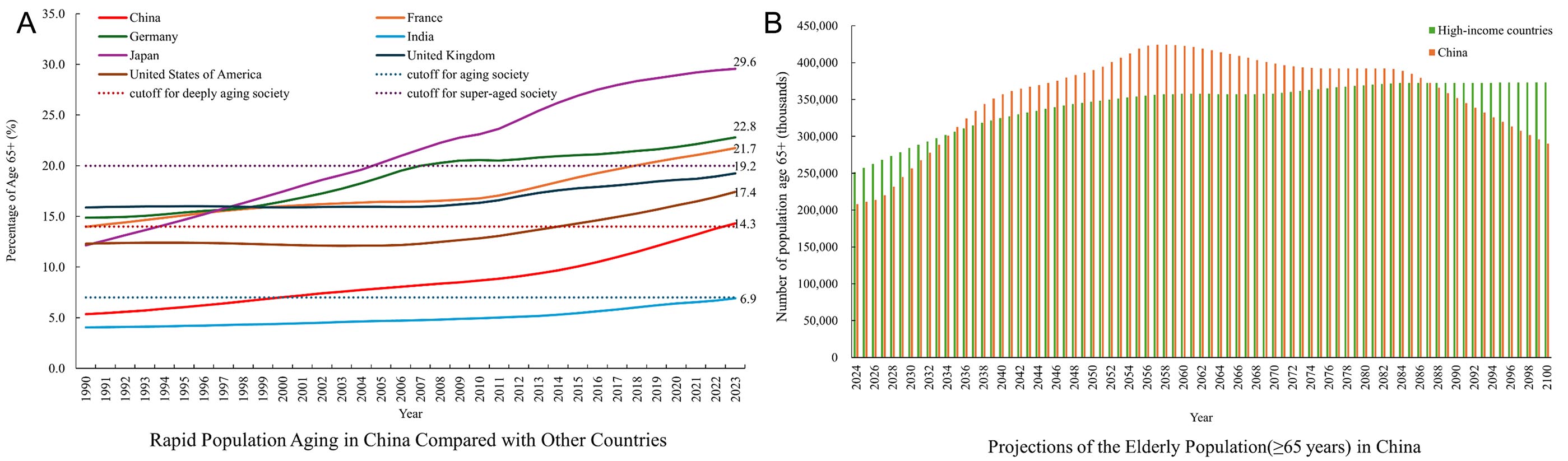
Figure 1. Population aging trends and comparative projections between China and other countries. (A) Rapid population aging in China compared with other countries. The figure highlights that China has experienced a particularly rapid increase in its elderly population share over a relatively short period. Compared with developed economies that underwent aging over several decades, China is transitioning swiftly from an aging society to an aged—and potentially super-aged—society, reflecting the compressed pace and unprecedented scale of population aging. (B) Projections of the elderly population in China and high-income countries. High-income countries are defined according to the United Nations and World Bank income classification standards, which generally include economies such as the United States, Japan, Germany, the United Kingdom, France, Italy, Canada, Australia, and other advanced economies. Even when aggregated, the elderly populations of these high-income countries remain substantially smaller than China’s projected elderly population at its peak. All data are from the United Nations World Population Prospects 2024[1].
The public health significance of this demographic shift lies not only in the number of older adults, but also in the speed with which age-related medical and social care needs are increasing. Older adults have a high prevalence of multimorbidity, including hypertension, diabetes, chronic kidney disease, frailty, cognitive impairment, and CVD, which together increase the complexity and cost of care[2]. This challenge is amplified by China’s “aging before becoming rich” trajectory, in which population aging has advanced before uniformly strong primary care, long-term care, and social support systems have been fully established. The mismatch between growing geriatric care needs and uneven health-system capacity is particularly pronounced in rural regions[4].
Urban-rural disparities in aging and healthcare access
Population aging in China displays striking geographic and socioeconomic disparities. Rural areas are aging faster than urban centers, largely because of the long-term migration of younger adults to cities for education and employment. This demographic shift has resulted in a relative "hollowing out" of rural communities, leaving many older adults with reduced family support, higher dependency ratios, and fewer nearby caregivers. Recent census data indicate that the old-age dependency ratio in rural areas (28.13%) is nearly double that of urban areas (15.56%)[5].
These demographic imbalances are compounded by persistent inequities in healthcare workforce distribution and service capacity. Although basic health insurance coverage has expanded substantially, the availability and quality of primary care, cardiology services, emergency transport, rehabilitation, and long-term management remain uneven. Recent statistics revealed that physician density in urban areas is approximately 3.73 per 1,000 population, compared to just 2.42 per 1,000 in rural regions[6]. This maldistribution limits access not only to routine chronic disease management but also to timely diagnosis, acute cardiovascular care, rehabilitation, and geriatric support services. Consequently, rural older adults may face delayed diagnosis and treatment, which can contribute to avoidable disease progression and widening rural-urban disparities in cardiovascular outcomes[2,7].
Health challenges in rural elderly populations
Older adults in rural China face a constellation of health challenges related to socioeconomic disadvantage, limited health literacy, reduced family support, and gaps in health-service infrastructure. Since 2009, rural populations have borne a heavier burden of cardiovascular mortality than urban populations [Figure 2]. In 2021, the age-standardized mortality rate for CVD in rural China was 364.16 per 100,000, exceeding the urban rate of 305.39 per 100,000[2]. These disparities should be interpreted as the combined result of higher clinical vulnerability, delayed care-seeking, uneven access to prevention and treatment, and limited rehabilitation capacity.
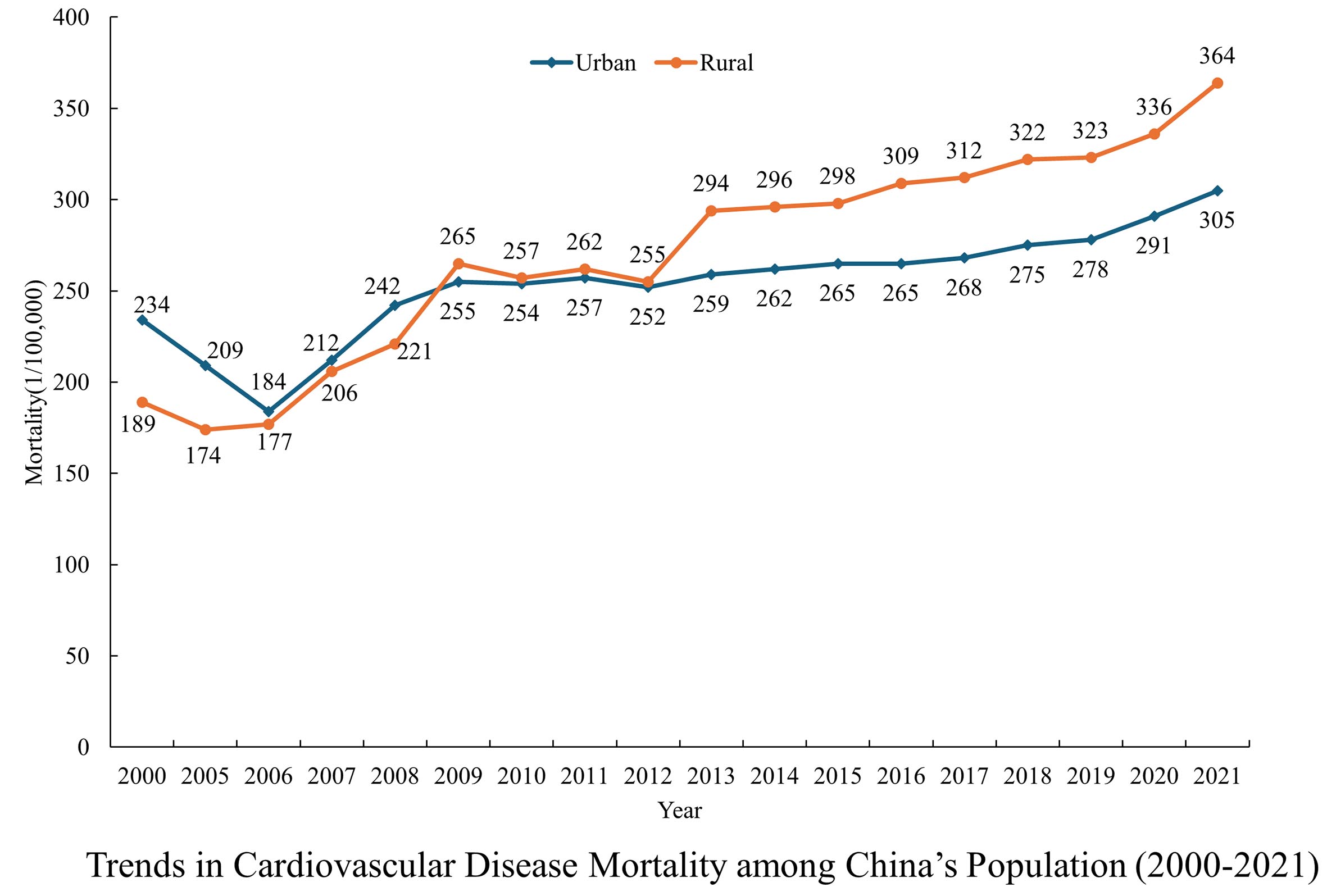
Figure 2. Trends in cardiovascular disease mortality among China’s population (2000-2021). Data are from the Report on Cardiovascular Health and Diseases in China 2023[2]. Although mortality increased in both settings, rural areas experienced a sharper and more sustained rise, with mortality rates exceeding those of urban areas since 2009. This pattern underscores the escalating cardiovascular health disparities between rural and urban populations.
A major contributor to this disparity is the suboptimal management of chronic cardiovascular risk factors. Hypertension prevalence is comparable or slightly higher in rural communities, but awareness, treatment, and control rates remain lower [Table 1][2,8,9]. Entrenched beliefs, such as the notion that "absence of symptoms indicates absence of disease," together with concerns about medication costs, continue to undermine long-term adherence[8]. Furthermore, rural health systems often have limited capacity to manage complex multimorbidity. Despite a reported increase to 7,881 integrated medical and elderly care institutions nationwide by late 2023, their distribution, staffing, quality, and accessibility may remain insufficient relative to the rapidly growing needs of rural older adults[10]. Without targeted interventions to strengthen rural primary care and chronic disease management, population aging may further widen cardiovascular health inequities between rural and urban China.
Prevalence and management of hypertension, diabetes, and dyslipidemia in China
| Indicator | Total (%) | Urban (%) | Rural (%) | |
| Hypertensiona[9] | Prevalence | 27.5 | 25.7 | 29.4 |
| Awareness | 41.0 | 43.1 | 39.0 | |
| Treatment | 34.9 | 37.5 | 32.4 | |
| Control | 11 | 13.6 | 8.5 | |
| Diabetesb[70] | Prevalence | 12.4 | 13.3 | 11.2 |
| Awareness | 36.7 | 40.0 | 32.6 | |
| Treatment | 32.9 | 36.2 | 28.8 | |
| Control* | 50.1 | 54.1 | 44.1 | |
| Dyslipidemiac[2] | Prevalence | 38.1 | 38.9 | 37.4 |
| Awareness | 11.7 | - | - | |
| Treatment | 10.1 | - | - | |
| Control | 4.8 | - | - |
AGING-DRIVEN CARDIOVASCULAR TRANSITION IN CHINA
Age-dependent risk accumulation and biological vulnerability
Population aging is a central driver of China’s expanding CVD burden. Its effect operates through several overlapping pathways: the growth of the older population, the rising proportion of people in high-risk age groups, cumulative lifetime exposure to risk factors, and biological aging of the cardiovascular system. National data indicate that CVD affects an estimated 330 million people in China, while the incidence of major cardiovascular conditions increases substantially with advancing age[2]. As shown in Figure 3, older age groups account for a disproportionate share of CVD incidence, with stroke and ischemic heart disease contributing prominently to the age-related increase in disease burden. For example, the incidence of HF increases from 158 per 100,000 person-years in adults aged 25-64 years to 1,655 per 100,000 person-years in those aged ≥ 80 years[11]. Similar age gradients are observed for ischemic heart disease, stroke, AF, and degenerative valvular disease[2,12,13].
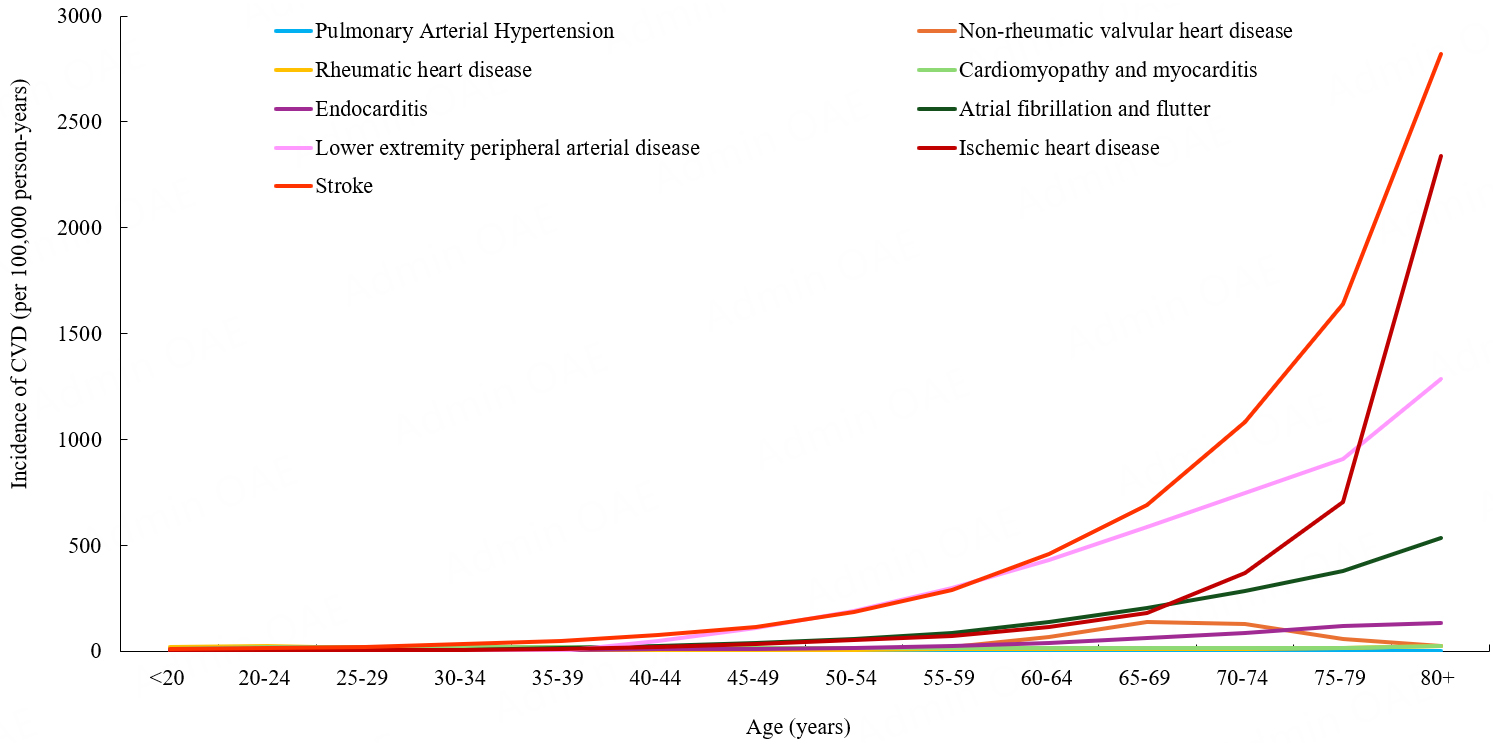
Figure 3. Age-specific incidence of different types of CVD in China. Data are from the Global Burden of Disease Study 2023 (GBD 2023)[69]. Older age groups account for a disproportionate share of total CVD incidence, driven primarily by ischemic heart disease and stroke, highlighting the growing CVD burden associated with population aging.
This age-dependent increase reflects the convergence of biological aging and cumulative lifetime exposure to cardiovascular risk factors. Biological aging contributes to CVD through arterial stiffening, endothelial dysfunction, chronic inflammation, autonomic dysregulation, myocardial fibrosis, and impaired repair mechanisms. These processes predispose older adults to isolated systolic hypertension, AF, degenerative valvular disease, and HF with preserved ejection fraction (HFpEF)[14]. At the same time, decades of exposure to hypertension, diabetes, dyslipidemia, smoking, unhealthy diet, and physical inactivity accelerate atherosclerosis, vascular remodeling, and myocardial dysfunction. Therefore, aging should be understood as a combined biological and epidemiological process, in which intrinsic cardiovascular vulnerability interacts with accumulated risk exposure to amplify late-life CVD burden.
Mortality transition: declining age-standardized rates but rising absolute deaths
A key feature of China’s cardiovascular transition is the coexistence of declining age-standardized mortality and rising absolute numbers of CVD deaths[15]. Improvements in acute care, secondary prevention, and risk-factor management have contributed to reductions in age-standardized mortality. However, these gains have been partly offset by the rapid expansion of the older population, producing a demographic offset effect: fewer deaths occur per age-standardized population, yet more deaths occur in absolute terms. The Report on Cardiovascular Health and Diseases in China estimates that annual CVD deaths now exceed 4.5 million, maintaining CVD as the leading cause of death nationwide[2].
This pattern has important implications for health-system planning. A declining age-standardized mortality rate may suggest progress in prevention and treatment, but the rising absolute number of deaths indicates a growing demand for emergency care, hospitalization, rehabilitation, long-term medication management, and post-event support. For an aging population characterized by recurrent cardiovascular events, frailty, disability, and multimorbidity, a response centered only on acute hospital care is unlikely to be sufficient. A strategic shift is therefore needed from episodic treatment toward longitudinal risk-factor control, post-event rehabilitation, medication adherence support, and community-based follow-up[2,16]. Recent modeling evidence further supports the expectation of a sustained cardiovascular burden in China. Using data from the ChinaHEART nationwide cohort and an agent-based model, Wang et al. projected that the annual incidence of CVD would increase from 0.74% in 2021 to 0.97% by 2030, while CVD mortality would rise until 2024 and subsequently stabilize at approximately 0.44% by 2030[17].
Persistent ASCVD burden and emerging geriatric cardiovascular complexity
Atherosclerotic cardiovascular disease (ASCVD) remains the dominant component of China’s CVD burden in older adults. CHD and stroke continue to account for a large proportion of cardiovascular deaths, disability, hospitalizations, and long-term care needs. With increasing age, cumulative exposure to hypertension, diabetes, dyslipidemia, smoking, unhealthy diet, and physical inactivity further accelerates atherosclerosis, plaque instability, vascular remodeling, and thromboembolic events. Therefore, ASCVD prevention and treatment should remain the central priority in cardiovascular healthy aging[15].
At the same time, population aging is increasing the clinical importance of geriatric cardiovascular conditions that often coexist with ASCVD rather than replace it. HF, particularly HFpEF, AF, degenerative valvular disease, frailty-associated cardiovascular decline, and multimorbidity-related treatment complexity are becoming more prominent among older patients[18,19]. These conditions are closely linked to age-related myocardial fibrosis, arterial stiffening, valvular calcification, autonomic dysregulation, impaired repair capacity, and chronic inflammation[14,18]. In older adults with CVD, HFpEF, frailty, and multimorbidity frequently co-occur and collectively drive adverse outcomes[18,19]. Data demonstrate that geriatric vulnerabilities across multiple health domains—medical, mind and emotion, and physical function—commonly overlap in HFpEF, with nearly half of patients exhibiting impairments in all three domains simultaneously[18]. Moreover, the number of impaired domains exhibits a dose-response relationship with prognosis: impairment of three domains confers a nearly four-fold increase in risk for all-cause hospitalization and mortality, with frailty emerging as the strongest independent prognostic factor[18]. Polypharmacy affects over 90% of patients with HFpEF, further amplifying the risks of adverse drug events, drug interactions, and cumulative medication burden, particularly in frail individuals[20,21]. Encouragingly, over 90% of patients with HFpEF report willingness to deprescribe if prompted by their physicians, suggesting that patient-centered medication optimization is feasible in this population[22].
This intersection of HFpEF, frailty, and multimorbidity not only worsens prognosis but also fundamentally alters treatment logic. Frailty and cognitive impairment compromise patients’ capacity for self-management and medication adherence; consequently, even well-intentioned guideline-directed regimens derived from single-disease trials become difficult to implement in this population, as these trials typically excluded the very patients-those with complex multimorbidity, advanced frailty, or cognitive dysfunction-who are most representative of real-world geriatric cardiology practice[23]. Meanwhile, polypharmacy exacerbates the risks of falls, delirium, and hospital readmissions, particularly in frail individuals[22,23]. Consequently, management goals for these patients must shift from event-focused disease control toward integrated strategies that incorporate comprehensive geriatric assessment, deprescribing, and functional preservation[22-24].
Thus, the aging-related CVD burden in China should not be interpreted as a simple shift from atherosclerotic disease to geriatric cardiovascular syndromes. Rather, it represents a layered transition in which ASCVD remains central, while degenerative CVD, multimorbidity, frailty, and functional decline increasingly shape prognosis, care needs, and health-service utilization. This layered transition is most clearly reflected in several major cardiovascular conditions among older adults, including CHD, stroke, AF, degenerative valvular heart disease (DVHD), and HF. The following section therefore examines these disease-specific burdens and care gaps in greater detail.
MAJOR CARDIOVASCULAR CONDITIONS IN OLDER CHINESE ADULTS
CHD
CHD has become a leading cause of mortality among older Chinese adults, with prevalence rising sharply with age. Recent estimates indicate that approximately 11.39 million individuals in China are living with CHD, and the mortality burden continues to shift toward rural populations[2]. In 2021, the age-standardized mortality rate for CHD in rural areas reached 148.19 per 100,000, significantly exceeding the urban rate of 135.08 per 100,000—a disparity that has widened continuously since 2016[2]. The volume of percutaneous coronary interventions (PCI) has grown robustly; according to the Data Report on PCI in Mainland China 2023, a total of 1,636,055 cases were registered, representing a 26.44% year-on-year growth[25]; however, this expansion has not fully translated into improved outcomes for rural patients[26]. Delayed presentation remains a critical bottleneck in acute myocardial infarction care. Symptom-to-door times for acute myocardial infarction (AMI) patients in rural areas are nearly double those of urban centers, reflecting delayed symptom recognition, transport barriers, limited emergency networks, and uneven availability of chest pain centers[2,27]. For older adults, atypical symptoms, frailty, cognitive impairment, and living alone may further delay treatment seeking. Strengthening county-level chest pain networks, prehospital triage, referral pathways, and post-discharge secondary prevention is therefore essential to reduce avoidable mortality and disability.
Stroke
Stroke imposes a heavy fatal and disabling burden on older Chinese adults, serving as the primary cause of disability and the second leading cause of death. Latest surveillance data estimate that 17.8 million adults have experienced a stroke, with 3.4 million new incident cases and 2.3 million deaths occurring annually[28]. China’s stroke profile differs from that of many high-income countries, with a relatively high proportion of hemorrhagic stroke and a large burden attributable to poorly controlled hypertension[2,28]. Rural stroke mortality (158.63 per 100,000) exceeds urban mortality (129.41 per 100,000), consistent with lower hypertension awareness and control, delayed emergency treatment, and uneven access to rehabilitation. High recurrence rates—reported at 5.6% within one year—highlight persistent gaps in secondary prevention, including blood pressure control, lipid management, antiplatelet or anticoagulant therapy when indicated, smoking cessation, and long-term rehabilitation for the nation's 13 million stroke survivors[2,28].
AF
AF is a rapidly growing epidemic among older adults, with the national prevalence estimated at 4.87 million cases[2]. The prevalence exhibits a steep age-dependent rise, escalating from roughly 4% in those aged 75-84 years to nearly 18% in those aged ≥ 95 years[29]. AF serves as a potent multiplier of cardiovascular risk, increasing the risk of ischemic stroke by 4-5 times and cardiovascular mortality by over three-fold in elderly hypertensive populations[30]. The interplay between AF and HF is particularly deleterious; approximately 34% of hospitalized HF patients have coexisting AF, a combination that significantly worsens prognosis[31]. Despite strong evidence supporting oral anticoagulation in eligible patients, anticoagulant therapy remains underused in older Chinese adults with AF, with recent registries indicating that fewer than 40% of eligible elderly patients receive guideline-recommended oral anticoagulation. Barriers include fear of bleeding, limited risk stratification in primary care, underdiagnosis of paroxysmal AF, medication cost, and uncertainty about anticoagulation in frail or multimorbid patients[30]. Improving AF detection, individualized stroke-bleeding risk assessment, and safe anticoagulation management should be a priority in geriatric cardiovascular care.
DVHD
As the population ages, the landscape of valvular heart disease in China is transitioning from a predominance of rheumatic etiology to degenerative disease. In patients aged ≥ 75 years, DVHD now accounts for 42.5% of all valvular pathology, with aortic stenosis and mitral regurgitation being the most common lesions[32,33]. Prevalence studies in southern China suggest that DVHD affects nearly 37% of individuals over age 65, making it a major, often underdiagnosed driver of HF[33]. The adoption of transcatheter aortic valve replacement (TAVR) has increased rapidly in China, reflecting growing capacity in the care of structural heart disease. According to the National Clinical Research Center for Interventional Medicine (2024), TAVR procedures surged by nearly 40% in 2023, with approximately 14,000 surgeries performed nationwide. This growth underscores the increasing clinical capacity to address degenerative valvular diseases in an aging society[34]. However, this volume remains insufficient relative to the estimated 1.5 million elderly patients suffering from severe, symptomatic aortic stenosis in China. This discrepancy highlights a substantial treatment gap, as the current annual procedure volume covers less than 1% of the potential candidate pool, emphasizing the urgent need for expanded access to transcatheter therapies, particularly within regional medical centers[35,36].
Heart failure
HF represents the final battleground of cardiovascular defense in the elderly. A 2025 analysis from the Global Burden of Disease Study estimates that 14.3 million people in China are now living with HF, a staggering increase driven by population aging and improved survival from ischemic heart disease[37]. The prevalence rises exponentially with age, reaching 7.55% in individuals aged ≥ 80 years[31]. The phenotype of HF is also shifting: HFpEF has emerged as the dominant form in older adults, accounting for over 50% of cases in community settings[31]. The prognosis remains poor, with 1-year mortality rates for hospitalized patients approaching 17.4% and 5-year mortality exceeding 50%[31]. Addressing this burden requires a paradigm shift toward comprehensive management that targets not just the heart, but the multimorbid frailty syndrome typical of these patients.
Integrated strategies for cardiovascular healthy aging
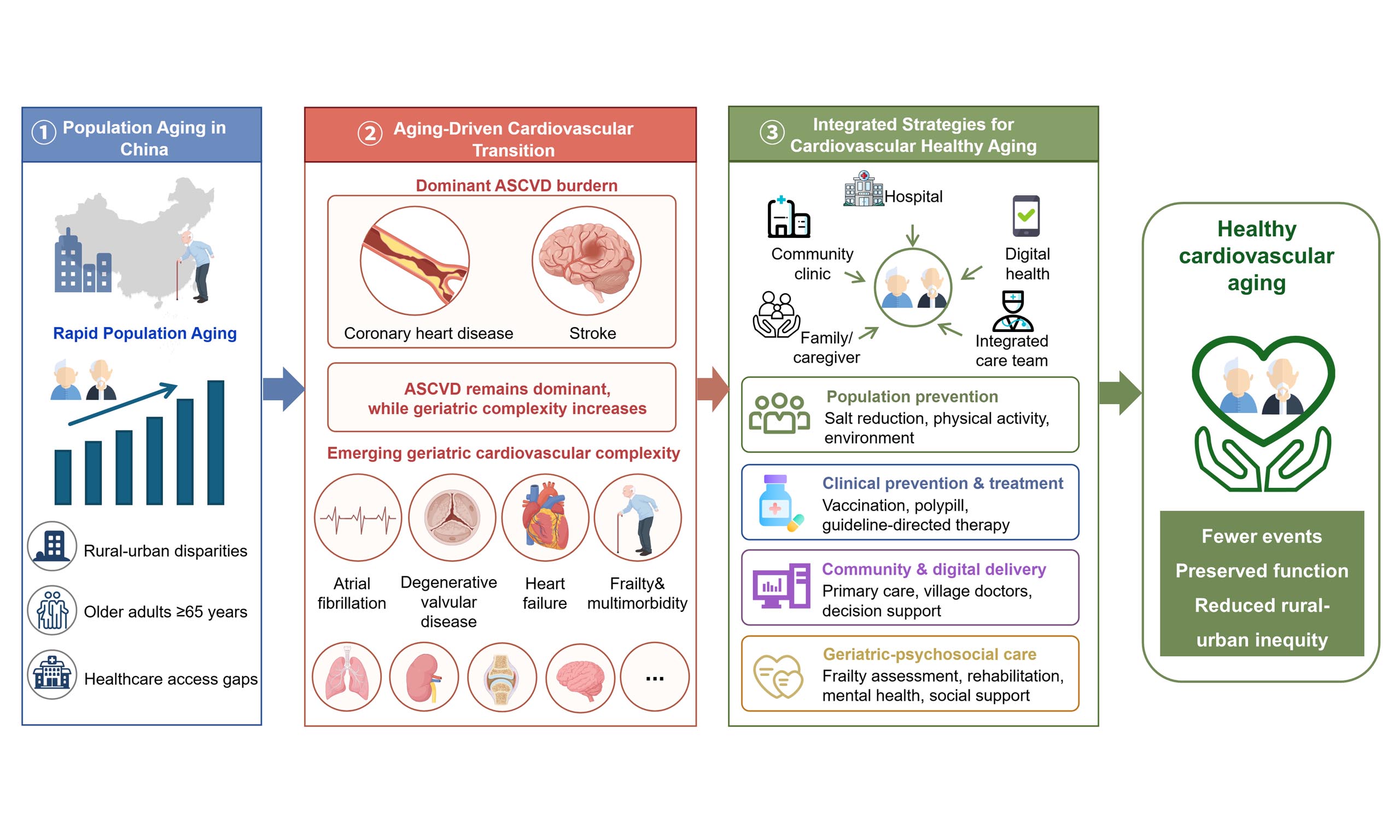
Cardiovascular healthy aging in China requires a coordinated prevention and care framework that spans population-level risk-factor control, evidence-based clinical prevention and treatment, community-based delivery models, and geriatric-psychosocial support. At the population level, priority should be given to scalable interventions such as dietary sodium reduction, culturally adapted physical activity, environmental risk mitigation, and age-friendly community design. At the clinical level, strategies should include vaccination for vulnerable patients, simplified pharmacotherapy, evidence-informed adjunctive traditional Chinese medicine, and frailty-aware use of guideline-directed therapies [Table 2]. Because older adults frequently live with multimorbidity, frailty, cognitive impairment, polypharmacy, and functional limitations, interventions should be evaluated not only by disease-specific outcomes but also by adherence, safety, equity, functional recovery, and preservation of intrinsic capacity. For China, effective strategies must be affordable, culturally acceptable, and deliverable through rural, community, and primary-care systems.
Summary of key studies and evidence characteristics for major interventions strategies for cardiovascular healthy aging
| Strategy | Author, year | Study design | Population | Intervention | Outcomes | Key findings |
| Dietary sodium substitution | Neal et al., 2021[38] | Open-label, cluster-randomized trial | Participants had a history of stroke or ≥ 60 years and had high blood pressure (N = 20,995) | A salt substitute vs. regular salt | Primary outcome: stroke Secondary outcome: major adverse cardiovascular events and all-cause death | Stroke rate: salt substitute 29.14/1,000 person-years, regular salt 33.56/1,000 person-years, RR (0.86, 95%CI: 0.77-0.96; P = 0.006) |
| Zhang et al., 2024[39] | A post hoc analysis of a cluster-randomized trial | Older adults with normal blood pressure (N = 611) | A salt substitute vs. usual salt | Hypertension and hypotension | Salt substitute vs. usual salt: hypertension: 11.7 vs. 24.3 per 100 person-years; adjusted HR: 0.60, 95%CI: 0.39 to 0.92; P = 0.02 Hypotension: 9.0 vs. 9.7 per 100 person-years; P = 0.76 | |
| Wang et al.,2022[40] | Randomized trial | Participants with 130 to 159 mm Hg baseline SBP (N = 265) | Chinese heart-healthy diet vs. control diet | Primary outcome: SBP Secondary outcome: DBP and food preference score | The net difference of change between the 2 groups in SBP: -10.0 (95%CI: -12.1 to -7.9) mm Hg | |
| Physical activity and culturally adapted exercise | Ma et al., 2023[41] | A systematic review and meta-analysis | Patients with essential hypertension (N = 4,207) | Tai Chi or Qigong vs. control group | SBP and DBP | SBP: MD = -9.88, 95%CI: [-11.94, -7.82], P < 0.00001 DBP: MD = -5.57, 95%CI: [-6.88, -4.27], P < 0.00001 |
| Dai et al., 2021[42] | A systematic review and network Meta-analysis | Patients with essential hypertension | Traditional Chinese exercises vs. AHD | SBP and DBP | Tai Chi + AHD:SBP -12.42, DBP -7.56; Baduanjin + AHD:SBP -7.03, DBP -4.51 (all vs. AHD alone) | |
| Ou et al., 2022[43] | A systematic review | Chinese older adults ≥ 55 years | Square dancing | Physical and mental health | Square dancing interventions were shown to result in effective mental, physical, and cognitive improvements | |
| Lazo Green et al., 2024[44] | Systematic review and meta-analysis | Adults aged ≥ 50 years (N = 2,451) | Square dancing | Primary outcome: falls Secondary outcomes: proxy markers for falls | Timed-up-and-go (dance vs. usual care, MD = -1.36; 95%CI: -3.57 to 0.85), Sit-to-Stand (dance vs. exercise MD = -0.85; 95%CI: -2.64 to 0.93: dance vs. education MD = -1.64; 95%CI: -4.12 to 0.85), Berg Balance Scale (dance vs. usual care MD = 0.61; 95%CI: -4.26 to 5.47) | |
| Influenza vaccination | Fröbert et al., 2021[49] | Double-blind randomized trial | Patients after MI or high-risk stable CHD (N = 2,571) | Inactivated influenza vaccine vs. saline | All-cause death, MI, or stent thrombosis at 12 months | 5.3% vs. 7.2%, HR = 0.72, 95%CI: 0.52-0.99, P = 0.04 |
| Anderson et al., 2025[50] | Cluster-randomized, controlled, superiority trial | Patients with moderate to severe HF (NYHA class III or IV) and no contraindication to influenza vaccination (N = 7,771) | Influenza vaccination vs. usual care | A composite of all-cause mortality or any hospital readmission over 12 months | 41.2% vs. 47.0%, OR = 0.83, 95%CI: 0.72-0.97, P =0.019 | |
| Polypill strategy | Castellano et al., 2022[51] | Phase 3, RCT | Patients with MI within the previous 6 months (N = 2,499) | Polypill treatment vs. usual care | Primary outcome: a composite of cardiovascular death, nonfatal type 1 MI, nonfatal ischemic stroke, or urgent revascularization secondary outcomes: a composite of cardiovascular death, nonfatal type 1 MI, or nonfatal ischemic stroke | Primary outcome: 9.5% vs. 12.7%, HR = 0.76, 95%CI: 0.60-0.96, P = 0.02 Secondary outcomes: 8.2% vs. 11.7%, HR = 0.70, 95%CI: 0.54-0.90, P = 0.005 |
| TCM as adjunctive therapy | Yang et al., 2023[55] | Double-blind RCT | Patients with STEMI within 24 h of symptom onset (N = 3,777) | Tongxinluo or placebo | A composite of cardiac death, myocardial reinfarction, emergent coronary revascularization, and stroke | 3.4% vs. 5.2%, RR = 0.64, 95%CI: 0.47-0.88; RD = -1.8%, 95%CI: -3.2% to -0.6% |
| Cheang et al., 2024[56] | Double-blind RCT | Patients with HFrEF (N = 3,110) | Qiliqiangxin vs. placebo | A composite of hospitalization for HF and cardiovascular death | 25.02% vs. 30.03%, HR = 0.78, 95%CI: 0.68-0.90, P < 0.001 | |
| Frailty-aware GDT | Anker et al., 2021[71] | double-blind RCT | Patients with class II-IV HF and an EF of more than 40% (N = 5,988) | Empagliflozin vs. placebo | A composite of cardiovascular death or hospitalization for HF | 13.8% vs. 17.1%, HR = 0.79, 95%CI: 0.69-0.90; P < 0.001 |
| Village doctor-led task-sharing | Sun et al., 2022[59] | Open, cluster randomized trial | Aged ≥ 40 years with an untreated blood pressure of 140/90 mm Hg or higher (≥ 130/80 mm Hg among those with a history of CVD, diabetes, or CKD) or a treated blood pressure of ≥ 130/80 mm Hg (N = 33,995) | Village doctor-led multifaceted intervention vs. enhanced usual care | The proportion of patients with a blood pressure of less than 130/80 mm Hg at 18 months | 57.0% vs. 19.9%; group difference: 37.0% (95%CI: 34.9 to 39.1%; P < 0.0001) |
| He et al., 2023[60] | Cluster-randomized trial | Aged ≥ 40 years with an untreated SBP of at least 140 mm Hg or a DBP of at least 90 mm Hg (≥ 130 mm Hg and ≥ 80 mm Hg for those at high risk for CVD or if currently taking antihypertensive medication) (N = 33,995) | Non-physician community health-care provider-led intervention vs. usual care | A composite outcome of MI, stroke, HF requiring hospitalization, and CVD death | 1.62% vs. 2.40% per year; HR = 0.67, 95%CI: 0.61-0.73; P < 0.0001 | |
| Digital clinical decision support | Zhang et al., 2025[61] | Cluster RCT | Aged ≥ 35 years, had no established ASCVD but a predicted 10 year risk of ≥ 10% | Village doctor-led mobile health intervention vs. usual care | Mean change in predicted 10 year risk of ASCVD from baseline to 12 months | Absolute difference -1.88% (95%CI: -2.57% to -1.19%; P < 0.001) |
| Song et al., 2024[62] | Cluster RCT | 12,137 participants with hypertension who used up to two classes of antihypertensives and had a SBP < 180 mm Hg and DBP < 110 mm Hg | Clinical decision support system | The proportion of hypertension related visits during which an appropriate (guideline-accordant) treatment was provided | 77.8% vs. 62.2%, absolute difference 15.2% (95%CI: 10.7 to 19.8), P < 0.001; OR: 2.17 (95%CI: 1.75 to 2.69), P < 0.001) |
Population-level risk-factor control
Healthy diets and salt reduction
Dietary sodium reduction is a priority for CVD prevention in China, particularly because hypertension is highly prevalent and often poorly controlled among older adults. Evidence from the landmark SSaSS (Salt Substitute and Stroke Study) indicates that replacing regular table salt with a low-sodium alternative (75% NaCl and 25% KCl) is the single most cost-effective strategy for stroke prevention, reducing the rate of stroke by 14% and major cardiovascular events by 13% in high-risk older adults[38]. Furthermore, recent findings from the DECIDE-salt trial reinforce that this strategy is safe and effective in reducing blood pressure among elderly populations without causing significant hyperkalemia in community settings[39]. Together, these findings suggest that salt substitution is a practical and scalable dietary strategy for cardiovascular prevention, especially in rural communities where discretionary salt use remains common.
Implementation should move beyond individual health education alone. Supply-side strategies, including subsidies, procurement support, community distribution, and integration into canteens or elderly-care institutions, may improve affordability and sustained use. At the same time, salt substitution should be accompanied by appropriate screening for chronic kidney disease and medication use that may increase hyperkalemia risk, particularly among older adults receiving renin-angiotensin-aldosterone system inhibitors or potassium-sparing diuretics. The China Heart-Healthy diet provides an additional culturally adapted model by modifying regional cuisines to reduce sodium intake and improve overall dietary quality[40].
Physical activity and culturally adapted exercise
Physical activity interventions for older adults should be safe, acceptable, and adaptable to functional capacity. Recent systematic reviews and meta-analyses suggest that traditional Chinese exercises (TCEs), specifically Baduanjin (Eight Brocades), are highly effective for improving cardiopulmonary function, modulating sympathetic nervous system activity, and lowering blood pressure[41]. Promoting Baduanjin aligns with the cultural philosophy of Yang Sheng (life nurturing), thereby ensuring superior long-term adherence compared to conventional Western aerobic training methods. Similarly, Tai Chi has been shown to improve lipid profiles and reduce systolic blood pressure by an average of 12.42 mmHg when combined with antihypertensive medication, establishing it as an ideal adjunctive therapy for older adults[42]. As these exercises are low-impact and culturally familiar, they may be particularly suitable for older adults with frailty, limited exercise tolerance, or low access to formal rehabilitation programs.
Community implementation can leverage existing social networks, including neighborhood activity groups and square-dance communities. Training community volunteers or peer leaders to deliver standardized, low-intensity exercise programs may transform informal social gatherings into sustainable health-promotion platforms. Such programs should incorporate fall-risk assessment, gradual intensity progression, and referral pathways for older adults with unstable symptoms or advanced CVD[43,44]. The goal is not to replace formal cardiac rehabilitation, but to provide a culturally acceptable entry point for regular physical activity and long-term functional maintenance.
Environmental risk reduction and age-friendly communities
Environmental exposure is an important but often underestimated population-level determinant of cardiovascular risk in older adults. In China, ambient air pollution, household solid fuel combustion, and extreme temperature events may aggravate hypertension, systemic inflammation, endothelial dysfunction, and autonomic imbalance, thereby increasing susceptibility to myocardial infarction, stroke, HF, and cardiovascular death. Older adults with preexisting CVD, frailty, or impaired physiological reserve are particularly vulnerable to these exposures[45,46].
Risk mitigation therefore requires both environmental governance and community-level protection. In rural areas, continued replacement of biomass and coal fuels with cleaner household energy may reduce indoor air pollution and associated cardiovascular risk. In urban settings, emission control, improved green space, and age-friendly community design can help reduce long-term pollutant exposure while supporting safe physical activity[47]. In addition, early warning systems for heatwaves and cold spells, residential thermal protection, and community outreach for high-risk older adults should be integrated into chronic disease management and healthy aging programs. These strategies extend cardiovascular prevention beyond individual behavior change and may help reduce rural-urban disparities in late-life CVD burden.
Clinical prevention and treatment in older adults
Immunization as cardiovascular risk reduction
Respiratory infections are important triggers of acute cardiovascular decompensation in older adults[48], particularly among those with frailty, HF, CHD, or multimorbidity. Influenza vaccination should therefore be considered not only as respiratory infection prevention, but also as a potentially important component of cardiovascular risk reduction[49,50]. The international IAMI trial (2021) and its subsequent analyses established the biological basis for this strategy, demonstrating that influenza vaccination early after myocardial infarction reduced all-cause mortality and cardiovascular death by 41% at 12 months[49]. These findings support the potential role of influenza vaccination as an adjunct to established cardiovascular preventive strategies in high-risk older adults[49]. In China, the PANDA II trial provides context-specific evidence that a structured implementation strategy combining physician-led education with free onsite vaccination improved outcomes among patients hospitalized with acute HF[50].
These findings support the integration of influenza vaccination into cardiovascular care pathways for high-risk older adults, particularly during hospital discharge planning and community follow-up. However, implementation should focus not only on vaccine availability, but also on physician recommendation, patient education, affordability, and delivery mechanisms in primary care. Rather than treating vaccination as a stand-alone intervention, it should be embedded within comprehensive secondary prevention for vulnerable older patients with CVD.
Simplified pharmacotherapy and the polypill strategy
Polypharmacy, low health literacy, medication cost, and fragmented follow-up contribute to poor adherence among older adults with CVD. The polypill strategy, which combines multiple evidence-based cardiovascular medications into a single fixed-dose formulation, offers a potential approach to regimen simplification. The SECURE trial (2022) demonstrated that a polypill strategy reduced cardiovascular mortality by 33% in elderly post-MI patients compared to usual care[51]. However, the open-label design, lack of adjustment for multiple secondary outcome comparisons, and potential COVID-19 pandemic-related disruption to trial visits should be considered when interpreting these findings. The inclusion of cardiovascular polypills in the WHO Essential Medicines List further supports their potential role in improving access to secondary prevention[52].
For China, the polypill strategy may be particularly relevant in rural and resource-limited settings, where follow-up is fragmented and long-term adherence is difficult to sustain. By reducing pill burden and simplifying prescribing, fixed-dose combination therapy may help narrow treatment gaps among older adults with established ASCVD. However, implementation should account for clinical heterogeneity, contraindications, drug interactions, dose flexibility, affordability, and patient preference. Therefore, polypills should be viewed as one tool for improving secondary prevention adherence, rather than a universal substitute for individualized pharmacotherapy.
Evidence-informed traditional Chinese medicine as adjunctive therapy
Traditional Chinese medicine (TCM) is widely used among patients with CVD in China. Historically, TCM research in this field has been constrained by small sample sizes, reliance on surrogate endpoints, unclear blinding methods, and heterogeneous outcome reporting, contributing to uncertainty about its safety and efficacy[53,54]. Recent randomized trials have provided higher-quality evidence for selected TCM compounds in specific cardiovascular conditions, moving the discussion from empirical use toward evidence-informed adjunctive therapy. The CTS-AMI trial demonstrated that Tongxinluo, a traditional compound, reduced 30-day major adverse cardiac and cerebrovascular events by 36% and cardiac death by 30% in patients with acute myocardial infarction[55]. Furthermore, the QUEST trial highlighted the efficacy of Qiliqiangxin, which reduced the composite endpoint of cardiovascular death and HF hospitalization by 22% in HFrEF patients[56]. Despite these encouraging methodological advances, several common limitations should still be considered when interpreting the evidence for TCM formulations in cardiovascular care. Both Tongxinluo and Qiliqiangxin are multi-ingredient compounds whose active components and mechanisms of action remain to be fully established. Moreover, both trials enrolled exclusively Chinese populations, limiting the generalizability of their findings to other settings where background medical therapy and patient characteristics may differ.
These findings suggest that selected TCM formulations may serve as adjunctive options in defined cardiovascular conditions, but they should not be considered substitutes for guideline-directed medical therapy. Future implementation should emphasize standardized indications, quality control, pharmacovigilance, and monitoring for drug-drug interactions, especially in older adults with polypharmacy, renal dysfunction, hepatic impairment, or frailty. Additional pragmatic trials and real-world safety studies are needed before broad population-level recommendations can be made.
Frailty-aware use of guideline-directed therapies
Older adults with frailty are often underrepresented in clinical trials and may be less likely to receive guideline-directed therapies despite high absolute risk. However, this situation is gradually being recognized and addressed. Recent frailty analyses from the DELIVER and EMPEROR-Preserved trials suggest that sodium-glucose cotransporter 2 inhibitors, including dapagliflozin and empagliflozin, generally reduce the risk of worsening HF and cardiovascular death across frailty categories, although the estimated benefit was attenuated and did not reach statistical significance in the very frail subgroup of EMPEROR-Preserved[57,58]. Treatment decisions should nevertheless consider renal function, blood pressure, volume status, infection risk, fall risk, cost, life expectancy, and patient preferences.
A frailty-aware approach does not mean undertreatment. Instead, it requires individualized initiation, slower titration when needed, monitoring for adverse events, deprescribing low-value medications, and shared decision-making. Such an approach may help reduce the treatment paradox in which the oldest and frailest patients receive the least evidence-based care despite the highest risk. The central principle is to adapt guideline-directed therapy to geriatric vulnerability without abandoning evidence-based treatment.
Community-based and digital delivery models
Task-sharing with primary care providers
The China Rural Hypertension Control Project (CRHCP) has provided a definitive, evidence-based blueprint for overcoming the chronic "specialist scarcity" in rural areas[59,60]. By using standardized protocols, training, performance monitoring, and supervision, village doctors were empowered to deliver intensive blood-pressure management. This system-level innovation demonstrated profound efficacy: a large-scale cluster-randomized trial showed that this village doctor-led model reduced total cardiovascular events by 33% and all-cause mortality by 15% over 18 months compared with usual care[60]. These findings suggest that task-sharing with trained primary care providers can improve cardiovascular prevention when supported by clear protocols, drug availability, supervision, and quality assurance.
Scaling this approach requires stable financing, legal clarity regarding prescribing authority, integration with township and county hospitals, and digital systems that are simple enough for routine use. The goal should not be to replace specialists, but to create a tiered care network in which village doctors manage stable risk factors, township hospitals provide supervision, and county or tertiary centers manage complex or acute cases. Such a model is particularly important for older adults in rural areas, who often face limited access to specialists, delayed care-seeking, and high multimorbidity burden.
Digital clinical decision support
Digital health interventions are proving effective in bridging the rural-urban quality gap by effectively exporting specialist expertise to the primary care level. Village Doctor-Led Mobile Health Intervention, a cluster-randomized trial, demonstrated that equipping village doctors with a smartphone-based Clinical Decision Support System (CDSS) significantly reduced the mean 10-year CVD risk score among high-risk residents[61]. Unlike traditional models that focus narrowly on blood pressure, this artificial intelligence (AI)-driven approach empowered village doctors to execute "Total Risk Management"—dynamically addressing lipids, glucose, and lifestyle factors through algorithmic guidance. Supporting this concept, a pragmatic cluster randomized trial conducted in primary care settings in China showed that an electronic health record-based CDSS significantly improved the delivery of guideline-concordant antihypertensive treatment compared with usual care[62]. During follow-up, the proportion of hypertension-related visits receiving appropriate guideline-based treatment was substantially higher in the CDSS group than in the control group, accompanied by a modest improvement in blood pressure reduction[62]. These findings suggest that digital decision support systems can enhance the implementation of evidence-based treatment strategies and help improve the quality of chronic disease management in primary care settings.
However, digital interventions also present several implementation challenges. First, due to the nature of complex, multifaceted health interventions, blinding of participants and staff was not feasible in these open-label trials, potentially introducing performance and detection bias despite efforts to use objective outcome measures. Second, the combined effects of lifestyle modification and pharmacological treatment for metabolic risk factors cannot be disentangled, making it difficult to isolate the most effective component of the interventions. Third, self-reported measures of physical activity, medication adherence, or lifestyle behaviors remain subject to recall and social desirability biases, and the provision of wearable devices to only the intervention group may introduce Hawthorne effects. Finally, the generalizability of these findings may be limited, as study populations were often slightly younger and more digitally competent than the broader rural population, and the non-random selection of study sites may restrict national representativeness.
For older adults, digital interventions should be designed to avoid widening the digital divide. Successful implementation requires attention to usability, clinician workload, data quality, privacy protection, interoperability with health records, and mechanisms for escalation when high-risk findings are detected. Evaluation should include not only short-term risk-factor changes but also clinical outcomes, cost-effectiveness, equity, and sustainability. Digital tools should therefore be positioned as support systems for primary care providers, not as replacements for clinical judgment or patient-centered communication.
Geriatric and psychosocial integration
Psychological distress, depression, loneliness, and social isolation are increasingly recognized as important modifiers of cardiovascular risk and prognosis. Recent authoritative reviews, including the seminal Scientific Statement from the American Heart Association (2021) and updated consensus documents, stated that these factors may influence CVD through behavioral pathways, such as medication nonadherence and physical inactivity, as well as biological pathways, including autonomic dysregulation, inflammation, and neuroendocrine activation[63]. Evidence from the China Health and Retirement Longitudinal Study (CHARLS) further quantifies this risk, identifying that older adults with persistent depressive symptom trajectories face a 1.7-fold increased risk of incident CVD[64].
These findings support the integration of geriatric and psychosocial assessment into cardiovascular care for older adults. In primary care and community settings, screening for frailty, depression, cognitive impairment, loneliness, medication burden, and functional limitation may help identify patients at high risk of poor adherence, hospitalization, disability, and incomplete recovery. Interventions may include behavioral support, medication review, social prescribing, caregiver engagement, referral to mental health services, and linkage with community activity programs. Rather than creating a separate care pathway, geriatric-psychosocial integration should be embedded into routine chronic disease management and post-event follow-up.
Integrated implications for an aging China
Together, dietary sodium reduction, culturally adapted physical activity, vaccination for vulnerable patients, simplified pharmacotherapy, evidence-informed adjunctive TCM, frailty-aware guideline-directed treatment, and digitally supported primary care provide a practical framework for cardiovascular healthy aging in China. Rather than being defined by technological sophistication, these strategies collectively reflect an implementation-oriented approach that emphasizes scalability, affordability, cultural acceptability, and applicability within both rural and urban health systems.
Moreover, China's deep-rooted cultural tradition of filial piety and community mutual aid provides a unique social and ethical foundation for aging in place. When effectively integrated with structured community health services—including village doctor-led chronic disease management, home-based blood pressure monitoring, and community exercise programs—this cultural infrastructure can strengthen the delivery of cardiovascular preventive care, enhance treatment adherence, and provide psychosocial support for older adults living with CVD.
The central policy implication is a shift from fragmented, hospital-centered treatment toward integrated, community-based management. This shift aligns with the WHO Integrated Care for Older People framework, which emphasizes preservation of intrinsic capacity and functional ability. For China, implementation should prioritize rural primary care, risk-factor control, post-event rehabilitation, medication adherence, psychological support, and coordination between medical care, public health, and social services[65]. However, both the strength of evidence and the feasibility of implementation vary across strategies. Dietary sodium substitution, the polypill strategy, influenza vaccination in high-risk cardiovascular patients, village doctor-led task-sharing for hypertension control, and selected TCM formulations as adjunctive therapy are supported by adequately powered, multicenter randomized trials with hard clinical endpoints or validated surrogate outcomes [Table 2]. In contrast, TCEs and geriatric-psychosocial integration are currently supported by meta-analyses of smaller trials and longitudinal cohort studies, and would benefit from larger-scale confirmatory research [Table 3]. In addition, the feasibility of these strategies varies substantially. Dietary sodium substitution and TCEs are the most readily scalable, given their low cost, cultural acceptance, and minimal infrastructure requirements. Village doctor-led task-sharing and digital decision support are also feasible but demand sustained investment in training, supervision, and digital infrastructure. Influenza vaccination and the polypill strategy, despite strong evidence, face barriers including vaccine hesitancy, out-of-pocket costs, and limited regulatory approval for certain fixed-dose combinations in China. Frailty-aware guideline-directed therapy requires geriatric competencies that remain scarce in rural primary care. Geriatric-psychosocial integration faces the greatest implementation challenges, including shortages in mental health workforce, lack of validated screening tools for older Chinese populations, and weak referral pathways between medical and social services. Future implementation should therefore be accompanied by pragmatic trials, real-world evaluation, and health-economic assessment.
Evidence gaps and research priorities
| Domain | Current evidence gap | Priority research questions |
| Community/Primary care CVD phenotypes | Limited community-based data on HFpEF, AF, degenerative valvular disease, multimorbidity, and frailty-related CVD, especially in rural and oldest-old populations[18,19,32,33] | What are the prevalence, incidence, diagnostic gaps, and treatment gaps of major geriatric CVD phenotypes across rural and urban settings? |
| Implementation and scalability | Insufficient evidence on how proven interventions can be financed, delivered, and sustained in primary care | Which delivery models can scale salt substitution, polypills, exercise programs, digital follow-up, and rehabilitation without increasing inequities or clinician workload? |
| Vaccine-based prevention | Limited China-specific evidence on vaccination as part of cardiovascular risk reduction in older adults[49,50] | What are the most effective strategies to improve influenza and pneumococcal vaccine uptake, adherence, and integration into routine CVD care? |
| Integrated multidimensional interventions | Most studies evaluate single interventions rather than combined prevention and care models | Which combinations of risk-factor management, exercise, diet, rehabilitation, TCM-based approaches, and psychosocial support are most effective, feasible, and cost-effective? |
| Psychosocial and geriatric factors | Depression, cognitive decline, social isolation, frailty, polypharmacy, and functional impairment are undermeasured in CVD studies[63,64] | How do psychosocial and geriatric factors affect treatment adherence, hospitalization, functional recovery, and long-term cardiovascular outcomes? |
Healthcare workforce implications
The cardiovascular burden of population aging extends beyond clinical complexity to impose substantial demands on the healthcare workforce across multiple disciplines, including cardiology, geriatrics, rehabilitation nursing, and primary care. This challenge is particularly acute in China, where the healthcare delivery system has long been hospital-centric and specialized-care oriented, with limited capacity for long-term chronic disease management and geriatric-psychosocial support[65]. The rapid growth of older populations with multimorbidity, frailty, and functional limitations will require not only more cardiologists but also a larger number of geriatricians, rehabilitation therapists, community health nurses, and trained long-term care workers, all of which are professions currently in critical shortage nationwide[66].
National data indicate a persistent maldistribution of health workers between urban and rural areas, with physician density in urban China (3.73 per 1,000 population) substantially exceeding that in rural regions (2.42 per 1,000) in 2021[6]. This urban-rural gap is even wider for specialist services: cardiologists, geriatricians, and rehabilitation professionals are concentrated in tertiary hospitals in large cities, leaving county-level and township facilities understaffed for the escalating burden of cardiovascular aging[2,25,26]. The shortage of geriatric competencies is particularly concerning. Most front-line healthcare providers in primary care and long-term care settings lack formal training in geriatric assessment, frailty management, polypharmacy review, and psychosocial support—skills that are essential for managing older adults with complex CVD[67].
Moreover, the long-term care workforce—which is crucial for post-stroke rehabilitation, HF self-management support, and functional preservation—remains grossly insufficient relative to the needs of China's aging population[67]. It is estimated that China has only approximately 300,000 registered long-term care workers nationwide to support over 40 million older adults with disabilities[67]. The unattractive career prospects of this profession, including low wages, heavy workloads, limited career development opportunities, and low social recognition, have led to low recruitment and high turnover rates, further constraining the system's capacity to support older adults with cardiovascular disability[67].
To address these workforce shortages, China will need a multipronged strategy that includes: (1) expanding training programs in geriatric cardiology and geriatric medicine at both undergraduate and postgraduate levels[67]; (2) task-sharing with trained village doctors and community health workers for routine risk-factor management and post-discharge follow-up, as exemplified by CRHCP[59,60]; (3) strengthening financial and career incentives to attract and retain health workers in rural and primary-care settings[67]; and (4) integrating digital clinical decision support and telehealth to extend specialist expertise to under-resourced areas, which can partially mitigate workforce shortages while preserving quality[61]. Without substantial investments in workforce development, the growing cardiovascular burden among older adults—particularly in rural China—is likely to widen existing disparities in access, quality, and outcomes[68].
In summary, although our proposed framework is broadly consistent with existing national policy directions such as Healthy China 2030, the tiered delivery system, Long-Term Care Insurance pilots, and Internet+Health initiatives, a substantial implementation gap remains. Most current programs are pilot-based, unevenly distributed across regions, and have not yet been scaled nationally[67,68]. Our framework contributes by explicitly linking these policies through a coordinated, patient-centered care continuum that spans primary prevention, acute care, rehabilitation, and long-term support, with particular emphasis on rural-equity considerations that are often under-addressed in national guidelines.
EVIDENCE GAPS AND RESEARCH PRIORITIES
Despite substantial advances in understanding CVD in China’s aging population, several important evidence gaps continue to limit effective prevention, treatment, and long-term management in older adults [Table 3]. First, community-based and longitudinal data remain insufficient for age-related CVD phenotypes such as HFpEF, AF, degenerative valvular disease, and multimorbidity, particularly among rural residents and the oldest-old population. Second, although several preventive strategies—including salt substitution, polypills, culturally adapted exercise, digital follow-up, and vaccination—have shown promise, evidence is still limited regarding their financing, delivery models, long-term adherence, and scalability within primary care systems.
Future research should therefore move beyond efficacy alone and place greater emphasis on implementation, integration, and equity. Pragmatic trials, real-world cohort studies, and health-economic evaluations are needed to determine how proven interventions can be delivered sustainably without increasing clinical workload or widening rural-urban disparities. In addition, more attention should be paid to multidimensional interventions that combine risk-factor control with exercise, dietary improvement, rehabilitation, psychosocial support, and geriatric assessment [Figure 4]. Psychosocial and geriatric factors, including frailty, depression, cognitive decline, social isolation, polypharmacy, and functional impairment, should be incorporated into future CVD research because they strongly influence adherence, recovery, hospitalization, and prognosis. In addition, regional heterogeneity across provinces in healthcare resources, policy implementation, and cardiovascular outcomes warrants further investigation. Future studies should examine province-level and county-level variations to inform geographically targeted interventions. Addressing these gaps will provide more actionable evidence for clinical practice, public health policy, and cardiovascular healthy aging in China.
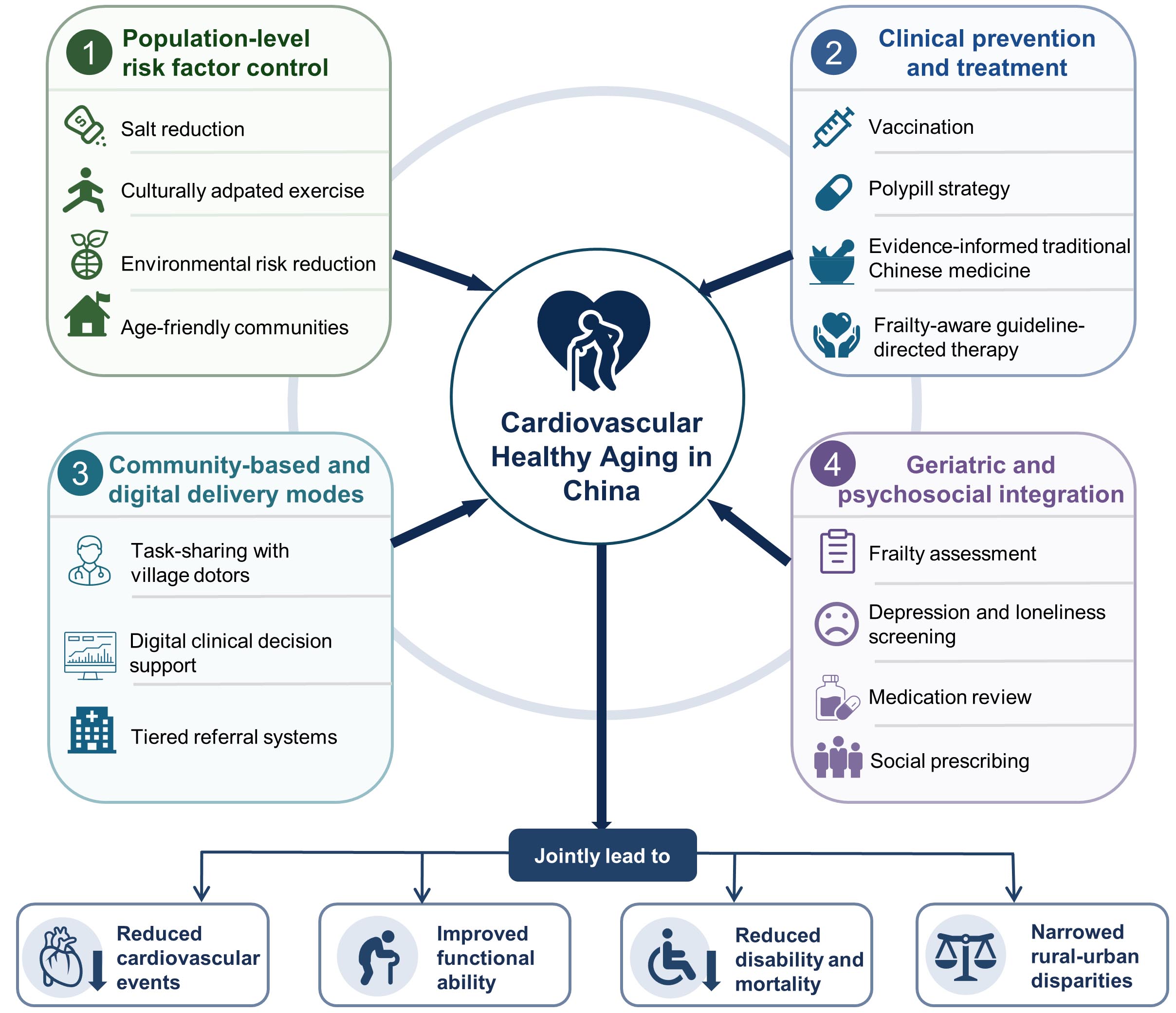
Figure 4. Integrated strategies for cardiovascular healthy aging in China. This schematic summarizes a multidimensional framework for promoting cardiovascular healthy aging in China. Four complementary strategy domains are proposed: population-level risk-factor control, including salt reduction, culturally adapted exercise, environmental risk reduction, and age-friendly communities; clinical prevention and treatment, including vaccination, polypill strategy, evidence-informed traditional Chinese medicine, and frailty-aware guideline-directed therapy; community-based and digital delivery models, including task-sharing with village doctors, digital clinical decision support, and tiered referral systems; and geriatric and psychosocial integration, including frailty assessment, depression and loneliness screening, medication review, and social prescribing. Together, these strategies aim to reduce cardiovascular events, improve functional ability, reduce disability and mortality, and narrow rural-urban disparities in cardiovascular health.
CONCLUSION
China is at a critical demographic and epidemiological turning point. Rapid population aging is increasing the absolute burden of CVD while reshaping the clinical profile of older patients toward multimorbidity, frailty, HF, AF, degenerative valvular disease, disability, and long-term care needs. ASCVD remains the dominant contributor to cardiovascular mortality and disability, but aging-related degenerative conditions and geriatric complexity are becoming increasingly important determinants of prognosis, healthcare demand, and functional outcomes.
Rural areas face particularly substantial challenges because of more advanced population aging, lower availability of healthcare resources, delayed care-seeking, and weaker capacity for long-term chronic disease management. These disparities suggest that hospital-centered and event-based models of cardiovascular care are insufficient for the needs of an aging society. A more comprehensive approach is needed, integrating population-level prevention, evidence-based clinical treatment, culturally adapted lifestyle interventions, rehabilitation, primary-care delivery, digital decision support, and geriatric-psychosocial care.
High-impact strategies include structural sodium reduction, culturally adapted physical activity, vaccination for high-risk patients, simplified secondary prevention such as polypills, frailty-aware guideline-directed therapies, evidence-informed adjunctive interventions, task-sharing with trained village doctors, and community-based follow-up. The common objective of these strategies is not only to reduce cardiovascular events and deaths, but also to preserve functional ability, reduce disability, improve quality of life, and narrow rural-urban disparities. Aligning these efforts with Healthy China 2030 and healthy aging policies could support the development of a more resilient, equitable, and age-friendly cardiovascular health system in China, while also offering lessons for other rapidly aging societies.
DECLARATIONS
Acknowledgments
The Graphical Abstract was prepared with Figdraw, and its drawing ID is WPAWW4b545.
Authors’ contributions
Contributed to the conception and design of the study and gave final approval for publication: Guo Y, Zhou M
Contributed to literature research and manuscript drafting: Zhao G, Zeng Y
Contributed to the critical revision of the manuscript: Hu G, Xing Y
All authors have read and approved the final version of this manuscript.
Availability of data and materials
Not applicable.
AI and AI-assisted tools statement
During the preparation of this manuscript, the AI tool ChatGPT (OpenAI, GPT-5.5 Instant, accessed July 3, 2026) was used solely for language editing. The tool did not influence the study design, data collection, analysis, interpretation, or the scientific content of the work. All authors take full responsibility for the accuracy, integrity, and final content of the manuscript.
Financial support and sponsorship
This project is funded by the Capital Health Development Research Project (Grant No. CFH 2026-4G-4214), the Fundamental Research Funds for the Central Universities (Grant No. 3332024063) and the Beijing Hospitals Authority Youth Programme (Grant No. QML20230605).
Conflicts of interest
All authors declared that there are no conflicts of interest.
Ethical approval and consent to participate
Not applicable.
Consent for publication
Not applicable.
Copyright
© The Author(s) 2026.
REFERENCES
1. United Nations. Department of economic and social affairs population division; 2024. Available from: https://population.un.org/wpp/downloads?folder=Standard%20Projections&group=Population [Last accessed on 28 Aug 2026].
2. Center for Cardiovascular Diseases the Writing Committee of the Report on Cardiovascular Health and Diseases in China. Report on cardiovascular health and diseases in China 2023: an updated summary. Biomed Environ Sci. 2024;37:949-92.
3. China NBoSo. China statistical yearbook 2025. China Statistics Press; 2025. Available from: https://www.stats.gov.cn/sj/ndsj/2025/indexeh.htm [Last accessed on 28 Aug 2026].
4. Hai L, Cui Y, Zhang J, Wang R. The dynamic equilibrium between population aging and the allocation of elderly medical care resources in the Yellow River Basin. BMC Public Health. 2025;25:2510.
5. Yuan D, Yang P, Yang H, Tang H, Guo C. Challenges and responses of left-behind elderly and children in rural China amid the new population development stage. China CDC Wkly. 2023;5:609-13.
6. Xiao Y, Zhang Z, Xu C, et al. Evolution of physician resources in China (2003-2021): quantity, quality, structure, and geographic distribution. Hum Resour Health. 2025;23:15.
7. Zhao Y, Atun R, Oldenburg B, et al. Physical multimorbidity, health service use, and catastrophic health expenditure by socioeconomic groups in China: an analysis of population-based panel data. Lancet Global Health. 2020;8:e840-9.
8. Xing W, Wang S, Liu X, et al. Prevalence and management of hypertension in central China: a cross-sectional survey. J Int Med Res. 2023;51:03000605221148905.
9. Zhang M, Wu J, Zhang X, et al. Prevalence and control of hypertension in adults in China, 2018. Zhonghua Liu Xing Bing Xue Za Zhi. 2021;42:1780-9.
10. Xinhua News Agency. China expands elderly care initiatives amid population ageing. Beijing: The State Council of the People's Republic of China. 2025. Available from: https://english.www.gov.cn/news/202412/31/content_WS67732aebc6d0868f4e8ee622.html [Last accessed on 25 Aug 2026].
11. Wang H, Chai K, Du M, et al. Prevalence and incidence of heart failure among urban patients in China: a national population-based analysis. Circ Heart Fail. 2021;14:e008406.
12. Zhang Z, Yue G, Wang L. RETRACTED: analysis of disease burden and future trends of ischemic heart disease in China and globally, 1990-2023. PLoS ONE. 2025;20:e0333927.
13. Xu S, Li Y, Lin F, Zuo P, Fan J, Yang X. Epidemiological trends in the burden of atrial fibrillation and atrial flutter in China (1990-2023). Vessel Plus. 2026;10:32.
14. Triposkiadis F, Butler J, Abboud FM, et al. The continuous heart failure spectrum: moving beyond an ejection fraction classification. Eur Heart J. 2019;40:2155-63.
15. Qi Y, Li J, Yang Z, Liu J, Zhao D. Cardiovascular disease in China: epidemiological evolution and implications. Eur Heart J. 2026;47:3544-54.
16. Li X, Krumholz HM, Yip W, et al. Quality of primary health care in China: challenges and recommendations. Lancet. 2020;395:1802-12.
17. Wang R, Wang Y, Lu J, et al. Forecasting cardiovascular disease risk and burden in China from 2020 to 2030: a simulation study based on a nationwide cohort. Heart. 2025;111:205-11.
18. Goyal P, Zainul O, Marshall D, Kitzman DW. Geriatric domains in patients with heart failure with preserved ejection fraction. Cardiol Clin. 2022;40:517-32.
19. Goyal P, Maurer MS, Roh J. Aging in heart failure: embracing biology over chronology: JACC family series. JACC Heart Fail. 2024;12:795-809.
20. Unlu O, Levitan EB, Reshetnyak E, et al. Polypharmacy in older adults hospitalized for heart failure. Circ Heart Fail. 2020;13:e006977.
21. Gorodeski EZ, Goyal P, Hummel SL, et al. Domain management approach to heart failure in the geriatric patient: present and future. J Am Coll Cardiol. 2018;71:1921-36.
22. Navid P, Nguyen L, Jaber D, et al. Attitudes toward deprescribing among adults with heart failure with preserved ejection fraction. J Am Geriatr Soc. 2021;69:1948-55.
23. Damluji AA, Nanna MG, Rich MW. Optimal management of HFpEF in very old patients: where do we stand? JACC Heart Fail. 2025;13:102758.
24. Goyal P, Zainul O, Sharma Y, et al. Geriatric vulnerabilities among adults with heart failure with preserved ejection fraction: a cross-continent evaluation. JACC Adv. 2025;4:101602.
25. National Clinical Research Center for Interventional Medicine, National Health Commission. Data report on percutaneous coronary intervention (PCI) in mainland China 2023; 2024. Available from: https://www.drvoice.cn/v2/article/12936 [Last accessed on 28 Aug 2026].
26. Li X, Murugiah K, Li J, et al. 10 year trends in urban-rural disparities in treatments and outcomes after ST-elevation myocardial infarction in China: insights from the China PEACE-Retrospective Acute Myocardial Infarction Study. Lancet. 2015;386:S2.
27. Shen C, Li C, Wang J, et al. In-depth look into urban and rural disparities in prehospital delay in patients with acute ST-elevation myocardial infarction and its impact on prognosis: a prospective observational study. BMJ Open. 2022;12:e063795.
29. Shi S, Tang Y, Zhao Q, et al. Prevalence and risk of atrial fibrillation in China: a national cross-sectional epidemiological study. Lancet Reg Health West Pac. 2022;23:100439.
30. Xia Z, Dang W, Yang X, et al. Prevalence of atrial fibrillation and the risk of cardiovascular mortality among hypertensive elderly population in northeast China. J Clin Hypertens. 2022;24:630-7.
31. Zhang SY. Chinese guidelines for the diagnosis and treatment of heart failure 2024. J Geriatr Cardiol. 2025;22:277-331.
32. Yang Y, Wang Z, Chen Z, et al. Current status and etiology of valvular heart disease in China: a population-based survey. BMC Cardiovasc Disord. 2021;21:339.
33. He SF, Jiang JR, Liu FZ, et al. Prevalence and modifiable risk factors of degenerative valvular heart disease among elderly population in southern China. J Geriatr Cardiol. 2021;18:523-33.
34. Pan WZ, Fang YX, Li J, et al. Transcatheter aortic valve replacement (TAVR) annual report 2023. Chin J Clin Thorac Cardiovasc Surg. 2024;31.
35. Wei L, Wang B, Yang Y, et al. Transcatheter aortic valve replacement in China - a review of the available evidence. AsiaIntervention. 2024;10:110-8.
36. Xie CM, Yao YT. The current practice of transcatheter aortic valve replacement in China. J Card Surg. 2022;37:3168-77.
37. Yang X, Zhao Z, Shi Y, et al. The evolving burden of heart failure in China: a 34-year subnational analysis of trends and causes from the Global Burden of Disease Study 2023. Mil Med Res. 2025;12:65.
38. Neal B, Wu Y, Feng X, et al. Effect of salt substitution on cardiovascular events and death. N Engl J Med. 2021;385:1067-77.
39. Zhang X, Yuan Y, Li C, et al. Effect of a salt substitute on incidence of hypertension and hypotension among normotensive adults. J Am Coll Cardiol. 2024;83:711-22.
40. Wang Y, Feng L, Zeng G, et al. Effects of cuisine-based Chinese heart-healthy diet in lowering blood pressure among adults in China: multicenter, single-blind, randomized, parallel controlled feeding trial. Circulation. 2022;146:303-15.
41. Ma J, Ma L, Lu S, Sun Y, Bao H. The effect of traditional Chinese exercises on blood pressure in patients with hypertension: a systematic review and meta-analysis. Evid Based Complement Alternat Med. 2023;2023:2897664.
42. Dai L, Jiang Y, Wang P, Chen K. Effects of three traditional Chinese fitness exercises combined with antihypertensive drugs on patients with essential hypertension: a systematic review and network meta-analysis of randomized controlled trials. Evid Based Complement Alternat Med. 2021;2021:1-14.
43. Ou K, Wong MYC, Chung PK, Chui KYK. Effect of square dance interventions on physical and mental health among Chinese older adults: a systematic review. Int J Environ Res Public Health. 2022;19:6181.
44. Lazo Green K, Yang Y, Abaraogu U, et al. Effectiveness of dance interventions for falls prevention in older adults: systematic review and meta-analysis. Age Ageing. 2024;53:afae104.
45. Yu K, Qiu G, Chan K, et al. Association of solid fuel use with risk of cardiovascular and all-cause mortality in rural China. JAMA. 2018;319:1351.
46. Xu J, Wang Q, Anikeeva O, Zhu P, Bi P, Huang C. Effects of extreme heat on physiology, morbidity, and mortality under climate change: mechanisms and clinical implications. BMJ. 2025;391:e084675.
47. Jia Y, Lee S, Kanda M, et al. Sustainable age-friendly cities and communities in China: a scoping review and narrative assessment of national policies. Lancet Reg Health West Pac. 2025;64:101723.
48. Jin C, Zhang Y, Wang B, Hua P. Influenza vaccination and cardiovascular and respiratory outcomes in high-risk populations: an umbrella review of systematic reviews and meta-analyzes. Front Immunol. 2026;17:1798398.
49. Fröbert O, Götberg M, Erlinge D, et al. Influenza vaccination after myocardial infarction: a randomized, double-blind, placebo-controlled, multicenter trial. Circulation. 2021;144:1476-84.
50. Anderson CS, Hua C, Wang Z, et al. Influenza vaccination to improve outcomes for patients with acute heart failure (PANDA II): a multiregional, seasonal, hospital-based, cluster-randomised, controlled trial in China. Lancet. 2025;406:1020-31.
51. Castellano JM, Pocock SJ, Bhatt DL, et al. Polypill strategy in secondary cardiovascular prevention. N Engl J Med. 2022;387:967-77.
52. World Health Organization. The selection and use of essential medicines 2023. Geneva: WHO; 2023. Available from: https://iris.who.int/server/api/core/bitstreams/f8f65796-ca38-4bc3-9833-af6edf4f5669/content [Last accessed on 28 Aug 2026].
53. Xu Y, Li X, Zhang H, et al. China Tongxinluo Study for myocardial protection in patients with Acute Myocardial Infarction (CTS-AMI): rationale and design of a randomized, double-blind, placebo-controlled, multicenter clinical trial. Am Heart J. 2020;227:47-55.
54. Hao P, Jiang F, Cheng J, Ma L, Zhang Y, Zhao Y. Traditional Chinese medicine for cardiovascular disease: evidence and potential mechanisms. J Am Coll Cardiol. 2017;69:2952-66.
55. Yang Y, Li X, Chen G, et al. Traditional Chinese medicine compound (Tongxinluo) and clinical outcomes of patients with acute myocardial infarction: the CTS-AMI randomized clinical trial. JAMA. 2023;330:1534.
56. Cheang I, Yao W, Zhou Y, et al. The traditional Chinese medicine Qiliqiangxin in heart failure with reduced ejection fraction: a randomized, double-blind, placebo-controlled trial. Nat Med. 2024;30:2295-302.
57. Butt JH, Jhund PS, Belohlávek J, et al. Efficacy and safety of dapagliflozin according to frailty in patients with heart failure: a prespecified analysis of the DELIVER trial. Circulation. 2022;146:1210-24.
58. Coats AJ, Butler J, Tsutsui H, et al. Efficacy of empagliflozin in heart failure with preserved ejection fraction according to frailty status in EMPEROR-Preserved. J Cachexia Sarcopenia Muscle. 2023;15:412-24.
59. Sun Y, Mu J, Wang DW, et al. A village doctor-led multifaceted intervention for blood pressure control in rural China: an open, cluster randomised trial. Lancet. 2022;399:1964-75.
60. He J, Ouyang N, Guo X, et al. Effectiveness of a non-physician community health-care provider-led intensive blood pressure intervention versus usual care on cardiovascular disease (CRHCP): an open-label, blinded-endpoint, cluster-randomised trial. Lancet. 2023;401:928-38.
61. Zhang X, Wang S, Zhou X, et al. A village doctor-led mobile health intervention for cardiovascular risk reduction in rural China: cluster randomised controlled trial. BMJ. 2025;389:e082765.
62. Song J, Wang X, Wang B, et al. Learning implementation of a guideline based decision support system to improve hypertension treatment in primary care in China: pragmatic cluster randomised controlled trial. BMJ. 2024;386:e079143.
63. Levine GN, Cohen BE, Commodore-Mensah Y, et al. Psychological health, well-being, and the mind-heart-body connection: a scientific statement from the American Heart Association. Circulation. 2021;143:e763-83.
64. Han L, Shen S, Wu Y, Zhong C, Zheng X. Trajectories of depressive symptoms and risk of cardiovascular disease: evidence from the China health and retirement longitudinal study. J Psychiatr Res. 2022;145:137-43.
65. Yip W, Fu H, Chen AT, et al. 10 years of health-care reform in China: progress and gaps in universal health coverage. Lancet. 2019;394:1192-204.
66. Feng Z, Liu C, Guan X, Mor V. China’s rapidly aging population creates policy challenges in shaping a viable long-term care system. Health Aff. 2012;31:2764-73.
67. Feng Z, Glinskaya E, Chen H, et al. Long-term care system for older adults in China: policy landscape, challenges, and future prospects. Lancet. 2020;396:1362-72.
68. Fang EF, Fang Y, Chen G, et al. Adapting health, economic and social policies to address population aging in China. Nat Aging. 2025;5:2176-87.
69. Global Health Data Exchange (GHDx). Global Burden of Disease Study; 2023. Available from: https://ghdx.healthdata.org/gbd-2023 [Last accessed on 25 Aug 2026].
70. Wang L, Peng W, Zhao Z, et al. Prevalence and treatment of diabetes in China, 2013-2018. JAMA. 2021;326:2498.
Cite This Article
 Open Access
How to Cite
Download Citation
Export Citation File:
Type of Import
Tips on Downloading Citation
Citation Manager File Format
Type of Import
Direct Import: When the Direct Import option is selected (the default state), a dialogue box will give you the option to Save or Open the downloaded citation data. Choosing Open will either launch your citation manager or give you a choice of applications with which to use the metadata. The Save option saves the file locally for later use.
Indirect Import: When the Indirect Import option is selected, the metadata is displayed and may be copied and pasted as needed.
About This Article
Copyright

Data & Comments
Data
0






Comments
Comments must be written in English. Spam, offensive content, impersonation, and private information will not be permitted. If any comment is reported and identified as inappropriate content by OAE staff, the comment will be removed without notice. If you have any queries or need any help, please contact us at support@oaepublish.com.