
fig1
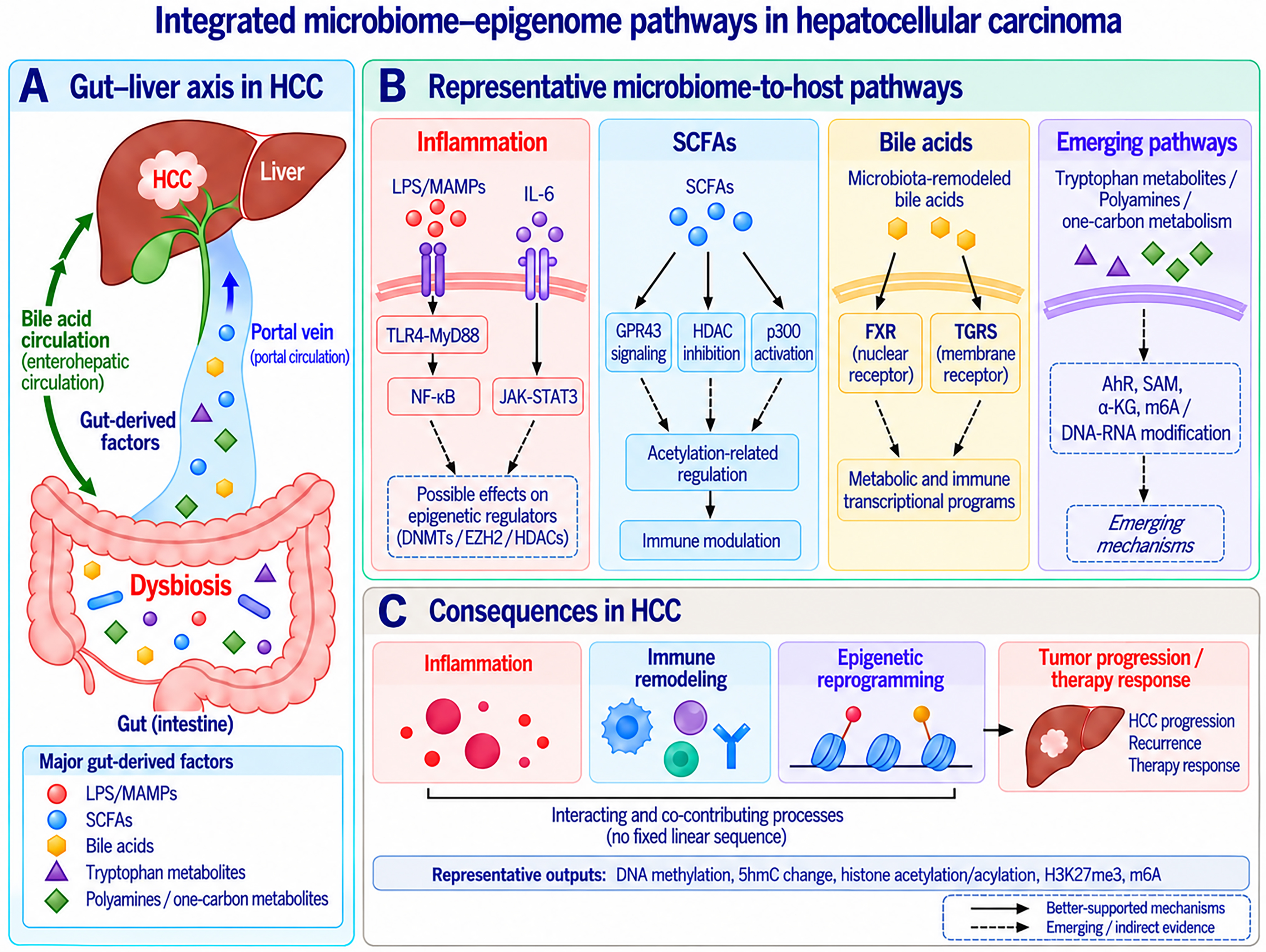
Figure 1. Integrated microbiome-epigenome pathways in HCC. (A) Gut dysbiosis and intestinal barrier dysfunction increase hepatic exposure to gut-derived factors through the portal circulation, including LPS/MAMPs, SCFAs, bile acids, tryptophan metabolites, and polyamine/one-carbon metabolites. Bile acids additionally participate in enterohepatic circulation; (B) Representative microbiome-to-host pathways include inflammatory signaling involving TLR4-MyD88-NF-κB and IL-6-JAK-STAT3, SCFA-mediated GPR43 signaling and acetylation-related regulation, microbiota-dependent bile acid signaling through FXR and TGR5, and emerging pathways involving tryptophan, polyamine, and one-carbon metabolism. Potential links between inflammatory signaling and epigenetic regulators, as well as between microbial metabolism and DNA/RNA modification, remain incompletely established in HCC; (C) These pathways may contribute to inflammatory responses, immune remodeling, epigenetic reprogramming, tumor progression, and therapeutic response. Representative epigenetic outputs include DNA methylation, 5hmC changes, histone acetylation/acylation, H3K27me3, and m6A RNA modification. Solid arrows denote relatively better-supported mechanisms, whereas dashed arrows indicate emerging or indirect evidence. The pathways are presented schematically and do not imply a fixed linear or temporal sequence. AhR: Aryl hydrocarbon receptor; α-KG: alpha-ketoglutarate; 5hmC: 5-hydroxymethylcytosine; DNA: deoxyribonucleic acid; DNMTs: DNA methyltransferases; EZH2: enhancer of zeste homolog 2; FXR: farnesoid X receptor; GPR43: G protein-coupled receptor 43; H3K27me3: histone H3 lysine 27 trimethylation; HCC: hepatocellular carcinoma; HDAC: histone deacetylase; HDACs: histone deacetylases; IL-6: interleukin 6; JAK: Janus kinase; LPS: lipopolysaccharide; m6A: N6-methyladenosine; MAMPs: microbe-associated molecular patterns; MyD88: myeloid differentiation primary response 88; NF-κB: nuclear factor kappa B; p300: histone acetyltransferase p300; RNA: ribonucleic acid; SAM: S-adenosylmethionine; SCFAs: short-chain fatty acids; TGR5: Takeda G protein-coupled receptor 5; TLR4: toll-like receptor 4; STAT3: signal transducer and activator of transcription 3.