

fig3
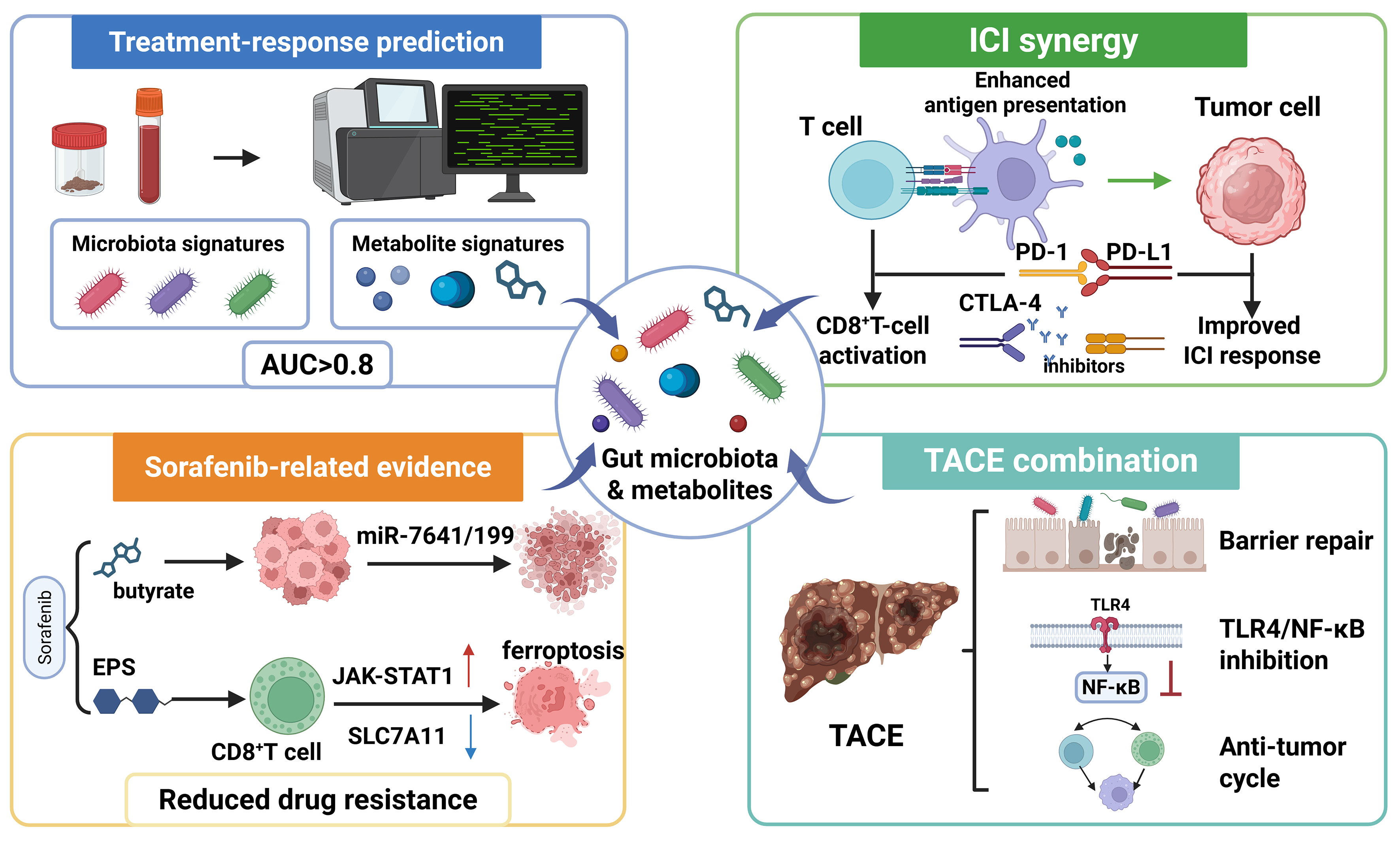
Figure 3. Potential roles of the gut microbiota in modulating HCC treatment response. Microbiota and metabolite signatures may have potential value in predicting treatment response; response-associated commensal bacteria may influence ICI efficacy by regulating antigen presentation and antitumor immunity. Sorafenib-specific preclinical evidence suggests that butyrate may reduce drug resistance by miRNAs, whereas Enterococcus faecium-derived exopolysaccharides may enhance sorafenib-associated ferroptosis through IFN-γ+CD8+ T-cell activation and JAK-STAT1-mediated suppression of SLC7A11. Microbiota remodeling following TACE therapy may contribute to intestinal barrier restoration and attenuation of TLR4/NF-κB-related inflammatory signaling. These applications remain exploratory and require prospective clinical validation. Created in BioRender. Zhang, K. (2026) https://BioRender.com/o8qwnjw. The upward arrow indicates activation of JAK-STAT1; The downward arrow indicates inhibition of SLC7A11. AUC: Area under the curve; CD8: cluster of differentiation 8; CTLA-4: cytotoxic T-lymphocyte-associated protein 4; HCC: hepatocellular carcinoma; ICI: immune checkpoint inhibitor; IFN-γ: interferon-γ; JAK-STAT1: Janus kinase-signal transducer and activator of transcription 1; miRNA: microRNA; NF-κB: nuclear factor kappa-light-chain-enhancer of activated B cells; PD-1: programmed cell death protein 1; PD-L1: programmed death-ligand 1; SLC7A11: solute carrier family 7 member 11; TACE: transarterial chemoembolization; TLR4: Toll-like receptor 4.