

fig1
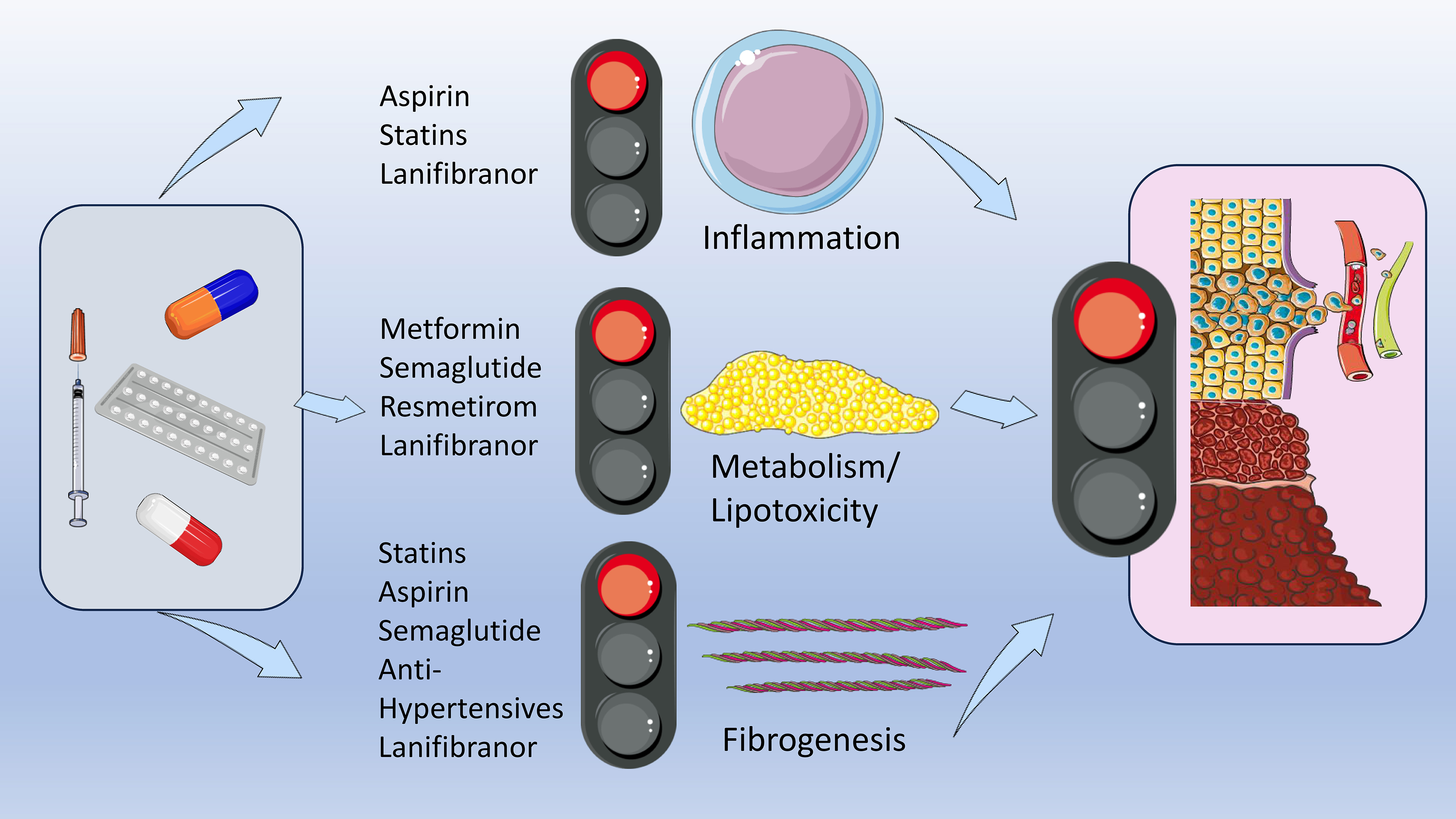
Figure 1. Principal pathways implicated in chemoprevention by selected pharmacological agents. Schematic representation, based on references cited in the text and Table 1, of liver histological changes induced by the main drug classes listed in Table 1 that may influence the pathobiology of metabolic dysfunction-associated steatotic liver disease and contribute to chemopreventive effects. Key molecular pathways involved include THR-β and the MDK/LRP1 axis for resmetirom, pan-PPAR α/δ/γ activation for lanifibranor, GLP-1R signaling for semaglutide, HMG-CoA reductase/mevalonate signaling for statins, COX/platelet signaling for aspirin, AMPK for metformin, and ACE/angiotensin II/EGFR transactivation for captopril and related agents. The traffic-light symbols indicate attenuation or blockade of pathological pathways rather than the strength of clinical evidence. Figure 1 provided by Servier Medical Art (https://smart.servier.com), licensed under CC BY 4.0 (https://creativecommons.org/licenses/by/4.0/). ACE: Angiotensin-converting enzyme; AMPK: adenosine monophosphate-activated protein kinase; COX: cyclooxygenase; EGFR: epidermal growth factor receptor; GLP-1R: glucagon-like peptide-1 receptor; HMG-CoA: 3-hydroxy-3-methylglutaryl-coenzyme A; LRP1: low-density lipoprotein receptor-related protein 1; MDK: midkine; PPAR: peroxisome proliferator-activated receptor; THR-β: thyroid hormone receptor-beta.