

Volume 1, Issue 1 (2025) – 1 article
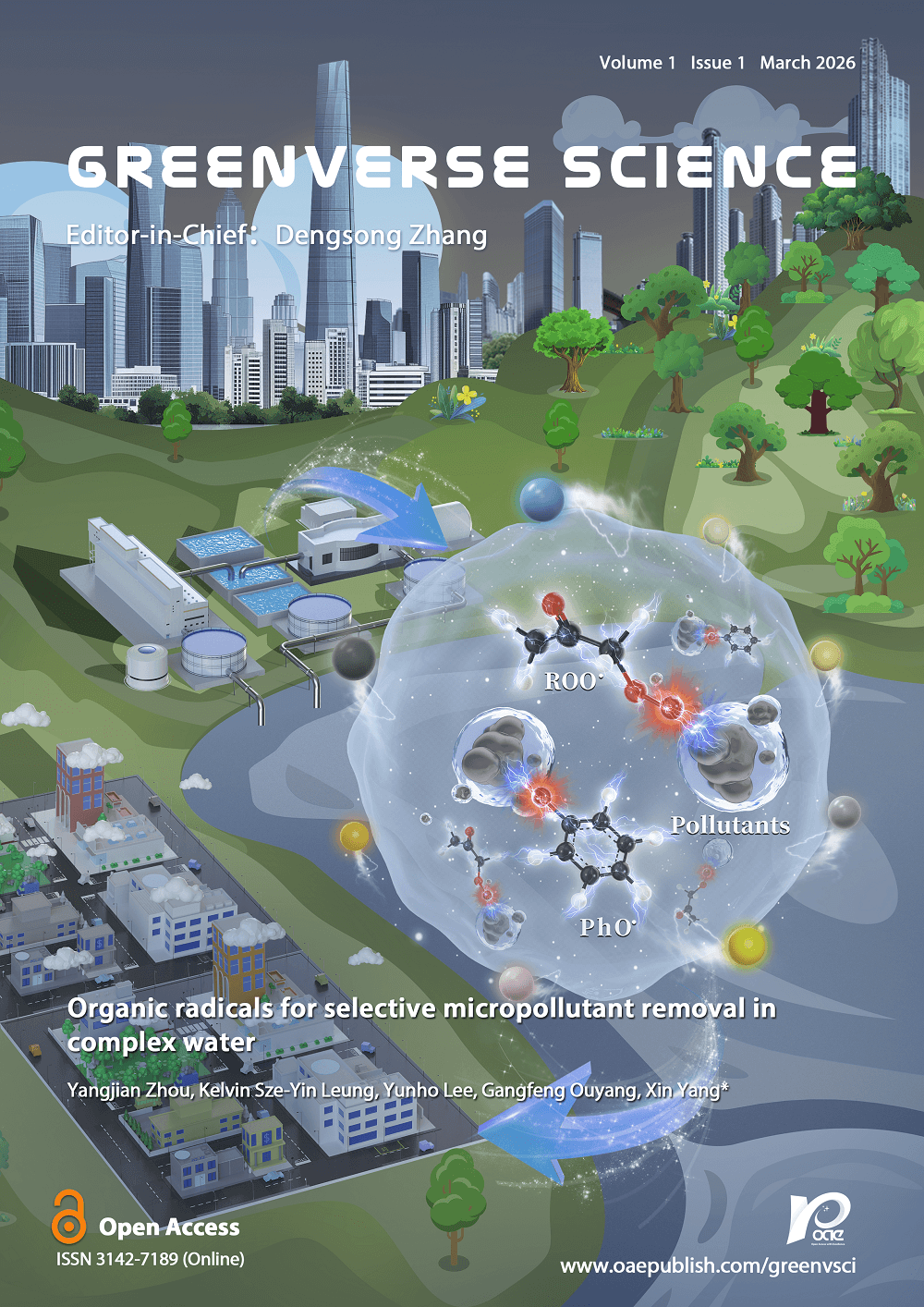
Cover Picture: Water treatment efficiency is often limited by complex water matrices that inhibit micropollutant degradation. Organic radicals are emerging as a promising alternative to conventional hydroxyl radical-based oxidation due to their higher selectivity toward electron-rich micropollutants (up to 107-109 M-1·s-1) and lower susceptibility to matrix interference. They can be generated under mild conditions via activation of organic peroxides or natural redox mediators and participate in electron transfer, hydrogen abstraction, addition, and polymerization reactions, enabling both micropollutant transformation and potential valorization. However, concerns about toxic by-products from radical precursors have driven strategies such as precursor immobilization and in situ radical generation. Despite these advances, critical knowledge gaps remain in reaction selectivity and the development of sustainable application frameworks. Future research should emphasize data-driven kinetic modeling, utilization of matrix-derived organic radicals, and the design of stable materials to advance practical implementation of organic radical-based water treatment technologies.
view this paper