

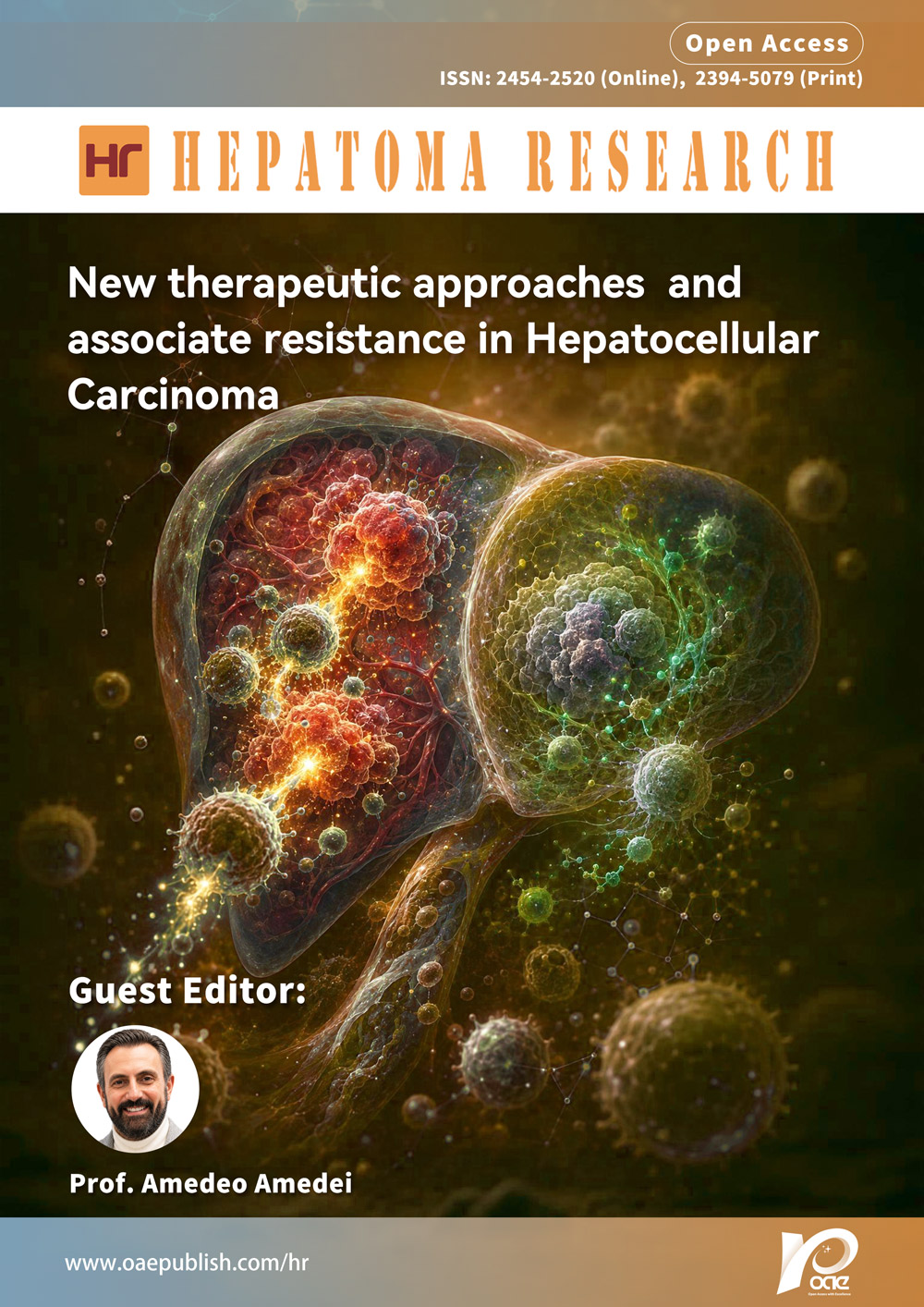
Topic: New therapeutic approaches and associate resistance in Hepatocellular Carcinoma
A Special Topic of Hepatoma Research
ISSN 2454-2520 (Online) 2394-5079 (Print)
Submission deadline: 30 Nov 2026
Guest Editor
Special Topic Introduction
Hepatocellular carcinoma (HCC) remains one of the leading causes of cancer-related mortality worldwide, representing nearly 90% of primary liver cancers and posing an increasing global health burden. Despite advances in surveillance programs and therapeutic strategies, most patients are still diagnosed at intermediate/advanced stages, when curative current options, such as surgical resection, liver transplantation, or local ablation, are no longer feasible. Consequently, systemic therapies have become the cornerstone of treatment for advanced HCC, profoundly reshaping the therapeutic landscape over the past decade.
The introduction of molecular targeted agents, followed by immune checkpoint inhibitors (ICIs), has significantly improved clinical outcomes. Multikinase inhibitors such as sorafenib and lenvatinib first established systemic treatment for advanced disease, while subsequent development of combination strategies—including anti-PD-1/PD-L1 antibodies with anti-angiogenic agents—has produced unprecedented improvements in overall survival and progression-free survival. More recently, dual immune checkpoint blockade and new immunotherapeutic combinations have further expanded the therapeutic armamentarium.
However, durable responses remain limited to a subset of patients. Primary and acquired resistance to targeted therapies and immunotherapy continue to represent major clinical challenges. Genetic heterogeneity, metabolic reprogramming, chronic inflammation, cirrhosis, and an immunosuppressive tumor microenvironment collectively contribute to treatment failure.
Resistance extends beyond tumor-intrinsic genetic alterations. Epigenetic remodeling, metabolic plasticity, dysregulated angiogenesis, cancer stem cell phenotypes, and alterations in innate and adaptive immunity all contribute to therapeutic escape. Finally, the gut–liver axis and the intestinal microbiota are increasingly recognized as regulators of systemic immunity and therapeutic responsiveness, while multi-omics technologies are identifying biomarkers that support precision oncology.
This Special Issue, “New Therapeutic Approaches and Associated Resistance in Hepatocellular Carcinoma,” aims to provide a multidisciplinary overview of the latest advances in HCC treatment and the mechanisms underlying therapeutic resistance. We welcome original research articles, reviews, meta-analyses, and perspectives addressing innovative therapies, biomarkers, tumor immunology, immunometabolism, the gut–liver axis, artificial intelligence, and precision medicine. Particular emphasis is placed on studies identifying resistance mechanisms and novel strategies to restore therapeutic sensitivity and improve patient outcomes.
By bringing together clinicians and scientists from multiple disciplines, this Special Issue seeks to bridge fundamental discoveries with clinical translation and favor the development of personalized therapeutic strategies for hepatocellular carcinoma.
Keywords
Novel therapeutic strategies, therapeutic resistance, cancer immunotherapy, tumor microenvironment, microbiome, precision oncology, biomarkers and multi-omics, artificial intelligence
Submission Deadline
Submission Information
For Author Instructions, please refer to https://www.oaepublish.com/hr/author_instructions
For Online Submission, please login at https://www.oaecenter.com/login?JournalId=hr&IssueId=hr26070810535
Submission Deadline: 30 Nov 2026
Contacts: Vivienne Yan, Science Editor, Journaleditor@hrpublishing.net