



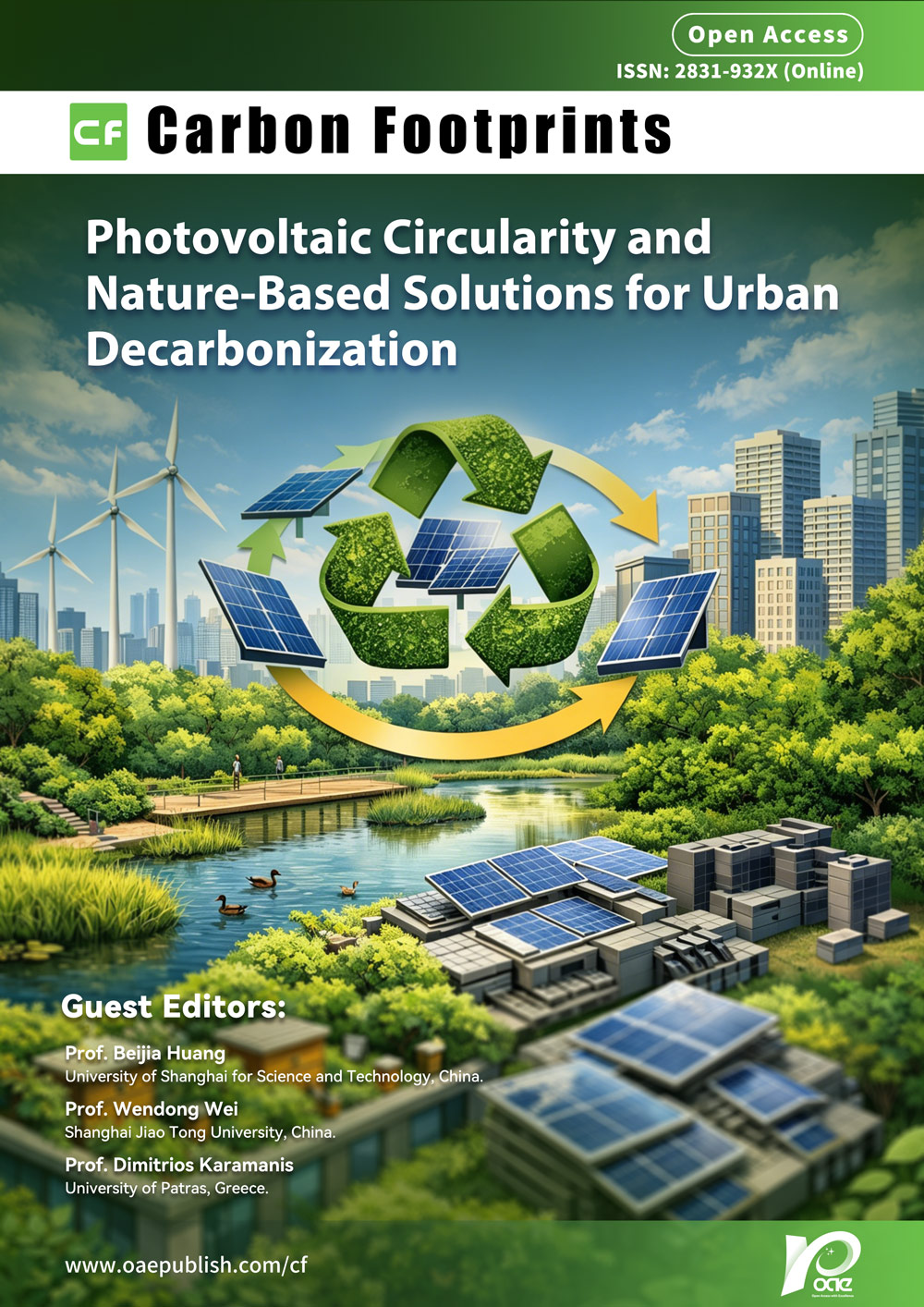
Topic: Photovoltaic Circularity and Nature-Based Solutions for Urban Decarbonization
Guest Editors
Special Topic Introduction
The transition toward carbon-neutral cities relies on the strategic deployment of both renewable energy and ecological infrastructures across urban surfaces. While Nature-Based Solutions (NbS)—such as urban greenery and restorative landscapes—provide essential ecosystem services including carbon sequestration and natural cooling, the rapid expansion of Photovoltaics (PV) offers a robust pathway for clean energy production. However, as these green assets scale up, the focus is shifting from simple installation to full life-cycle sustainability, particularly in terms of carbon footprint mitigation.
From a life-cycle perspective, both PV and NbS systems involve embodied carbon from material production and installation. While PV reduces operational emissions, its overall benefits depend on life-cycle carbon footprint assessment. NbS may also involve trade-offs due to material inputs and maintenance, making LCA essential to quantify net carbon reduction.
A critical challenge in this transition is the environmental management of retired components. As the first generation of urban solar infrastructure reaches the end of its service life, the circularity of PV systems and high-value resource recovery have become urgent priorities to ensure that the transition to green energy does not create a legacy of waste and additional carbon burdens. Furthermore, the adoption of bio-based and low-carbon materials as sustainable substrates for urban infrastructure offers a pathway to reduce embodied carbon, and life-cycle carbon footprint evaluation is crucial to support low-carbon material selection.
This Special Issue aims to provide a multidisciplinary platform for research that bridges energy systems, urban ecology, and environmental management. We encourage studies that evaluate the environmental footprints of PV and NbS technologies, with an emphasis on life-cycle carbon footprint quantification, explore PV circularity, and investigate the spatial planning and governance required for integrated implementation. By integrating expertise in clean energy, urban ecology, and industrial ecology, this Special Issue seeks to define a resilient, low-carbon and truly circular roadmap for sustainable cities.
Subtopics:
- Technological Innovations in PV Module Disassembly and Material Recovery
- Environmental Impacts and Life-Cycle Carbon Footprint Assessment of Retired Photovoltaic Assets
- Nature-Based Solutions (NbS) for Urban Decarbonization and Adaptation
- Environmental Footprint Evaluation of PV and NbS Technologies
- Microclimate Regulation and Passive Cooling by Urban NbS Assets
- Bio-based and Low-Carbon Materials for Sustainable Infrastructure: Life-Cycle Carbon Footprint Assessment and Mitigation Strategies
- Performance and Adaptability of PV Technologies in Diverse Urban Contexts
- Material Stock–Flow and Circularity Analysis of Urban Green-Energy Systems under an Industrial Ecology Framework
- Synergistic Effects of PV and NbS on Urban Resilience and Energy Efficiency
Spatial Planning and Governance Policies for Circular Urban Transitions
Keywords
Photovoltaic circularity, Nature-Based Solutions, urban decarbonization, carbon footprint, end-of-life management, bio-based materials, circular economy, spatial planning
Submission Deadline
Submission Information
For Author Instructions, please refer to https://www.oaepublish.com/cf/author_instructions
For Online Submission, please login at https://www.oaecenter.com/login?JournalId=cf&IssueId=cf26050910457
Submission Deadline: 30 Sep 2026
Contacts: Leah Zhang, Assistant Editor, carbonfootprints@oaemesas.com