
AI Agent Expert Interview Series - Prof. Aloysius Soon
On January 15, 2026, the Editorial Office of AI Agent had the pleasure of interviewing Prof. Aloysius Soon, an Editorial Board Member of the journal and a distinguished scholar in first-principles calculations, theoretical materials science, and surface and interface science at Yonsei University, Seoul, South Korea.
In this in-depth conversation, Prof. Soon shared his perspectives on how artificial intelligence (AI) is reshaping research paradigms in materials science - from accelerating traditional computational workflows to enabling new modes of scientific discovery. He discussed the evolving relationship between density functional theory (DFT) and data-driven methods, highlighting that AI is no longer simply a tool for improving efficiency, but is increasingly becoming a collaborative partner in exploration, hypothesis generation, and scientific decision making.
Watch the full interview with Prof. Aloysius Soon:
Interview Questions:
Q1. You have long been engaged in first-principles calculations and theoretical materials science. In your view, how is the introduction of artificial intelligence reshaping the traditional DFT-centered research paradigm, and what new possibilities does it bring to materials research?
Q2. In recent years, machine learning and data-driven approaches have rapidly advanced in materials science. Based on your research experience, in which areas has AI already had the most direct and significant impact, and where do you see substantial potential that remains to be fully explored?
Q3. Your work has made important contributions to surface and interface science. Do you believe AI can help uncover structure-property relationships at complex interfaces that were previously difficult to access? What kinds of breakthroughs do you most look forward to in this area?
Q4. There is growing discussion in the scientific community about viewing AI as a scientific collaborator - or an "AI Agent - rather than merely a computational tool. From your perspective, how close are we to realizing this shift, and what are the most critical scientific or methodological challenges that still need to be addressed?
Q5. As an Editorial Board Member of AI Agent, what motivated you to join a journal dedicated to AI-driven scientific discovery? How do you see AI Agent's unique role and value within the broader landscape of AI-enabled scientific research?
Q6. From your perspective as an editor and reviewer, what key qualities define a strong "AI + materials science" manuscript? For researchers who are new to this interdisciplinary field, what common pitfalls should they be particularly mindful to avoid?
About the Interviewee:
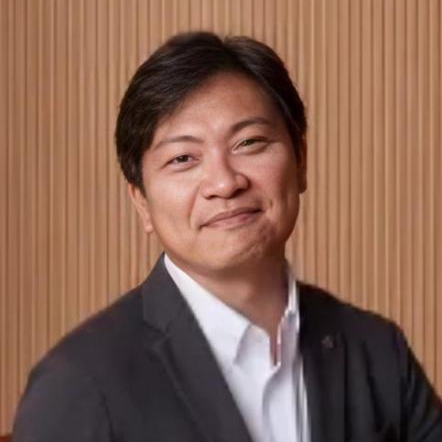
Prof. Aloysius Soon, Department of Materials Science and Engineering, Yonsei University, Seoul, South Korea
Prof. Soon obtained his BSc in Chemistry from the National University of Singapore, Singapore; his MSc in Chemistry from the University of Auckland, New Zealand; and his PhD in Physics from the University of Sydney, Australia. Since 2010, Prof. Soon has been a faculty member in the Department of Materials Science and Engineering at Yonsei University, where he was awarded a tenured full professorship in 2020. Prior to joining Yonsei, he was an Alexander von Humboldt Research Fellow at the former Theory Department (now the Novel Materials Discovery (NOMAD) Laboratory) of the Fritz Haber Institute of the Max Planck Society in Berlin, Germany. His research focuses on developing a fundamental understanding of the chemistry and physics of complex materials and their surfaces/interfaces using first-principles electronic structure theory combined with modern machine learning methods. Prof. Soon has been elected a Fellow of both the Institute of Physics (FlnstP, UK) and the Royal Society of Chemistry (FRSC, UK), and he is also a registered Chartered Scientist (CSci, UK).
Editor: Wen Xue
Language Editor: Catherine Yang
Production Editor: Ting Xu
Respectfully Submitted by the Editorial Office of AI Agent