


Liver muscle bone axis in metabolic dysfunction-associated steatotic liver disease
 0
0 Abstract
Metabolic dysfunction-associated steatotic liver disease (MASLD) has become one of the most common chronic liver diseases worldwide. With the introduction of the new nomenclature, the management of MASLD is evolving from a conventional liver-centered approach focused primarily on hepatic steatosis, metabolic dysfunction-associated steatohepatitis (MASH), liver fibrosis, and cirrhosis risk toward a broader framework that also addresses heterogeneity in metabolic risk, physical function, tolerance to lifestyle interventions, and long-term prognosis. In recent years, impaired skeletal muscle function, sarcopenia, myosteatosis, vitamin D deficiency, and abnormalities in bone metabolism have increasingly been recognized as clinically relevant conditions associated with MASLD severity, progression risk, and adverse extrahepatic outcomes. Although the underlying biological mechanisms remain incompletely understood, these conditions may serve as clinically meaningful risk markers and potential modifiers of disease progression. This review systematically summarizes the epidemiological associations, proposed shared pathogenic mechanisms, clinical recognition pathways, and integrated intervention strategies linking MASLD, sarcopenia, vitamin D deficiency, and bone metabolic abnormalities. We propose that MASLD complicated by sarcopenia and bone vulnerability may represent a clinically relevant liver-muscle-bone metabolic phenotype. Future management of MASLD should therefore place greater emphasis on preserving muscle function, maintaining bone health, and improving patient-centered outcomes.
Keywords
INTRODUCTION
In recent years, the new term metabolic dysfunction-associated steatotic liver disease (MASLD) has been proposed to replace non-alcoholic fatty liver disease (NAFLD), with the aim of emphasizing the metabolic basis of steatotic liver disease. This nomenclature change places greater emphasis on the intrinsic relationship between hepatic steatosis and cardiometabolic risk factors[1], and also reflects the frequent coexistence of MASLD with multisystem disorders, including obesity, type 2 diabetes (T2DM), atherosclerotic cardiovascular disease, chronic kidney disease, sleep-disordered breathing, impaired skeletal muscle function, and abnormalities in bone metabolism[1-3]. Among these, metabolic dysfunction-associated steatohepatitis (MASH) and liver fibrosis are key determinants of liver-related outcomes, whereas cardiovascular disease, kidney disease, malignancy, and musculoskeletal functional decline represent major extrahepatic factors affecting long-term prognosis. Accordingly, the clinical challenges of MASLD are no longer confined to identifying hepatic steatosis itself, but also require concurrent assessment of advanced liver fibrosis, cardiometabolic risk, renal risk, muscle functional status, and nutritional-metabolic conditions.
At present, lifestyle intervention remains the cornerstone of MASLD treatment. Weight loss, dietary modification, and regular physical activity can reduce intrahepatic fat content, improve insulin resistance, and lower cardiometabolic risk[2,4,5]. However, management strategies centered solely on body weight or body mass index (BMI) have clear limitations. Some patients may experience weight reduction accompanied by loss of skeletal muscle mass, decreased muscle strength, and reduced basal metabolic rate. Others with normal BMI or only mild overweight may still have visceral adiposity, myosteatosis, and reduced skeletal muscle quality. This issue deserves particular attention in older adults, patients with lean MASLD, individuals with T2DM, patients with sarcopenic obesity, and those receiving intensive pharmacological weight-loss therapy or metabolic bariatric surgery[6,7].
Sarcopenia is a progressive skeletal muscle disorder characterized by reduced muscle strength, with or without decreased muscle mass or impaired muscle quality, and is associated with increased risks of falls, fractures, disability, hospitalization, and mortality[8-12]. In MASLD, sarcopenia and myosteatosis are increasingly recognized as clinically relevant conditions associated with both liver-related and extrahepatic outcomes[13-15]. In 2025, the Asian Working Group for Sarcopenia (AWGS) further shifted its focus from diagnosing sarcopenia alone to promoting muscle health across the life course, providing a new conceptual basis for the early identification of muscle-related risk in patients with MASLD[10]. Meanwhile, vitamin D deficiency adds further complexity to musculoskeletal dysfunction in MASLD. Low vitamin D status has been associated with MASLD, particularly in individuals with T2DM, although this association may be influenced by obesity and other metabolic confounders[16]. Vitamin D is involved not only in calcium-phosphate homeostasis and bone metabolism, but also in skeletal muscle function, immune regulation, inflammatory responses, mitochondrial function, and insulin sensitivity. Nevertheless, current evidence remains inconsistent as to whether vitamin D supplementation can serve as a direct liver-targeted therapy for MASLD or MASH[17].
This review aims to integrate the epidemiological associations, putative shared pathogenic mechanisms, clinical recognition strategies, and integrated intervention pathways linking MASLD, sarcopenia, vitamin D deficiency, and bone metabolic abnormalities, with the goal of providing a theoretical foundation and practical reference for multidisciplinary liver-muscle-bone management in patients with MASLD.
EPIDEMIOLOGY AND CLINICAL RELEVANCE
MASLD has become one of the most common chronic liver diseases worldwide, and its disease burden continues to rise in parallel with obesity, T2DM, sedentary behavior, and population aging[18,19]. The prevalence of MASLD is particularly high among individuals with T2DM and obesity, in whom it is often accompanied by higher rates of MASH, significant liver fibrosis, and advanced liver fibrosis[2,20]. Current guidelines emphasize that, in individuals with cardiometabolic risk factors, abnormal liver enzymes, or imaging evidence of hepatic steatosis, especially those with T2DM, abdominal obesity, or multiple metabolic risk factors, a stratified non-invasive testing strategy should be used to identify the risk of significant or advanced liver fibrosis[4]. This approach is important for preventing liver-related outcomes. However, a liver-centered strategy may underestimate extrahepatic consequences related to low muscle reserve, myosteatosis, impaired physical function, vitamin D deficiency, and bone vulnerability[6,21].
Epidemiological association between MASLD and impaired muscle health
Sarcopenia and myosteatosis are relatively common, interrelated, but distinct skeletal muscle phenotypes in patients with MASLD[22]. Sarcopenia mainly reflects reduced muscle strength, decreased muscle mass, and impaired physical function, whereas myosteatosis reflects fat infiltration within skeletal muscle and reduced muscle quality. Their prevalence varies substantially across populations and diagnostic criteria, but both conditions become more common with aging and increasing chronic disease burden[8,23].
Available evidence suggests a bidirectional epidemiological association between MASLD and sarcopenia, although the strength of this association differs across studies. One study reported that the prevalence of NAFLD was 52.0% among individuals with sarcopenia, significantly higher than the 27.6% prevalence among those without sarcopenia[13]. A 2024 systematic review and meta-analysis further estimated that the pooled prevalence of sarcopenia among patients with MASLD was approximately 23.5%[24]. In addition, a population-based study from the United Kingdom reported that, among patients with MASLD, 24% had isolated myosteatosis, 10% had isolated sarcopenia, and 14% had both muscle abnormalities[22]. These findings should be interpreted in the context of substantial heterogeneity. Differences in MASLD or NAFLD definitions, sarcopenia criteria, methods for assessing myosteatosis, age structure, sex distribution, ethnicity, obesity and diabetes burden, and skeletal muscle assessment tools may all contribute to inconsistent results. Moreover, parameters obtained using dual-energy X-ray absorptiometry (DXA), bioelectrical impedance analysis (BIA), and computed tomography (CT) are not fully interchangeable. Muscle mass, skeletal muscle index, CT-derived muscle attenuation, muscle strength, and physical performance reflect different dimensions of muscle quantity, quality, and function[24-26].
The relative clinical importance of sarcopenia and myosteatosis remains incompletely defined and may vary according to the outcome assessed, liver disease etiology, and disease severity. In patients with obesity, T2DM, sarcopenic obesity, and early or metabolically active MASLD, myosteatosis may be particularly relevant because it is closely related to ectopic lipid deposition, skeletal muscle insulin resistance, mitochondrial dysfunction, chronic low-grade inflammation, dyslipidemia, and cardiometabolic risk[6]. By contrast, in patients with advanced fibrosis, cirrhosis, or hepatic decompensation, reduced muscle mass and impaired muscle function may become more clinically prominent because of malnutrition, hypermetabolism, systemic inflammation, hormonal alterations, reduced physical activity, and increased risks of frailty, falls, infection, hepatic encephalopathy, hospitalization, and mortality[24-26].
Therefore, sarcopenia and myosteatosis should be regarded as complementary rather than interchangeable markers of impaired muscle health. Their relative prognostic value in MASLD may differ across disease stages and clinical contexts. This association is biologically plausible, as insulin resistance, systemic inflammation, adiposity, mitochondrial dysfunction, and insufficient physical activity may simultaneously promote liver fibrogenesis and muscle deterioration[6,21]. Nevertheless, current evidence remains insufficient to fully determine their independent prognostic value or causal role.
Vitamin D deficiency and bone health in MASLD
Vitamin D deficiency is also highly prevalent across diverse populations, including older adults, individuals with obesity, those with limited sunlight exposure, and patients with chronic diseases[27-29]. Low serum 25-hydroxyvitamin D [25(OH)D] levels are frequently observed in patients with MASLD and sarcopenia, but their relationship with disease status is substantially confounded by obesity, diet, season, physical activity, ethnicity, and comorbid conditions[30,31]. An exploratory randomized controlled trial suggested that short-term vitamin D supplementation may improve certain liver fibrosis-related factors and metabolic parameters; however, the study had a limited sample size and lacked direct hepatic endpoints such as liver histology, magnetic resonance imaging-derived proton density fat fraction (MRI-PDFF), or magnetic resonance elastography (MRE)[32]. Therefore, the principal value of vitamin D in MASLD management should lie in supporting musculoskeletal health and correcting deficiency, rather than in serving as a specific treatment for MASH or liver fibrosis.
Bone abnormalities in patients with MASLD are not limited to vitamin D deficiency, but may also include low bone mass, osteoporosis, and increased risk of fragility fractures. Existing evidence suggests a possible association between MASLD and reduced bone mineral density or fracture risk; however, findings remain inconsistent and may be influenced by age, sex, ethnicity, adiposity, liver disease severity, diabetes status, and the skeletal site used for bone mineral density measurement[33]. Therefore, bone-related findings should be interpreted cautiously and in the context of individual patient characteristics.
Current evidence remains largely derived from cross-sectional studies and observational cohorts, and causality has not yet been fully established. Low muscle mass and reduced muscle strength may contribute to the development and progression of MASLD, whereas advanced liver disease may also lead to secondary sarcopenia and myosteatosis through reduced appetite, inadequate nutritional intake, a hypermetabolic state, chronic inflammation, hormonal alterations, and decreased physical activity[20,21]. Similarly, the bone phenotype associated with MASLD is likely multifactorial. Chronic low-grade inflammation, insulin resistance, oxidative stress, reduced muscle mass, and decreased muscle strength may contribute to abnormal bone remodeling and increased fracture risk. In patients with advanced chronic liver disease or cirrhosis, hepatic osteodystrophy, malnutrition, hypogonadism, cholestasis, and systemic inflammation may further aggravate bone loss and fracture risk. Therefore, the relationship among MASLD, impaired muscle health, bone vulnerability, and disease progression should be understood as potentially bidirectional, stage-dependent, and driven by shared metabolic, inflammatory, nutritional, and endocrine factors [Figure 1].
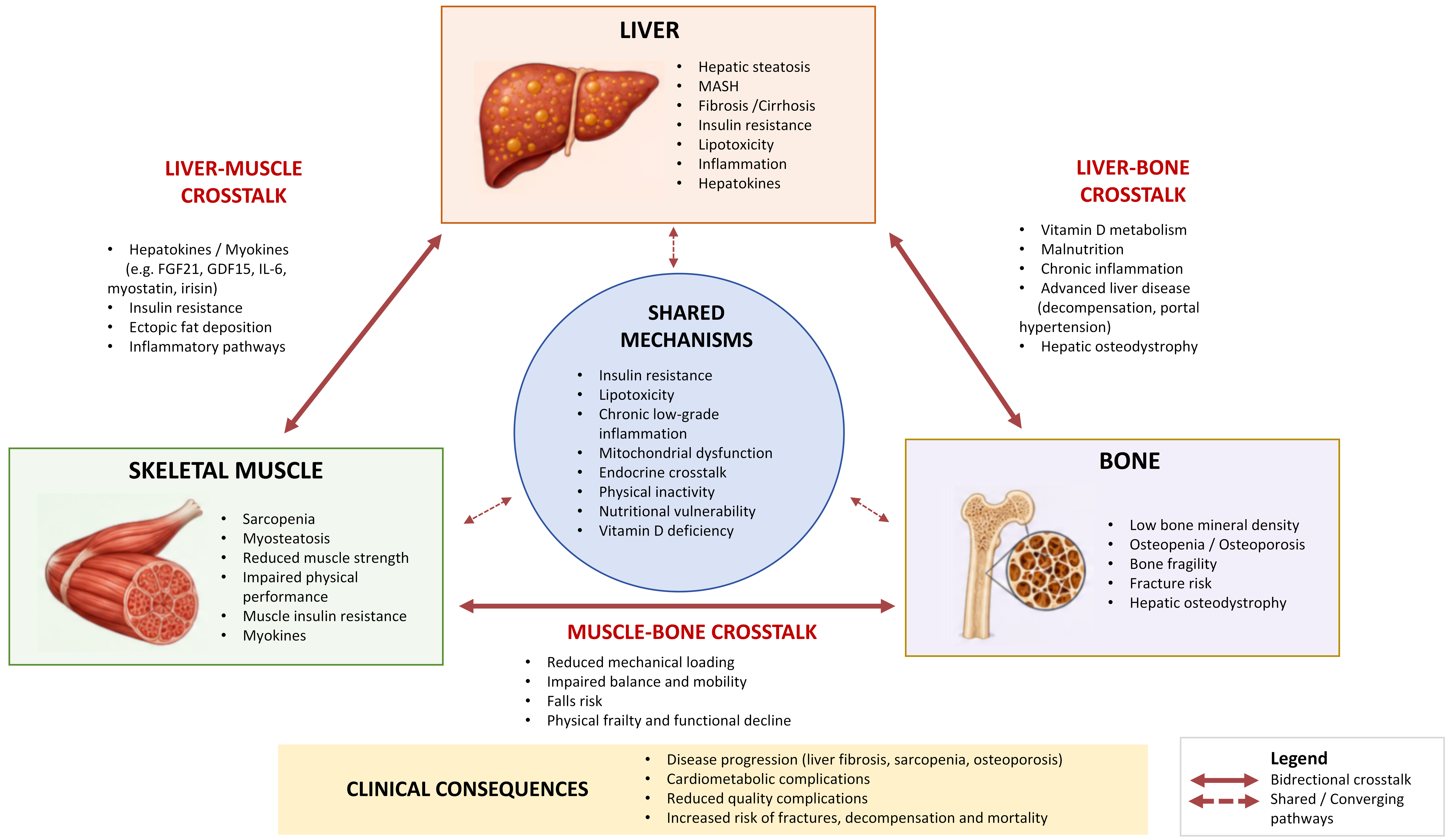
Figure 1. The liver-muscle-bone axis in MASLD: shared mechanisms and bidirectional crosstalk. This figure summarizes bidirectional crosstalk among the liver, skeletal muscle, and bone in MASLD. Hepatic steatosis, MASH, fibrosis or cirrhosis, insulin resistance, lipotoxicity, inflammation, and hepatokine dysregulation may interact with sarcopenia, myosteatosis, reduced muscle strength, impaired physical performance, and muscle insulin resistance. Bone-related abnormalities, including low bone mineral density, osteopenia or osteoporosis, bone fragility, fracture risk, and hepatic osteodystrophy, may further contribute to this multisystem phenotype. Shared mechanisms include insulin resistance, lipotoxicity, chronic low-grade inflammation, mitochondrial dysfunction, endocrine crosstalk, physical inactivity, nutritional vulnerability, and vitamin D deficiency. Liver-muscle, liver-bone, and muscle-bone interactions may contribute to liver fibrosis progression, musculoskeletal vulnerability, cardiometabolic complications, reduced quality of life, fractures, hepatic decompensation, and mortality. These pathways are biologically plausible and clinically relevant, but should not be interpreted as definitive causal relationships in humans. FGF21: Fibroblast growth factor 21; GDF15: growth differentiation factor 15; IL-6: interleukin-6; MASLD: metabolic dysfunction-associated steatotic liver disease; MASH: metabolic dysfunction-associated steatohepatitis.
BIOLOGICAL CROSSTALK AMONG LIVER, SKELETAL MUSCLE, BONE, AND VITAMIN D PATHWAYS
Insulin resistance, lipotoxicity, and chronic inflammation
Insulin resistance is a key shared pathological process that may link MASLD with impaired skeletal muscle function. In skeletal muscle, impaired insulin signaling reduces glucose uptake, glycogen synthesis, and mitochondrial oxidative capacity, thereby sustaining postprandial hyperglycemia and compensatory hyperinsulinemia. Because skeletal muscle is the major site of insulin-mediated glucose disposal, reduced muscle mass, myosteatosis, and mitochondrial dysfunction in muscle further impair systemic metabolic homeostasis, forming a vicious cycle of muscle insulin resistance, compensatory hyperinsulinemia, and hepatic lipid accumulation[6,21,34].
In the liver, insulin resistance does not manifest as a uniform reduction in all insulin actions. Rather, insulin-mediated suppression of hepatic gluconeogenesis and hepatic glucose output becomes impaired, whereas hepatic de novo lipogenesis may remain persistently enhanced under the combined influence of hyperinsulinemia, high glucose availability, increased free fatty acid flux, and signaling pathways involving sterol regulatory element-binding protein 1c (SREBP1c), carbohydrate response element-binding protein (ChREBP), and mammalian target of rapamycin complex 1 (mTORC1)[35]. Lipotoxicity represents another central mechanism linking adipose tissue, the liver, skeletal muscle, and the bone. Insulin resistance in adipose tissue enhances lipolysis, resulting in sustained delivery of free fatty acids to the liver and skeletal muscle. Intrahepatic triglyceride accumulation itself is more appropriately regarded as a phenotype of lipid excess and, to some extent, a buffering mechanism. The truly cytotoxic mediators are often lipotoxic intermediates such as saturated fatty acids, diacylglycerols, ceramides, free cholesterol, and acylcarnitines[6,35,36]. These lipid species can induce endoplasmic reticulum stress, oxidative stress, mitochondrial injury, inflammasome activation, and cell death, thereby driving the progression from simple steatosis to MASH and liver fibrosis.
Chronic low-grade inflammation further amplifies pathological crosstalk along the liver-muscle-bone axis [Figure 1]. Adipose tissue dysfunction increases pro-inflammatory mediators and alters the adipokine profile, while MASLD-related hepatocellular injury and exposure to gut-derived endotoxins may further intensify inflammatory signaling. In skeletal muscle, chronic inflammation promotes protein breakdown, suppresses protein synthesis, and impairs mitochondrial biogenesis and oxidative phosphorylation. In the liver, inflammatory signaling promotes fibrogenesis through hepatic stellate cell activation, extracellular matrix deposition, and immunometabolic reprogramming[37,38]. In bone, increased inflammatory cytokines, including tumor necrosis factor (TNF), interleukin-6 (IL-6), and interleukin-17 (IL-17), may contribute to abnormal bone remodeling, bone loss, osteoporosis, and increased fracture risk, although the precise mechanisms remain incompletely understood[34]. This shared inflammatory milieu may help explain why patients with sarcopenic obesity have higher metabolic and musculoskeletal risk than those with obesity alone or sarcopenia alone.
Hepatokines, myokines, and adipokines
The liver, skeletal muscle, and adipose tissue communicate through multiple endocrine mediators, including hepatokines, myokines, and adipokines. Some of these mediators may be produced by more than one tissue, and their predominant source may change under conditions of metabolic stress, inflammation, or exercise. Representative mediators discussed in this review, together with their major sources, target organs, and physiological actions, are summarized in Supplementary Table 1. The liver is not only a central organ for glucose and lipid metabolism, but also an endocrine organ that secretes a variety of hepatokines. Hepatokines such as fibroblast growth factor 21 (FGF21), fetuin-A, and selenoprotein P can influence insulin sensitivity, fatty acid oxidation, inflammatory responses, oxidative stress, and energy homeostasis[39]. In the setting of early metabolic stress, FGF21 may represent an adaptive response that helps promote fatty acid oxidation and energy expenditure. In more severe metabolic dysfunction, however, compensatory elevation and functional resistance may occur, and its net effect on skeletal muscle remains uncertain[6]. Fetuin-A and selenoprotein P have been implicated in insulin resistance and disordered muscle metabolism, although the extent of their clinical contribution requires further investigation[40].
Skeletal muscle also influences hepatic and adipose tissue metabolism through myokines. Myostatin is a negative regulator of muscle growth. Through activin receptor type IIB (ActRIIB) and small mothers against decapentaplegic 2/3 (SMAD2/3) signaling, it inhibits muscle protein synthesis, promotes muscle atrophy, and has been associated with insulin resistance, fat accumulation, and sarcopenia related to chronic liver disease[41,42]. By contrast, exercise-induced myokines, including irisin, IL-6, IL-15, brain-derived neurotrophic factor, and certain forms of FGF21, are involved in the regulation of fatty acid oxidation, mitochondrial function, muscle regeneration, and whole-body energy expenditure[35]. Although this review focuses primarily on the liver-muscle-bone axis, adipose tissue should be considered an important endocrine and inflammatory modifier of this axis in MASLD. In obesity, visceral adiposity, and sarcopenic obesity, adipose tissue dysfunction alters adipokine secretion and increases the release of pro-inflammatory mediators and free fatty acids, thereby promoting hepatic steatosis, muscle insulin resistance, myosteatosis, and systemic low-grade inflammation.
Adiponectin improves insulin sensitivity, promotes fatty acid oxidation, and exerts anti-inflammatory effects. Therefore, reduced adiponectin levels in obesity and adipose tissue dysfunction may weaken insulin-sensitizing, fatty acid-oxidizing, and anti-inflammatory signaling in the liver and skeletal muscle, thereby promoting ectopic fat accumulation and metabolic inflammation[36,40]. These changes may also indirectly impair bone health through systemic inflammation, insulin resistance, and reduced muscle function. However, the net effect of adiponectin on bone metabolism may vary according to metabolic context and remains incompletely defined[36,39]. Leptin plays an important role in energy balance, but chronic obesity may lead to hyperleptinemia and leptin resistance[43]. Leptin may also participate in hepatic stellate cell activation, immune-inflammatory responses, and lipid metabolism in peripheral tissues. Therefore, hyperleptinemia and leptin resistance may represent a potential link among adipose tissue dysfunction, hepatic metabolic injury, and impaired muscle function[40,43]. The effects of leptin on bone metabolism and bone remodeling may vary according to age, adiposity, hormonal status, and the local tissue microenvironment, and consistent clinical evidence remains lacking.
In addition to adiponectin and leptin, other adipose-derived mediators, including resistin, visfatin, chemerin, TNF-α, and IL-6, may contribute to hepatic steatosis, systemic insulin resistance, muscle catabolism, and chronic low-grade inflammation[36,40]. However, their specific roles, relative contributions, and clinical predictive value in MASLD-related liver-muscle-bone crosstalk remain unclear. Current evidence is largely derived from experimental and observational studies, and further validation in longitudinal human studies is needed[36,39].
Taken together, MASLD complicated by sarcopenia or sarcopenic obesity reflects an imbalance in endocrine and immunometabolic networks involving the liver, skeletal muscle, adipose tissue, gut, and immune system[37]. Within this network, adipokines are best interpreted as modulators of the liver-muscle-bone phenotype rather than as a separate focus of this review.
Vitamin D and vitamin D receptor signaling
Vitamin D exerts its biological effects through the vitamin D receptor (VDR). Vitamin D is first hydroxylated in the liver to 25(OH)D and is then converted primarily in the kidneys to its active form, 1,25-dihydroxyvitamin D. VDR signaling is involved not only in calcium-phosphate metabolism and bone remodeling, but also in neuromuscular function, immune regulation, inflammatory responses, and glucose metabolism[17,27,28].
In the liver, VDR activation may also confer protective effects by modulating lipid metabolism, inflammatory signaling, oxidative stress, and hepatic stellate cell activation[17]. Human studies have suggested that hepatic VDR expression may be inversely associated with the histological severity of steatosis and lobular inflammation[44]. In MASLD and MASH, hepatocellular lipotoxicity, oxidative stress, pro-inflammatory cytokines, altered bile acid metabolism, and hepatic stellate cell activation may alter VDR expression or impair downstream VDR-mediated transcriptional activity, thereby disrupting hepatic immune and metabolic homeostasis.
In skeletal muscle, reduced vitamin D availability and impaired VDR signaling may be associated with aging, obesity, insulin resistance, chronic inflammation, and sarcopenia[17,27]. Vitamin D deficiency and reduced VDR activity may adversely affect myocyte differentiation, calcium homeostasis, mitochondrial function, oxidative stress responses, muscle protein homeostasis, and regenerative capacity. Impaired VDR signaling may also interact with abnormal lipid metabolism, insulin resistance, inflammatory pathways, myosteatosis, and increased myostatin signaling, thereby contributing to reduced muscle strength and impaired physical performance.
Vitamin D and VDR signaling also provide a biological link between muscle dysfunction and bone vulnerability. Vitamin D deficiency may contribute to reduced bone mineral density and impaired bone remodeling, whereas sarcopenia and myosteatosis may further compromise bone health by increasing fall risk and reducing mechanical loading. Low protein intake, obesity, T2DM, chronic liver disease, cholestasis, advanced fibrosis, and cirrhosis may further aggravate abnormalities in bone metabolism and fracture risk. These interrelated abnormalities may collectively increase the risk of osteoporotic fractures and adverse clinical outcomes.
Nevertheless, current clinical evidence remains insufficient to determine whether impaired VDR signaling is a causal driver of metabolic and musculoskeletal dysfunction in MASLD or merely a marker of disease severity and systemic metabolic disturbance. The reproducibility of these mechanisms in human studies and their clinical extrapolation should be interpreted cautiously.
CLINICAL RECOGNITION AND RISK STRATIFICATION
Given the epidemiological overlap and potential shared pathological mechanisms among MASLD, sarcopenia, myosteatosis, vitamin D deficiency, and bone vulnerability, clinical risk stratification should not be limited to the assessment of hepatic steatosis or liver fibrosis. Instead, it should also incorporate muscle reserve, muscle quality, physical function, bone metabolism, and nutritional vulnerability[6,37]. This broader approach is particularly important because patients with MASLD may differ substantially in metabolic risk, body composition, exercise tolerance, nutritional status, and long-term prognosis.
Screening for muscle health should be prioritized in patients with MASLD who are older; have T2DM, obesity, central obesity, sarcopenic obesity, repeated or unintentional weight loss, frailty, falls, low physical activity, reduced gait speed, chronic kidney disease, osteoporosis, or advanced liver fibrosis; or are scheduled to receive intensive pharmacological weight-loss therapy or metabolic bariatric surgery[6,7,10]. In patients with MASLD and normal BMI, early assessment of muscle and bone health should also be considered when increased waist circumference, visceral adiposity, low muscle strength, fatigue, reduced exercise tolerance, or insufficient protein intake is present[37,45].
Liver assessment
Liver assessment should follow current MASLD management guidelines[2,4]. The purpose of the stepwise strategy recommended in these guidelines is not only to identify patients with clinically significant fibrosis, but also to recognize potential safety risks when prescribing exercise, nutritional interventions, weight-loss strategies, or pharmacological therapy. Patients with advanced liver fibrosis or cirrhosis require particular attention because portal hypertension, ascites, varices, malnutrition, frailty, and hepatic decompensation may influence the safety and intensity of physical activity, resistance training, and dietary interventions.
Muscle health assessment
Assessment of muscle health should begin with practical, low-cost, and reproducible clinical tools. Handgrip strength is a useful measure of muscle strength. The strength, assistance in walking, rise from a chair, climb stairs, and falls (SARC-F) or SARC-F combined with calf circumference (SARC-CalF) questionnaires, calf circumference, the five-time chair stand test, gait speed, and the short physical performance battery (SPPB) can help identify probable sarcopenia, reduced mobility, or risk of frailty[10,11]. Because SARC-F may have limited sensitivity in some populations, a negative result should not exclude further assessment in high-risk MASLD patients[46].
For patients with positive screening results or high clinical risk, further evaluation of muscle mass or muscle quality should be performed. Depending on equipment availability, clinical setting, and research purpose, DXA, BIA, CT, or MRI may be selected[11]. In patients who have already undergone abdominal CT or MRI, opportunistic assessment of skeletal muscle area and myosteatosis at the third lumbar vertebra level may be considered to improve detection of sarcopenia and reduced muscle quality[47,48]. When imaging is available, both skeletal muscle quantity and quality should be considered, because reduced muscle area and myosteatosis may provide complementary clinical information, particularly in patients with obesity, advanced fibrosis, cirrhosis, or hepatic decompensation.
Bone health and selective vitamin D assessment
Bone health assessment should be considered in selected high-risk patients with MASLD, including older adults, postmenopausal women, patients with recurrent falls, sarcopenia, frailty, chronic kidney disease, cholestatic or advanced liver disease, previous fragility fracture, long-term glucocorticoid exposure, malnutrition, post-bariatric surgery status, or planned intensive weight-loss therapy[27,28,49,50]. Practical assessment may include a history of falls and fragility fractures, medication use, calcium and vitamin D intake, frailty and physical performance evaluation, bone mineral density measurement when clinically indicated, and laboratory tests such as serum calcium, phosphate, alkaline phosphatase, parathyroid hormone, and 25-hydroxyvitamin D [25(OH)D]. In patients with cirrhosis, the risk of hepatic osteodystrophy should be specifically considered.
Assessment of vitamin D status should be performed selectively rather than as routine screening for all patients with MASLD. Reasonable indications for testing include advanced age, osteoporosis or low bone mass, recurrent falls, sarcopenia or frailty, malnutrition, chronic kidney disease, cholestatic liver disease, advanced liver disease, fat malabsorption, post-bariatric surgery status, long-term insufficient sunlight exposure, and treatment plans that may lead to rapid changes in body weight or muscle mass[17,28,32]. Serum 25(OH)D is the principal circulating marker for evaluating vitamin D status, but its interpretation should take into account season, assay variability, obesity, inflammatory status, albumin level, kidney function, supplementation history, and comorbid conditions[28].
INTEGRATED INTERVENTION STRATEGIES
The evidence base for integrated lifestyle management in MASLD remains uneven. Although lifestyle intervention is widely regarded as the cornerstone of MASLD treatment, many specific strategies for exercise modality, intensity, frequency, nutritional composition, protein intake, and muscle-preserving approaches are derived from heterogeneous trials, small interventional studies, observational data, and expert consensus rather than large, definitive randomized controlled trials. This limitation is particularly relevant for patients with sarcopenia, advanced fibrosis, or cirrhosis. Therefore, the following strategies should be interpreted as practical, evidence-informed clinical considerations rather than uniform prescriptions. In clinical practice, intervention plans should be individualized according to liver disease stage, muscle reserve, cardiometabolic risk, frailty, comorbidities, nutritional status, safety, feasibility, and patient preference.
Exercise prescription: reducing liver fat while preserving muscle and bone
Exercise is a cornerstone of MASLD management. Current evidence suggests that aerobic training, resistance training, high-intensity interval training, and combined exercise interventions may reduce liver fat content, improve insulin resistance, and enhance cardiometabolic health to varying degrees, with some benefits occurring independently of substantial weight loss[2,5,51]. Resistance training is clinically relevant in MASLD care because it may improve muscle strength and metabolic function while also contributing to reductions in liver fat, although the magnitude of hepatic benefit varies across studies[52]. In general, moderate-intensity aerobic exercise combined with resistance training may be considered, particularly for patients with muscle-related risk. However, existing studies do not establish a single exercise modality as optimal for all patients with MASLD. Clinical prescriptions should therefore prioritize safety, adherence, progressive overload, and long-term sustainability, rather than pursuing a single exercise model[51].
For patients with simple steatosis or MASH without advanced liver fibrosis, moderate-intensity aerobic exercise combined with resistance training at least two to three times per week may be considered as a pragmatic approach, provided there are no cardiopulmonary, osteoarticular, or other contraindications to exercise. Aerobic exercise may improve cardiorespiratory fitness, liver fat content, and insulin sensitivity. Resistance training may more directly support muscle strength, neuromuscular function, muscle protein synthesis signaling, and physical performance, and may be particularly relevant for patients with sarcopenia, sarcopenic obesity, or repeated weight loss[6,21]. High-intensity interval training may be considered for individuals with good cardiorespiratory fitness, low osteoarticular risk, and access to appropriate supervision, but it should not be the default recommendation for older adults, frail individuals, patients at high risk of falls, or those with advanced liver disease because evidence regarding its safety and effectiveness in these populations remains limited.
For patients with advanced liver fibrosis or compensated cirrhosis, exercise prescriptions should be individualized[49,50]. In those with suspected clinically significant portal hypertension, prominent varices, poorly controlled ascites, or recent decompensation, heavy-load resistance training, Valsalva maneuvers, and exercises that markedly increase intra-abdominal pressure should generally be avoided. In patients with decompensated cirrhosis, the goal of exercise may need to shift from simply improving fitness to supervised rehabilitation, maintenance of daily functional capacity, prevention of further muscle loss, reduction of fall risk, and improvement of quality of life[50,53]. Recent evidence suggests that exercise and nutrition interventions may improve skeletal muscle index and albumin levels in cirrhosis-related sarcopenia, particularly when sustained over longer periods, but intervention intensity and safety monitoring should be individualized according to liver disease severity and functional status[54]. Small interventional studies also suggest that resistance exercise may improve physical fitness and quality of life in selected patients with cirrhosis without major adverse events, although larger controlled trials remain needed[55].
Traditional mind-body exercises such as Tai Chi, Baduanjin, Yijinjing, and Wuqinxi may serve as complementary options to improve balance, flexibility, coordination, adherence, and low-intensity physical activity, particularly in older adults, frail individuals, patients with low physical activity, or those unsuitable for high-intensity exercise. Available evidence suggests that Tai Chi and Baduanjin may improve muscle strength and physical function in patients with sarcopenia, but their effects on hepatic endpoints in MASLD still require validation in more rigorous randomized controlled trials[56]. Therefore, in MASLD management, these forms of exercise may be used as adjunctive strategies to increase physical activity and improve balance function, but they should not replace the central role of aerobic and resistance training in reducing adiposity, improving insulin resistance, and preserving muscle.
Bone-directed physical activity should also be considered in selected patients. When performed safely, resistance and weight-bearing exercise may help preserve bone mineral density, improve balance, reduce fall risk, and enhance musculoskeletal resilience. However, the optimal intensity, frequency, duration, and combination of aerobic exercise, resistance training, balance training, and weight-bearing exercise for different MASLD phenotypes remain uncertain. Decisions regarding exercise participation and modality should be guided primarily by safety, tolerance, adherence, comorbidities, liver disease severity, fall risk, and individual functional status.
Nutritional management: reducing fat without losing muscle
Nutritional therapy should aim to optimize body composition rather than simply pursue weight reduction. In patients with MASLD who are overweight or obese, sustained weight loss may improve hepatic steatosis, inflammatory activity in MASH, and the risk of fibrosis[2,4]. However, rapid weight loss may also reduce muscle strength and lower basal metabolic rate, particularly in patients with sarcopenia, older adults, individuals with diabetes, those with repeated weight loss attempts, and patients receiving intensive pharmacological weight-loss therapy[7]. The magnitude of these effects may vary according to baseline muscle reserve, the rate of weight loss, nutritional intake, comorbidities, and the treatment strategy. Therefore, in patients with MASLD who already have muscle-related risk, the therapeutic goal may need to shift from weight loss toward fat reduction with muscle preservation. Clinical follow-up should not rely solely on body weight and BMI, but may also incorporate waist circumference, handgrip strength, gait speed, the five-time chair stand test, appendicular lean mass, skeletal muscle area, or BIA to assess changes in body composition and physical function[7,10]. When designing an energy-deficit plan, excessive caloric restriction should be avoided. A Mediterranean diet or a similar high-quality dietary pattern may be considered, with restriction of ultra-processed foods, sugar-sweetened beverages, refined carbohydrates, and saturated fats, while ensuring adequate intake of high-quality protein, dietary fiber, micronutrients, and unsaturated fatty acids. However, dietary planning should be adapted to cultural dietary patterns, food availability, metabolic comorbidities, nutritional risk, and individual preferences rather than applied as a uniform dietary prescription.
Adequate protein intake appears clinically relevant to the prevention and treatment of sarcopenia, particularly when combined with resistance training. Older adults, frail patients, individuals with sarcopenia, and patients with obesity undergoing weight reduction may require a protein intake higher than that recommended for the average adult[2]. In patients with cirrhosis, nutritional guidelines emphasize adequate energy and protein intake to prevent or treat malnutrition and sarcopenia, while avoiding unnecessary protein restriction except in unusual circumstances of severe intolerance[49,50]. The actual target should be individualized according to kidney function, stage of liver disease, total energy intake, dietary tolerance, and exercise plan. During intentional weight reduction or incretin-based therapy, nutritional counseling may specifically aim to preserve lean mass through adequate protein intake and concurrent resistance training[57].
For patients with bone vulnerability, nutritional management should also ensure adequate calcium and protein intake and correction of relevant micronutrient deficiencies when present. However, for MASLD patients with sarcopenia or bone vulnerability, large randomized controlled trials are still lacking to define the optimal macronutrient composition, protein intake target, and timing of nutritional intervention. Therefore, exercise and nutritional strategies should be adapted to local dietary patterns, physical activity habits, cultural context, comorbidities, available healthcare resources, and patient preferences.
Vitamin D and bone health management: selective assessment and deficiency correction
Vitamin D supplementation should be positioned with caution. Its clearest clinical role is to correct deficiency and support musculoskeletal health in selected high-risk populations, rather than the direct treatment of hepatic disease. Correction of vitamin D deficiency is clinically appropriate, particularly in patients with osteoporosis, low bone mass, recurrent falls, frailty, malnutrition, cholestasis, chronic kidney disease, fat malabsorption, post-bariatric surgery status, or confirmed low 25(OH)D levels[17,28,32]. Mechanistic studies suggest that VDR signaling may be involved in the regulation of lipid metabolism, inflammation, oxidative stress, muscle function, and fibrogenesis. However, biological plausibility demonstrated in experimental studies has not been consistently translated into clinically meaningful hepatic benefits. Current clinical evidence is insufficient to support vitamin D as a direct treatment for MASH or liver fibrosis[58].
Current studies of vitamin D supplementation in MASLD are heterogeneous in baseline vitamin D status, supplementation dose, dosing frequency, treatment duration, liver disease severity, and assessed outcomes. These methodological differences may partly explain the inconsistent results across studies. Therefore, in MASLD management, vitamin D testing should follow a selective strategy; routine vitamin D testing is not warranted in all patients with MASLD. Testing and correction of deficiency may be considered when patients have osteoporosis, osteomalacia, hypocalcemia, recurrent falls, marked muscle weakness, malnutrition, chronic kidney disease, cholestatic or advanced liver disease, fat malabsorption, post-bariatric surgery status, or when they are scheduled to receive treatments that may lead to rapid changes in body weight and muscle mass[28,59]. An updated systematic review and dose-response meta-analysis indicated that vitamin D supplementation in steatotic liver disease was generally safe and well tolerated, but did not show meaningful clinical benefit for hepatic or metabolic parameters[59]. For older adults or patients at high risk of falls who require long-term supplementation, daily or regular low-dose regimens are generally preferred over intermittent very-high-dose bolus regimens, because intermittent high-dose supplementation may fail to reduce the risk of falls or fractures in some older populations and may even increase fall risk[27,28]. Whether 25(OH)D should be reassessed should be individualized, particularly in patients receiving high-dose therapy, those with malabsorption, obesity, chronic kidney disease, advanced liver disease, persistent symptoms, or risk of hypocalcemia.
In addition to correction of vitamin D deficiency, bone-directed management should include fall-risk reduction, safe resistance and weight-bearing exercise, adequate protein and calcium intake, and referral for osteoporosis evaluation or treatment when clinically indicated.
Pharmacological therapy for MASH: preserving muscle during metabolic and liver-targeted treatment
The therapeutic landscape for MASH is changing rapidly. In 2024, the US Food and Drug Administration (FDA) granted accelerated approval to resmetirom for adults with noncirrhotic non-alcoholic steatohepatitis (NASH)/MASH with moderate to advanced liver fibrosis, consistent with fibrosis stages F2-F3, in conjunction with diet and exercise. The phase 3 MAESTRO-NASH trial showed that resmetirom was superior to placebo in achieving MASH resolution and improvement in fibrosis[60]. In 2025, the FDA granted accelerated approval to semaglutide 2.4 mg once weekly for adults with noncirrhotic MASH with moderate to advanced fibrosis, consistent with F2-F3 fibrosis. The phase 3 ESSENCE trial showed that once-weekly semaglutide 2.4 mg improved histological outcomes in MASH and fibrosis-related endpoints[61]. These advances indicate that MASH treatment has entered a pharmacological era. However, they do not diminish the importance of lifestyle intervention; rather, they require clinical management to expand toward integrated monitoring of body composition, muscle function, nutritional intake, and cardiometabolic and renal risk.
In patients receiving incretin-based therapies or other intensive weight-loss treatments, clinicians should proactively prevent unnecessary loss of body weight and muscle strength. Weight reduction associated with glucagon-like peptide-1 receptor agonists (GLP-1 RAs) is mainly attributable to fat mass loss, but the proportion of weight loss varies across studies and does not necessarily reflect skeletal muscle function[7,57]. Available evidence suggests that skeletal muscle changes associated with GLP-1 RA therapy may, to a considerable extent, represent an adaptive response. Improved insulin sensitivity and reduced myosteatosis may enhance muscle quality and reduce the risk of declining muscle strength and physical function[57]. However, in selected high-risk patients, GLP-1 RA-associated weight loss may unmask or aggravate pre-existing muscle vulnerability. In clinical practice, muscle strength and nutritional risk should be assessed before treatment initiation. During therapy, adequate protein intake, avoidance of excessive caloric restriction, and resistance training combined with aerobic exercise when feasible should be emphasized. Follow-up should monitor handgrip strength, gait speed, body composition, fatigue, falls, physical function, and quality of life, rather than focusing solely on the magnitude of weight loss[57,62].
In the phase 2 BELIEVE trial in adults with obesity, bimagrumab plus semaglutide produced greater fat-mass reduction while preserving lean mass relative to semaglutide alone[63]. This strategy may represent a potential option for older adults or patients with low baseline muscle reserve, high risk of sarcopenia, or limited ability to tolerate conventional exercise interventions. However, its effects on muscle strength, physical function, clinically defined sarcopenia-related outcomes, and long-term safety require confirmation in larger and longer-term studies.
For patients receiving liver-targeted metabolic therapies such as resmetirom, clinical attention should not be limited to improvements in liver histology, MRI-PDFF, controlled attenuation parameter (CAP), liver stiffness measurement (LSM), enhanced liver fibrosis test (ELF), or liver enzymes. Because patients with MASLD often have coexisting obesity, T2DM, cardiovascular disease, chronic kidney disease, and impaired muscle function, future clinical trials and real-world studies should incorporate muscle-related and patient-centered outcomes into their evaluation frameworks[6,37,57]. The approval of resmetirom and semaglutide should therefore be viewed not as a replacement for lifestyle care, but as an opportunity to redefine lifestyle intervention as a muscle-preserving, nutrition-guided, and function-oriented foundation for pharmacological MASH therapy.
PRACTICAL IMPLEMENTATION IN REAL-WORLD CLINICAL SETTINGS
In routine clinical practice, the liver-muscle-bone approach should be implemented in a stepwise manner according to available resources. Diagnostic cutoffs for sarcopenia, obesity, vitamin D deficiency, and non-invasive liver fibrosis assessment may vary by region, ethnic group, and population; therefore, local guidelines and population-specific reference values should be used whenever possible. Differences in MASLD or NAFLD definitions, sarcopenia criteria, vitamin D thresholds, imaging methods, non-invasive fibrosis tests, and muscle assessment tools may also contribute to variation across studies and clinical settings. For this reason, the proposed liver-muscle-bone approach should be viewed as a practical and flexible care model rather than a fixed pathway for all patients.
A suggested stepwise workflow is shown in Figure 2. Further real-world studies are needed to determine whether different screening pathways, intervention models, and follow-up strategies are feasible, cost-effective, and acceptable to patients.

Figure 2. Practical workflow for liver-muscle-bone assessment and integrated management in MASLD. The figure shows a stepwise approach to liver-muscle-bone assessment in patients with MASLD. After initial evaluation of liver disease stage, cardiometabolic and renal risk, nutritional status, and treatment safety, patients are assessed for muscle health risk, vitamin D deficiency risk, and bone health risk. Low-cost screening tools include handgrip strength, SARC-F or SARC-CalF, calf circumference, gait speed, chair stand testing, fall and fracture history, and selective serum 25-hydroxyvitamin D measurement. Further assessment with DXA, BIA, CT, MRI, fracture risk assessment, or laboratory testing may be performed when screening is positive or clinical risk is high. Individualized management may include exercise, nutritional intervention, weight-loss strategies, correction of vitamin D deficiency when indicated, and bone-directed treatment. Functional follow-up and periodic reassessment should guide treatment adjustment according to liver disease stage, muscle reserve, bone health, metabolic risk, safety, and patient preference. BIA: Bioelectrical impedance analysis; CT: computed tomography; DXA: dual-energy X-ray absorptiometry; MASLD: metabolic dysfunction-associated steatotic liver disease; MRI: magnetic resonance imaging; PTH: parathyroid hormone; T2DM: type 2 diabetes mellitus.
CONCLUSIONS AND FUTURE PERSPECTIVES
In summary, MASLD complicated by sarcopenia, myosteatosis, vitamin D deficiency, and bone vulnerability may represent a clinically relevant manifestation of imbalance along the liver-muscle-bone axis. The essence of this phenotype is not the simple coexistence of several common conditions, but rather a high-risk state characterized by increased hepatic metabolic burden, reduced muscle reserve, adverse changes in body composition, impaired skeletal muscle function, and increased musculoskeletal vulnerability. This phenotype may influence patients’ tolerance, adherence, and degree of benefit during lifestyle intervention, pharmacological weight-loss therapy, emerging MASH-directed treatments, and long-term follow-up.
However, current evidence linking MASLD with sarcopenia, myosteatosis, vitamin D deficiency, bone abnormalities, and adverse clinical outcomes is mainly derived from cross-sectional studies and observational cohorts. Therefore, these associations are clinically relevant and biologically plausible, but should not yet be interpreted as definitive causal relationships. Future prospective cohort studies, randomized interventional trials, mechanistic studies, and real-world implementation studies are needed to determine whether improving muscle health, reducing myosteatosis, correcting vitamin D deficiency, and protecting bone health can directly improve liver-related, musculoskeletal, metabolic, and patient-centered outcomes in MASLD.
The clinically relevant question is not whether exercise, nutrition, and vitamin D are useful in isolation, but how these interventions can be safely, effectively, and sustainably integrated according to liver disease stage, muscle reserve, metabolic risk, bone health, and functional status. Future pharmacological trials and real-world studies in MASH should proactively incorporate muscle-related, bone-related, and patient-centered outcomes. Ultimately, the goals of MASLD management should extend beyond the narrow control of body weight and hepatic fat to include the preservation of liver-related outcomes, cardiometabolic and renal health, muscle function, skeletal resilience, treatment tolerance, and long-term patient-centered well-being.
DECLARATIONS
Authors’ contributions
Made substantial contributions to conception and design of the review, supervised the work, and critically revised the manuscript for important intellectual content: Cao H, Zeng J
Performed literature search, evidence synthesis, and manuscript drafting: Li B, Zhang Y, Zhou C
Contributed to manuscript revision and administrative, technical, and material support: Li B, Zhang Y, Zhou C, Cao H, Zeng J
All authors read and approved the final manuscript.
Availability of data and materials
Not applicable.
AI and AI-assisted tools statement
During the preparation of this manuscript, the AI tool ChatGPT (GPT-5.5 Thinking, released 2026-04-23) was used solely for language editing. The tool did not influence the study design, data collection, analysis, interpretation, or the scientific content of the work. All authors take full responsibility for the accuracy, integrity, and final content of the manuscript.
Financial support and sponsorship
This work was supported by Shanghai Pujiang Program (2024PJD084), SHWSRS(2025)_071, National Natural Science Foundation of China (No. 82100605), the Key Nursing Research Project of Shanghai Jiao Tong University (No. Jyhz2430), and the 2025 Lanzhou Municipal Science and Technology Development Guiding Plan Project (Project No. 2025-5-207).
Conflicts of interest
All authors declared that there are no conflicts of interest.
Ethical approval and consent to participate
Not applicable.
Consent for publication
Not applicable.
Copyright
© The Author(s) 2026.
Supplementary Materials
REFERENCES
1. Rinella ME, Lazarus JV, Ratziu V, et al. ; NAFLD Nomenclature consensus group. A multisociety Delphi consensus statement on new fatty liver disease nomenclature. Hepatology. 2023;78:1966-86.
2. European Association for the Study of the Liver (EASL), European Association for the Study of Diabetes (EASD), European Association for the Study of Obesity (EASO). EASL-EASD-EASO Clinical Practice Guidelines on the management of metabolic dysfunction-associated steatotic liver disease (MASLD). J Hepatol. 2024;81:492-542.
3. Cusi K, Isaacs S, Barb D, et al. American Association of Clinical Endocrinology Clinical Practice Guideline for the Diagnosis and Management of Nonalcoholic Fatty Liver Disease in Primary Care and Endocrinology Clinical Settings: Co-Sponsored by the American Association for the Study of Liver Diseases (AASLD). Endocr Pract. 2022;28:528-62.
4. Rinella ME, Neuschwander-Tetri BA, Siddiqui MS, et al. AASLD Practice Guidance on the clinical assessment and management of nonalcoholic fatty liver disease. Hepatology. 2023;77:1797-835.
5. Younossi ZM, Zelber-Sagi S, Henry L, Gerber LH. Lifestyle interventions in nonalcoholic fatty liver disease. Nat Rev Gastroenterol Hepatol. 2023;20:708-22.
6. Marjot T, Armstrong MJ, Stine JG. Skeletal muscle and MASLD: mechanistic and clinical insights. Hepatol Commun. 2025;9:e0711.
7. Donini LM, Busetto L, Bischoff SC, et al. Definition and diagnostic criteria for sarcopenic obesity: ESPEN and EASO consensus statement. Obes Facts. 2022;15:321-35.
8. Yuan S, Larsson SC. Epidemiology of sarcopenia: prevalence, risk factors, and consequences. Metabolism. 2023;144:155533.
10. Chen LK, Hsiao FY, Akishita M, et al. A focus shift from sarcopenia to muscle health in the Asian Working Group for Sarcopenia 2025 Consensus Update. Nat Aging. 2025;5:2164-75.
11. Kirk B, Cawthon PM, Arai H, et al. ; Global Leadership Initiative in Sarcopenia (GLIS) group. The conceptual definition of sarcopenia: Delphi consensus from the Global Leadership Initiative in Sarcopenia (GLIS). Age Ageing. 2024;53:afae052.
12. Xia L, Zhao R, Wan Q, et al. Sarcopenia and adverse health-related outcomes: an umbrella review of meta-analyses of observational studies. Cancer Med. 2020;9:7964-78.
13. Harring M, Golabi P, Paik JM, et al. Sarcopenia among patients with nonalcoholic fatty liver disease (NAFLD) is associated with advanced fibrosis. Clin Gastroenterol Hepatol. 2023;21:2876-88.e5.
14. Joo SK, Kim W. Interaction between sarcopenia and nonalcoholic fatty liver disease. Clin Mol Hepatol. 2023;29:S68-78.
15. Kuchay MS, Martínez-Montoro JI, Kaur P, Fernández-García JC, Ramos-Molina B. Non-alcoholic fatty liver disease-related fibrosis and sarcopenia: An altered liver-muscle crosstalk leading to increased mortality risk. Ageing Res Rev. 2022;80:101696.
16. Basil B, Adiri W, Ugwu EL, Okoro NI. Association between vitamin D and metabolic-associated steatotic liver disease in type 2 diabetes mellitus patients: a systematic review and meta-analysis. Diabetol Metab Syndr. 2025;17:457.
17. Aggeletopoulou I, Tsounis EP, Triantos C. Vitamin D and metabolic dysfunction-associated steatotic liver disease (MASLD): novel mechanistic insights. Int J Mol Sci. 2024;25:4901.
18. Riazi K, Azhari H, Charette JH, et al. The prevalence and incidence of NAFLD worldwide: a systematic review and meta-analysis. Lancet Gastroenterol Hepatol. 2022;7:851-61.
19. Lou TW, Yang RX, Fan JG. The global burden of fatty liver disease: the major impact of China. Hepatobiliary Surg Nutr. 2024;13:119-23.
20. Younossi ZM, Kalligeros M, Henry L. Epidemiology of metabolic dysfunction-associated steatotic liver disease. Clin Mol Hepatol. 2025;31:S32-50.
21. Nishikawa H, Kim SK, Yoshio S, Asai A. Metabolic dysfunction-associated steatotic liver disease and sarcopenia: review of literature. J Clin Med. 2026;15:1661.
22. Linge J, Ekstedt M, Dahlqvist Leinhard O. Adverse muscle composition is linked to poor functional performance and metabolic comorbidities in NAFLD. JHEP Rep. 2021;3:100197.
23. Cruz-Jentoft AJ, Bahat G, Bauer J, et al. ; Writing Group for the European Working Group on Sarcopenia in Older People 2 (EWGSOP2), and the Extended Group for EWGSOP2. Sarcopenia: revised European consensus on definition and diagnosis. Age Ageing. 2019;48:16-31.
24. Li X, He J, Sun Q. The prevalence and effects of sarcopenia in patients with metabolic dysfunction-associated steatotic liver disease (MASLD): a systematic review and meta-analysis. Clin Nutr. 2024;43:2005-16.
25. Malik A, Javaid S, Malik MI, Qureshi S. Relationship between sarcopenia and metabolic dysfunction-associated steatotic liver disease (MASLD): a systematic review and meta-analysis. Ann Hepatol. 2024;29:101544.
26. Xia N, Wang J, Lu Q, Fan X, Jiang Z, Yu Q. Relationship between metabolic dysfunction-associated steatotic liver disease and sarcopenia: a systematic review and meta-analyses. Clin Nutr ESPEN. 2025;68:679-90.
27. Giustina A, Bilezikian JP, Adler RA, et al. Consensus statement on vitamin D status assessment and supplementation: whys, whens, and hows. Endocr Rev. 2024;45:625-54.
28. Demay MB, Pittas AG, Bikle DD, et al. Vitamin D for the prevention of Disease: An Endocrine Society Clinical Practice Guideline. J Clin Endocrinol Metab. 2024;109:1907-47.
29. Man PW, van der Meer IM, Lips P, Middelkoop BJ. Vitamin D status and bone mineral density in the Chinese population: a review. Arch Osteoporos. 2016;11:14.
30. Yodoshi T, Orkin S, Arce-Clachar AC, et al. Vitamin D deficiency: prevalence and association with liver disease severity in pediatric nonalcoholic fatty liver disease. Eur J Clin Nutr. 2020;74:427-35.
31. Heo NJ, Park HE, Yoon JW, et al. The association between vitamin D and nonalcoholic fatty liver disease assessed by controlled attenuation parameter. J Clin Med. 2021;10:2611.
32. Ebrahimpour-Koujan S, Sohrabpour AA, Giovannucci E, Vatannejad A, Esmaillzadeh A. Effects of vitamin D supplementation on liver fibrogenic factors, vitamin D receptor and liver fibrogenic microRNAs in metabolic dysfunction-associated steatotic liver disease (MASLD) patients: an exploratory randomized clinical trial. Nutr J. 2024;23:24.
33. Khanmohammadi S, Kuchay MS. Effects of metabolic dysfunction-associated steatotic liver disease on bone density and fragility fractures: associations and mechanisms. J Obes Metab Syndr. 2024;33:108-20.
34. Goldscheitter GM, Seneshaw M, Mirshahi F, et al. Sexual dimorphism of MASLD-driven bone loss. Sci Rep. 2025;15:23090.
35. Bo T, Gao L, Yao Z, et al. Hepatic selective insulin resistance at the intersection of insulin signaling and metabolic dysfunction-associated steatotic liver disease. Cell Metab. 2024;36:947-68.
36. Carli F, Della Pepa G, Sabatini S, Vidal Puig A, Gastaldelli A. Lipid metabolism in MASLD and MASH: from mechanism to the clinic. JHEP Rep. 2024;6:101185.
37. Liu CH, Zeng QM, Kim W, et al. Sarcopenia and MASLD: novel insights and the future. Nat Rev Endocrinol. 2026;22:139-52.
38. Wang P, Liu X, Du X, et al. Prevalence and risk of metabolic dysfunction-associated steatotic liver disease in patients with sarcopenic obesity: a systematic review and meta-analysis. Nutr Metab. 2025;22:101.
39. Milani I, Codini M, Guarisco G, et al. Hepatokines and MASLD: the GLP1-Ras-FGF21-Fetuin-A crosstalk as a therapeutic target. Int J Mol Sci. 2024;25:10795.
40. Pezzino S, Puleo S, Luca T, Castorina M, Castorina S. Adipokine and hepatokines in metabolic dysfunction-associated steatotic liver disease (MASLD): current and developing trends. Biomedicines. 2025;13:1854.
41. Nishikawa H, Kim SK, Asai A. The role of myokines in liver diseases. Int J Mol Sci. 2025;26:1043.
42. Aguirre F, Valero-Breton M, Cabrera D, et al. Impact of myokines on chronic liver diseases: exploring the effects of metabolic dysfunction-associated steatotic liver disease (MASLD) on skeletal muscle. A narrative review. Eur J Transl Myol. 2025;35:13365.
43. Wang JL, Xiao Y, Li ML, Chen GL, Cui MH, Liu JL. Research progress on leptin in metabolic dysfunction-associated fatty liver disease. J Clin Transl Hepatol. 2025;13:964-75.
44. Liu J, Song Y, Wang Y, Hong H. Vitamin D/vitamin D receptor pathway in non-alcoholic fatty liver disease. Expert Opin Ther Targets. 2023;27:1145-57.
45. Gupta V, Krishnamoorthy A. Skeletal muscle alterations in metabolic dysfunction-associated steatotic liver disease: a critical review of diagnostic, mechanistic, and therapeutic intersections. World J Gastroenterol. 2025;31:110481.
46. Kerminen H, Jyväkorpi S, Urtamo A, et al. Performance of the SARC-F, SARC-CalF, and calf circumference for sarcopenia case finding in community-dwelling older adults. Eur Geriatr Med. 2024;15:1817-26.
47. Ju C, Yao L, Yoon SY, et al. Defining reference values for skeletal muscle metrics on abdominal CT using data from healthy young adult populations: a systematic review and meta-analysis. AJR Am J Roentgenol. 2025;225:e2532781.
48. Yang J, Liu Q, Sun C. Quality and quantity? The clinical significance of myosteatosis in various liver diseases: a narrative review. J Clin Transl Hepatol. 2025;13:1092-106.
49. European Association for the Study of the Liver. EASL Clinical Practice Guidelines on nutrition in chronic liver disease. J Hepatol. 2019;70:172-93.
50. Plauth M, Bernal W, Dasarathy S, et al. ESPEN guideline on clinical nutrition in liver disease. Clin Nutr. 2019;38:485-521.
51. Fan JG, Xu XY, Yang RX, et al. ; Chinese Society of Hepatology, Chinese Medical Association. Guideline for the prevention and treatment of metabolic dysfunction-associated fatty liver disease (version 2024). J Clin Transl Hepatol. 2024;12:955-74.
52. Medeiros DG, Ferreira LF, Lamp JDS, Telles da Rosa LH. The impact of resistance training in patients diagnosed with metabolic dysfunction-associated steatotic liver disease: a systematic review. Eur J Gastroenterol Hepatol. 2025;37:129-36.
53. Lin YY, Qian D, Lin L, Chen S, Jing XC. Advanced exercise intervention for liver cirrhosis and sarcopenia: a development and feasibility study. Medicine. 2025;104:e43974.
54. Hsu HC, Chow LH, Chen YL, Hung HM, Yen M, Lee HF. Effects of exercise and nutrition in improving sarcopenia in liver cirrhosis patients: a systematic review and meta-analysis. Hepatobiliary Surg Nutr. 2025;14:33-48.
55. Brown A, Dias I, da Silva Novaes J, et al. A resistance training program on patients with liver cirrhosis: a randomized clinical trial. Int J Environ Res Public Health. 2025;22:1257.
56. Yang S, Chen S, Zhang Y, Zhou Z, Li D, Zeng P. Effects of Tai Chi and Baduanjin on muscle mass, muscle function, and activities of daily living in individuals with sarcopenia: a systematic review and meta-analysis. Front Public Health. 2025;13:1636857.
57. Linge J, Birkenfeld AL, Neeland IJ. Muscle mass and glucagon-like peptide-1 receptor agonists: adaptive or maladaptive response to weight loss? Circulation 2024;150:1288-98.
58. Martinekova P, Obeidat M, Topala M, et al. Role of vitamin D supplementation in chronic liver disease: a systematic review and meta-analysis of randomized controlled trials. Nutr Rev. 2025;83:2043-54.
59. Taheri E, Esmaeili S, Jodeiri F, et al. Vitamin D supplementation for steatotic liver disease: an updated systematic review and dose-response meta-analysis of randomized and nonrandomized interventional studies. Curr Dev Nutr. 2026;10:107631.
60. Harrison SA, Bedossa P, Guy CD, et al. ; MAESTRO-NASH Investigators. A phase 3, randomized, controlled trial of resmetirom in NASH with liver fibrosis. N Engl J Med. 2024;390:497-509.
61. Sanyal AJ, Newsome PN, Kliers I, et al. ; ESSENCE Study Group. Phase 3 trial of semaglutide in metabolic dysfunction-associated steatohepatitis. N Engl J Med. 2025;392:2089-99.
62. Moscucci F, Baratta F, Pastori D, et al. A narrative review on GLP-1 receptor agonists for obesity in older women: maximizing weight loss while preserving lean mass. Nutrients. 2026;18:632.
Cite This Article
 Open Access
How to Cite
Download Citation
Export Citation File:
Type of Import
Tips on Downloading Citation
Citation Manager File Format
Type of Import
Direct Import: When the Direct Import option is selected (the default state), a dialogue box will give you the option to Save or Open the downloaded citation data. Choosing Open will either launch your citation manager or give you a choice of applications with which to use the metadata. The Save option saves the file locally for later use.
Indirect Import: When the Indirect Import option is selected, the metadata is displayed and may be copied and pasted as needed.
About This Article
Copyright

Data & Comments
Data
0







Comments
Comments must be written in English. Spam, offensive content, impersonation, and private information will not be permitted. If any comment is reported and identified as inappropriate content by OAE staff, the comment will be removed without notice. If you have any queries or need any help, please contact us at support@oaepublish.com.