

Beyond high thermovoltage: toward sustained and reliable energy conversion in ionic thermoelectric gels
 0
0 
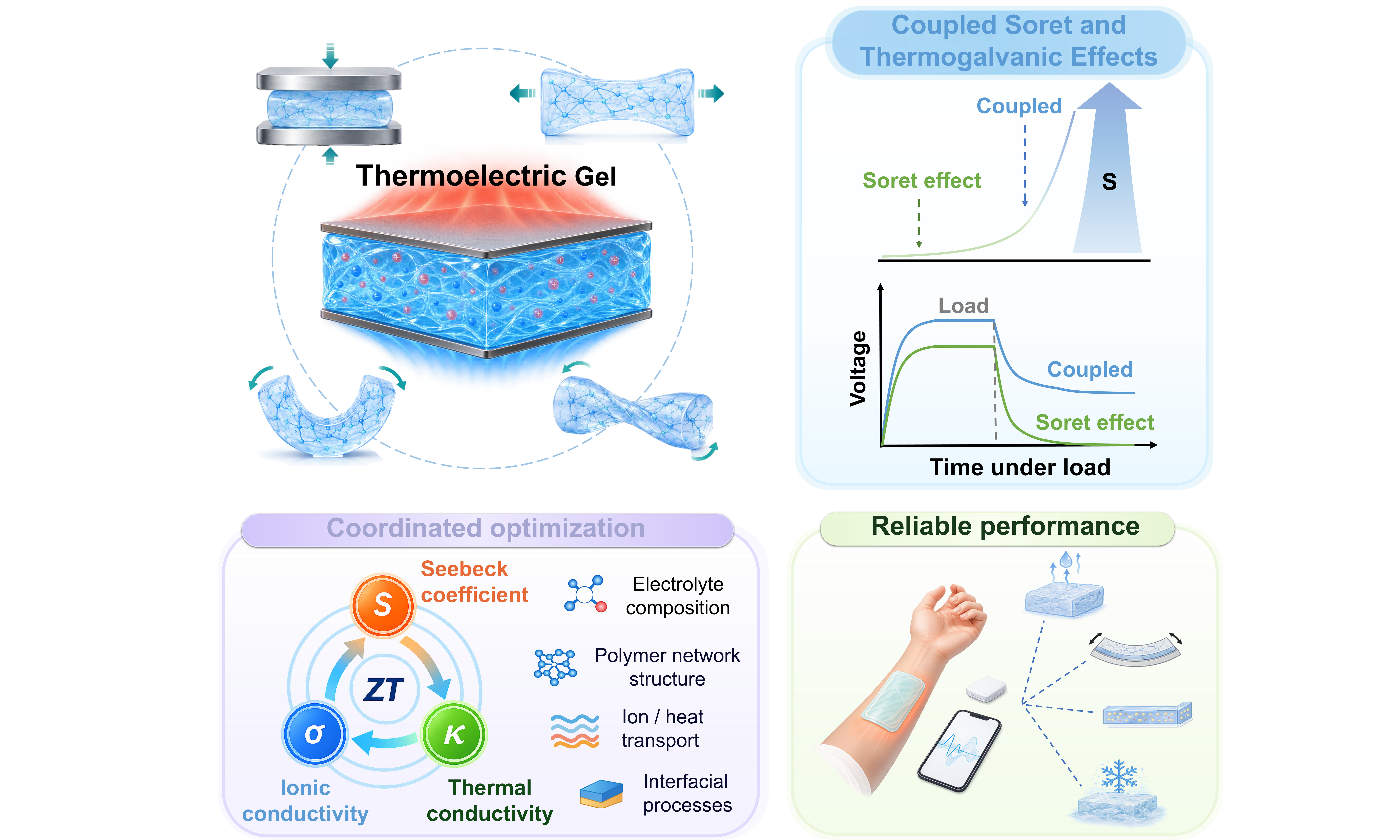
PERSPECTIVE AND SCOPE
Ionic thermoelectric (iTE) gels have emerged as promising platforms for converting low-grade heat into electricity through thermally driven ion transport, with potential uses in flexible energy harvesting and self-powered sensing systems[1,2]. Despite rapid gains in thermopower, three barriers still separate laboratory demonstrations from practical devices: transient output in thermodiffusion-based systems, coupled trade-offs among the Seebeck coefficient, ionic conductivity, and thermal conductivity, and output degradation under realistic thermal, mechanical, and environmental stresses[3]. Together, these challenges indicate that the practical performance of iTE gels should be assessed beyond open-circuit thermovoltage, with greater attention to sustained output under load, transport limitations, and operational reliability.
Ionic thermodiffusion under a temperature gradient can generate large thermovoltages, but the resulting ionic polarization gradually relaxes under load, leading to transient output[4]. In contrast, thermogalvanic systems containing redox couples can sustain electrical output through reversible electrode reactions and continuous redox cycling between oxidized and reduced species[5], although the thermovoltage is generally limited by the reaction entropy of the redox couple. Coupling the Soret and thermogalvanic effects therefore offers a potential route to combine high thermovoltage with improved output retention[6]. The two contributions, however, are not necessarily additive. Their combined effect depends on the relative polarity of the thermodiffusive and thermogalvanic voltages, redox-species transport, and interfacial charge-transfer kinetics, which may lead to either enhancement or partial cancellation.
Beyond the coupling mechanism itself, practical output is also constrained by ionic and thermal transport, bulk electrolyte resistance, interfacial charge-transfer resistance, mechanical integrity, and environmental stability[7]. These factors are closely interconnected, and improving thermovoltage alone may not lead to better performance if transport or interfacial processes become limiting. The evaluation of coupled iTE systems should therefore extend beyond the Seebeck coefficient and open-circuit voltage to include loaded voltage retention, power and energy output, and operational stability under realistic conditions. From this perspective, a central question is not simply whether the Soret and thermogalvanic effects coexist, but whether their interaction produces a measurable advantage under load. This Perspective therefore focuses on the criteria and limitations of such coupling, the coordinated regulation of thermoelectric performance, and the reliability of iTE gels under practical operating conditions. Multiphysics modeling and data-driven approaches may further help clarify the relationships among these factors and guide materials and device design.
From transient thermovoltage to sustained output: coupling of the soret and thermogalvanic effects
The Soret effect generates thermovoltage through the thermodiffusion of mobile ions under a temperature gradient. The resulting ion redistribution establishes a concentration gradient between the hot and cold sides. Once an external load is connected, this concentration gradient gradually relaxes, leading to a decrease in voltage and current over time[8,9]. In comparison, the thermogalvanic effect originates from the temperature dependence of the redox potential. Reversible redox reactions at the electrodes enable continuous charge transfer, allowing the electrical output to be maintained for a longer period[5]. However, the thermogalvanic voltage is generally limited by the reaction entropy of the redox couple, while the attainable current and power also depend on redox-species transport and interfacial charge-transfer kinetics[10,11]. As illustrated in Figure 1, combining the Soret and thermogalvanic effects may therefore provide a route to couple rapid thermovoltage generation with improved output retention under load.
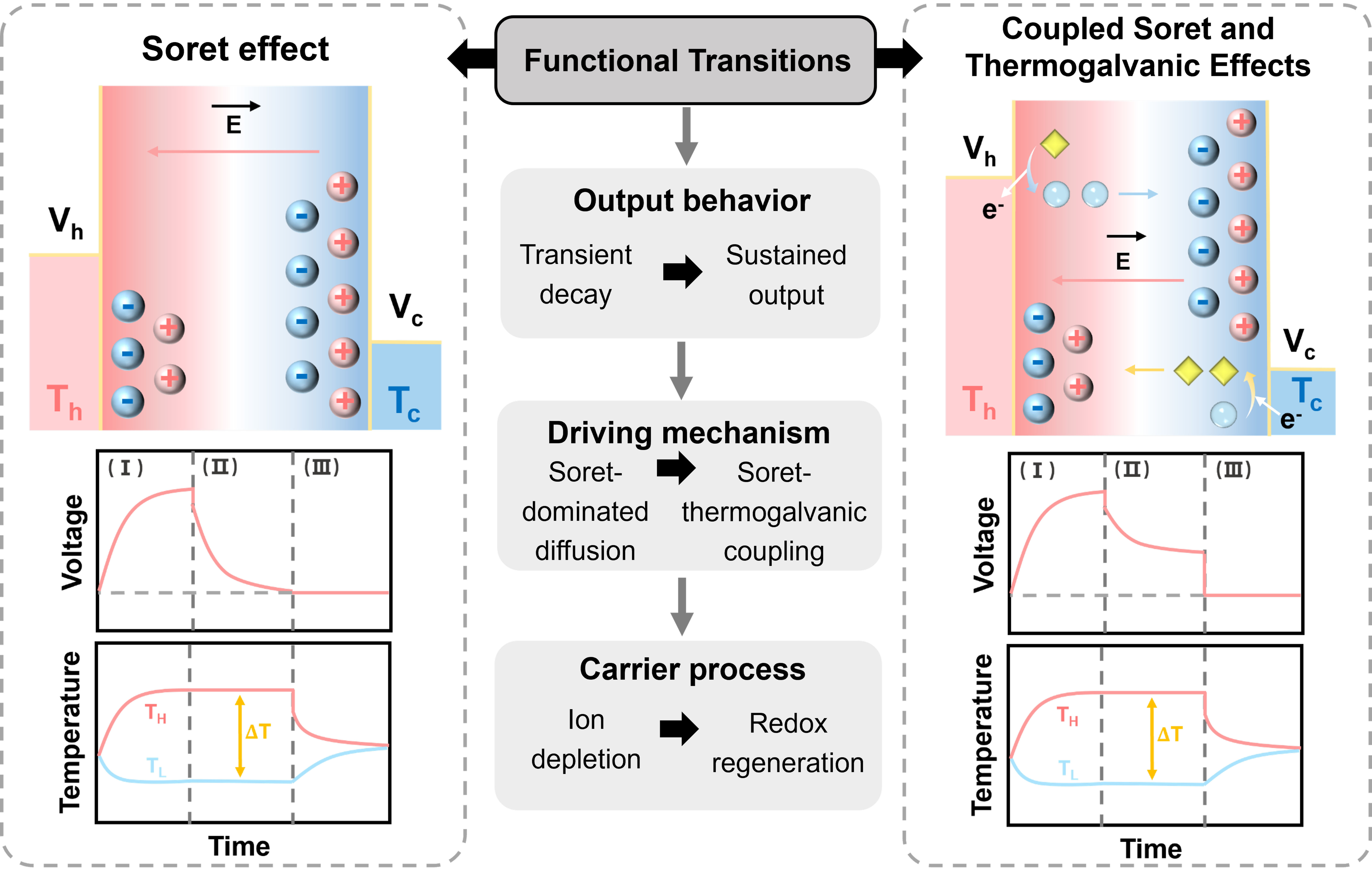
Figure 1. Conceptual comparison of thermodiffusion-dominated and coupled Soret-thermogalvanic output.
However, the coupled thermovoltage cannot be interpreted as a simple linear superposition of thermodiffusive and thermogalvanic contributions. A representative gelatin gel containing KCl and the [Fe (CN)6]4-/ [Fe (CN)6]3- redox couple reported by Han et al. provides an illustrative example of such coupling behavior[10]. The coexistence of thermodiffusive ions and a redox couple in this system resulted in a substantially enhanced Seebeck coefficient together with improved output retention, highlighting the potential benefit of combining the two effects. A related example is the PVA-CuCl2 gel, in which Cl- participates in thermodiffusion while also coordinating with Cu redox species, thereby modifying redox speciation and interfacial reaction kinetics[12]. This interaction indicates that the thermodiffusive and thermogalvanic contributions can influence each other through electrolyte chemistry rather than simply coexist as independent voltage sources. However, these examples do not yet provide a general criterion for distinguishing constructive coupling from counteractive interactions. The coupling outcome depends on the relative magnitude and polarity of the two voltage contributions, ion migration behavior, the reaction entropy of the redox couple, and the characteristic timescales of ionic redistribution, redox-species transport, and interfacial charge transfer[13]. Following the concept of interaction analysis in coupled transport systems, an apparent coupling term can be introduced as:
ΔScoupling = Scoupled − (Sthermodiffusive + Sthermogalvanic)
The apparent coupling term provides a simple way to identify deviations from additive behavior, but it does not reveal the physical origin of these deviations. A quantitative description therefore needs to account for the simultaneous redistribution of mobile ions and redox species under a temperature gradient. Ion transport can be described by incorporating thermodiffusion into the Nernst-Planck framework, while the redox potential should be evaluated using temperature- and concentration-dependent Nernst relationships. Interfacial charge transfer and heat transport should also be considered to describe the output behavior under realistic operating conditions[4,7,8].
Several factors can limit the performance of coupled systems. Opposite polarities of the thermodiffusive and thermogalvanic contributions may lead to partial voltage cancellation, while differences in their characteristic timescales can result in a high open-circuit voltage but limited output under load. Redox-species transport may further become rate-limiting and cause concentration polarization, whereas high interfacial charge-transfer resistance can suppress current and power output. These effects indicate that effective coupling requires simultaneous consideration of voltage polarity, mass transport, and electrode-electrolyte charge transfer rather than optimization of any single parameter. This distinction is also important when comparing coupled iTE systems with thermocapacitive operation. In thermocapacitive systems, the stored ionic polarization gradually relaxes during discharge, whereas the introduction of reversible redox reactions can provide an additional faradaic pathway for maintaining charge transfer. Accordingly, coupled systems should be evaluated not only by their peak thermovoltage but also by the voltage change upon load connection, output retention, delivered energy, and recovery during repeated thermal cycling[7,8].
From single-parameter enhancement to multiparameter optimization: coordinated thermoelectric design in ionic thermoelectric gels
The thermoelectric performance of ionic thermoelectric gels depends on the balance among the Seebeck coefficient (S), ionic conductivity (σ), and thermal conductivity (κ), rather than on the maximization of any single parameter. A high S favors thermovoltage generation, but this advantage may not translate into high power output when ionic transport, redox-species diffusion, or interfacial charge transfer becomes limiting. In hydrated polymer networks, these parameters are closely related to electrolyte composition, solvent state, and network structure. Increasing ion concentration or polymer-chain mobility, for example, may enhance σ while also affecting thermodiffusion, thermal transport, and mechanical stability. Conversely, stronger network confinement may suppress heat transport but restrict ion migration. More generally, confinement can also modify ionic thermopower by regulating ion distributions and diffusivity-dependent transport, with the resulting effect depending on the confinement geometry and boundary conditions[14]. These trade-offs indicate that the design of iTE gels should move from the independent optimization of individual parameters toward coordinated control of thermovoltage generation, ionic and thermal transport, and interfacial processes. As illustrated in Figure 2, electrolyte composition and ion speciation primarily influence S, network continuity and solvent state affect σ, and polymer-network confinement contributes to the regulation of κ, although changes in each component may also influence the other transport properties and interfacial resistance. Accordingly, S, σ, and κ should be evaluated together with load-dependent voltage, power output, and output retention to better reflect device-level performance[15].
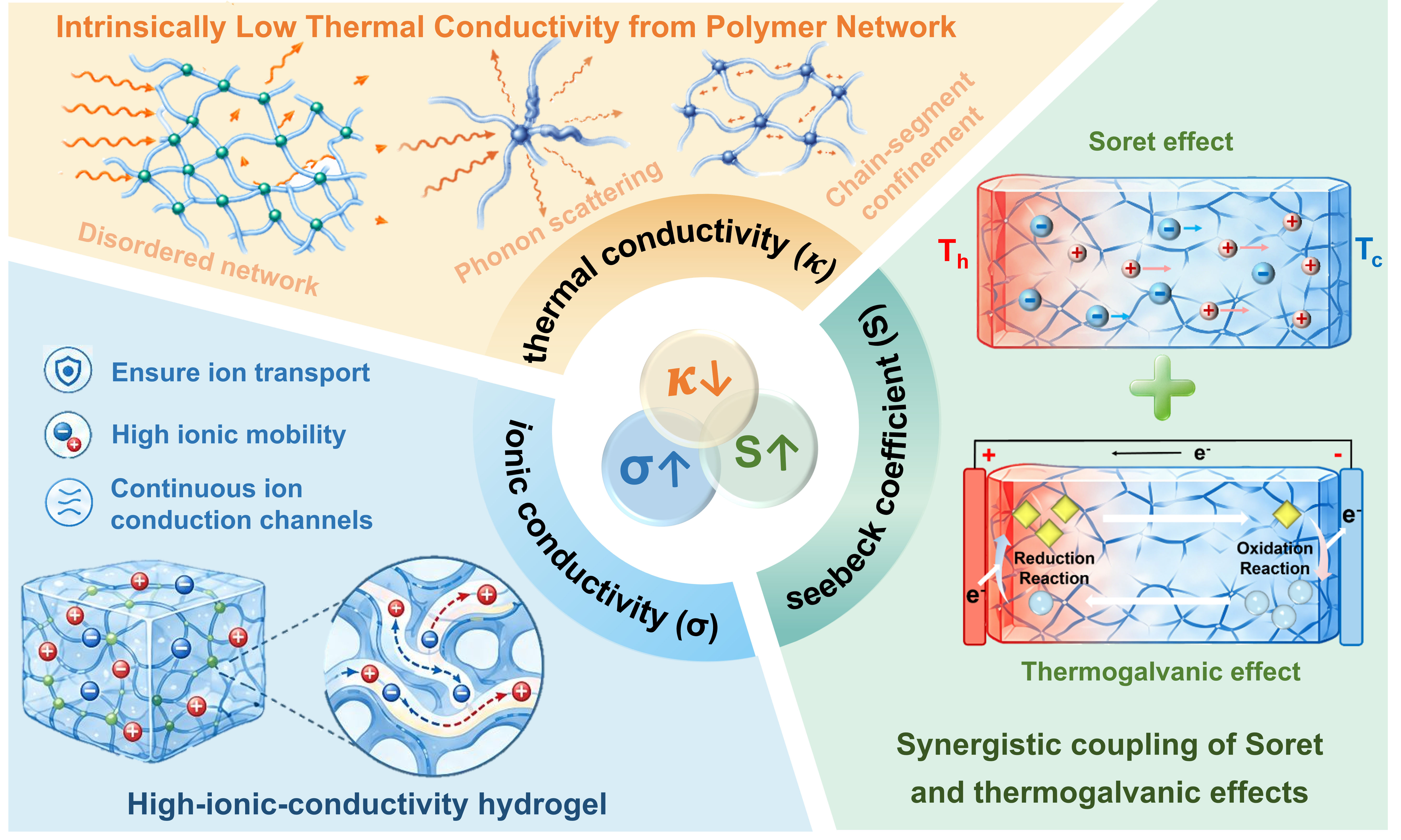
Figure 2. Multiparameter optimization pathways in ionic thermoelectric gels.
A direct comparison of representative ionic thermoelectric systems operating through thermodiffusion, thermogalvanic conversion, or their combination helps clarify why high thermovoltage alone does not necessarily correspond to high extractable energy. Table 1 summarizes these systems in terms of their operating mechanisms, transport characteristics, and output behavior. The reported values should not be interpreted as a simple performance ranking, because differences in temperature gradient, device geometry, normalization method, external load, and integration time can strongly affect the measured results.
Comparison of representative ionic thermoelectric systems based on thermodiffusion, thermogalvanic conversion, and coupled mechanisms
| System | Mechanism | S (mV K-1) | Transport information | Output feature | Ref. |
| Gelatin-KCl | Thermodiffusion/thermocapacitive | ≈ 5 | NR | Transient output | [10] |
| Gelatin-Fe (CN)64-/3- | Thermogalvanic | ≈ 1-1.4 | NR | Improved stability | [10] |
| Gelatin-KCl-Fe(CN)64-/3- | Coupled Soret-thermogalvanic | ≈ 17 | NR | Enhanced output retention | [10] |
| PVA-CuCl2 | Speciation-mediated coupling | -30.6 | NR | Improved module output | [12] |
| Fe2+/Fe3+ hydrogel | n-type coupling | -26.6 | NR | Sustained energy output | [13] |
| PAM-CMC-Li2SO4-Fe(CN)64-/3- | Coupled mechanism | 11.58 | Σ = 18.4 mS cm-1; κ = 0.47 W m-1 K-1 | Sustained power generation | [16] |
| Polycationic hydrogel + redox electrode | Thermodiffusion/interface redox | -26.04 | NR | Sustained n-type output | [17] |
| Gelatin/GTA-KCl- Fe(CN)64-/3- | Coupled extended-range system | 24.7 | NR | High-output demonstration | [18] |
The examples summarized in Table 1 illustrate how electrolyte composition and polymer-network architecture can be jointly used to regulate thermoelectric performance. Zhou et al. developed a polyacrylamide-carboxymethyl cellulose (PAM-CMC) dual-network quasi-solid gel containing Li2SO4-derived ions and the [Fe(CN)6]4-/3- redox couple[16]. In this system, the polymer network influences ion migration and thermal transport, while the electrolyte components contribute to thermovoltage generation. This combination enables the simultaneous regulation of thermopower, ionic transport, and thermal transport, illustrating the importance of coordinating S, σ, and κ rather than optimizing them independently. Related strategies have also been extended to n-type systems, where polycationic networks, ion-selective interactions, and redox-active electrodes provide additional means of regulating thermodiffusion and interfacial charge transfer[17].
Further progress requires moving beyond isolated improvements in S, σ, or κ toward a clearer understanding of how these parameters jointly influence device-level performance. Future studies should therefore report thermoelectric parameters together with relevant transport, resistance, and load-dependent output characteristics under clearly defined testing conditions. Such measurements can help identify whether performance is limited by ionic transport, redox-species diffusion, heat leakage, or interfacial charge transfer. ZT and the ionic power factor (S2σ) remain useful descriptors of material performance, but they do not fully capture practical operation, which also depends on mechanical compliance, environmental stability, device integration, and long-term reliability[19,20]. The goal should therefore be to identify a workable balance among thermovoltage generation, ionic transport, thermal-gradient preservation, and interfacial charge conversion rather than to maximize any single metric.
From laboratory performance to real-world operation: operational reliability of ionic thermoelectric gels
Even when the thermoelectric performance of ionic thermoelectric gels is optimized, practical operation still depends on whether the gel can maintain its composition, network integrity, and interfacial contact over time. As iTE gels move from laboratory demonstrations toward practical devices, the focus therefore shifts from maximizing thermoelectric performance to maintaining stable voltage and power under realistic service conditions[21]. Temperature fluctuations, dehydration, freezing, and interfacial delamination can affect ion solvation, ionic and thermal transport, redox kinetics, and electrode-gel contact, underscoring the multidimensional nature of reliability in practical iTE devices, as illustrated in Figure 3A. In systems involving both thermodiffusive and thermogalvanic contributions, such changes may also alter their relative magnitudes and characteristic timescales, leading to partial cancellation or transport-limited output. For practical iTE devices, reliability should therefore be defined by the retention of electrical output under environmental and mechanical stresses, not simply by the preservation of the gel structure.

Figure 3. Environmental reliability strategies for ionic thermoelectric gels. (A) Key reliability considerations for practical operation, including wide-temperature stability, encapsulation reliability, moisture retention and antifreezing, and interfacial adhesion; (B) Wide-temperature thermogalvanic ionogel integrated with a radiative cooling layer (RCL) and a black encapsulation layer (BEL) for passive temperature-gradient generation and all-weather power generation (reproduced with permission from Ref.[23]. Copyright 2024 Wiley-VCH GmbH); (C) Ternary nanocellulose hydrogel thermocell containing Fe(CN)63-/4-, GdmCl, and LiCl with enhanced moisture retention, freeze tolerance, and mechanical robustness through electrolyte regulation (reproduced with permission from Ref.[24]. Copyright 2025 Wiley-VCH GmbH); (D) Gelatin/glycerol thermogalvanic hydrogel with temperature-responsive adhesion (reproduced with permission from Ref.[25]. Copyright 2024 The Royal Society of Chemistry).
Recent studies have addressed operational reliability through temperature adaptability, water retention, and interfacial stability[22]. Yang et al. developed a chaotropic-effect-enhanced thermogalvanic ionogel, illustrated in Figure 3B, that operated over a temperature range from -40 to 90 °C and was further integrated with passive radiative cooling for continuous energy generation under varying environmental conditions[23]. This combination shows that wide-temperature operation depends not only on the intrinsic stability of the gel but also on thermal management at the device level. For hydrogel-based systems, water retention and phase stability are equally important. Gui et al. developed a ternary nanocellulose hydrogel electrolyte incorporating Fe(CN)63-/4-, GdmCl, and LiCl, as shown in Figure 3C, which simultaneously enhanced anti-drying, anti-freezing, and mechanical robustness through electrolyte regulation[24]. Interfacial stability provides another important requirement for maintaining heat transfer and electrical signal collection. Zhang et al. developed a gelatin/glycerol thermogalvanic hydrogel with temperature-responsive adhesion, shown in Figure 3D, enabling reversible attachment while preserving thermoelectric signal collection[25]. Encapsulation provides an additional means of limiting dehydration, contamination, and mechanical damage during prolonged operation[26]. Its design, however, must account for the additional thermal resistance introduced by the encapsulation layer, because excessive thickness or poor thermal matching can reduce the effective temperature difference across the active gel.
Wide-temperature adaptability, water retention, freeze tolerance, adhesion, and encapsulation should be considered together because changes introduced to improve one property can also affect thermoelectric performance. For example, hygroscopic salts and organic cosolvents may improve moisture retention and freeze resistance while also altering ionic thermodiffusion, redox-species activity, conductivity, and mechanical properties. Increasing crosslink density can enhance structural stability but restrict ion migration, whereas stronger adhesion may improve interfacial contact while affecting reversible device integration. These trade-offs highlight the need to balance environmental adaptability with sustained electrical output. Future studies should therefore relate material composition, network architecture, and interfacial characteristics to load-dependent output retention under realistic operating conditions. Standardized tests involving thermal cycling, humidity exposure, freeze-thaw treatment, and mechanical deformation, together with measurements of voltage retention, power output, and resistance evolution, would help identify the dominant degradation processes and improve the comparability of reliability assessments. For systems involving both thermodiffusive and thermogalvanic contributions, environmental changes are particularly important because dehydration, freezing, and encapsulation can alter ion activity, redox speciation, interfacial charge transfer, and the effective temperature gradient across the gel, thereby changing the relative contributions of the two thermoelectric processes.
CONCLUSIONS AND PERSPECTIVES
A central challenge for the future development of ionic thermoelectric gels is to move beyond isolated performance records toward more reliable criteria for practical energy conversion. For systems involving both thermodiffusive and thermogalvanic contributions, constructive coupling should be identified through controlled comparisons under load rather than from a high open-circuit thermovoltage alone. Improvements in voltage retention, power output, and energy delivery should therefore be examined together with the relative polarity, transport behavior, and interfacial kinetics of the two contributions. Such comparisons would help distinguish beneficial interactions from apparent enhancement arising from independent or compensating effects.
Progress will also depend on evaluation methods that connect material properties with device-level output. Standardized reporting of thermoelectric parameters, transport characteristics, resistance, loading conditions, and output retention would improve comparison among different iTE systems and help identify the dominant performance limitations. Multiphysics modeling can provide a useful framework for linking thermodiffusion, redox-species transport, heat transfer, and interfacial charge transfer. As experimental datasets become more consistent, data-driven approaches may further assist materials screening and parameter optimization, particularly when constrained by established transport and electrochemical principles.
Ultimately, practical iTE devices require more than the optimization of thermovoltage or individual material parameters. Conversion mechanisms, ionic and thermal transport, electrode interfaces, mechanical stability, environmental tolerance, thermal management, and encapsulation must be considered together at the device level. Future work should therefore place greater emphasis on sustained electrical output under realistic operating conditions, together with scalable fabrication and long-term reliability. These advances will be important for translating ionic thermoelectric gels from laboratory demonstrations to practical platforms for low-grade heat harvesting, self-powered sensing, and wearable energy technologies.
DECLARATIONS
Authors’ contributions
Wrote the draft: Zhao, Y.; Yang, X.; Niu, Y.; Yao, Y.
Supervised, reviewed and edited the manuscript: Zhang, H.
Contributed equally to the preparation of this manuscript: Zhao, Y.; Yang, X.; Niu, Y.; Yao, Y.
All authors discussed the review and agreed upon the final version of the manuscript.
Availability of data and materials
Not applicable.
AI and AI-assisted tools statement
During the preparation of this manuscript, the AI tool GPT-5.6 Sol (OpenAI, version 5.6, released 2026-07-09) was used only for the initial visualization of a limited number of non-scientific and non-data-bearing background and decorative elements in the Graphical Abstract, Figure 2, and Figure 3A. These AI-assisted elements were subsequently manually edited and integrated by the authors. The tool did not influence the study design, data collection, analysis, interpretation, or the scientific content of the work. All authors take full responsibility for the accuracy, integrity, and final content of the manuscript.
Financial support and sponsorship
This work is supported by the National Natural Science Foundation of China (52475600, U25A20417) and Special Project of Science and Technology Cooperation and Exchange of Shanxi Province (202304041101021).
Conflicts of interest
All authors declared that there are no conflicts of interest.
Ethical approval and consent to participate
Not applicable.
Consent for publication
Not applicable.
Copyright
© The Author(s) 2026.
REFERENCES
1. Zhao, D.; Würger, A.; Crispin, X. Ionic thermoelectric materials and devices. J. Energy. Chem. 2021, 61, 88-103.
2. Yu, M.; Li, H.; Li, Y.; et al. Ionic thermoelectric gels and devices: progress, opportunities, and challenges. EnergyChem 2024, 6, 100123.
3. Jia, S.; Qian, W.; Yu, P.; et al. Ionic thermoelectric materials: innovations and challenges. Mater. Today. Phys. 2024, 42, 101375.
4. Sehnem, A. L.; Janssen, M. On the time-dependent electrolyte Seebeck effect. J. Chem. Phys. 2021, 154, 164511.
5. Ding, Z.; Du, C.; Long, W.; et al. Thermoelectrics and thermocells for fire warning applications. Sci. Bull. (Beijing). 2023, 68, 3261-77.
6. Zhang, W.; Qiu, L.; Lian, Y.; et al. Gigantic and continuous output power in ionic thermo-electrochemical cells by using electrodes with redox couples. Adv. Sci. (Weinh). 2023, 10, e2303407.
7. Qian, X.; Ma, Z.; Huang, Q.; Jiang, H.; Yang, R. Thermodynamics of ionic thermoelectrics for low-grade heat harvesting. ACS. Energy. Lett. 2024, 9, 679-706.
8. Würger, A. Thermopower of ionic conductors and ionic capacitors. Phys. Rev. Research. 2020, 2, 042030.
9. Liu, S.; Yang, Y.; Huang, H.; et al. Giant and bidirectionally tunable thermopower in nonaqueous ionogels enabled by selective ion doping. Sci. Adv. 2022, 8, eabj3019.
10. Han, C. G.; Qian, X.; Li, Q.; et al. Giant thermopower of ionic gelatin near room temperature. Science 2020, 368, 1091-8.
11. Jiang, K.; Jia, J.; Chen, Y.; et al. An ionic thermoelectric generator with a giant output power density and high energy density enabled by synergy of thermodiffusion effect and redox reaction on electrodes. Adv. Energy. Mater. 2023, 13, 2204357.
12. Li, Y.; Qiu, Y. R.; Liao, J.; et al. Modulating thermo-diffusion/galvanic coupling via ion speciation engineering enables high-performance ionic thermoelectric cells. Nat. Commun. 2026, 17, 2209.
13. Tai, W.; Jia, J.; Zhang, W.; Dai, Y.; Wang, Q.; Zeng, W. A n-type ionic thermoelectric generator with high thermopower and energy density enabled by modulation of thermodiffusion and thermogalvanic effect. Chem. Eng. J. 2025, 509, 161288.
14. Qian, X.; Liu, T.; Yang, R. Confinement effect on thermopower of electrolytes. Mater. Today. Phys. 2022, 23, 100627.
15. Hu, J.; Wei, J.; Li, J.; Bai, L.; Liu, Y.; Li, Z. Double selective ionic gel with excellent thermopower and ultra-high energy density for low-quality thermal energy harvesting. Energy. Environ. Sci. 2024, 17, 1664-76.
16. Zhou, Z.; Wan, Y.; Zi, J.; et al. Flexible hydrogel with a coupling enhanced thermoelectric effect for low-grade heat harvest. Mater. Today. Sustainability. 2023, 21, 100293.
17. Li, X.; Jia, J.; Dai, Y.; et al. Advanced n-type ionic thermoelectric cells featuring bidirectional cationic anchoring strategy and REDOX electrode. Adv. Energy. Mater. 2025, 15, 2500584.
18. Li, Y.; Li, Q.; Zhang, X.; et al. Realizing record-high output power in flexible gelatin/GTA-KCl-FeCN4-/3- ionic thermoelectric cells enabled by extending the working temperature range. Energy. Environ. Sci. 2022, 15, 5379-90.
19. Eldib, S. A. S.; Abdelaziz, M. I. M.; Shaheen, B. S.; Allam, N. K. Ionogels for thermoelectric energy conversion: a critical review of materials design strategies and application prospects. Energy. Fuels. 2025, 39, 21125-42.
20. Chi, C.; Zhang, X.; Shen, C.; et al. Bioinspired double-layer thermogalvanic cells with engineered ionic gradients for high-efficiency waste heat recovery. Nano. Energy. 2025, 142, 111189.
21. Chen, J.; Shi, C.; Wu, L.; et al. Environmentally tolerant ionic hydrogel with high power density for low-grade heat harvesting. ACS. Appl. Mater. Interfaces. 2022, 14, 34714-21.
22. Zhang, C.; Shi, X.; Liu, Q.; Chen, Z. Hydrogel-based functional materials for thermoelectric applications: progress and perspectives. Adv. Funct. Mater. 2024, 34, 2410127.
23. Yang, M.; Hu, Y.; Wang, X.; et al. Chaotropic effect-boosted thermogalvanic ionogel thermocells for all-weather power generation. Adv. Mater. 2024, 36, e2312249.
24. Gui, J. X.; Cheng, Y.; Ren, K.; et al. Development of ternary hydrogel electrolytes for superior gel thermocells: exceptional anti-drying, anti-freezing, and mechanical robustness. Adv. Mater. 2025, 37, e2420214.
25. Zhang, X.; Li, N.; Cui, X.; et al. Edible temperature-responsive-adhesive thermogalvanic hydrogel for self-powered multi-sited fatigue monitoring. J. Mater. Chem. C. 2024, 12, 12064-74.
Cite This Article
 Open Access
How to Cite
Zhao, Y.; Yang, X.; Niu, Y.; Yao, Y.; Zhang, H. Beyond high thermovoltage: toward sustained and reliable energy conversion in ionic thermoelectric gels. Iontronics 2026, 2, 32. https://dx.doi.org/10.20517/iontronics.2026.31
Download Citation
Export Citation File:
Type of Import
Tips on Downloading Citation
Citation Manager File Format
Type of Import
Direct Import: When the Direct Import option is selected (the default state), a dialogue box will give you the option to Save or Open the downloaded citation data. Choosing Open will either launch your citation manager or give you a choice of applications with which to use the metadata. The Save option saves the file locally for later use.
Indirect Import: When the Indirect Import option is selected, the metadata is displayed and may be copied and pasted as needed.
About This Article
Copyright

Data & Comments
Data
0




Comments
Comments must be written in English. Spam, offensive content, impersonation, and private information will not be permitted. If any comment is reported and identified as inappropriate content by OAE staff, the comment will be removed without notice. If you have any queries or need any help, please contact us at support@oaepublish.com.