

Computational Nutrition 2.0: an algorithmic frontier for AI agents
 0
0 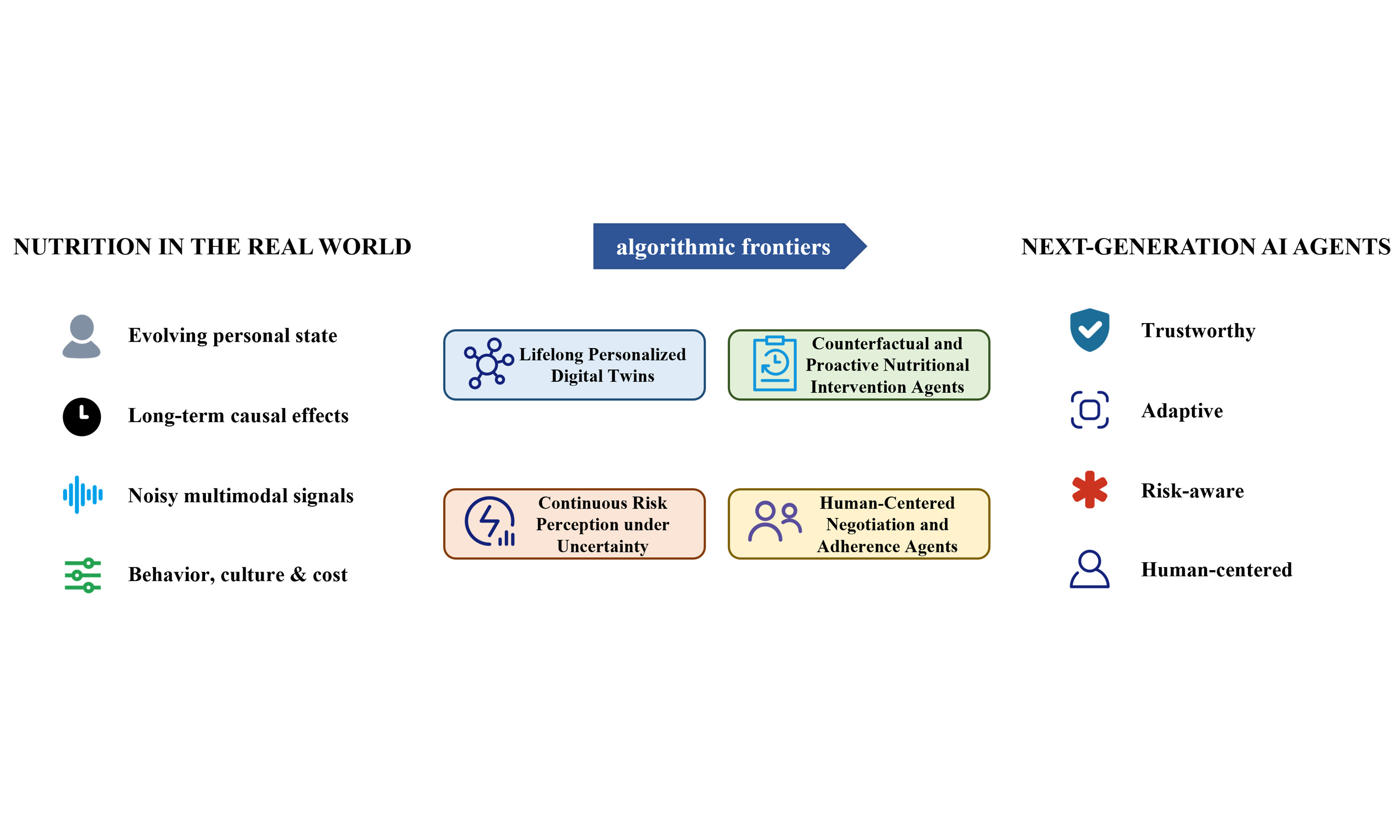
INTRODUCTION
Artificial intelligence (AI) agents perceive, maintain memory, plan, use tools, act, and learn through environmental interaction[1-3]. Recent progress has extended this paradigm beyond single-turn language generation toward systems that combine reasoning-action loops, structured tool use, persistent memory, and iterative reflection[4,5]. However, evaluations of long-horizon tasks continue to identify limitations in reliable execution, memory updating, and the reuse of prior experience across changing task contexts[6-8]. In healthcare and life sciences, this shift affects decision support, personalized intervention, and research workflows[9-12]. Computational nutrition is a suitable testbed because it combines multimodal data, metabolic prediction, intervention-effect estimation, risk monitoring, and feasible dietary decisions.
This Perspective argues that computational nutrition is both an application domain and an algorithmic frontier for designing, evaluating, and building trust in AI agents. Because nutrition decisions recur daily, reflect culture and cost, generate heterogeneous physiological responses, and accumulate over time, they require agents that integrate prediction, causality, uncertainty, constrained optimization, and human feedback.
Current systems often treat nutrition as prediction followed by advice, representing dietary exposures, metabolic responses, or risks but remaining static. Computational Nutrition 2.0 shifts from models that represent the world to agents that update, plan, and act within changing personal and environmental contexts[13,14]. Such agents should sense change, update memory, negotiate feasible options, and remain accountable as physiology, medication, behavior, or environment changes.
KEY CHALLENGES FOR AI-AGENT DESIGN IN COMPUTATIONAL NUTRITION
Nutrition is often simplified as recommendation, but its inputs can reshape the decision problem itself. Because metabolic responses vary, personalization cannot stop at adding age, body mass index (BMI), or microbiome features to a shared predictor[15]. Food images, dietary logs, continuous glucose monitoring (CGM), wearables, omics, clinical variables, and context provide partial and drifting views of an individual. Dietary interventions have causal and long-term effects shaped by timing, medication, sleep, microbiome state, physical activity, and socioeconomic context[16,17]. Agents must therefore adapt objectives, constraints, and safety rules, rather than merely update model parameters.
For AI research, these features reveal concrete failure modes: misclassified meals, mismatched constraints, overstated causal evidence, ignored uncertainty, infeasible plans, and subgroup harms hidden by average gains. They make the gap between static prediction and situated action visible. Table 1 summarizes this task-to-capability mapping.
Mapping representative computational nutrition studies to the Computational Nutrition 2.0 agentic framework
| Nutrition task | Representative literature | Algorithmic challenge | Limitations of conventional models or systems | Required nutrition-agent capabilities | Evaluation signal |
| Metabolic-response prediction and meal planning | [15,18,19] | Heterogeneity, personal constraints, calibration | Many systems remain static predictors or fixed-constraint planners | Personalized prediction, constraint-aware planning, uncertainty estimation, meal simulation, feedback adaptation | Individual calibration, postprandial prediction error, meal feasibility, longitudinal diet quality |
| Digital twins | [20-22] | Behavioral drift, multimodal state representation, updating, partial observability, contextual uncertainty | Digital twins may remain dashboards if they do not update with outcomes, maintain memory, detect drift, or support safe action | Adaptive twins, individual memory, online learning, drift detection, multimodal updating, safe adaptation | Temporal robustness, drift detection, calibration under change, state-update quality |
| Dietary intervention and causal effects | [16,17,23-31] | Counterfactual trajectories, heterogeneous effects, intervention timing, auditable assumptions, validation | Methods often support post hoc estimation or simulation, but rarely real-time individualized planning. Unvalidated simulations have limited actionability | Causal planning, explicit assumptions, counterfactual simulation, individualized effect estimation, evidence provenance, warning, abstention, escalation | Agreement with trials or real-world evidence, counterfactual validation, sensitivity analysis, intervention timing |
| Continuous disease-risk monitoring | [32-38] | Noisy sensing, partial observability, sensor failure, shifting baselines, privacy, false alerts | Many models remain single-time-point or clinic-centered. Monitoring systems often lack uncertainty judgment, action thresholds, and escalation logic | Multimodal perception, anomaly detection, baseline modeling, privacy preservation, uncertainty-aware assessment, alert withholding, escalation | Early detection, false-positive and false-negative rates, lead time, robustness, privacy, trust, explainability |
| Adherence, conversation, and plan revision | [39-44] | Trust, responsibility allocation, cultural acceptability, feasibility, escalation | Adherence treated as external, plans may be infeasible in daily life | Memory, preference elicitation, constraint identification, explainable trade-offs, negotiated revision | Adherence, usability, trust, acceptance, sustained improvement, safety events, inappropriate recommendations |
| Diet optimization under constraints | [45-51] | Adequacy, cost, sustainability, acceptability, equity, feasible sets | Fixed constraints and preferences, limited culture, budget, availability, equity | Multi-objective planning, hard or soft constraints, trade-off negotiation, feedback revision | Adequacy, cost, environmental impact, acceptability, feasibility, adherence, equity, safety |
FRONTIERS FOR AGENTIC COMPUTATIONAL NUTRITION
Figure 1A summarizes the closed-loop of agentic computational nutrition. An agent perceives multimodal nutrition data, remembers personal memory and constraints, models uncertainty and drift, simulates counterfactual meals and intervention trajectories, plans across objectives, and acts by recommending, warning, adapting, negotiating, abstaining, or escalating. Moving beyond passive text generation, agents in sandboxed electronic health record environments have collected histories, ordered and interpreted tests, formulated diagnoses, converted clinical intent into structured actions, and supported longitudinal, guideline-grounded management across visits[10,11]. Although tested in simulated clinical rather than nutrition settings, these systems suggest key design targets: reliable tool use, longitudinal adaptation, guideline grounding, action safety, human oversight, and appropriate abstention or escalation. Feedback and outcomes update memory, models, constraints, and future actions. Augmented reality could provide a low-burden interface linking visual recognition, portion or weight estimation, nutrient-composition retrieval, and immediate feedback[52].
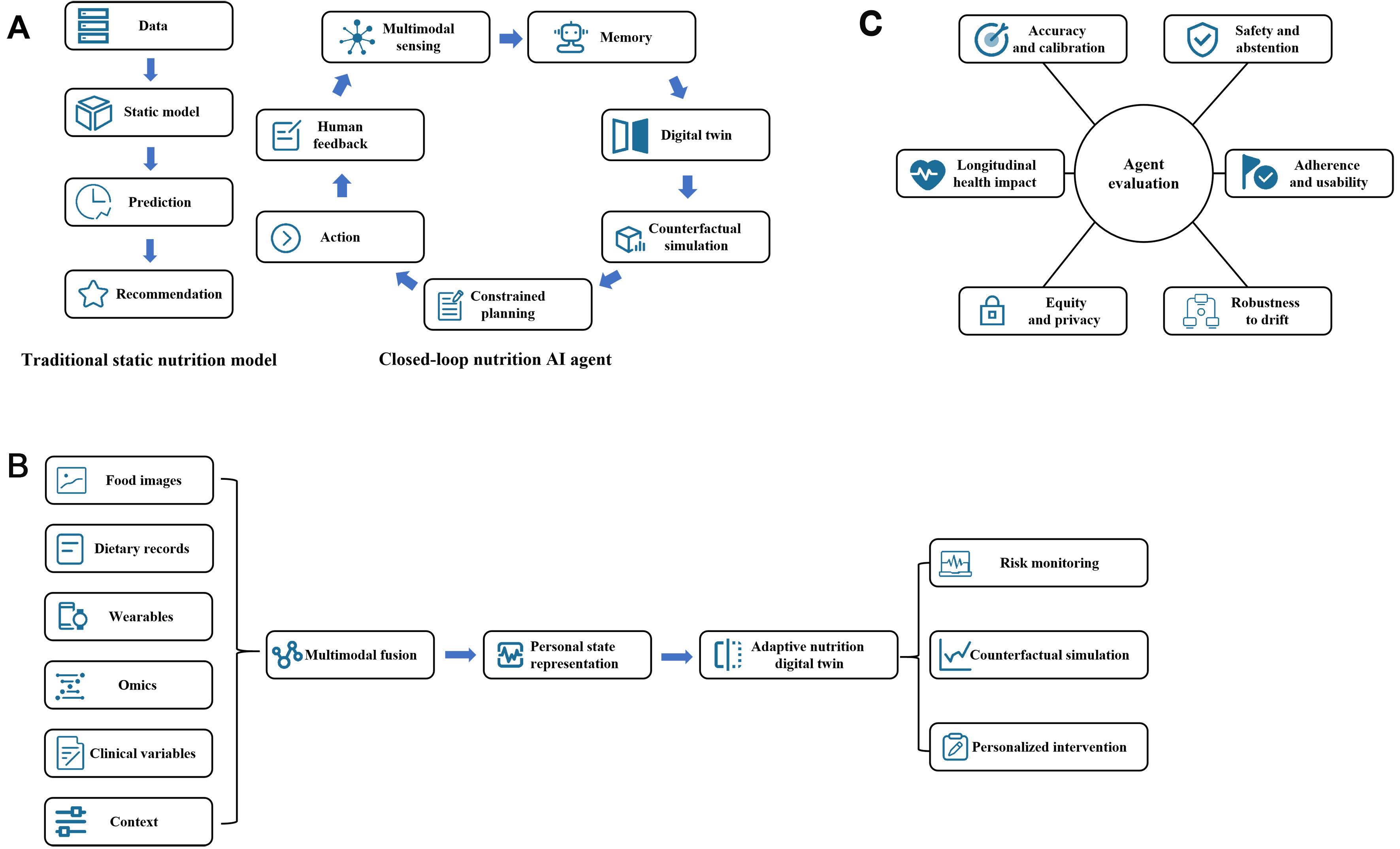
Figure 1. Computational Nutrition 2.0: (A) comparison between traditional static nutrition models and closed-loop nutrition AI agents; (B) multimodal data fusion for adaptive nutrition digital twins; and (C) conceptual evaluation dimensions for nutrition AI agents.
Lifelong personalized digital twins
Personalized metabolic-response prediction is central to computational nutrition, and precision nutrition already aims to move from population averages toward individualized prevention and treatment[13,53-55]. Landmark studies show that individuals can respond differently to the same foods[15,18]. The algorithmic challenge extends beyond tuning a generic model with individual covariates. For people with diabetes, food allergy, medication use, or strong cultural preferences, feasible sets, risk thresholds, objective weights, and safety rules may all change.
As shown in Figure 1B, digital twins provide a framework for moving from reactive models to agentic systems[20,21]. In nutrition, an agentic digital twin would integrate dietary records, wearable data, CGM, clinical variables, omics profiles, and context, maintain personal memory, simulate responses to candidate meals, and update after observed outcomes[54]. GluFormer[22], trained on large-scale CGM data, improved glycemic and risk prediction and generated plausible individual glucose responses when dietary information was added. Complementarily, a generative multi-omics AI framework modeled aging, metabolic health, and intervention response, suggesting how omics-based representations could extend such twins beyond glucose[56]. Nutrition digital twins must support online learning, drift detection, uncertainty estimation, interpretable feedback, and safe adaptation under long-term biological and behavioral change.
Counterfactual and proactive nutritional intervention agents
Nutrition science asks which dietary intervention works for whom, under what conditions, and for how long. Observational dietary data are confounded, causal assumptions must be explicit and auditable[23-25], and long-term randomized trials cannot exhaust all individualized strategies[26,57]. For agents, the challenge is not only to explain causal relationships after a problem occurs, but also to connect causal reasoning with proactive intervention.
An effective nutrition AI agent should detect emerging risk states, simulate counterfactual trajectories, and act before risk materializes. Before a meal predicted to trigger a severe glucose spike, it should combine real-time context, personal history, uncertainty estimates, and causal evidence to warn, negotiate alternatives, or escalate. This requires explicit causal assumptions, data provenance[27,28], counterfactual simulation, and individualized treatment-effect estimation[29]. A study showed that personalized models using CGM, meal logs, and medication data predicted next-in-time postprandial glucose excursions, with relevant predictors differing across individuals with type 2 diabetes[19]. Thus, proactive intervention cannot rely on population-level rules. At the same time, simulations must meet a higher evidentiary standard before they are used to guide action. Methodological work on in silico clinical trials emphasizes that simulation alone is insufficient as a decision-support tool[30]. Wang et al. further note that simulated interventions require explicit virtual populations, response models, intervention assumptions, outcome measures, external validation, sensitivity analysis, and transparent reporting[31]. In nutrition, such simulations should be tested against real-world dietary responses and intervention evidence, rather than judged only by internal prediction metrics.
Continuous risk perception under uncertainty
Diet-related diseases evolve gradually, yet risk assessment is often periodic, questionnaire-based, or clinic-centered. Machine-learning models can improve risk prediction[32,33], but predicting risk at a single time point differs from perceiving a changing health state.
Nutrition AI agents for diet-related disease risk monitoring must operate under partial observability: sensors can fail, dietary inputs can be inaccurate, personal baselines can shift, and early warning signals can be subtle. Digital biomarkers and wearables are relevant because they can make monitoring less burdensome and more continuous[34-37]. Ambient sensing can add contextual information from homes and care settings[38], and conversational agents can help sustain engagement in disease self-management[39]. These technologies are useful only if the agent interprets incomplete data streams cautiously. The challenge is to produce calibrated, explainable, privacy-aware, and uncertainty-aware risk signals while determining when to alert, withhold advice, request human review, or escalate.
Human-centered negotiation and adherence agents
Nutrition AI agents should tailor plans to users’ tastes, cultures, costs, cooking abilities, motivation, and clinical constraints. Conversational and adaptive interventions show why interaction matters. Gong et al.[39] found that a 12-month conversational diabetes app improved quality of life and self-care experience, indicating sustained engagement. Schneider et al. showed that acceptance of AI-based clinical decision support depends on transparent communication, responsibility allocation, and self-determination[40]. Hietbrink et al. found adaptive messages potentially motivating and acceptable, but preferences varied in timing, intensity, relevance, and personalization[41]. Thus, adherence should enter decision models because recommendations intersect with routines, culture, household constraints, and identity.
Agents should elicit constraints, explain trade-offs[42], offer alternatives, detect barriers, and revise infeasible plans via feedback. Agents must choose when to persuade, adapt, abstain, or escalate. Low-risk contexts permit conservative suggestions with disclosed uncertainty; in higher-risk contexts, such as kidney disease, pregnancy, food allergy, medication use, eating disorders or suspected adverse reactions, agents should abstain from autonomous advice, provide only general guidance, or escalate to qualified clinicians[43,44]. They must balance individual goals with affordability, sustainability, and equity[45-48]. Algorithmically, cultural or religious rules, allergies, contraindications, and local food availability can define hard constraints[49], taste, budget, and willingness to change are preference weights, and sustainability or equity can be represented as environmental penalties, fairness criteria, or subgroup-specific evaluation dimensions[50,51]. Nutrition therefore provides a concrete domain for studying AI agents that work with people rather than merely acting on them.
EVALUATION AGENDA FOR NUTRITION-DRIVEN AGENTS
The preceding examples suggest that nutrition-agent evaluation should extend beyond static prediction toward interactive, long-horizon, and constraint-aware action. Figure 1C summarizes this evaluation agenda. Future systems should maintain evolving personal state, reason under uncertainty, evaluate counterfactual interventions, negotiate human preferences and constraints, and update recommendations as contexts change. They should also clarify whether they are acting as predictors, planners, conversational partners, or safety-aware escalation systems, because each role requires different evidence and accountability.
For nutrition AI agents, static accuracy is insufficient because systems may recommend, warn, negotiate, abstain, or escalate in daily life. Evaluation should translate calibration, safety, usability, robustness, and fairness into measurable endpoints, including calibration error, false-positive and false-negative alert rates, adherence to recommended plans, subgroup-specific performance, safety violations, inappropriate escalations, and longitudinal changes in diet quality, glycemic control, weight trajectory, or other clinically relevant health outcomes. Studies should report refusal behavior, handling of missing or conflicting signals, constraint representation, feedback effects on future plans, and subgroup-specific benefits and harms. The Transparent Reporting frameworks such as Transparent Reporting of a multivariable prediction model for Individual Prognosis Or Diagnosis (TRIPOD)+AI[58] and TRIPOD-Large Language Model (LLM)[59], together with emerging guidance for evaluating healthcare AI agents[60], provide useful foundations for this broader agenda.
CONCLUSION
Nutrition is not only a domain in which AI agents may be applied, but it can also shape how agents are designed, evaluated, and trusted. Its value as an algorithmic frontier lies in repeated daily decisions, heterogeneous biology, noisy multimodal data, long-term causal effects, and deeply human feasibility constraints. If computational nutrition can support agents that adapt safely, personalize equitably, and act proactively without overriding human judgment, it will offer lessons for trustworthy AI agents well beyond nutrition.
DECLARATIONS
Authors’ contributions
Literature investigation: Xie, M.; Shen, C.; Zhu, R.
Original manuscript preparation: Xie, M.; Shen, C.
Validation: Xie, M.; Shen, C.
Manuscript review and editing: Xie, M.; Shen, C.
Conceptualization and design of the research topic: Xie, M.; Shen, C.; Zhu, R.; Lv, C.
All authors approved the final version of the manuscript for submission.
Availability of data and materials
Not applicable.
AI and AI-assisted tools statement
Not applicable.
Financial support and sponsorship
This work was supported by the Basic Operation Project of the Start-up Fund for Young Researchers of China Agricultural University (Project No.: 2024144), as well as the Visiting Scholar Program of the China Scholarship Council (CSC) (Project No.: 202506350123).
Conflicts of interest
All authors declared that there are no conflicts of interest.
Ethical approval and consent to participate
Not applicable.
Consent for publication
Not applicable.
Copyright
© The Author(s) 2026.
REFERENCES
1. Cheng, Y.; Zhang, C.; Zhang, Z.; et al. Exploring large language model-based intelligent agents: definitions, methods, and prospects. arXiv 2024, arXiv:2401.03428. Available online: https://doi.org/10.48550/arXiv.2401.03428 (accessed 11 August 2026).
2. Wang, L.; Ma, C.; Feng, X.; et al. A survey on large language model based autonomous agents. Front. Comput. Sci. 2024, 18, 186345.
4. Yao, S.; Zhao, J.; Yu, D.; et al. ReAct: Synergizing reasoning and acting in language models. In International Conference on Learning Representations. 2023. https://openreview.net/forum?id=WE_vluYUL-X. (accessed 2026-08-11).
5. Shinn, N.; Cassano, F.; Gopinath, A.; Narasimhan, K.; Yao, S. Reflexion: language agents with verbal reinforcement learning. In Advances in Neural Information Processing Systems. 2023, 36, 8634-52.
6. Wu, D.; Wang, H.; Yu, W.; Zhang, Y.; Chang, K. W.; Yu, D. LongMemEval: Benchmarking chat assistants on long-term interactive memory. In International Conference on Learning Representations. 2025. https://proceedings.iclr.cc/paper_files/paper/2025/file/d813d324dbf0598bbdc9c8e79740ed01-Paper-Conference.pdf. (accessed 2026-08-11).
7. Tan, H.; Zhang, Z.; Ma, C.; Chen, X.; Dai, Q.; Dong, Z. MemBench: towards more comprehensive evaluation on the memory of LLM-based agents. In Findings of the Association for Computational Linguistics: ACL 2025, Vienna, Austria, June, 2025; Association for Computational Linguistics: Stroudsburg, PA, USA, 2025; pp 19336-52.
8. Wang, Z. Z.; Mao, J.; Fried, D.; Neubig, G. Agent workflow memory. In Proceedings of the 42nd International Conference on Machine Learning. 2025, 267, 63897-911. https://proceedings.mlr.press/v267/wang25bx.html. (accessed 2026-08-11).
9. Liu, F.; Niu, Y.; Zhang, Q.; et al. A foundational architecture for AI agents in healthcare. Cell. Rep. Med. 2025, 6, 102374.
10. Ferber, D.; Hilgers, L.; Höper, C.; et al. Towards autonomous medical artificial intelligence agents. Nature 2026, 655, 1282-91.
11. Liévin, V.; Palepu, A.; Weng, W. H.; et al. Towards conversational artificial intelligence for disease management. Nature 2026, 655, 1292-9.
12. Gorenshtein, A.; Omar, M.; Glicksberg, B. S.; Nadkarni, G. N.; Klang, E. AI agents in clinical medicine: a systematic review. medRxiv. 2025, Epub ahead of print.
13. Massara, P.; Kirkland, J.; Pagani, I.; et al. Applying artificial intelligence and machine learning in precision nutrition. Nat. Commun. 2026, 17, 5880.
14. Karunanayake, N. Next-generation agentic AI for transforming healthcare. Informatics and Health. 2025, 2, 73-83.
15. Zeevi, D.; Korem, T.; Zmora, N.; et al. Personalized nutrition by prediction of glycemic responses. Cell 2015, 163, 1079-94.
16. Chiu, Y. H.; Wen, L. What are we estimating? Revisiting standard nutritional models through the Target Trial Framework. Am. J. Epidemiol. 2026, kwag053.
17. Zheng, G.; Chen, L.; Ran, S.; et al. A hypothetical intervention analysis for the effects of healthy dietary patterns on reducing major chronic diseases and mortality associated with air pollutant mixtures. BMC. Med. 2025, 23, 655.
18. Berry, S. E.; Valdes, A. M.; Drew, D. A.; et al. Human postprandial responses to food and potential for precision nutrition. Nat. Med. 2020, 26, 964-73.
19. Brügger, V.; Kowatsch, T.; Jovanova, M. Predicting postprandial glucose excursions to personalize dietary interventions for type-2 diabetes management. Sci. Rep. 2025, 15, 25920.
20. San, O.; Rasheed, A.; Bozdemir, E.; Deng, J. The evolution of digital twins from reactive to agentic systems. Nat. Comput. Sci. 2026, 6, 6-10.
21. Mosquera-Lopez, C.; Jacobs, P. G. Digital twins and artificial intelligence in metabolic disease research. Trends. Endocrinol. Metab. 2024, 35, 549-57.
22. Lutsker, G.; Sapir, G.; Shilo, S.; et al. A foundation model for continuous glucose monitoring data. Nature 2026, 650, 978-86.
23. Feuerriegel, S.; Frauen, D.; Melnychuk, V.; et al. Causal machine learning for predicting treatment outcomes. Nat. Med. 2024, 30, 958-68.
24. Prosperi, M.; Guo, Y.; Sperrin, M.; et al. Causal inference and counterfactual prediction in machine learning for actionable healthcare. Nat. Mach. Intell. 2020, 2, 369-75.
25. Tennant, P. W. G.; Murray, E. J.; Arnold, K. F.; et al. Use of directed acyclic graphs (DAGs) to identify confounders in applied health research: review and recommendations. Int. J. Epidemiol. 2021, 50, 620-32.
26. Nguyen, T.; Collins, G. S.; Landais, P.; Le Manach, Y. Counterfactual clinical prediction models could help to infer individualized treatment effects in randomized controlled trials - an illustration with the International Stroke Trial. J. Clin. Epidemiol. 2020, 125, 47-56.
27. Feeney, T.; Hartwig, F. P.; Davies, N. M. How to use directed acyclic graphs: guide for clinical researchers. BMJ 2025, 388, e078226.
28. Naumova, E. N. Causal AI for public health research and policy: a journey back to the future. J. Public. Health. Policy. 2025, 46, 1-7.
29. Wedlund, L.; Kvedar, J. Simulated trials: in silico approach adds depth and nuance to the RCT gold-standard. NPJ. Digit. Med. 2021, 4, 121.
30. Pathmanathan, P.; Aycock, K.; Badal, A.; et al. Credibility assessment of in silico clinical trials for medical devices. PLoS. Comput. Biol. 2024, 20, e1012289.
31. Wang, Z.; Gao, C.; Glass, L. M.; Sun, J. Artificial intelligence for in silico clinical trials: a review. arXiv 2022, arXiv:2209.09023. Available online: https://doi.org/10.48550/arXiv.2209.09023 (accessed 11 August 2026).
32. Mohsen, F.; Al-Absi, H. R. H.; Yousri, N. A.; El Hajj, N.; Shah, Z. A scoping review of artificial intelligence-based methods for diabetes risk prediction. NPJ. Digit. Med. 2023, 6, 197.
33. Rao, S.; Li, Y.; Mamouei, M.; et al. Refined selection of individuals for preventive cardiovascular disease treatment with a transformer-based risk model. Lancet. Digit. Health. 2025, 7, 100873.
34. Vasudevan, S.; Saha, A.; Tarver, M. E.; Patel, B. Digital biomarkers: convergence of digital health technologies and biomarkers. NPJ. Digit. Med. 2022, 5, 36.
35. Coravos, A.; Khozin, S.; Mandl, K. D. Developing and adopting safe and effective digital biomarkers to improve patient outcomes. NPJ. Digit. Med. 2019, 2, 14.
36. Lieberwirth, J. K.; Mittermaier, M.; Stern, A. D. Challenges and potential of using digital biomarkers in healthcare and clinical trials. Commun. Med. 2026, 6, 151.
37. Aboagye, N. Y.; Hinchliffe, C.; Del Din, S.; Ng, W. F.; Baker, K. F.; Baker, M. R. Systematic review: digital biomarkers of fatigue in chronic diseases. NPJ. Digit. Med. 2025, 8, 602.
38. Gardano, M.; Nocera, A.; Raimondi, M.; Senigagliesi, L.; Gambi, E. A narrative review on key values indicators of millimeter wave radars for ambient assisted living. Electronics 2025, 14, 2664.
39. Gong, E.; Baptista, S.; Russell, A.; et al. My diabetes coach, a mobile App-based interactive conversational agent to support type 2 diabetes self-management: randomized effectiveness-implementation trial. J. Med. Internet. Res. 2020, 22, e20322.
40. Schneider, D.; Liedtke, W.; Klausen, A. D.; et al. Indecision on the use of artificial intelligence in healthcare - a qualitative study of patient perspectives on trust, responsibility and self-determination using AI-CDSS. Digit. Health. 2025, 11, 20552076251339522.
41. Hietbrink, E. A. G.; Middelweerd, A.; d’Hollosy, W.; Schrijver, L. K.; Laverman, G. D.; Vollenbroek-Hutten, M. M. R. Exploring the acceptance of just-in-time adaptive lifestyle support for people with type 2 diabetes: qualitative acceptability study. JMIR. Form. Res. 2025, 9, e65026.
42. Magnini, M.; Ciatto, G.; Cantürk, F.; Aydoğan, R.; Omicini, A. Symbolic knowledge extraction for explainable nutritional recommenders. Comput. Methods. Programs. Biomed. 2023, 235, 107536.
43. Onay, T.; Bekar, D.; Çoban, E.; Doğan, N.; Günşen, U. Artificial intelligence in clinical nutrition: a descriptive comparison of ChatGPT‐ and dietitian‐planned diets for chronic disease scenarios. J. Hum. Nutr. Diet. 2025, 38, e70135.
44. Aydin Cil, M.; Karatas, N.; Mustafaoglu, O.; Sevinc, C. Comparison of AI-generated renal diets by different large language models: a guideline-based evaluation with expert input. BMC. Nephrol. 2026, 27, 133.
45. Willett, W.; Rockström, J.; Loken, B.; et al. Food in the Anthropocene: the EAT-Lancet Commission on healthy diets from sustainable food systems. Lancet 2019, 393, 447-92.
46. van Dooren, C. A review of the use of linear programming to optimize diets, nutritiously, economically and environmentally. Front. Nutr. 2018, 5, 48.
47. Gebara, C. H.; Berthet, E.; Vandenabeele, M. I. D.; Jolliet, O.; Laurent, A. Diets can be consistent with planetary limits and health targets at the individual level. Nat. Food. 2025, 6, 466-77.
48. Zhu, R.; Wang, L.; Chen, H.; et al. The health and environmental impacts, safety, and affordability of the eat-lancet planetary health diet: a multidisciplinary systematic review and meta-analysis. Adv. Nutr. 2026, 17, 100666.
49. Shiratori, S.; Abeysekara, M. D. Relevance of mathematical optimization as a tool for diet modeling in the development of food-based dietary recommendations in sub-saharan africa: a scoping review. Adv. Nutr. 2025, 16, 100480.
50. Bashiri, B.; Kaleda, A.; Vilu, R. Sustainable diets, from design to implementation by multi-objective optimization-based methods and policy instruments. Front. Sustain. Food. Syst. 2025, 9, 1629739.
51. Hu, Y.; Zhao, F.; Zhang, M.; et al. Multi-objective optimization of national dietary guidelines: balancing nutrition, environment, and economy. Front. Nutr. 2026, 13, 1758724.
52. Wang, B.; Zheng, Y.; Han, X.; et al. A systematic literature review on integrating AI-powered smart glasses into digital health management for proactive healthcare solutions. NPJ. Digit. Med. 2025, 8, 410.
53. Guasch-Ferré, M.; Wittenbecher, C.; Palmnäs, M.; et al. Precision nutrition for cardiometabolic diseases. Nat. Med. 2025, 31, 1444-53.
54. Wu, X.; Oniani, D.; Shao, Z.; et al. A scoping review of artificial intelligence for precision nutrition. Adv. Nutr. 2025, 16, 100398.
55. Mehta, S.; Huey, S. L.; Fahim, S. M.; et al. Advances in artificial intelligence and precision nutrition approaches to improve maternal and child health in low resource settings. Nat. Commun. 2025, 16, 7673.
56. Chen, J.; Ren, Y.; Zhou, Y.; et al. A generative AI framework unifies human multi-omics to model aging, metabolic health, and intervention response. Cell. Metab. 2026, 38, 1229-44.e6.
57. Liu, H.; Shi, K.; Li, A.; et al. An AI agent for automated causal inference in epidemiology. medRxiv. 2026, Epub ahead of print.
58. Collins, G. S.; Moons, K. G. M.; Dhiman, P.; et al. TRIPOD+AI statement: updated guidance for reporting clinical prediction models that use regression or machine learning methods. BMJ 2024, 385, e078378.
59. Gallifant, J.; Afshar, M.; Ameen, S.; et al. The TRIPOD-LLM reporting guideline for studies using large language models. Nat. Med. 2025, 31, 60-9.
Cite This Article
 Open Access
How to Cite
Download Citation
Export Citation File:
Type of Import
Tips on Downloading Citation
Citation Manager File Format
Type of Import
Direct Import: When the Direct Import option is selected (the default state), a dialogue box will give you the option to Save or Open the downloaded citation data. Choosing Open will either launch your citation manager or give you a choice of applications with which to use the metadata. The Save option saves the file locally for later use.
Indirect Import: When the Indirect Import option is selected, the metadata is displayed and may be copied and pasted as needed.
About This Article
Copyright

Data & Comments
Data
0




Comments
Comments must be written in English. Spam, offensive content, impersonation, and private information will not be permitted. If any comment is reported and identified as inappropriate content by OAE staff, the comment will be removed without notice. If you have any queries or need any help, please contact us at support@oaepublish.com.