

WEO-CEGS 2026: report of the WEO Capsule Endoscopy Global Summit
 0
0 Abstract
The WEO Capsule Endoscopy Global Summit (WEO-CEGS) 2026 was successfully held on March 21, 2026, in Chongqing, China. Jointly organized by the World Endoscopy Organization (WEO) and the Chinese Association of Gastroenterologists and Hepatologists (CAGH), the summit brought together leading experts, clinicians, and researchers in capsule endoscopy. Conducted in a hybrid format, the meeting attracted more than 1,000 participants from 72 countries, including over 500 onsite attendees and more than 500 online participants. The scientific program featured keynote lectures, abstract presentations, panel discussions, and poster sessions, fostering academic exchange and international collaboration. A total of 41 abstracts were submitted, with eight receiving awards in recognition of outstanding scientific contributions. In addition, 19 posters were presented, providing further opportunities for discussion and knowledge sharing. The summit served as an important global platform for advancing research, clinical practice, and technological innovation in capsule endoscopy. Key topics highlighted during the meeting included the integration of artificial intelligence into diagnostic workflows, the development of magnetic navigation technologies, the implementation of standardized quality measures, and the expansion of capsule endoscopy into large-scale, non-invasive screening programs. By bringing together a diverse international community, WEO-CEGS 2026 strengthened global cooperation and contributed to the continued advancement of capsule endoscopy worldwide.
Keywords
INTRODUCTION
Capsule endoscopy has become an important diagnostic modality in modern gastroenterology, enabling non-invasive visualization of the gastrointestinal tract and significantly improving the detection of small bowel and other gastrointestinal diseases. With rapid technological advancements, including artificial intelligence-assisted image analysis and expanded clinical applications, capsule endoscopy continues to evolve as a key tool in gastrointestinal diagnostics.
To promote international collaboration and facilitate knowledge exchange in this field, the WEO Capsule Endoscopy Global Summit (WEO-CEGS) (https://www.weo-cegs.com/) was established as a specialized academic forum focusing on capsule endoscopy research and clinical practice.
The WEO-CEGS 2026 summit, held in Chongqing, China, provided a global platform for experts, clinicians, and researchers to share recent scientific findings, discuss emerging technologies, and explore future directions in capsule endoscopy.
CONFERENCE OVERVIEW
The WEO-CEGS 2026 conference took place on March 21, 2026, in Chongqing, China. The meeting was organized by the World Endoscopy Organization (WEO) and the Chinese Association of Gastroenterologists and Hepatologists (CAGH), with support from Chongqing Jinshan Science & Technology (Group) Co., Ltd.
The conference adopted a hybrid format, allowing participants to attend either onsite or online. This approach significantly expanded global accessibility and enabled participation from experts and clinicians worldwide.
The summit attracted strong international engagement, with:
• Over 500 onsite participants
• More than 500 online participants
• Participants from 72 countries
• 41 abstract submissions
• 19 international faculty members
• 19 poster presentations
These figures reflect the growing global interest in capsule endoscopy research and clinical innovation. Specifically, Figures 1-3 show the continental distribution of attendees, the participant breakdown, and the thematic focus of the 41 submitted abstracts, respectively, based on data extracted from the WEO-CEGS 2026 official registration and submission system.
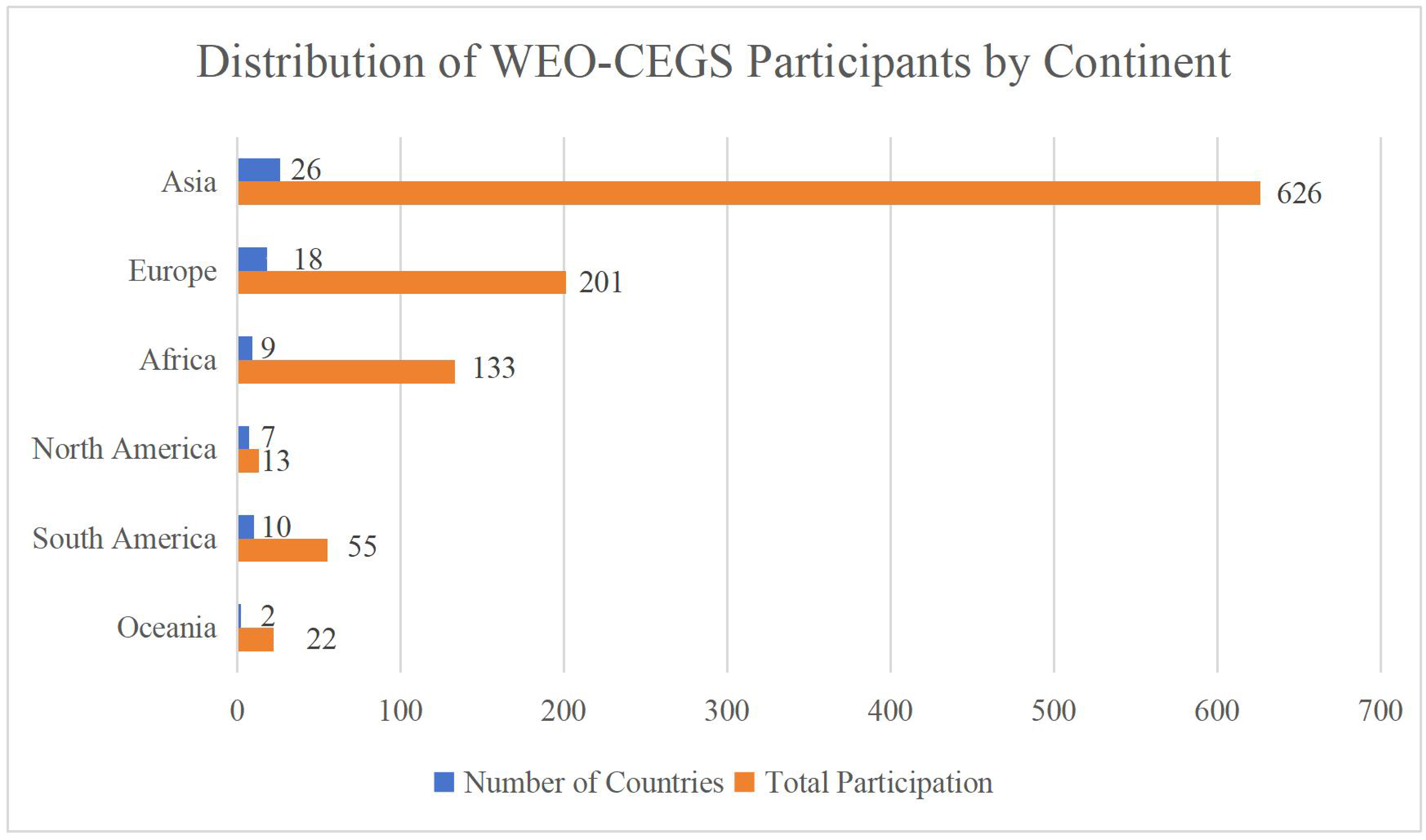
Figure 1. Distribution of WEO-CEGS 2026 participants by continents. Data source: official backend of WEO-CEGS 2026. WEO-CEGS: World Endoscopy Organization Capsule Endoscopy Global Summit.
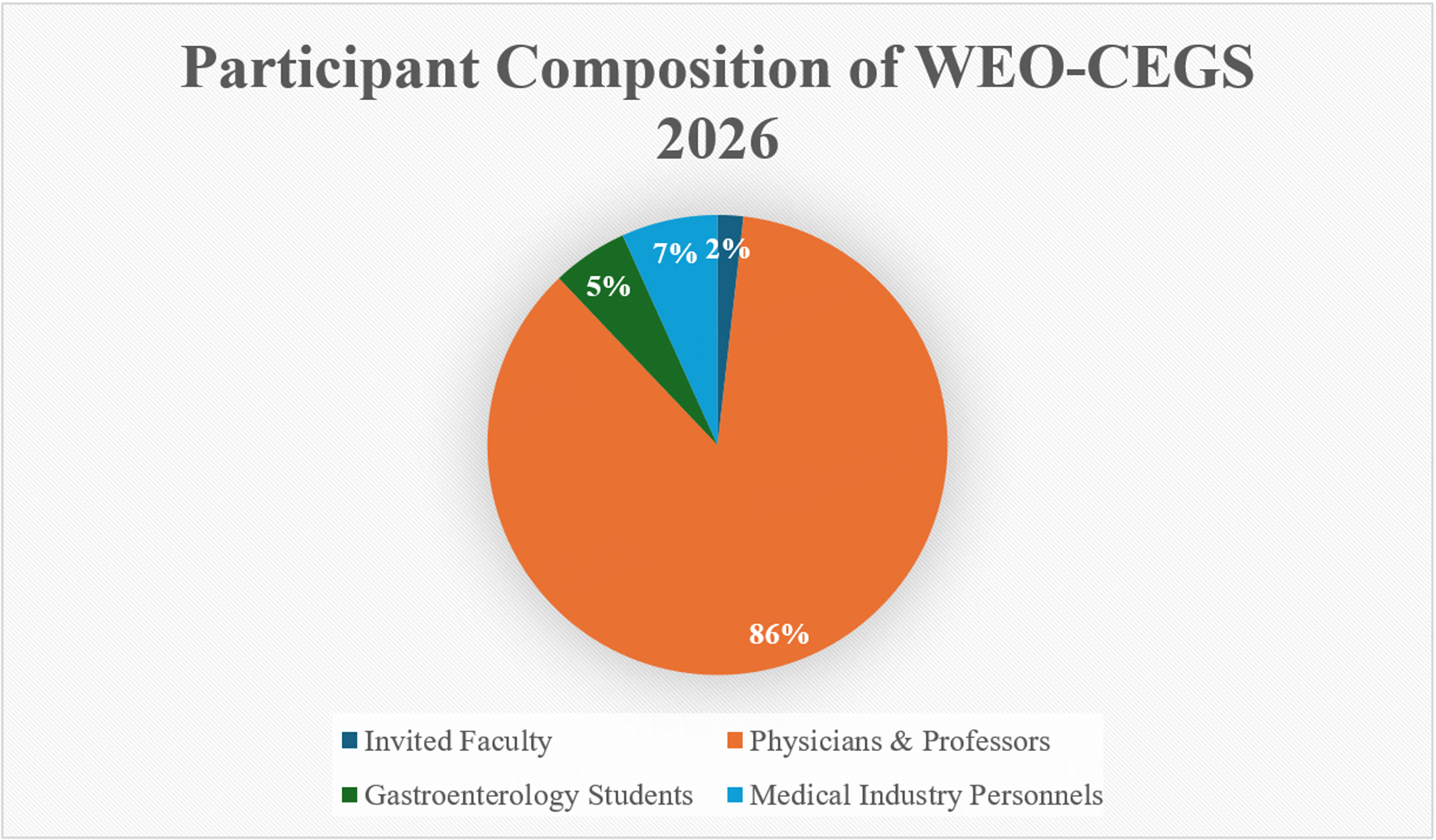
Figure 2. Participant composition of WEO-CEGS 2026. Data source: same as Figure 1. WEO-CEGS: World Endoscopy Organization Capsule Endoscopy Global Summit.
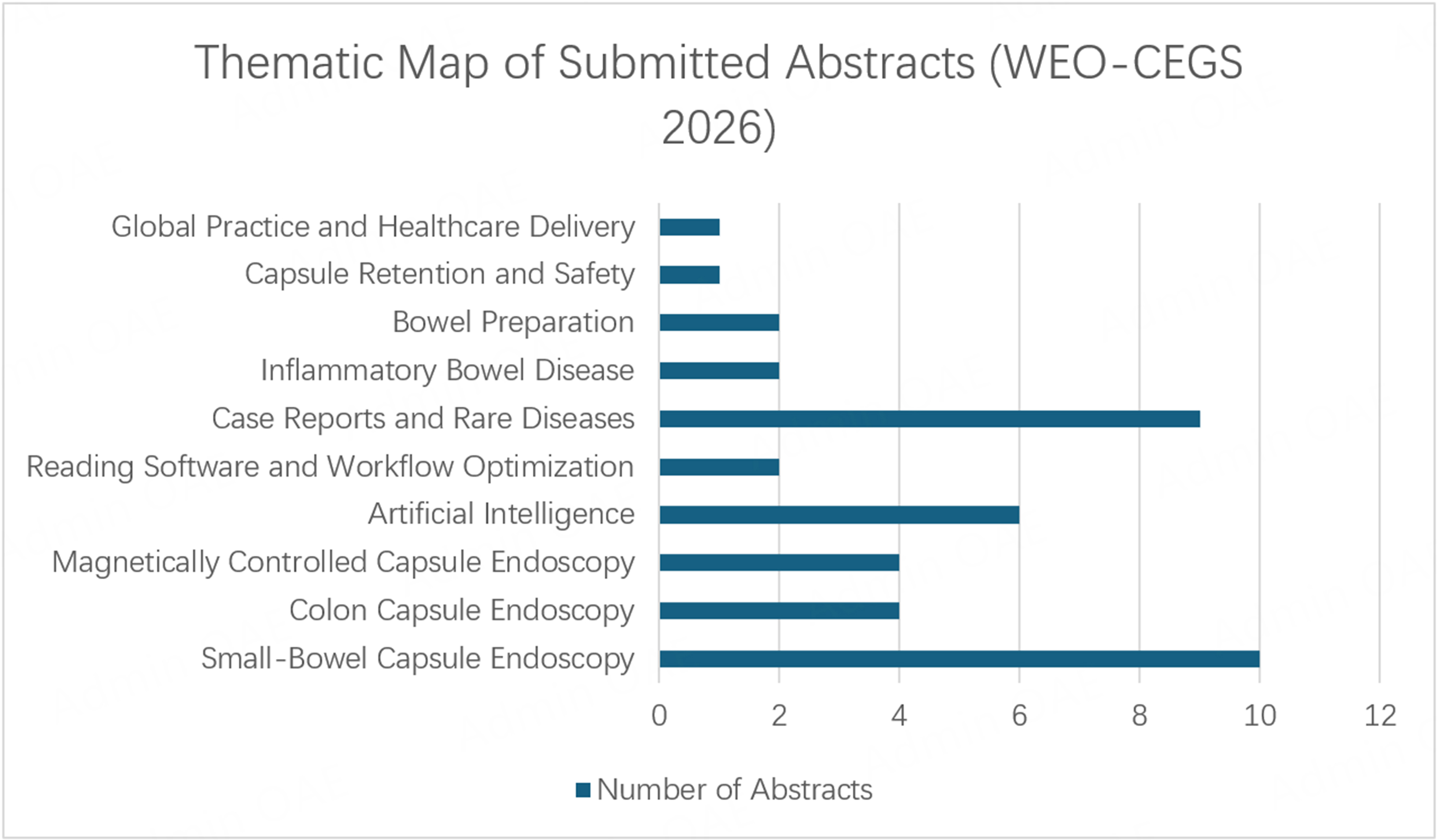
Figure 3. Thematic map of submitted abstracts (WEO-CEGS 2026). Data source: same as Figure 1. WEO-CEGS: World Endoscopy Organization Capsule Endoscopy Global Summit.
INTERNATIONAL FACULTY
WEO-CEGS 2026 featured 19 internationally recognized experts in gastroenterology and endoscopy from Asia, Europe, and the Middle East. These faculty members contributed significantly to the scientific program by delivering invited lectures, moderating sessions, and evaluating abstract submissions.
Their participation ensured the academic quality of the summit and facilitated international collaboration in the rapidly evolving field of capsule endoscopy.
The participating faculty members and their affiliations are summarized in Table 1.
International faculty participating in WEO-CEGS 2026
| Name | Title/affiliation |
| Lars Aabakken | President of WEO; Head of GI Endoscopy, Oslo University Hospital, Norway |
| Tibor Gyökeres | Head, Department of Gastroenterology, Hospital of the Hungarian Defence Forces, Hungary |
| Jianwei Hu | Director and Associate Chief Physician, Endoscopy Center, Zhongshan Hospital, Fudan University, China |
| Zhendong Jin | Executive Director, Department of Gastroenterology, Changhai Hospital, China |
| Enqiang Linghu | Major General (Medical Services), Director of the Department of Gastroenterology, Chinese PLA General Hospital (301 Hospital) |
| Hong Li | Associate Chief Physician, The Second Affiliated Hospital of Xi’an Jiaotong University, China |
| Xiaobei Luo | Resident Physician, Gastroenterology Department, Nanfang Hospital, Southern Medical University, China |
| Konosuke Nakaji | Doctor of Medicine, Endoscopy Center, Aishinkai Nakae Hospital, Japan |
| Jean-François Rey | Course Director, Video Capsule Endoscopy Network, World Endoscopy Organization, France |
| Long Rong | Director and Chief Physician, Endoscopy Center, Peking University First Hospital, China |
| Miguel Saraiva | Founder and Director, ManopH - Laboratory of Digestive Endoscopy and Motility, Porto, Portugal |
| Reena Sidhu | Consultant Gastroenterologist, Sheffield Teaching Hospitals NHS Foundation Trust, United Kingdom |
| Cristiano Spada | Director of Digestive Endoscopy Unit, Fondazione Policlinico Universitario Agostino Gemelli IRCCS, Rome, Italy |
| Ahmed Tawheed | Consultant, Gastroenterology Department, Al Emadi Hospital, Doha, Qatar |
| Pablo Cortegoso Valdivia | Consultant at University Hospital of Parma, Italy; General Secretary for iCARE (International Capsule Endoscopy Research) group |
| Yuting Wang | Director, Gastroenterology Department, Children’s Hospital of Chongqing Medical University, China |
| Qiu Zhao | Director, Department of Gastroenterology and Endoscopy Center, Zhongnan Hospital of Wuhan University, China |
| Shutian Zhang | President and Chief Physician, Beijing Friendship Hospital, Capital Medical University, China |
| Xiuli Zuo | Specially-appointed Professor and PhD supervisor, Shandong University, China |
SCIENTIFIC PROGRAM
The scientific program was designed to encourage both knowledge dissemination and interactive discussion. The conference featured multiple academic formats, including:
1. Poster Sessions & Networking
2. Opening Ceremony & Welcome Remarks
3. Abstract Presentation Sessions
4. Invited Lectures by International Faculty
5. Panel Discussions & Interactive Q&A
6. Closing Remarks
The program provided comprehensive coverage of the latest developments in capsule endoscopy, including technological innovations, clinical applications, and emerging research trends. The complete scientific program, including session topics, moderators, and speakers, is summarized in Table 2.
Overview of the WEO-CEGS 2026 scientific program
| WEO-CEGS 2026 Official Program: The Voice of World Capsule Endoscopy | ||
| 1. OPENING SESSION | ||
| Time | Session content | Speaker |
| 13:30-14:00 | Registration | - |
| 14:00-14:10 | Welcome remarks | Shutian Zhang (CN), Enqiang Linghu (CN), Zhendong Jin (CN), Lars Aabakken (NO) |
| 14:10-14:25 | Presidential lecture: Panenteric capsule endoscopy in gastrointestinal bleeding: time to change old habits? | Lars Aabakken (NO) |
| 2. ABSTRACT PRESENTATION SESSION | ||
| Moderators: Hisao Tajiri (JP), Shuyi Zhang (CN), Xiaojun Yang (CN), Jing Yu (CN), Danian Ji (CN), Song He (CN),Ye Chu (CN), Xia Xie (CN) | ||
| Time | Session content | Speaker |
| 14:25-14:33 | Best Abstracts Awarding | Lars Aabakken (NO) |
| 14:33-14:42 | Optimization of bowel preparation in colon capsule endoscopy: an umbrella review | Pablo Cortegoso Valdivia (IT) |
| 14:42-14:51 | Impact of Prucalopride on colonic transit, bowel cleansing, and completion rate in colon capsule endoscopy: a real-world comparative study | Pablo Machado (UY) |
| 14:51-15:00 | Duodenal visibility and patient tolerance of a wired magnet-assisted capsule endoscopy system: a randomized controlled trial | Shuang Wu (CN) |
| 15:00-15:09 | Inflammatory lesions of the small bowel: correlation between capsule endoscopy and double balloon enteroscopy | Nicoletta Nandi (IT) |
| 15:09-15:18 | Handheld magnetically assisted esophagogastric capsule endoscopy: a randomized controlled trial and additional colorectal examination | Naoki Ohmiya (JP) |
| 15:18-15:27 | AI performance in practical tasks during CE reading: landmark identification and reader’s cleansing perception | Stefania Piccirelli (IT) |
| 15:27-15:36 | Survey on capsule endoscopy use, availability, and diagnostic accuracy in Africa and the Middle East | Mohamed Alboraie (EG) |
| 15:36-15:45 | When the “hidden small bowel” meets the “non-invasive eye”: the diagnostic breakthrough of capsule endoscopy in critical malabsorption syndromes - insights from 3 cases | Yuhua Chen (CN) |
| 3. INVITED LECTURES SESSION | ||
| Moderators: Cristiano Spada (IT), Aimin Li (CN), Hongbin Yang (CN), Rui Xie (CN), Dong-Wan Seo (KR), Lu Li (CN), Reena Sidhu (UK), Yubao Zhou (CN) | ||
| Time | Session content | Speaker |
| 15:45-16:05 | Conventional small-bowel capsule endoscopy reading vs proprietary artificial intelligence auxiliary systems: systematic review and meta-analysis | Pablo Cortegoso Valdivia (IT) |
| 16:05-16:25 | Prep or not prep for small bowel capsule? Toward iCARE consensus | Jean-François Rey (FR) |
| 16:25-16:45 | Capsule endoscopy in pediatrics | Yuting Wang (CN) |
| 16:45-17:05 | Updates on performance measures for small-bowel endoscopy | Reena Sidhu (UK) |
| 17:05-17:15 | Q&A | - |
| 17:15-17:45 | Tea break | - |
| 17:45-18:05 | The role of artificial intelligence in suspected Crohn’s disease patients | Cristiano Spada (IT) |
| 18:05-18:25 | Effectiveness and efficacy of cable-transmission magnetically guided capsule for upper GI diseases | Long Rong (CN) |
| 18:25-18:45 | Worldwide overview of magnetic guided capsule from European perspective | Tibor Gyökeres (HU) |
| 18:45-19:05 | The role of capsule endoscopy in screening in China | Hong Li (CN) |
| 19:05-19:20 | Q&A | - |
| 4. PANEL DISCUSSION SESSION | ||
| Moderators: Jean-François Rey (FR), Laura Schleser-Low (SG) | ||
| Time | Session content | Speaker |
| 19:20-20:25 | Capsule panendoscopy cases in patients with liver cirrhosis | Miguel Saraiva (PT) |
| Capsule endoscopy: do we still need it after 24 years of clinical use? | Ahmed Tawheed (QA) | |
| Colon capsule endoscopy: can it contribute to green endoscopy? | Konosuke Nakaji (JP) | |
| Diagnosis accuracy of detachable string-guided capsule for esophageal varices | Qiu Zhao (CN) | |
| Clinical significance of small bowel in liver cirrhosis | Xiaobei Luo (CN) | |
| Colon capsule indications in China | Xiuli Zuo (CN) | |
| Robot and AI for gastric and small bowel examination | Jianwei Hu (CN) | |
| 5. CLOSING REMARKS | ||
| Time | Session content | Speaker |
| 20:25-20:30 | Closing remarks | Jinshan Wang (CN) |
POSTER PRESENTATIONS AND ACADEMIC INTERACTION
A total of 19 posters were presented during the conference, covering diverse topics in capsule endoscopy and gastrointestinal diagnostics. The poster session enabled in-depth discussions, idea exchange, and potential collaboration among participants. This interactive format was well received and is expected to be retained in future WEO-CEGS meetings.
OPENING SESSION
Chairs: Shutian Zhang (China), Enqiang Linghu (China), Zhendong Jin (China), Lars Aabakken (Norway)
The opening session began with welcome remarks from the organizing chairs and international leadership.
Prof. Lars Aabakken (President of WEO; Head of GI Endoscopy, Oslo University Hospital, Norway) delivered the President Lecture entitled “Panenteric capsule endoscopy in gastrointestinal bleeding: time to change old habits?” He reviewed current clinical paradigms and proposed updated strategies for using panenteric capsule endoscopy in the evaluation and management of gastrointestinal bleeding.
ABSTRACT PRESENTATION SESSION
Moderators: Hisao Tajiri (Japan), Shuyi Zhang (China), Xiaojun Yang (China), Jing Yu (China), Danian Ji (China), Song He (China), Ye Chu (China), Xia Xie (China)
The abstract session highlighted outstanding original research and was preceded by the Best Abstracts Awarding ceremony led by Lars Aabakken. Among 41 total submissions, eight abstracts were selected for awards.
Dr. Pablo Cortegoso Valdivia (Italy) presented “Optimization of bowel preparation in colon capsule endoscopy: an umbrella review”. The presentation highlighted bowel preparation as one of the key unresolved challenges in colon capsule endoscopy. Although low-volume PEG regimens, sodium phosphate or Gastrografin boosters, routine prokinetics, and low-fiber diets were associated with improved cleansing and completion rates, overall performance still remained below conventional colonoscopy standards. The talk also underscored increasing recognition of individualized preparation strategies, particularly for inflammatory bowel disease patients, while emphasizing the future importance of standardized scoring systems and AI-assisted quality assessment.
Dr. Pablo Machado (Uruguay) delivered an “Impact of Prucalopride on colonic transit, bowel cleansing, and completion rate in colon capsule endoscopy: a real-world comparative study”. Dr. Pablo Machado highlighted growing interest in optimizing bowel preparation while improving patient acceptability in colon capsule endoscopy. Among the three preparation protocols evaluated, prucalopride was associated with improved completion rates, faster colonic transit, and better cleansing quality. Importantly, simplified regimens combined with prucalopride achieved comparable performance to standard protocols while increasing patient willingness to repeat the procedure, reflecting an emerging shift toward more patient-friendly and clinically practical colon capsule endoscopy (CCE) preparation strategies.
Prof. Shuang Wu (China) presented “Duodenal visibility and patient tolerance of a wired magnet-assisted capsule endoscopy system: a randomized controlled trial”. Compared with conventional magnetic-controlled systems, the wing magnet-assisted platform significantly improved duodenal visibility and pyloric access while maintaining comparable patient tolerance. The findings underscored the potential of enhanced maneuverability and reversible control to expand the diagnostic capabilities of capsule systems in upper gastrointestinal examination without compromising patient comfort.
Dr. Nicoletta Nandi (Italy) discussed “Inflammatory lesions of the small bowel: correlation between capsule endoscopy and double balloon enteroscopy”. Using DBE as the reference standard, the study demonstrated high specificity and good agreement of small bowel capsule endoscopy (SBCE) for several inflammatory and atrophic patterns, including stenosis, edema, villous atrophy, and scalloping. Particularly strong performance in aphthoid lesions and villous atrophy reinforced the diagnostic reliability of SBCE in inflammatory small bowel diseases. The presentation also highlighted the growing need for multicenter validation and standardized interpretation criteria as capsule endoscopy becomes increasingly integrated into inflammatory bowel disease assessment.
Dr. Naoki Ohmiya (Japan) spoke on “Handheld magnetically assisted esophagogastric capsule endoscopy: a randomized controlled trial and additional colorectal examination”. The presentation illustrated continuing innovation in magnetic capsule navigation systems aimed at improving mucosal visualization while preserving procedural safety. Compared with nonmagnetic guidance, handheld magnetic assistance significantly enhanced gastric visualization and detection of small upper-middle gastric lesions without increasing adverse events. The findings suggested that externally controlled magnetic systems may further expand the clinical utility of capsule endoscopy beyond passive examination toward more targeted and controllable gastrointestinal assessment.
Dr. Stefania Piccirelli (Italy) presented “AI performance in practical tasks during CE reading: landmark identification and reader’s cleansing perception”. The multicenter study addressed an emerging challenge in AI-assisted capsule endoscopy: whether current AI systems can reliably support practical workflow tasks beyond lesion detection. While AI demonstrated moderate accuracy for gastric and small bowel landmark recognition, performance remained limited for colonic landmarks, highlighting current technical gaps in comprehensive gastrointestinal navigation. At the same time, AI-assisted reading did not significantly alter readers’ perception of bowel cleansing, suggesting that AI integration may support workflow efficiency without introducing systematic interpretative bias.
Prof. Mohamed Alboraie (Egypt) delivered “A survey on capsule endoscopy use, availability, and diagnostic accuracy in Africa and the Middle East”. The multinational survey revealed substantial regional disparities in capsule endoscopy accessibility, with availability largely concentrated in tertiary centers and procedural volumes remaining relatively low. Beyond technical availability, the presentation emphasized broader implementation challenges, including limited quality monitoring, inconsistent adoption of best practices, reimbursement barriers, and shortage of trained readers. Collectively, the findings highlighted the need for standardized training, infrastructure development, and health policy support to improve equitable access to capsule endoscopy across resource-limited regions.
Dr. Yuhua Chen (China) presented “When the ‘hidden small bowel’ meets the ‘non-invasive eye’: the diagnostic breakthrough of capsule endoscopy in critical malabsorption syndromes - insights from 3 cases”. Through three clinically challenging malabsorption cases, the presentation demonstrated the growing value of capsule endoscopy as a non-invasive first-line diagnostic approach for severe small bowel disorders in high-risk patients. Distinct capsule findings, including villous atrophy, ulcerative lesions, and neoplastic patterns, enabled early differentiation among autoimmune enteropathy, intestinal T-cell lymphoma, and celiac disease. The talk further reinforced the expanding role of capsule endoscopy in situations where conventional invasive procedures may be technically difficult or poorly tolerated.
Taken together, the abstracts showcased how capsule endoscopy is evolving from a purely diagnostic imaging modality toward an increasingly intelligent, controllable, and integrated platform for gastrointestinal investigation. The convergence of optimized preparation protocols, advanced navigation technologies, AI-assisted interpretation, and expanding clinical indications suggests that future developments will focus not only on improving diagnostic performance but also on enhancing accessibility, efficiency, and standardization across diverse healthcare settings worldwide.
INVITED LECTURES SESSION
The invited lectures highlighted the rapid evolution of capsule endoscopy from a primarily diagnostic modality toward an increasingly intelligent, standardized, and population-oriented platform. Major themes included AI-assisted reading, consensus development, pediatric applications, magnetic capsule systems, and large-scale screening strategies.
Dr. Pablo Cortegoso Valdivia (Consultant at University Hospital of Parma, Italy) presented “Conventional small-bowel capsule endoscopy reading vs proprietary artificial intelligence auxiliary systems: systematic review and meta-analysis”. The presentation highlighted the accelerating integration of artificial intelligence into routine capsule endoscopy practice. Compared with conventional reading, AI-assisted systems significantly improved lesion detection rates while dramatically reducing reading time from nearly 50 min to less than 6 min. The findings reinforced the growing consensus that AI may substantially improve workflow efficiency and diagnostic consistency in small bowel capsule endoscopy.
Dr. Jean-François Rey (Course Director, Video Capsule Endoscopy Network, WEO, France) gave a lecture entitled “Prep or not prep for small bowel capsule? Toward iCARE consensus”[1]. Reviewing 25 years of evidence, the lecture addressed one of the most debated topics in capsule endoscopy preparation. While earlier studies questioned the value of purgative regimens, recent umbrella analyses increasingly support low-volume PEG protocols, particularly same-day and post-ingestion approaches, for improving mucosal cleansing. The talk reflected ongoing international efforts to standardize preparation strategies and develop updated iCARE consensus recommendations for small bowel capsule endoscopy.
Prof. Yuting Wang (Director, Gastroenterology Department, Children’s Hospital of Chongqing Medical University, China) delivered a lecture on “Capsule endoscopy in pediatrics”. The presentation demonstrated the expanding role of capsule endoscopy in pediatric gastrointestinal diseases. In a large single-center cohort, SBCE showed high completion rates, extremely low retention risk, and substantial diagnostic yield across Crohn’s disease, obscure gastrointestinal bleeding, Meckel’s diverticulum, and celiac disease. These findings further supported the growing acceptance of capsule endoscopy as a safe and effective diagnostic modality in children, including increasingly younger patient populations.
Prof. Reena Sidhu (Consultant Gastroenterologist, Sheffield Teaching Hospitals NHS Foundation Trust, UK) presented “Updates on performance measures for small-bowel endoscopy”. The lecture emphasized the growing importance of quality assurance and standardization in capsule and device-assisted enteroscopy. Updated ESGE 2025 performance indicators[2] addressed key aspects including appropriate indications, bowel preparation quality, retention rates, therapeutic complications, and training requirements. Structured reporting, multidisciplinary collaboration, and AI-assisted support were highlighted as increasingly important components of future high-quality small bowel endoscopy practice.
Prof. Cristiano Spada (Director of Digestive Endoscopy Unit, Fondazione Policlinico Universitario Agostino Gemelli IRCCS, Rome, Italy) spoke on “The role of artificial intelligence in suspected Crohn’s disease patients”. The presentation illustrated how AI-assisted capsule reading may fundamentally change inflammatory bowel disease evaluation. Preliminary SCAl study data showed that AI markedly reduced reading time while preserving diagnostic performance and maintaining a high negative predictive value for ruling out disease. Although automated lesion characterization remains imperfect and requires further validation, the lecture strongly reflected the growing transition toward AI-supported clinical decision-making in capsule endoscopy.
Prof. Long Rong (Director and Chief Physician, Endoscopy Center, Peking University First Hospital, China) presented “The effectiveness and efficacy of cable-transmission magnetically guided capsule for upper GI diseases”. The multicenter trial demonstrated excellent concordance between CT-MCCE and conventional gastroscopy across esophageal, gastric, and duodenal examinations, while significantly improving patient tolerance and avoiding adverse events. The presentation highlighted the ongoing evolution of magnetically guided capsule systems toward more controllable, patient-friendly, and AI-assisted upper gastrointestinal diagnostic platforms.
Prof. Tibor Gyökeres (Head, Department of Gastroenterology, Hospital of the Hungarian Defence Forces, Hungary) delivered a lecture on “Worldwide overview of magnetic guided capsule from European perspective.” Reviewing the development of magnetic capsule systems from joystick-controlled devices to robotic and AI-integrated platforms, the lecture illustrated the rapid technological evolution within the field. Available European data supported high diagnostic accuracy and favorable clinical utility, particularly as a non-invasive triage approach for upper gastrointestinal diseases. The presentation reinforced the view that magnetic capsule endoscopy is becoming an increasingly important complementary modality rather than a replacement for conventional gastroscopy.
Prof. Hong Li (Associate Chief Physician, The Second Affiliated Hospital of Xi’an Jiaotong University, China) discussed “The role of capsule endoscopy in screening in China”. The presentation highlighted the rapid expansion of capsule endoscopy within large-scale screening programs in China, particularly for gastric cancer detection. Recent Chinese expert consensus statements and multicenter studies[3] supporting magnetically controlled capsule gastroscopy, together with evidence demonstrating high concordance with conventional gastroscopy, reflected increasing confidence in capsule-based screening strategies. The integration of AI-assisted reading further illustrated how workflow optimization may support broader implementation of non-invasive gastrointestinal screening in large populations.
Beyond the diversity of topics presented, a common perspective emerged from the invited lectures: future progress in capsule endoscopy will depend on simultaneously improving efficiency, expanding clinical applicability, and maintaining high-quality standards. Among all developments discussed, artificial intelligence was arguably the most prominent theme. Multiple speakers demonstrated its ability to substantially reduce reading time and support lesion detection, highlighting its potential to improve workflow efficiency and facilitate wider adoption of capsule endoscopy. At the same time, experts acknowledged that current AI systems remain primarily supportive tools. Although lesion detection performance continues to improve, limitations persist in lesion characterization, disease classification, assessment of clinical relevance, and the interpretation of complex findings[4], underscoring the continuing importance of physician oversight.
Another recurring theme was the expansion of capsule endoscopy beyond its traditional role in small bowel evaluation. Presentations on pediatric applications, Crohn’s disease assessment, magnetic capsule systems, and population-based screening programs collectively reflected growing confidence in capsule-based diagnostics across broader patient populations and disease indications. Advances in magnetic guidance technology further demonstrated ongoing efforts to improve examination controllability, patient comfort, and diagnostic completeness, bringing the field closer to the goal of more comprehensive and minimally invasive gastrointestinal evaluation.
Equally notable was the strong emphasis on standardization and quality assurance. Discussions on bowel preparation, performance measures, and international consensus development suggested broad agreement that technological innovation alone cannot guarantee diagnostic quality. Adequate bowel cleansing remains a fundamental determinant of examination performance, while future efforts are expected to focus on simplifying preparation protocols and improving patient compliance. Together, these perspectives indicate that the future of capsule endoscopy will be shaped not by a single technological breakthrough, but by the integration of artificial intelligence, expanded clinical applications, improved device control, and evidence-based standardization.
PANEL DISCUSSION SESSION
Moderators: Jean-François Rey (France), Laura Schleser-Low (Singapore)
The panel discussions reflected growing interest in future-oriented applications of capsule endoscopy, including sustainability, robotic systems, portal hypertension assessment, and expanded screening indications.
Prof. Miguel Saraiva (Founder and Director, ManopH - Laboratory of Digestive Endoscopy and Motility, Porto, Portugal) shared insights on “Capsule panendoscopy cases in patients with liver cirrhosis”. The discussion emphasized capsule panendoscopy as a non-invasive approach for evaluating the full gastrointestinal spectrum of portal hypertension.
Dr. Ahmed Tawheed (Consultant, Gastroenterology Department, Al Emadi Hospital, Doha, Qatar) discussed “Capsule endoscopy: do we still need it after 24 years of clinical use?” The talk reinforced the continuing clinical relevance of capsule endoscopy while highlighting emerging robotic and AI-assisted innovations.
Dr. Konosuke Nakaji (Doctor of Medicine, Endoscopy Center, Aishinkai Nakae Hospital, Japan) presented “Colon capsule endoscopy: can it contribute to green endoscopy?” The presentation introduced environmental sustainability as an emerging consideration in future capsule endoscopy practice.
Prof. Qiu Zhao (Director, Department of Gastroenterology and Endoscopy Center, Zhongnan Hospital of Wuhan University, China) addressed the “Diagnosis accuracy of a detachable string-guided capsule for esophageal varices”. The talk highlighted detachable string-guided capsules as a promising sedation-free alternative for esophageal varices assessment.
Prof. Xiaobei Luo (Resident Physician, Gastroenterology Department, Nanfang Hospital, Southern Medical University, China) explored “Clinical significance of small bowel in liver cirrhosis”. Prof. Luo emphasized the growing recognition of small bowel involvement in portal hypertension-related gastrointestinal disease.
Prof. Xiuli Zuo (Standing Committee Member, Chinese Society of Gastroenterology, China) presented “Colon capsule indications in China”. The discussion reflected expanding interest in colon capsule endoscopy for improving colorectal screening accessibility and patient tolerance.
Prof. Jianwei Hu (Director and Associate Chief Physician, Endoscopy Center, Zhongshan Hospital, Fudan University, China) discussed “Robot and AI for gastric and small bowel examination”. The talk highlighted automation and robotics as key future directions for improving efficiency and standardization in capsule endoscopy.
The panel discussions offered a forward-looking perspective on the evolving role of capsule endoscopy. While addressing diverse topics, several speakers shared the view that future advances will extend beyond diagnostic performance alone. Emerging technologies such as robotics and artificial intelligence, together with expanding applications in screening and portal hypertension, may further enhance accessibility, patient acceptance, and clinical utility. The discussions also highlighted growing awareness of broader healthcare considerations, including sustainability and resource efficiency, as the field continues to evolve.
DIGITAL PLATFORM AND GLOBAL ENGAGEMENT
The official conference website served as the central hub for conference overview and welcome message, scientific committee information, detailed conference program, faculty profiles, abstract submission guidelines, and online registration portal. The digital infrastructure strongly supported the hybrid meeting format and global participation.
IMPACT AND FUTURE PERSPECTIVES
The success of WEO-CEGS 2026 demonstrated the growing importance of international collaboration and knowledge exchange in advancing the field of capsule endoscopy. Guided by the theme, “The Voice of World Capsule Endoscopy”, the summit brought together experts from diverse geographical regions, healthcare systems, and professional backgrounds to share scientific discoveries, clinical experiences, technological innovations, and perspectives on future development. The meeting highlighted not only the remarkable progress in capsule endoscopy but also the value of creating a truly global platform where different voices can contribute to shaping the future of the field.
Looking ahead, future editions of WEO-CEGS are expected to further strengthen the summit’s role as a global forum that brings together diverse perspectives and experiences from across regions and healthcare systems. Beyond presenting scientific advances, the summit can facilitate broader discussions on clinical implementation, training, quality standards, accessibility, patient-centered care, and healthcare policy. By encouraging dialogue across different disciplines and levels of experience, WEO-CEGS has the potential to inspire not only established experts but also young investigators, students, healthcare professionals, and patients who will ultimately benefit from continued innovation in the field.
The scientific content presented at WEO-CEGS 2026 also underscored the remarkable future potential of capsule endoscopy. Rapid advances in artificial intelligence, automated image analysis, magnetic navigation, pan-enteric capsule platforms, dual-camera systems, and next-generation home-based or remotely monitored diagnostic solutions are transforming both the capabilities and accessibility of capsule-based gastrointestinal evaluation. As these technologies mature, capsule endoscopy may become increasingly accurate, efficient, personalized, and widely available across diverse clinical settings.
Ultimately, the long-term vision extends beyond technological progress alone. The continued integration of innovation, clinical evidence, education, and global collaboration will be critical to ensuring that advances in capsule endoscopy translate into meaningful improvements in patient care. Future WEO-CEGS meetings will undoubtedly continue to showcase emerging breakthroughs while fostering the collective efforts needed to make advanced capsule endoscopy more accessible and beneficial to patients worldwide.
CONCLUSION
WEO-CEGS 2026 successfully brought together leading experts, researchers, and innovators from around the world to share the latest advances in capsule endoscopy and discuss the challenges and opportunities facing the field. Through keynote lectures, scientific sessions, expert discussions, and abstract presentations, the meeting provided a comprehensive overview of current developments spanning artificial intelligence, magnetic navigation, quality improvement, screening applications, and emerging clinical indications.
The scientific program demonstrated that capsule endoscopy continues to evolve beyond a diagnostic imaging tool toward a more intelligent, integrated, and patient-centered platform for gastrointestinal investigation. At the same time, the discussions highlighted the importance of standardization, education, accessibility, and international cooperation in ensuring that technological advances translate into meaningful clinical benefits.
Reflecting the meeting theme, “The Voice of World Capsule Endoscopy”, WEO-CEGS 2026 successfully created a global forum where diverse perspectives could be shared and future directions collectively explored. By fostering scientific exchange and collaboration across regions and disciplines, the summit further strengthened the global capsule endoscopy community and contributed to the continued advancement of gastrointestinal diagnostics and patient care.
DECLARATIONS
Acknowledgments
The authors sincerely thank all speakers for their excellent presentations and scientific contributions to the WEO-CEGS 2026. We also acknowledge all authors who submitted abstracts and all onsite and online participants for their active engagement and valuable academic discussions. We further express our appreciation to the organizing committee and all supporting staff for their dedicated efforts in ensuring the conference’s successful execution.
Authors’ contributions
Made substantial contributions to conception and design of the report, as well as drafting the manuscript and data acquisition: Peng L, He J, Liao H
Contributed to data interpretation, critical revision of the manuscript, and final approval of the version to be published: Liu Y, Wang J, Zhang S, Linghu E, Jin Z, Aabakken L, Rey JF
Availability of data and materials
Public conference information is available on the official WEO-CEGS website (https://www.weo-cegs.com/). Additional data supporting this conference report are available from the corresponding author upon reasonable request.
AI and AI-assisted tools statement
During the preparation of this manuscript, the AI tool ChatGPT (OpenAI, GPT-5.5) was used solely for language editing. The tool did not influence the study design, data collection, analysis, interpretation, or the scientific content of the work. All authors have reviewed, verified, and approved the outputs and take full responsibility for the accuracy, integrity, and final content of the manuscript.
Financial support and sponsorship
This study was supported by Chongqing Jinshan Science & Technology (Group) Co., Ltd.
Conflicts of interest
Rey JF is a Section Editor of Mini-invasive Surgery and was not involved in any step of the editorial process, including reviewer selection, manuscript handling, or decision making. Peng L, He J, Liao H, Liu Y, and Wang J are affiliated with Chongqing Jinshan Science & Technology (Group) Co., Ltd. The other authors declare no conflicts of interest.
Ethical approval and consent to participate
Not applicable.
Consent for publication
Not applicable.
Copyright
© The Author(s) 2026.
REFERENCES
1. Lei II, Cortegoso Valdivia P, Gualandi N, et al. Identifying the optimal bowel preparation for small-bowel capsule endoscopy: a meta-review and umbrella meta-analysis. Gastrointest Endosc. 2026;103:672-86.e24.
2. Sidhu R, Shiha MG, Carretero C, et al. Performance measures for small-bowel endoscopy: a European Society of Gastrointestinal Endoscopy (ESGE) Quality Improvement Initiative - Update 2025. Endoscopy. 2025;57:366-89.
3. Jiang B, Pan J, Qian YY, et al. Clinical guideline on magnetically controlled capsule gastroscopy (2021 edition). J Dig Dis. 2023;24:70-84.
Cite This Article
 Open Access
How to Cite
Download Citation
Export Citation File:
Type of Import
Tips on Downloading Citation
Citation Manager File Format
Type of Import
Direct Import: When the Direct Import option is selected (the default state), a dialogue box will give you the option to Save or Open the downloaded citation data. Choosing Open will either launch your citation manager or give you a choice of applications with which to use the metadata. The Save option saves the file locally for later use.
Indirect Import: When the Indirect Import option is selected, the metadata is displayed and may be copied and pasted as needed.
About This Article
Copyright

Data & Comments
Data
0






Comments
Comments must be written in English. Spam, offensive content, impersonation, and private information will not be permitted. If any comment is reported and identified as inappropriate content by OAE staff, the comment will be removed without notice. If you have any queries or need any help, please contact us at support@oaepublish.com.